
BuddhistCatholicContemplativeEvangelicalGeneral ChristianHinduJewishLatter-day SaintMuslimNew VisionsProgressive Christian
Beliefs
- Buddhist
- Catholic
- Contemplative
- Evangelical
- General Christian
- Hindu
- Jewish
- Latter-day Saint
- More Voices
- Muslim
- New Visions
- Pagan
- Progressive Christian
Topics
- Religion News
- Food and Religion
- Sports and Religion
- Religious Art
- Religious Music and Entertainment
- Religious Events
- History and Religion
- Style and Religion
- Politics and Religion
- Women in Religion
- Recreation Outdoors and Religion
- Business Finance and Religion
- Careers Workplace and Religion
- Education and Religion
- Family Parenting and Religion
- Health Fitness and Religion
- Home and Religion
- Relationships and Religion
- Technology and Religion
- Travel and Religion
Columnists
- Buddhist Columnists
- Business Finance and Religion Columnists
- Careers Workplace and Religion Columnists
- Catholic Columnists
- Contemplative Columnists
- Education and Religion Columnists
- Evangelists Columnists
- Family Parenting and Religion Columnists
- General Christian Columnists
- Health Fitness and Religion Columnists
- Hindu Columnists
- History and Religion Columnists
- Home and Religion Columnists
- Jewish Columnists
- More Voices Columnists
- Latter Day Columnists
- Muslim Columnists
- New Visions Columnists
- Nonreligious Columnists
- Pagan Columnists
- Politics and Religion Columnists
- Progressive Columnists
- Recreation Outdoors and Religion Columnists
- Relationships and Religion Columnists
- Religion News Columnists
- Religious Art Columnists
- Religious Events Columnists
- Religious Music and Entertainment Columnists
- Sports and Religion Columnists
- Style and Religion Columnists
- Technology and Religion Columnists
- Travel and Religion Columnists
- Women in Religion Columnists
Resource Library
- 2026 Calendar
- Library of World Religions
- The 100 Most Holy Places on Earth
- Patheos Answers
- Podcasts
- Videos
- Faith Leaders Database
- Anglican Episcopalian
- Bahai
- Baptist
- Buddhism
- Christianity
- Confucianism
- Eastern Orthodoxy
- Hinduism
- Holiness and Pentecostal
- ISKCON
- Islam
- Judaism
- Lutheran
- Methodist
- The Church of Jesus Christ of Latter-day Saints
- New Age
- Paganism
- Presbytarian and Reformed
- Protestantism
- Religion Behind the Scenes
- Roman Catholic
- Scientology
- Shia Islam
- Sikhism
- Sufism
- Sunni Islam
- Taoism
- Zen
- See all religions
Research Tools
 Ad-Free & Subscriber Log-In Subscription Support
Ad-Free & Subscriber Log-In Subscription Support
Follow Patheos 

- Trending:
- Forgiveness
- |
- Marriage
- |
- Consciousness
- |
- Death Penalty
- |
- Election
- |
- Halloween

-
Categories
-
Christian Living
-
Christology
-
Golf
-
My Books
- Home
- Progressive Christian
- Religion News
- Did Jesus’ Disciples See “the Son of Man Coming in his Kingdom”?
Did Jesus’ Disciples See “the Son of Man Coming in his Kingdom”?
Last updated on: November 14, 2018 at 11:25 am by Kermit Zarley
Did Jesus’ Disciples See “the Son of Man Coming in his Kingdom”? 2018-11-14T11:25:23-07:00 Kermit Zarley
Patheos Explore the world's faith through different perspectives on religion and spirituality! Patheos has the views of the prevalent religions and spiritualities of the world.
Jesus once asked his disciples who he was. Peter replied, “You are the Messiah, the Son of the living God” (Mt 16.16 NRSV). Then, for the first time, Jesus told them he must go to Jerusalem, be killed, and rise from the dead on the third day (v. 21). Without telling them he would then ascend to heaven to remain awhile, he added concerning his future return, “For the Son of Man is to come with his angels in the glory of his Father,… Truly I tell you, there are some standing here who will not taste death before they see the Son of Man coming in his kingdom” (v. 28). Did that happen? If not, was Jesus wrong?
 German philosopher and Deist, Hermann Samuel Reimarus (1694-1768), said it didn’t happen and therefore Jesus was wrong. Reimarus initiated investigation of the historical Jesus with his book Fragments (1774-1778), published posthumously.He was a rationalist and thus a skeptic concerning Jesus’ miracles and resurrection recorded in the New Testament (NT). He claimed Jesus meant in the above saying that he would return to earth with his eschatological kingdom before his disciples would die. Reimarus further alleged that the NT repeatedly teaches that Jesus would return soon, at least within a generation of perhaps forty years.
Reimarus’ allegation, that Jesus wrongly predicted his return within about a generation, has had a profound impact on Bible scholars, even to this present time. Yet many of those scholars convinced of his thesis have been unwilling to admit the obvious—Jesus was wrong. No one has publicized Reimarus’ findings on this matter, and agreed that Jesus was wrong, more than the famed Dr. Albert Schweitzer. He did so in his book, The Quest of the Historical Jesus (1906). It was hailed as the best scholarly book about Jesus in the 20th century.
Even without Reimarus’ allegation, the general consensus of Christian theologians throughout church history has been that the NT does indeed teach that Jesus would return “soon,” with Jesus even saying it would be in a “generation,” and thus in the 1st century. When this didn’t happen, it embarrassed Christians so much that they gradually refrained from preaching Jesus’ second coming.
I believe Reimarus and all those learned scholars who have agreed with him about Jesus having been wrong have themselves been wrong. The key to understanding Jesus’ prediction that some of his disciples would see the kingdom of God before dying is in examining closely what all three synoptists immediately record thereafter. Mind you, they don’t always arrange their events about Jesus’ life in the same order. But here they do, and for good reason.
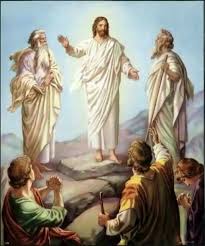 It is that Jesus’ Transfiguration occurs next in the synoptists’ accounts (Mt 17.1-8; Mk 9.2-8; Lk 9.28-36a). Jesus took Peter, James, and John “up a high mountain by themselves. And he was transfigured before them, and his face shone like the sun, and his clothes became dazzling white. Suddenly there appeared to them Moses and Elijah, talking with him” (Mt 17.1-3). From a literary perspective, it seems pretty obvious that all three synoptists intended for their readers to understand that Jesus referred to his upcoming Transfiguration when he said some disciples would see him coming in his kingdom before they die.
Jesus taught and acted with a style that people often misunderstand. It was mostly that, when he spoke, they understood him literally whereas he meant it figuratively. Perhaps the classic example was Jesus telling Nicodemus he needed to be “born again” (Jn 3.3). This kind of thing occurred so much that at the end of Jesus’ ministry, right after the Last Supper, he told his disciples, “I have said these things to you in figures of speech” (Jn 16.25). Then, “His disciples said, ‘Yes, now you are speaking plainly, not in any figure of speech!’” (v. 29).
Jesus’ Transfiguration was a preview of his glorious second coming with his kingdom and the simultaneous resurrection of the saints, which Moses and Elijah epitomized. Jesus’ face shining like the sun and his garments being white as light suggests the saints’ resurrection, when they “shall shine like the brightness of the sky, and … like the stars forever” (Dan 12.3). Peter apparently recalled this when he then suggested to Jesus, “if you wish, I will make three dwellings here, one for you, one for Moses, and one for Elijah” (Mt 17.4). Peter meant that he would build three huts to commemorate the Feast of Tabernacles. It symbolized both Israel’s past and anticipated its joyous banqueting in the future, eschatological kingdom.
Apparently, Peter’s suggestion to then build huts didn’t impress God, maybe since it signified human effort. Regardless, “While he [Peter] was still speaking, suddenly a bright cloud overshadowed them, and from the cloud a voice said, ‘This is my Son the Beloved, with him I am well pleased; listen to him’” (v. 5). The implication seems to be that God was referring to that previous moment, last recorded in all three synoptics, when Jesus predicted his death. We then read, “Peter took him aside and began to rebuke him, saying, ‘God forbid it, Lord! This must never happen to you.’ But he turned and said to Peter, ‘Get behind me, Satan! You are a stumbling block to me; for you are setting your mind not on divine things but on human things’” (Mt 16.22-23).
In this Transfiguration scene, Moses and Elijah could not have appeared in actual resurrection bodies. For, Jesus was to be “the firstfruits” of the resurrection (1 Cor 15.20, 23). Moreover, Matthew relates, “As they were coming down the mountain, Jesus ordered them, ‘Tell no one about the vision until after the Son of Man has been raised from the dead’” (Mt 17.9). So, it seems the appearance of Moses and Elijah was only visionary. And Jesus’ command not to tell about this incident parallels what he had just told the disciples during the last recorded incident. It was that when Jesus asked his disciples who he was, and Peter said he was the Messiah, Matthew relates, “Then he [Jesus] sternly ordered the disciples not to tell anyone that he was the Messiah” (16.20; cf. Mk 8.30). Scholars rightly call this “the Messianic Secret.” Jesus so directed his disciples in order to avoid his being executed before the appointed time.
Now, Matthew and Mark claim “six days” transpired between these two episodes (Mt 17.1; Mk 9.2), whereas Luke says it was “about eight days” (Lk 9.28). Some critics have alleged a discrepancy here. But, besides Luke saying “about,” ancients were known for counting a portion of a day as a “day.” We encounter such evidence when Jesus predicted he would rise from the dead “on the third day,” according to Matthew and Luke (Mt 16.21; 17.23; 20.19; Lk 9.22; 18.33); but Mark says “after three days” (Mk 8.31; 9.31; 10.34). It is clearly evident that this is no discrepancy the two expressions are used interchangeably in Mt 27.63-64 and Esther 4.16 compared with 5.1.
Yes, the interpretation I have presented here about Jesus predicting some of his disciples would see him coming in his kingdom before they die, and it being his Transfiguration, has been commonly accepted by Christians throughout history. I see no justifiable reason for abandoning it when it is recalled that Jesus often spoke in a non-literal manner. For historical critics, and even so many fairly conservative NT scholars, to reject this traditional interpretation puts them, ironically, in the camp of all those who have erroneously thought Jesus meant something literally when he actually meant it non-literally.
But in examining this episode about Jesus saying some of his disciples would not die before they would see him coming in his kingdom, we need to also consider briefly what preterists say about this matter. Praeter is a Latin word that means “past.” So, regarding Jesus saying some of his disciples would not die before they would see him coming in his kingdom, Preterists believe these disciples saw it in A.D. 70 with the Romans’ destruction of Jerusalem and its temple which ended the First Jewish Revolt (A.D. 66-70). Thus, Preterists think the Romans’ destruction was orchestrated by Jesus invisibly coming in his kingdom power in the form of judgment upon Israel. This viewpoint surprisingly has been gaining adherents in recent times, especially among some distinguished NT scholars, such as N. T. Wright, who is a partial preterist. (See my boldly titled post on 5/24/16, “Tom Wright’s Faulty Eschatology.”
Both historical-critical scholars and preterists cite Jesus’ word “generation” in his Olivet Discourse to support their view about what Jesus meant when he said some disciples would not die ’til after they saw him coming in his kingdom. On this issue, see my post on 2/14/17, “Did Jesus Wrongly Predict He Would Return Within a Generation?”
Previous Post

July 17, 2017
Park and DeChambeau First-Time Winners on the Big Stage
Next Post

July 22, 2017 Jordan Spieth Still Leads the 146th British Open
Browse Our Archives
Select a Category Angels Billy Graham Blog Description Book Reviews Christian Living Christianity Christology Church History Current Events Deity of Christ? Disarmament Eschatology Evangelicalism Ezekiel 38-39 Film Reviews God Golf Gospel Harmonization Health History Holy Spirit Incarnation? Interview Islam Israeli-Palestinian Conflict Jesus Last Empire Literary Announcements Major Championship Winners Masters Monotheism My Books New Testament Old Testament Politics Primitive Weapons Ryder Cup Science Society of Biblical Literature The Bible The Restitution of Jesus Christ Trinitarianism Trinity? Uncategorized Unconditional Love? War on Terrorism
Select a Month October 2026 September 2026 August 2026 July 2026 June 2026 May 2026 April 2026 March 2026 February 2026 January 2026 December 2025 November 2025 October 2025 September 2025 August 2025 July 2025 June 2025 May 2025 April 2025 March 2025 February 2025 January 2025 December 2024 November 2024 October 2024 September 2024 August 2024 July 2024 June 2024 May 2024 April 2024 March 2024 February 2024 January 2024 December 2023 November 2023 October 2023 September 2023 August 2023 July 2023 June 2023 May 2023 April 2023 March 2023 February 2023 January 2023 December 2022 November 2022 October 2022 September 2022 August 2022 July 2022 June 2022 May 2022 April 2022 March 2022 February 2022 January 2022 December 2021 November 2021 October 2021 September 2021 August 2021 July 2021 June 2021 May 2021 April 2021 March 2021 February 2021 January 2021 December 2020 November 2020 October 2020 September 2020 August 2020 July 2020 June 2020 May 2020 April 2020 March 2020 February 2020 January 2020 December 2019 November 2019 October 2019 September 2019 August 2019 July 2019 June 2019 May 2019 April 2019 March 2019 February 2019 January 2019 December 2018 November 2018 October 2018 September 2018 August 2018 July 2018 June 2018 May 2018 April 2018 March 2018 February 2018 January 2018 December 2017 November 2017 October 2017 September 2017 August 2017 July 2017 June 2017 May 2017 April 2017 March 2017 February 2017 January 2017 December 2016 November 2016 October 2016 September 2016 August 2016 July 2016 June 2016 May 2016 April 2016 March 2016 February 2016 January 2016 December 2015 November 2015 October 2015 September 2015 August 2015 July 2015 June 2015 May 2015 April 2015 March 2015 February 2015 January 2015 December 2014 November 2014 October 2014 September 2014 July 2014 June 2014 May 2014 April 2014 March 2014 February 2014 January 2014 December 2013 November 2013 October 2013 September 2013 August 2013 July 2013 June 2013 May 2013 April 2013
Follow Us!
TAKE THE
Religious Wisdom Quiz
Who said, "The Spirit of the Lord is upon me"?
Select your answer to see how you score.
Elijah Isaiah Paul Jesus
Books by This Author Books by Kermit Zarley Blog
Related posts from Kermit Zarley Blog

Stephen Hawking Said "Losers" Boast about IQ—That's Trump

Trump Should Retake his Old Name Drumpf that...
Counting the Cost Before Going to War

Trump's Gaza Reconstruction Plan Is on Track
TRENDING AT PATHEOS Progressive Christian

Emotion in Early Christianity by Andrew Crislip
Andrew Crislip’s Emotion in Early Christianity examines an often overlooked dimension of...

16 Spiritual Touchstones for a More Grounded Life
After decades of spiritual study, here are 16 principles I try...

Catholic Evangelization: Sharing Your Faith Every Day
Welcome back to the Graceful Awakening mini-series called, “From Faith to Mission.” ...

The Pillar of the Boatmen: the Ancient Monument...
The Pillar of the Boatmen is a Romano-Gaulish sculpture that dates from...

In one sense walking into Westminster Abbey is like walking down the...

'Super Scam Me' Exposes AI Jon Bon Jovi...
Leslie Pickett believed she was in a relationship with Jon Bon Jovi....
view all Progressive Christian blogs
Ad-Free & Subscriber Log-In Subscription Support
- About Us
- 2026 Calendar
- Videos
- Podcasts
- Library of World Religions
- Faith In Media Tracker
- Advertise With Us
- Write for Us
- Privacy Policy
- Terms of Service
- Do Not Sell My Data
- Contact Us
- Radiant Digital
- Manage Newsletter Subscriptions
- Unsubscribe From Notifications
- Sitemap
Copyright 2008-2026, Patheos. All rights reserved.
Subscription Support Ad-Free & Subscriber Log-In
Follow Patheos