
BuddhistCatholicContemplativeEvangelicalGeneral ChristianHinduJewishLatter-day SaintMuslimNew VisionsProgressive Christian
Beliefs
- Buddhist
- Catholic
- Contemplative
- Evangelical
- General Christian
- Hindu
- Jewish
- Latter-day Saint
- More Voices
- Muslim
- New Visions
- Pagan
- Progressive Christian
Topics
- Religion News
- Food and Religion
- Sports and Religion
- Religious Art
- Religious Music and Entertainment
- Religious Events
- History and Religion
- Style and Religion
- Politics and Religion
- Women in Religion
- Recreation Outdoors and Religion
- Business Finance and Religion
- Careers Workplace and Religion
- Education and Religion
- Family Parenting and Religion
- Health Fitness and Religion
- Home and Religion
- Relationships and Religion
- Technology and Religion
- Travel and Religion
Columnists
- Buddhist Columnists
- Business Finance and Religion Columnists
- Careers Workplace and Religion Columnists
- Catholic Columnists
- Contemplative Columnists
- Education and Religion Columnists
- Evangelists Columnists
- Family Parenting and Religion Columnists
- General Christian Columnists
- Health Fitness and Religion Columnists
- Hindu Columnists
- History and Religion Columnists
- Home and Religion Columnists
- Jewish Columnists
- More Voices Columnists
- Latter Day Columnists
- Muslim Columnists
- New Visions Columnists
- Nonreligious Columnists
- Pagan Columnists
- Politics and Religion Columnists
- Progressive Columnists
- Recreation Outdoors and Religion Columnists
- Relationships and Religion Columnists
- Religion News Columnists
- Religious Art Columnists
- Religious Events Columnists
- Religious Music and Entertainment Columnists
- Sports and Religion Columnists
- Style and Religion Columnists
- Technology and Religion Columnists
- Travel and Religion Columnists
- Women in Religion Columnists
Resource Library
- 2026 Calendar
- Library of World Religions
- The 100 Most Holy Places on Earth
- Patheos Answers
- Podcasts
- Videos
- Faith Leaders Database
- Anglican Episcopalian
- Bahai
- Baptist
- Buddhism
- Christianity
- Confucianism
- Eastern Orthodoxy
- Hinduism
- Holiness and Pentecostal
- ISKCON
- Islam
- Judaism
- Lutheran
- Methodist
- The Church of Jesus Christ of Latter-day Saints
- New Age
- Paganism
- Presbytarian and Reformed
- Protestantism
- Religion Behind the Scenes
- Roman Catholic
- Scientology
- Shia Islam
- Sikhism
- Sufism
- Sunni Islam
- Taoism
- Zen
- See all religions
Research Tools
 Ad-Free & Subscriber Log-In Subscription Support
Ad-Free & Subscriber Log-In Subscription Support
Follow Patheos 

- Trending:
- Forgiveness
- |
- Marriage
- |
- Consciousness
- |
- Death Penalty
- |
- Election
- |
- Halloween

-
Categories
-
Christian Living
-
Christology
-
Golf
-
My Books
- Home
- Progressive Christian
- Religion News
- Is Jesus God Because of His Virgin Birth?
Is Jesus God Because of His Virgin Birth?
Last updated on: November 23, 2018 at 11:48 am by Kermit Zarley
Is Jesus God Because of His Virgin Birth? 2018-11-23T11:48:36-07:00 Kermit Zarley
Patheos Explore the world's faith through different perspectives on religion and spirituality! Patheos has the views of the prevalent religions and spiritualities of the world.
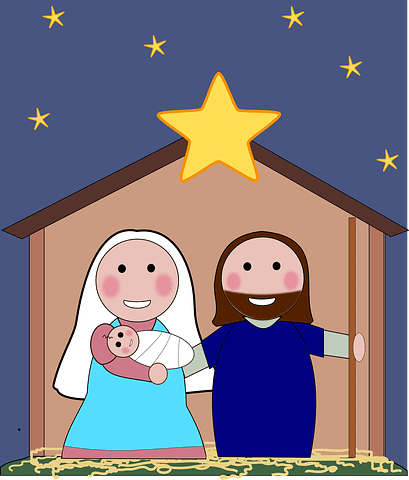 One of the most important elements of church doctrine has been Jesus’ virgin birth. (The miracle was conception, not birth, so it can more properly be called “the virginal conception.”) Jesus’ virgin birth is only mentioned in two New Testament (NT) gospels (Matthew 1.18- 25; Luke 1.26-38; 2.1-21). Together, they relate that Mary miraculously conceived in her womb by the power of the Holy Spirit, and she remained a virgin until Jesus was born.
Many Christians have believed that Jesus was God because of the miraculous nature of his conception. This view has been defended by some Christian scholars. For example, leading Evangelical theologian Alister McGrath asserts, “The way Jesus was conceived confirms … that Jesus is indeed both God and man.” And Roman Catholic theologian Gerald O’Collins explains, “Traditionally the major value of his virginal conception has been to express Jesus’ divine origin. The fact that he was born of a woman pointed to his humanity. The fact that he was born of a virgin pointed to his divinity.”
If Jesus’ virgin birth signifies that he was God or divine, it is surprising that neither Matthew nor Luke expressly state this in their birth narratives. And if Jesus was God, he must have preexisted. Yet no less of an authority on this subject than preeminent Roman Catholic NT exegete Raymond E. Brown concludes concerning these birth narratives, “Matthew and Luke show no knowledge of preexistence” of Jesus. Such silence strongly suggests that they did not believe that Jesus preexisted or that he was God.
An angel prophesied to Mary about Jesus’ birth, saying he “shall be called the Son of God” (Luke 1.35, cf. v. 32), not due to an ontological preexistence but a supernatural conception. Both this miracle and title merely signaled that Jesus would have a special relationship with God. Luke implies that Jesus’ conception being accomplished by God’s Spirit is a basis for identifying him as the Son of God. Reginald H. Fuller explains that Jesus is called “the Son of the Most High (God)” in this birth-pronouncement “because of the salvation he is to accomplish in history, not because of his inherent nature.”
Logically, the virgin birth cannot indicate that Jesus is God only because it was a miracle. Miracles can only indicate a supernatural source. God did a miracle by causing a virginal conception and birth; but that does not indicate the miracle itself is God.
Consider the first man, Adam. Accepting the two biblical accounts of his creation as literal (Genesis 2-3), Adam became a human being due to God’s direct creation, as Jesus did. Yet no one would claim that Adam’s supernatural origin indicates that he was God.
Many Christians have further insisted that the virgin birth is an essential element of Christian belief. Thus, they have contended that a person must believe in Jesus’ virgin birth in order to be a genuine Christian. Yet no such requirement exists in the NT. This silence is significant in the two recorded birth narratives, but even more so in the several evangelistic sermons and brief descriptions of sermons recorded in the book of Acts.
In fact, Jesus’ virgin birth is not even mentioned anywhere else in the NT, unless implicitly and sarcastically by Jesus’ opponents in John 8.41. Many scholars think that because the Apostle Paul died before the gospels of Matthew and Luke were published, Paul probably didn’t even know about the virgin birth. Regardless, N.T. Wright, who believes in the virgin birth, well observes, “The virginal conception of Jesus is not, in itself, a central, major doctrine of the New Testament.” Hans Kung likewise states that “belief in Christ in no way stands or falls with the confession of the virgin birth.”
In the Old Testament, Isaiah 7.14 has been a pivotal text in the debate about Jesus’ virgin birth. This verse is about the prophet Isaiah prophesying to King Ahaz, “Therefore the Lord Himself will give you a sign: Behold, a virgin will be with child and bear a son, and she will call His name Immanuel.” The Hebrew word here translated “virgin” is alma. There has been a long-running scholastic debate about whether alma here means “a virgin” or “a young, married woman.” Most contemporary scholars think the latter.
Matthew, in his birth narrative, quotes Isaiah 7.14 and explains Immanuel. It reads, “‘BEHOLD, THE VIRGIN SHALL BE WITH CHILD, AND SHALL BEAR A SON, AND THEY SHALL CALL HIS NAME IMMANUEL,’ which translated means, ‘GOD WITH US’” (Matthew 1.23).
The word Immanuel represents the joining of two Hebrew words: immanu and el. Since el is the shortened Hebrew form for “God” (elohim), some Christians have asserted that ascribing the title Immanuel to Jesus effectively identifies him as God.
On the contrary, calling Jesus “Immanuel” means only that God is present with his people through Jesus as his agent. It means what someone exclaimed when Jesus raised the widow’s dead son to life, that “God has visited His people” (Luke 7.16). And the Apostle Peter once preached that Jesus “went about doing good and healing” people because “God was with Him” (Acts 10.38). Jewish NT scholar Geza Vermes explains, “Jews would have known that the name Emmanuel (‘God is with us’) signified not the incarnation of God in human form, but a promise of divine help to the Jewish people.”
Most scholars who have written extensively that Jesus is God concede that Matthew 1.23 does not. Murray Harris explains, “Matthew is not saying, ‘Someone who is “God” is now physically with us,’ but ‘God is acting on our behalf in the person of Jesus.’”
Calling Jesus “Immanuel” is similar to the names of some OT saints. For example, Israel, Elijah, Elisha, Daniel, Michael, Ezekiel, and Joel contain el, meaning “God;” yet parents who so named their son did not deem it a declaration that their child was God.
In conclusion, Jesus’ virgin birth does not necessitate that he was more than a man. John A.T. Robinson is right, that Jesus “was totally and utterly a man—and had never been anything other than a man or more than a man,” so that he never was God.
…………….
To see a list of titles of 130+ posts (2-3 pages) that are about Jesus not being God in the Bible, with a few about God not being a Trinity, at Kermit Zarley Blog click “Chistology” in the header bar. Most are condensations of my book, The Restitution of Jesus Christ. See my website servetustheevangelical.com, which is all about this book, with reviews, etc. Learn about my books and purchase them at kermitzarley.com. I was a Trinitarian for 22 years before reading myself out of it in the Bible.
Previous Post

May 2, 2017
Does Jesus Say in John 6 He Literally "Came Down from Heaven?"
Next Post

May 4, 2017 Comey Was Wrong
Browse Our Archives
Select a Category Angels Billy Graham Blog Description Book Reviews Christian Living Christianity Christology Church History Current Events Deity of Christ? Disarmament Eschatology Evangelicalism Ezekiel 38-39 Film Reviews God Golf Gospel Harmonization Health History Holy Spirit Incarnation? Interview Islam Israeli-Palestinian Conflict Jesus Last Empire Literary Announcements Major Championship Winners Masters Monotheism My Books New Testament Old Testament Politics Primitive Weapons Ryder Cup Science Society of Biblical Literature The Bible The Restitution of Jesus Christ Trinitarianism Trinity? Uncategorized Unconditional Love? War on Terrorism
Select a Month October 2026 September 2026 August 2026 July 2026 June 2026 May 2026 April 2026 March 2026 February 2026 January 2026 December 2025 November 2025 October 2025 September 2025 August 2025 July 2025 June 2025 May 2025 April 2025 March 2025 February 2025 January 2025 December 2024 November 2024 October 2024 September 2024 August 2024 July 2024 June 2024 May 2024 April 2024 March 2024 February 2024 January 2024 December 2023 November 2023 October 2023 September 2023 August 2023 July 2023 June 2023 May 2023 April 2023 March 2023 February 2023 January 2023 December 2022 November 2022 October 2022 September 2022 August 2022 July 2022 June 2022 May 2022 April 2022 March 2022 February 2022 January 2022 December 2021 November 2021 October 2021 September 2021 August 2021 July 2021 June 2021 May 2021 April 2021 March 2021 February 2021 January 2021 December 2020 November 2020 October 2020 September 2020 August 2020 July 2020 June 2020 May 2020 April 2020 March 2020 February 2020 January 2020 December 2019 November 2019 October 2019 September 2019 August 2019 July 2019 June 2019 May 2019 April 2019 March 2019 February 2019 January 2019 December 2018 November 2018 October 2018 September 2018 August 2018 July 2018 June 2018 May 2018 April 2018 March 2018 February 2018 January 2018 December 2017 November 2017 October 2017 September 2017 August 2017 July 2017 June 2017 May 2017 April 2017 March 2017 February 2017 January 2017 December 2016 November 2016 October 2016 September 2016 August 2016 July 2016 June 2016 May 2016 April 2016 March 2016 February 2016 January 2016 December 2015 November 2015 October 2015 September 2015 August 2015 July 2015 June 2015 May 2015 April 2015 March 2015 February 2015 January 2015 December 2014 November 2014 October 2014 September 2014 July 2014 June 2014 May 2014 April 2014 March 2014 February 2014 January 2014 December 2013 November 2013 October 2013 September 2013 August 2013 July 2013 June 2013 May 2013 April 2013
Follow Us!
TAKE THE
Religious Wisdom Quiz
I am a day when the high priest enters the Most Holy Place once a year to make atonement. What day am I?
Select your answer to see how you score.
The Day of Trumpets The Day of Atonement The Sabbath Passover
Books by This Author Books by Kermit Zarley Blog
Related posts from Kermit Zarley Blog

The Nicene Creed's Birthplace Is Found Buried in...

God Is the Father Alone, and Jesus Is...

Did Jesus Literally Come Down from Heaven?
Today is the 1,700th Anniversary of the Nicene...
TRENDING AT PATHEOS Progressive Christian

When Halloween Unmasks Married Hearts
Written by Dr. David K. Ewen from Eternal Truth Bible College Behind...

Aristotle. He’s been called the father of logic, the father of the...

Methodist Central Hall and Westminster Abbey
Situated on the same square is Methodist Central Hall and Westminster Abbey. ...

57th Dove Awards Honor Dolly Parton, Crown New...
On gospel music’s biggest night, the 57th annual GMA Dove Awards honored...

The First Eucharistic Controversy: Christ’s Real Presence
For Catholics, the Eucharist is the source and summit of the Christian...

What a Stop Sign Can Teach Us About...
How to Make a Decision When You Can't Hear God Main point:...
view all Progressive Christian blogs
Ad-Free & Subscriber Log-In Subscription Support
- About Us
- 2026 Calendar
- Videos
- Podcasts
- Library of World Religions
- Faith In Media Tracker
- Advertise With Us
- Write for Us
- Privacy Policy
- Terms of Service
- Do Not Sell My Data
- Contact Us
- Radiant Digital
- Manage Newsletter Subscriptions
- Unsubscribe From Notifications
- Sitemap
Copyright 2008-2026, Patheos. All rights reserved.
Subscription Support Ad-Free & Subscriber Log-In
Follow Patheos