
BuddhistCatholicContemplativeEvangelicalGeneral ChristianHinduJewishLatter-day SaintMuslimNew VisionsProgressive Christian
Beliefs
- Buddhist
- Catholic
- Contemplative
- Evangelical
- General Christian
- Hindu
- Jewish
- Latter-day Saint
- More Voices
- Muslim
- New Visions
- Pagan
- Progressive Christian
Topics
- Religion News
- Food and Religion
- Sports and Religion
- Religious Art
- Religious Music and Entertainment
- Religious Events
- History and Religion
- Style and Religion
- Politics and Religion
- Women in Religion
- Recreation Outdoors and Religion
- Business Finance and Religion
- Careers Workplace and Religion
- Education and Religion
- Family Parenting and Religion
- Health Fitness and Religion
- Home and Religion
- Relationships and Religion
- Technology and Religion
- Travel and Religion
Columnists
- Buddhist Columnists
- Business Finance and Religion Columnists
- Careers Workplace and Religion Columnists
- Catholic Columnists
- Contemplative Columnists
- Education and Religion Columnists
- Evangelists Columnists
- Family Parenting and Religion Columnists
- General Christian Columnists
- Health Fitness and Religion Columnists
- Hindu Columnists
- History and Religion Columnists
- Home and Religion Columnists
- Jewish Columnists
- More Voices Columnists
- Latter Day Columnists
- Muslim Columnists
- New Visions Columnists
- Nonreligious Columnists
- Pagan Columnists
- Politics and Religion Columnists
- Progressive Columnists
- Recreation Outdoors and Religion Columnists
- Relationships and Religion Columnists
- Religion News Columnists
- Religious Art Columnists
- Religious Events Columnists
- Religious Music and Entertainment Columnists
- Sports and Religion Columnists
- Style and Religion Columnists
- Technology and Religion Columnists
- Travel and Religion Columnists
- Women in Religion Columnists
Resource Library
- 2026 Calendar
- Library of World Religions
- The 100 Most Holy Places on Earth
- Patheos Answers
- Podcasts
- Videos
- Faith Leaders Database
- Anglican Episcopalian
- Bahai
- Baptist
- Buddhism
- Christianity
- Confucianism
- Eastern Orthodoxy
- Hinduism
- Holiness and Pentecostal
- ISKCON
- Islam
- Judaism
- Lutheran
- Methodist
- The Church of Jesus Christ of Latter-day Saints
- New Age
- Paganism
- Presbytarian and Reformed
- Protestantism
- Religion Behind the Scenes
- Roman Catholic
- Scientology
- Shia Islam
- Sikhism
- Sufism
- Sunni Islam
- Taoism
- Zen
- See all religions
Research Tools
 Ad-Free & Subscriber Log-In Subscription Support
Ad-Free & Subscriber Log-In Subscription Support
Follow Patheos 

- Trending:
- Forgiveness
- |
- Marriage
- |
- Consciousness
- |
- Death Penalty
- |
- Election
- |
- Halloween

-
Categories
-
Christian Living
-
Christology
-
Golf
-
My Books
- Home
- Progressive Christian
- Religion News
- Is Jesus God or Subordinate to God?
Is Jesus God or Subordinate to God?
Last updated on: November 23, 2018 at 11:44 am by Kermit Zarley
Is Jesus God or Subordinate to God? 2018-11-23T11:44:53-07:00 Kermit Zarley
Patheos Explore the world's faith through different perspectives on religion and spirituality! Patheos has the views of the prevalent religions and spiritualities of the world.
The church doctrine of the Trinity says God is one essence existing as three co-equal and co-eternal Persons: the Father, the Son (Jesus Christ), and the Holy Spirit. But the New Testament (NT) repeatedly describes Jesus as subordinate to God to Father, which seems to conflict with them being equal. Some scholars label this a paradox. Raymond E. Brown acknowledges that “even in the New Testament works that speak of Jesus as God, there are also passages that seem to militate against such a usage.”
This apparent conflict is most evident in the Gospel of John. Traditionalists and others believe this gospel identifies Jesus as God more than perhaps the rest of the Bible. Therefore, some NT scholars refer to this apparent conflict as “the Johannine riddle.”
The Johannine Jesus indicates this subordination by claiming the Father sends him, empowers him, and gives him all authority in heaven and earth, including raising the dead and judging them. The paramount question is whether or not the Fourth Gospel portrays Jesus as essentially subordinate or functionally subordinate to the Father. According to the church doctrine of incarnation, Jesus could only have been the latter.
When the Johannine Jesus was accused of making himself equal with God (John 5.18), he vehemently denied it by revealing his essential subordination to the Father (vv. 19-47). He immediately said of himself, “the Son can do nothing of Himself, unless it is something He sees the Father doing; for whatever the Father does, these things the Son also does in like manner” (v. 19).* And he adds, “I can do nothing on My own initiative” (v. 30). He was referring to his having just healed the paralytic (vv. 8-9).
Closely associated with the subordination of the Son is his obedience to the Father. Yet Jesus being God and obeying God are incompatible concepts. Traditionalist C.K. Barrett explains, “It is simply intolerable that Jesus should be made to say, ‘I am God, the supreme God of the Old Testament, and being God I do as I am told.’”
If Jesus was essentially subordinate to the Father, then the Father was superior to Jesus. Indeed, the Johannine Jesus said, “the Father is greater than I” (John 14.28). The word in the Greek text here translated “greater” is meizon, meaning greater in rank and dignity. Obviously, such a difference between the Father and the Son does not accord well with the traditional view of their supposed equality.
Jesus’ subordination to God is related to his dependence upon God, which further indicates he could not have been God. For Jesus depended upon God’s Spirit in order to perform his miracles. The Apostle Peter preached, “Jesus the Nazarene, a man attested to you by God with miracles and wonders and signs which God performed through Him” (Acts 2.22). And Peter later preached likewise, “You know of Jesus of Nazareth, how God anointed Him with the Holy Spirit and with power, and how He went about doing good, and healing all who were oppressed by the devil; for God was with Him” (10.38). So, Peter attributes Jesus’ powers to God being with him, not Jesus being God.
The title applied to Jesus in the NT which signifies his subordination to the Father more than any other title is “servant.” Peter preached to Jews, “the God of our fathers, has glorified His servant Jesus,… For you first, God raised up His Servant, and sent Him to bless you” (Acts 3.13). And Jesus’ disciples later prayed to the Father, “Your holy servant Jesus, whom You anointed,” so that “signs and wonders take place through the name of Your holy servant Jesus” (4.27, 30).
Second century church fathers sometimes identified Jesus as God’s “servant” (Greek pais). But later fathers discontinued it. Joachim Jeremias observes that “the designation of Jesus as pais theou [servant of God] is found in Gentile Christian writings up to 170 CE only at 11 places and in three works…. From the 5th century pais disappears completely as a term for Christ…. To the Gentile Church it was offensive from the very first because it did not seem to bring out the full significance of the majesty of the glorified Lord.” Identifying Jesus as Servant clashed with the view that he is God. Yet the Quran says of him, “The Messiah does not disdain to be a servant of God” (4:172).
The Apostle Paul often relates in his NT letters the essential subordination of Christ to God. He says, “Christ belongs to God,” and “God is the head of Christ” (1 Corinthians 3.23; 11.3). Thus, Paul certainly would have said that God is greater than Christ.
Indeed, Paul further relates that it is God the Father “who is the blessed and only Sovereign” (1 Timothy 6.15). He explains that this will be demonstrated when the Father “will bring about at the proper time” Christ’s return to earth. If the Father is the “only Sovereign” (Greek monos dunastes), and Paul says this in relation to Christ and his second coming, then Christ cannot also be equal in sovereignty to the Father.
The signal signpost of Jesus’ essential subordination to God is Paul’s prophecy about Jesus’ final, revelatory act regarding the kingdom. Paul says of Jesus, “when He delivers up the kingdom to the God and Father,… then the Son Himself also will be subjected to the One who subjected all things to Him, that God may be all in all” (1 Corinthians 15.24, 28; cf. 1 Chronicles 29.11). Here is the ultimate act of subordination, and it is a voluntary one. Oscar Cullmann calls it “the key to all New Testament Christology.”
Jesus’ subordination to the Father is also seen in Paul’s prayers. After each salutation in his letters, he often adds that he gives thanks to God in prayer for those to whom he writes. Even though he occasionally appends Jesus’ name to his petitions and heartfelt thanks made in prayer, Paul relates his view about the Father’s essential preeminence over Jesus by always addressing these prayers solely to “God (the Father).”
In sum, Jesus’ essential subordination to the Father shows that Jesus was not God.
* All scripture quotations are taken from the New American Standard Bible.
See also “What Is the Subordination of the Son?”
…………….
To see a list of titles of 130+ posts (2-3 pages) that are about Jesus not being God in the Bible, with a few about God not being a Trinity, at Kermit Zarley Blog click “Chistology” in the header bar. Most are condensations of my book, The Restitution of Jesus Christ. See my website servetustheevangelical.com, which is all about this book, with reviews, etc. Learn about my books and purchase them at kermitzarley.com. I was a Trinitarian for 22 years before reading myself out of it in the Bible.
Previous Post

May 17, 2017
Is Jesus Yahweh?
Next Post
May 18, 2017 Is Jesus God If He Has a God?
Browse Our Archives
Select a Category Angels Billy Graham Blog Description Book Reviews Christian Living Christianity Christology Church History Current Events Deity of Christ? Disarmament Eschatology Evangelicalism Ezekiel 38-39 Film Reviews God Golf Gospel Harmonization Health History Holy Spirit Incarnation? Interview Islam Israeli-Palestinian Conflict Jesus Last Empire Literary Announcements Major Championship Winners Masters Monotheism My Books New Testament Old Testament Politics Primitive Weapons Ryder Cup Science Society of Biblical Literature The Bible The Restitution of Jesus Christ Trinitarianism Trinity? Uncategorized Unconditional Love? War on Terrorism
Select a Month October 2026 September 2026 August 2026 July 2026 June 2026 May 2026 April 2026 March 2026 February 2026 January 2026 December 2025 November 2025 October 2025 September 2025 August 2025 July 2025 June 2025 May 2025 April 2025 March 2025 February 2025 January 2025 December 2024 November 2024 October 2024 September 2024 August 2024 July 2024 June 2024 May 2024 April 2024 March 2024 February 2024 January 2024 December 2023 November 2023 October 2023 September 2023 August 2023 July 2023 June 2023 May 2023 April 2023 March 2023 February 2023 January 2023 December 2022 November 2022 October 2022 September 2022 August 2022 July 2022 June 2022 May 2022 April 2022 March 2022 February 2022 January 2022 December 2021 November 2021 October 2021 September 2021 August 2021 July 2021 June 2021 May 2021 April 2021 March 2021 February 2021 January 2021 December 2020 November 2020 October 2020 September 2020 August 2020 July 2020 June 2020 May 2020 April 2020 March 2020 February 2020 January 2020 December 2019 November 2019 October 2019 September 2019 August 2019 July 2019 June 2019 May 2019 April 2019 March 2019 February 2019 January 2019 December 2018 November 2018 October 2018 September 2018 August 2018 July 2018 June 2018 May 2018 April 2018 March 2018 February 2018 January 2018 December 2017 November 2017 October 2017 September 2017 August 2017 July 2017 June 2017 May 2017 April 2017 March 2017 February 2017 January 2017 December 2016 November 2016 October 2016 September 2016 August 2016 July 2016 June 2016 May 2016 April 2016 March 2016 February 2016 January 2016 December 2015 November 2015 October 2015 September 2015 August 2015 July 2015 June 2015 May 2015 April 2015 March 2015 February 2015 January 2015 December 2014 November 2014 October 2014 September 2014 July 2014 June 2014 May 2014 April 2014 March 2014 February 2014 January 2014 December 2013 November 2013 October 2013 September 2013 August 2013 July 2013 June 2013 May 2013 April 2013
Follow Us!
TAKE THE
Religious Wisdom Quiz
True or False: Ezekiel saw a vision of a valley of dry bones that came to life.
Select your answer to see how you score.
TRUE FALSE
Books by This Author Books by Kermit Zarley Blog
Related posts from Kermit Zarley Blog

The Nicene Creed's Birthplace Is Found Buried in...

God Is the Father Alone, and Jesus Is...
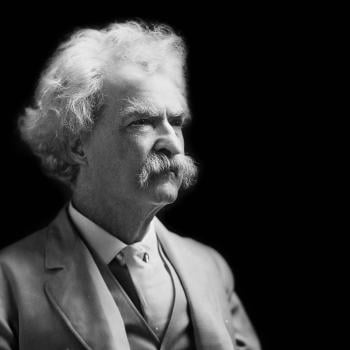
Mark Twain Advised the Questioning of Majority Opinion

Did Jesus Literally Come Down from Heaven?
TRENDING AT PATHEOS Progressive Christian

Letters on Living the Faith by C.S. Lewis
Most of us met C.S. Lewis as a public intellectual. Mere Christianity....

When Halloween Unmasks Married Hearts
Written by Dr. David K. Ewen from Eternal Truth Bible College Behind...

Aristotle. He’s been called the father of logic, the father of the...

Methodist Central Hall and Westminster Abbey
Situated on the same square is Methodist Central Hall and Westminster Abbey. ...

57th Dove Awards Honor Dolly Parton, Crown New...
On gospel music’s biggest night, the 57th annual GMA Dove Awards honored...

The First Eucharistic Controversy: Christ’s Real Presence
For Catholics, the Eucharist is the source and summit of the Christian...
view all Progressive Christian blogs
Ad-Free & Subscriber Log-In Subscription Support
- About Us
- 2026 Calendar
- Videos
- Podcasts
- Library of World Religions
- Faith In Media Tracker
- Advertise With Us
- Write for Us
- Privacy Policy
- Terms of Service
- Do Not Sell My Data
- Contact Us
- Radiant Digital
- Manage Newsletter Subscriptions
- Unsubscribe From Notifications
- Sitemap
Copyright 2008-2026, Patheos. All rights reserved.
Subscription Support Ad-Free & Subscriber Log-In
Follow Patheos