
BuddhistCatholicContemplativeEvangelicalGeneral ChristianHinduJewishLatter-day SaintMuslimNew VisionsProgressive Christian
Beliefs
- Buddhist
- Catholic
- Contemplative
- Evangelical
- General Christian
- Hindu
- Jewish
- Latter-day Saint
- More Voices
- Muslim
- New Visions
- Pagan
- Progressive Christian
Topics
- Religion News
- Food and Religion
- Sports and Religion
- Religious Art
- Religious Music and Entertainment
- Religious Events
- History and Religion
- Style and Religion
- Politics and Religion
- Women in Religion
- Recreation Outdoors and Religion
- Business Finance and Religion
- Careers Workplace and Religion
- Education and Religion
- Family Parenting and Religion
- Health Fitness and Religion
- Home and Religion
- Relationships and Religion
- Technology and Religion
- Travel and Religion
Columnists
- Buddhist Columnists
- Business Finance and Religion Columnists
- Careers Workplace and Religion Columnists
- Catholic Columnists
- Contemplative Columnists
- Education and Religion Columnists
- Evangelists Columnists
- Family Parenting and Religion Columnists
- General Christian Columnists
- Health Fitness and Religion Columnists
- Hindu Columnists
- History and Religion Columnists
- Home and Religion Columnists
- Jewish Columnists
- More Voices Columnists
- Latter Day Columnists
- Muslim Columnists
- New Visions Columnists
- Nonreligious Columnists
- Pagan Columnists
- Politics and Religion Columnists
- Progressive Columnists
- Recreation Outdoors and Religion Columnists
- Relationships and Religion Columnists
- Religion News Columnists
- Religious Art Columnists
- Religious Events Columnists
- Religious Music and Entertainment Columnists
- Sports and Religion Columnists
- Style and Religion Columnists
- Technology and Religion Columnists
- Travel and Religion Columnists
- Women in Religion Columnists
Resource Library
- 2026 Calendar
- Library of World Religions
- The 100 Most Holy Places on Earth
- Patheos Answers
- Podcasts
- Videos
- Faith Leaders Database
- Anglican Episcopalian
- Bahai
- Baptist
- Buddhism
- Christianity
- Confucianism
- Eastern Orthodoxy
- Hinduism
- Holiness and Pentecostal
- ISKCON
- Islam
- Judaism
- Lutheran
- Methodist
- The Church of Jesus Christ of Latter-day Saints
- New Age
- Paganism
- Presbytarian and Reformed
- Protestantism
- Religion Behind the Scenes
- Roman Catholic
- Scientology
- Shia Islam
- Sikhism
- Sufism
- Sunni Islam
- Taoism
- Zen
- See all religions
Research Tools
 Ad-Free & Subscriber Log-In Subscription Support
Ad-Free & Subscriber Log-In Subscription Support
Follow Patheos 

- Trending:
- Forgiveness
- |
- Marriage
- |
- Consciousness
- |
- Death Penalty
- |
- Election
- |
- Halloween

-
Categories
-
Christian Living
-
Christology
-
Golf
-
My Books
- Home
- Progressive Christian
- Religion News
- 500 Years Since Martin Luther Hatched His Protestant Plot with 95 Theses
500 Years Since Martin Luther Hatched His Protestant Plot with 95 Theses
Last updated on: May 14, 2017 at 8:11 pm by Kermit Zarley
500 Years Since Martin Luther Hatched His Protestant Plot with 95 Theses 2017-05-14T20:11:27-07:00 Kermit Zarley
Patheos Explore the world's faith through different perspectives on religion and spirituality! Patheos has the views of the prevalent religions and spiritualities of the world.
This year will be the 500th anniversary of the Protestant Reformation. This Fall, it will be 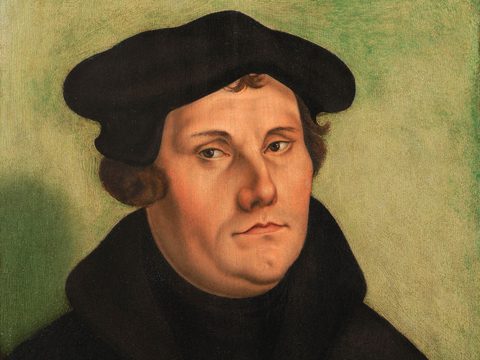 a major celebration in Europe and much of the western world. A guy named Martin Luther started this protest movement against the Roman Catholic Church of the Holy Roman Empire that forever split the church. Yet Luther was a priest in this church.
Martin Luther has been one of the world’s most significant figures. He was born in 1483 in Eisleben, Saxony, in what is now Germany. Martin came from a Catholic family of ten. At thirteen years of age, he began attending a Catholic school in Magdeburg that was operated by The Brethren of the Common Life. That’s where young Martin learned personal piety and grew interested in the monastic life of his church.
But Martin Luther’s father was a successful businessmen who planned for his son Martin to be a lawyer. So, according to his father’s wishes, young Martin withdrew from the school at Magdeburg in 1501, enrolled in Germany’s most prestigious school, the University of Erfurt, and graduated from there with a Master’s degree in 1505.
In July that year, Martin Luther was caught in a violent rainstorm that threatened his life. He was struck by lightning bolt that knocked him to the ground. He immediately prayed earnestly that if God would spare his life, he would become a monk. Martin survived the ordeal without harm and kept his vow. Only days later, he enrolled in an Augustinian monastery. After that, Martin Luther always regarded that lightning bolt from the sky above as a sign sent from God. Likewise, twelve years later Mr. Martin Luther would become a metaphorical bolt of lightning to his church.
So, Martin Luther became an Augustinian priest. Yet he continued to study at the University of Erfurt in Wittenburg. In 1512, Martin achieved his doctorate and became a professor of biblical studies at his school. He remained in relative obscurity for the next five years, continuing his studies, teaching, and supposedly being a humble monk.
But on October 31, 1517, Martin Luther started the Protestant Reformation when he nailed a document that he had written to the door of the Wittenburg Catholic Church. Little known is the legend that he conceived of his pro testant plot while seated on the pot taking a, well, you know the rest.
During this period of time, the Bible was becoming known to the people for the first time. Back in about 1440, German Johannes Gutenberg had invented the printing press. In 1516, Dutch humanist scholar Erasmus used it to publish his compiled Greek New Testament, which later became known as Textus Receptus. This first publication of the Greek New Testament had a major impact on biblical studies, and no less on Martin Luther. He eventually translated the Bible into German using the second edition of Textus Receptus (1519) to translate his German New Testament, which was published in 1522. For nearly the next 400 years, Textus Receptus was the sole text in Protestantism for translating the New Testament into other languages.
Erasmus and Luther were the two most influential Catholic scholars of their time, and they had similar upbringings. Both learned Latin and Greek at young ages. Both soon learned to appreciate piety and the necessity of a personal relationship with God from being schooled by The Brethren of the Common Life.
But the direction of the lives of Erasmus and Luther were the opposite respecting the Church (=RCC). Although both objected to its clerical abuses such as indulgences, with which Luther really launched his revolution, Erasmus always remained faithful to the Church, trying to affect positive change from within.
For instance, Erasmus always said he never disagreed with the Church’s doctrinal teaching. He even affirmed its transubstantiation teaching of the Eucharist, with which Luther strongly disagreed. And Erasmus never spoke ill publicly of Catholic clergy.
Luther, on the other hand, often identified Catholic popes, or the papacy itself, as “the beast” or “Antichrist” depicted in the book of Revelation in the New Testament. And Luther characterized the Roman Catholic Church as “Babylon the Great, mother of harlots and abominations of the earth” (Rev. 17.5). This is somewhat understandable since, when Luther started his rupture with the Church, its officials often directed their Inquisitors of Inquisition fame to try to capture Martin Luther so the Church could try him before a court and get him executed. Thus, during those early years Martin Luther was sometimes on the run, with his friends protecting him.
In contrast, Erasmus dedicated Textus Receptus to Pope Leo X, calling him a “patron of learning.” Luther fully embraced Augustine’s two main teachings: (1) the centrality of the Bible, and (2) humans cannot achieve salvation by their works, but only by God’s grace that he interpreted as unconditional predestination of people.
Thus, in 1526 Luther wrote to Erasmus, his elder by seventeen years, declaring, “free will does not exist.” That’s because Erasmus had always endorsed free will as taught by the Church. This, and Erasmus’ refusal to join the Lutheran wing of the Protestant Reformation, angered Luther and caused him to write one of his primary works–On the Bondage of the Will. In this book, Luther even declares that Erasmus is not a Christian. Yet Erasmus respected Luther, once calling him “a mighty trumpet of gospel truth.” And Luther admired Erasmus’ for his prestigious knowledge. Erasmus was known for his religious toleration, whereas Luther created a firestorm wherever he went. Maybe it was due to that lightning bolt that struck him.
Luther’s “95 Theses” consisted of 95 points, sometimes arranged as questions rather than being accusatory. The main thrust of this document was to criticize the Church for abusing indulgences. Luther’s main contention was that God’s salvation comes through repentance and faith alone, thus not through good works as the Church taught. In fact, when Luther translated his German New Testament, he added the word “alone” after the Apostle Paul’s word “faith” in the book of Romans that reads, “For we hold that a person is justified by faith apart from works prescribed by the law” (Romans 2.28). This was one of Martin’s favorite Bible texts he cited in support of justification by faith.
This was the primary doctrine of the Protestant Reformation–salvation by faith alone. But there was controversy, especially from the Roman Catholic Church, that true faith must be accompanied by works of righteousness or else it isn’t true faith. The primary biblical support for this assertion is by Jesus’ brother James. He writes, “a person is justified by works, and not by faith alone” (James 2.24; some versions translate monon “only”). In this case, the word “alone” is in the Greek text. James adds, “faith without works is dead” (v. 26). Since Martin Luther could not reconcile his view of “works” in Romans with what James says here, Luther deemed this letter of James “a right strawy epistle.” He also suggested that maybe it should not be in the canon.
This controversy–about how to receive God’s salvation–was highly disputed between Protestants and Catholics for centuries. Protestants generally understood the biblical expression “works of the law,” which appears six times in Paul’s two letters to the Roman and Galatian believers, as righteous acts. But during the twentieth century, these two foremost Christian bodies entered into years of dialogue meetings. Surprisingly, the outcome was peace. A document was signed between them admitting fault on both sides and that they now agree about how to obtain salvation.
Plus, a new scholastic viewpoint has risen in recent decades called The New Perspective on Paul. It alleges that the Apostle Paul has been misunderstood regarding his use of the expression “works of the law.” I think these scholars are convincing in claiming that Paul does not always use the word “works” in the same manner. They contend that he often uses it to refer to rituals in Judaism, such as male circumcision, animal sacrifices, and treating certain days as holy, just as Paul says in his Galatians letter. Accordingly, that is what Paul means by writing, “we know that a person is justified not by the works of the law but through faith in Jesus Christ” (Galatians 2.16).
With this understanding, Paul does not disagree with James at all. In fact, along with all of Paul’s teaching about the works of the law, he also says those who are justified by faith will live by the Spirit (e.g., Romans 8.4, 9). Paul cuts off the argument that his teaching encourages antinomianism. For he says, “Now the works of the flesh are obvious: fornication, impurity, licentiousness, idolatry, sorcery, enmities,” etc., “those who do such things will not inherit the kingdom of God ” (Galatians 5.19-21). He says rather that such people “have fallen away from grace” (v. 4). Paul adds, “the only thing that counts is faith working through love” v. 5).
Several of Luther’s 95 Theses are about the misuse of indulgences by Catholic clerics. That was the primary reason he pounded his nail into the door at Wittenburg. Indulgences were money payments people made to the Church in order for its clerics to forgive certain confessed sins they had committed. Yes, the Church actually sunk that low. Vatican II has helped a lot, but apparently the Church still has not totally revived.
This week, I was eating lunch at a restaurant, sitting outside in Phoenix, Arizona, enjoying the warm sunshine. Two students from a Roman Catholic high school near my home walked up, stopped, and asked me if they could ask me some questions and videotape it for a school project. I assented. They did a good job, asking questions that included some theology. One was that they asked how I felt about the Catholic Church providing salvation. I answered that I believe the Church can’t do that but can truthfully tell us how to obtain salvation, which is by believing in Jesus dying for our sins on the cross. Of course, the Catholic Church is most well known for its focus on physical crucifixes, symbolizing Jesus death on the cross. Many Catholics wear one on a chain around their necks. When I said that, the faces of these students–a Caucasian boy and an Asian girl–became joyfully animated. Then both of them said they thought that was an interesting perspective. All of this was being taped for their class to watch.
That is what Martin Luther would have told these students, and it’s in his 95 Theses.
Previous Post
May 13, 2017
Palestinians Must Find Another Two-State Solution
Next Post

May 14, 2017 Si Woo Kim Wins the 2017 Players Championship
Browse Our Archives
Select a Category Angels Billy Graham Blog Description Book Reviews Christian Living Christianity Christology Church History Current Events Deity of Christ? Disarmament Eschatology Evangelicalism Ezekiel 38-39 Film Reviews God Golf Gospel Harmonization Health History Holy Spirit Incarnation? Interview Islam Israeli-Palestinian Conflict Jesus Last Empire Literary Announcements Major Championship Winners Masters Monotheism My Books New Testament Old Testament Politics Primitive Weapons Ryder Cup Science Society of Biblical Literature The Bible The Restitution of Jesus Christ Trinitarianism Trinity? Uncategorized Unconditional Love? War on Terrorism
Select a Month October 2026 September 2026 August 2026 July 2026 June 2026 May 2026 April 2026 March 2026 February 2026 January 2026 December 2025 November 2025 October 2025 September 2025 August 2025 July 2025 June 2025 May 2025 April 2025 March 2025 February 2025 January 2025 December 2024 November 2024 October 2024 September 2024 August 2024 July 2024 June 2024 May 2024 April 2024 March 2024 February 2024 January 2024 December 2023 November 2023 October 2023 September 2023 August 2023 July 2023 June 2023 May 2023 April 2023 March 2023 February 2023 January 2023 December 2022 November 2022 October 2022 September 2022 August 2022 July 2022 June 2022 May 2022 April 2022 March 2022 February 2022 January 2022 December 2021 November 2021 October 2021 September 2021 August 2021 July 2021 June 2021 May 2021 April 2021 March 2021 February 2021 January 2021 December 2020 November 2020 October 2020 September 2020 August 2020 July 2020 June 2020 May 2020 April 2020 March 2020 February 2020 January 2020 December 2019 November 2019 October 2019 September 2019 August 2019 July 2019 June 2019 May 2019 April 2019 March 2019 February 2019 January 2019 December 2018 November 2018 October 2018 September 2018 August 2018 July 2018 June 2018 May 2018 April 2018 March 2018 February 2018 January 2018 December 2017 November 2017 October 2017 September 2017 August 2017 July 2017 June 2017 May 2017 April 2017 March 2017 February 2017 January 2017 December 2016 November 2016 October 2016 September 2016 August 2016 July 2016 June 2016 May 2016 April 2016 March 2016 February 2016 January 2016 December 2015 November 2015 October 2015 September 2015 August 2015 July 2015 June 2015 May 2015 April 2015 March 2015 February 2015 January 2015 December 2014 November 2014 October 2014 September 2014 July 2014 June 2014 May 2014 April 2014 March 2014 February 2014 January 2014 December 2013 November 2013 October 2013 September 2013 August 2013 July 2013 June 2013 May 2013 April 2013
Follow Us!
TAKE THE
Religious Wisdom Quiz
Who was the slave who became a Christian and whose master was Philemon?
Select your answer to see how you score.
Onesimus Tychicus Sosthenes Barnabas
Books by This Author Books by Kermit Zarley Blog
Related posts from Kermit Zarley Blog
What Is "Easy Believism" that Is Rampant in...

New Book Affirms John's Gospel Is Historically Reliable
Christianity Is Growing in Communist China
Sir Isaac Newton's Non-Arian Theological Beliefs
TRENDING AT PATHEOS Progressive Christian

A new article, written by Jeff Lindsay and Gale L. Pooley,...

Swimfan: Forgotten Aughts Pleasures
This is a recovery effort. In 2002, My Big Fat Greek Wedding...

Top Three Anti-Catholic Lies About Catholicism
This is my initial transcript for the video, "THE 3 WORST...

Pope Leo Celebrates Mass for Nurses & Docs...
I don't have any idea how he did it, but Pope Leo...

The Sermon on the Mount, Part I: Matthew...
The Sermon on the Mount, Part I (Matthew 4:12-5:12) St. Matthew moves...

What's up from Crossway: Reviewing some of their latest A few weeks...
view all Progressive Christian blogs
Ad-Free & Subscriber Log-In Subscription Support
- About Us
- 2026 Calendar
- Videos
- Podcasts
- Library of World Religions
- Faith In Media Tracker
- Advertise With Us
- Write for Us
- Privacy Policy
- Terms of Service
- Do Not Sell My Data
- Contact Us
- Radiant Digital
- Manage Newsletter Subscriptions
- Unsubscribe From Notifications
- Sitemap
Copyright 2008-2026, Patheos. All rights reserved.
Subscription Support Ad-Free & Subscriber Log-In
Follow Patheos