
BuddhistCatholicContemplativeEvangelicalGeneral ChristianHinduJewishLatter-day SaintMuslimNew VisionsProgressive Christian
Beliefs
- Buddhist
- Catholic
- Contemplative
- Evangelical
- General Christian
- Hindu
- Jewish
- Latter-day Saint
- More Voices
- Muslim
- New Visions
- Pagan
- Progressive Christian
Topics
- Religion News
- Food and Religion
- Sports and Religion
- Religious Art
- Religious Music and Entertainment
- Religious Events
- History and Religion
- Style and Religion
- Politics and Religion
- Women in Religion
- Recreation Outdoors and Religion
- Business Finance and Religion
- Careers Workplace and Religion
- Education and Religion
- Family Parenting and Religion
- Health Fitness and Religion
- Home and Religion
- Relationships and Religion
- Technology and Religion
- Travel and Religion
Columnists
- Buddhist Columnists
- Business Finance and Religion Columnists
- Careers Workplace and Religion Columnists
- Catholic Columnists
- Contemplative Columnists
- Education and Religion Columnists
- Evangelists Columnists
- Family Parenting and Religion Columnists
- General Christian Columnists
- Health Fitness and Religion Columnists
- Hindu Columnists
- History and Religion Columnists
- Home and Religion Columnists
- Jewish Columnists
- More Voices Columnists
- Latter Day Columnists
- Muslim Columnists
- New Visions Columnists
- Nonreligious Columnists
- Pagan Columnists
- Politics and Religion Columnists
- Progressive Columnists
- Recreation Outdoors and Religion Columnists
- Relationships and Religion Columnists
- Religion News Columnists
- Religious Art Columnists
- Religious Events Columnists
- Religious Music and Entertainment Columnists
- Sports and Religion Columnists
- Style and Religion Columnists
- Technology and Religion Columnists
- Travel and Religion Columnists
- Women in Religion Columnists
Resource Library
- 2026 Calendar
- Library of World Religions
- The 100 Most Holy Places on Earth
- Patheos Answers
- Podcasts
- Videos
- Faith Leaders Database
- Anglican Episcopalian
- Bahai
- Baptist
- Buddhism
- Christianity
- Confucianism
- Eastern Orthodoxy
- Hinduism
- Holiness and Pentecostal
- ISKCON
- Islam
- Judaism
- Lutheran
- Methodist
- The Church of Jesus Christ of Latter-day Saints
- New Age
- Paganism
- Presbytarian and Reformed
- Protestantism
- Religion Behind the Scenes
- Roman Catholic
- Scientology
- Shia Islam
- Sikhism
- Sufism
- Sunni Islam
- Taoism
- Zen
- See all religions
Research Tools
 Ad-Free & Subscriber Log-In Subscription Support
Ad-Free & Subscriber Log-In Subscription Support
Follow Patheos 

- Trending:
- Forgiveness
- |
- Marriage
- |
- Consciousness
- |
- Death Penalty
- |
- Election
- |
- Halloween

-
Categories
-
Christian Living
-
Christology
-
Golf
-
My Books
- Home
- Progressive Christian
- Religion News
- Saint Peter Did Not Believe Jesus Was God
Saint Peter Did Not Believe Jesus Was God
Last updated on: November 23, 2018 at 11:53 am by Kermit Zarley
Saint Peter Did Not Believe Jesus Was God 2018-11-23T11:53:09-07:00 Kermit Zarley
Patheos Explore the world's faith through different perspectives on religion and spirituality! Patheos has the views of the prevalent religions and spiritualities of the world.
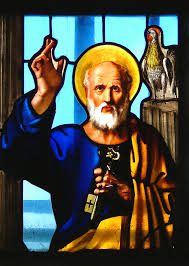 If you could have told Saint Peter that Jesus is God, I think he would have said something like, “you’re nuts”! Just read about Peter in the New Testament (NT) gospels, the early portion of the book of Acts, and the two NT letters attributed to his authorship. If you can read this literature with some objectivity, you may see what I’m saying.
Let’s start with the first place in the NT gospels where Jesus’ identity surfaces among his chosen apostles. It was when Jesus took them to Caesarea Philippi, and asked them, “‘Who do people say that the Son of Man is?’ And they said, ‘Some say John the Baptist, but others say Elijah, and still others Jeremiah or one of the prophets.’ He said to them, ‘But who do you say that I am?'” (Matt. 16.13-15 NRSV and throughout unless noted otherwise). Notice in this Matthean account that Jesus clearly identifies himself as “the Son of Man.”
Then we read next, “Simon Peter answered, ‘You are the Messiah, the Son of the living God'” (Matt. 16.16). Now, all three synoptists (Matthew, Mark, and Luke) record this pericope. If Peter had believed at this point in Jesus’ public ministry–which was perhaps about halfway through that approximately three-year period–that Jesus was God, surely Peter would have thought it important to include this in his confession. Wouldn’t you have done so if you were in Peter’s shoes? I’m pretty sure I would have.
For those who think Peter did say here that Jesus was God, by calling him the Son of God, for those poor folks there is no hope! Just kidding. No, Jesus or Peter identifying Jesus as “the Son (of God)” does not indicate Jesus is God, no matter how much church fathers or church pastors have said so. (See my post, “Is Jesus God Because He Is the Son of God?“) The Old Testament calls angels, men, the king of Israel, and Israel itself “Son/son (of God).” This use of Son/son in the OT can be no different in the NT. It merely means that person or Israel has a special relationship with God. Furthermore, in the NT, Paul calls Christians “sons of God” (Galatians 3.26). The KJV and NRSV have “children” here, which is wrong. The Greek text has huioi, which is rightly translated “sons” in the NASB, NIV, and ESV.
This is such an important point since church fathers established the precept officially at the Nicene Council of 325 that Jesus is “very God of very God.” It’s in their Nicene Creed. The main reason most Christians believe Jesus is God is they were taught he is the Son of God, since if a man has a son, that son becomes a man; thus God’s Son must likewise be God. That, folks, is metaphysical reasoning borrowed from prevalent Greek philosophy in their Hellenistic world. Those church fathers certainly didn’t get that from their Bibles, much less the Jews.
Moreover, this is confirmed in what Matthew writes next: “Then he sternly ordered the disciples not to tell anyone that he was the Messiah” (Matt. 16.20). So, for Matthew to say this, he obviously believed that in Peter’s confession the two titles Messiah and Son of God are interchangeable, thus pretty much meaning the same thing. See also Caiaphas’ question to Jesus at the interrogation of him: “tell us if you are the Messiah, the Son of God” (Matt. 26.63). In fact, most distinguished, NT scholars, even Trinitarians, now say Messiah and Son of God mean the same.
Apparently, soon after Jesus had this conversation with Peter–to which only Matthew adds important detail in Matt. 16.17-19–we read in all three synoptics that Jesus told his disciples expressly for the first time, in no uncertain language, that “he must go to Jerusalem and undergo great suffering at the hands of the elders and chief priests and scribes, and be killed, and on the third day be raised” (v. 21).
Then Matthew adds, “Peter took him [Jesus] aside and began to rebuke him, saying, ‘God forbid it, Lord! This must never happen to you'” (Matt. 16.22). Now, pray tell me, if Peter had believed at that moment that Jesus was God, would Peter have done such a crazy stunt? NO WAY!!! Peter believed like all religious Jews who thought a special Messiah/Christ (=anointed one) would someday come to redeem Israel. Peter believed this Messiah would be a human being and no more, perhaps endowed with special powers from God, but still no more than a human being.
Now, I get criticized by some readers of my book, The Restitution of Jesus Christ (available at kermitzarley.com) wherein I say Jesus was no more than human. Since he exercised supernatural powers, they want to say more about his identity than that. But folks, you cannot support that from the Bible. Moreover, what Peter did here militates against it. Peter thought Jesus was a human being and no more, not man and angel, not man and God, or something in between. No, Peter thought Jesus was a man, and that was it. But Peter and the apostles thought God certainly empowered Jesus in order for him to do all those many miracles. But neither that, nor his Virgin Birth, nor his impending resurrection from the dead indicates that Jesus was God.
Moreover, I think Jesus was more human than we are. Look at the book of Daniel. God likens the kingdoms of men to beasts. Or how about the book of Revelation, in which worshippers of the yet future Antichrist and God call him “the beast.” Mark these words: Jesus was a human being par excellence as God intended humans to be when he first made them. But then came the Fall, and you know the rest. Ever since, God looks at the rest of us humans, besides Jesus, as subpar, “cracked icons” as my friend Professor Scot McKnight writes in his book Embracing Grace. God is in the business of restoring us who believe in him and his Son into fully human people and thus no longer part human and part beast, such as with a “heart of stone” (Eze. 36.26; cf. Jer. 31.33).
But let’s move on through the NT regarding this subject and the Apostle Peter. Another time, Jesus taught metaphorically that he had come down from heaven like the manna that came down from the sky for the starving Israelites in the wilderness (John 6). He also said then, “those who eat my body and drink my blood have eternal life” (v. 54). Some of his listeners objected. Then we read, “Because of this many of his disciples turned back and no longer went about with him. So Jesus asked the twelve, ‘Do you also wish to go away?’ Simon Peter answered him, ‘Lord, to whom can we go? You have the words of eternal. We have come to believe and know that you are the Holy One of God'” (vv. 66-69). Again, Peter was not saying Jesus was God but that he belongs to God.
And look at how Peter concludes the salutation in his first NT letter. He says, “Blessed be the God and Father of our Lord Jesus Christ!” (1 Peter 1.3). Peter does three things here: (1) he distinguishes between God and Jesus as two separate persons, which Peter does often in the NT; (2) he identifies God exclusively as “the Father,” so that Jesus cannot also be God; and (3) he says Jesus has a God, who is the Father. Neither Peter nor any person or writer of the NT says the Father has a God. Rather, Jesus has a God, who is the Father, and his God-Father is Almighty God, thus more mighty than Jesus.
Now, for those who think Jesus’ resurrection from the dead proved that he is God, let’s see what Peter had to say about that matter. When Peter saw, talked to, and perhaps touched the risen Jesus, if he had then believed that Jesus was God, surely Peter would have afterwards declared this about Jesus more than anything else. Well, Peter was the spokesperson for the apostles on the Day of Pentecost, only ten days after the risen Jesus ascended to heaven. The Holy Spirit came upon the disciples and they spoke with tongues, that is, in languages they did not know (Acts 2.1-13). Peter then delivered his first sermon. It was to thousands of Jews attending the feast. He proclaimed, “You that are Israelites, listen to what I have to say: Jesus of Nazareth, a man attested to you by God with deeds of power, wonders, and signs that God did through him among you, as you yourselves know” etc. (v. 22). So, Peter said Jesus was “a man attested … by God” with deeds “God did through him.”
Likewise, some time later, Peter preached the gospel to the Roman Cornelius and his household, saying, “God anointed Jesus of Nazareth with the Holy Spirit and with power; how he went about doing good and healing all who were oppressed by the devil, for God was with him” (Acts 10.38).
So, Jesus did not do those supernatural acts by some innate power that was part of his own nature, and certainly not because he was God, thus with a divine nature. Proof of this is that the Johannine Jesus earlier was accused of “making himself equal with God” (John 5.18). He denied it by saying, “Very truly I tell you, the Son can do nothing on his own, but only what he sees the Father doing” (v. 19, cf. v. 30). So, Jesus is here saying that he does not do miracles by some divine nature that is part of his being. In a lengthy rebuttal (vv. 19-46), he called the Father “the one who alone is God” (v. 44). Later, the Johannine Jesus explained, “The Father is greater than I” (14.28).
There is no getting around this, friends; Jesus is inferior to God the Father, who alone is Almighty God, because Jesus is no more than a man. Granted, Jesus was conceived supernaturally, thus there was the Virgin Birth. But that does not make him more than a man. Adam, the first man, did not have a natural birth either, being created from the dust of the ground; but that did not make him God or a god.
Some may say, what difference does all this make? It makes a whole lot of difference to people like me. I was a Christian for five years before I was taught the church doctrine of the Trinity and therefore that Jesus is God. I believed it for the next 22 years. I was a devout Evangelical Christian conducting Christian ministry as a full-time professional golfer on the regular PGA Tour. Then in my last full-time year on the regular Tour, 1982, I read myself out of Trinitarianism in the Bible.
I knew what I was getting into because I knew something about the church history on this matter. The post-apostolic Catholic Church–at Nicea in 325 from which came the Nicene Creed–said you must believe Jesus is God to be a Christian. In giving up the so-called “deity of Christ,” my church and many of my Christian friends, including those with whom I was involved in ministry, would reject me as a true Christian or at the very least brand me as some kind of heretic.
But I made the decision to go with God because I believed he is the One who revealed this to me. It has not been easy. Jesus didn’t say it would be. Instead, he said, “follow me,” and he went to cross. I have suffered rejection from many people who I believe to be my brethren in God and Christ. They simply have not seen the light yet on this subject. Most probably they never will until they get to glory. My job is to love them, but still hold fast to God and Christ as I understand them.
One more thing about what difference does all this make. I believe post-apostolic church fathers somewhat changed the gospel. I still think, and always will, that you can be a Trinitarian and still be a born-again Christian. (See my post, “Can Genuine Christians Be Trinitarian or Non-Trinitarian?“) Yet I believe Trinitarianism looks like the worship of three Gods/gods, just as Jews and Muslims allege, even though Trinitarians vehemently deny this and claim to worship one God. It’s just that Trinitarians do not see God and Jesus as fully as the Bible presents them. Making God out to be a trinity of persons, so that Jesus is God/deity/divine, somewhat ruins the gospel. How so?
Jesus was “a man attested … by God” as Peter preached. Our loving God sent Jesus to be our Savior, to save us from the condemnation of our sins, which results in eternal separation from God. Jesus bridged the gulf between us sinners and God. He provided “the way” for our salvation (John 14.6). He triumphed in this so difficult task that God gave him to do. And because of Jesus’ victory, God makes him the head of the human race. He is the Lamb of God who overcame the world as the book of Revelation declares repeatedly. He will be the king of king and lord of lords forevermore.
Jesus was no more than a man, thus not a preexistent person. Rather, “he had to become like his brothers and sisters in every respect” (Hebrews 2.17). He couldn’t do that if he was an actual person who preexisted as the Son-Logos as Nicene and Post-Nicene church fathers taught.
Therefore, God will greatly bless the overcoming Jesus, that “man” who was tempted in all things as we are, yet without sin (Hebrews 2.18). As a former Trinitarian, I don’t think Trinitarians, or Binitarians, can truly appreciate how Jesus overcame, how he gained the victory, because they believe Jesus was more than a man. As a Trinitarian, I didn’t. That’s what I think to some degree ruins the gospel of our Lord Jesus Christ and thereby imperils, just a little, the strength of our Christian faith. And I think one who overcame his impetuousness in following this man Jesus, Saint Peter, would say a hearty AMEN to this.
…………….
To see a list of titles of 130+ posts (2-3 pages) that are about Jesus not being God in the Bible, with a few about God not being a Trinity, at Kermit Zarley Blog click “Chistology” in the header bar. Most are condensations of my book, The Restitution of Jesus Christ. See my website servetustheevangelical.com, which is all about this book, with reviews, etc. Learn about my books and purchase them at kermitzarley.com. I was a Trinitarian for 22 years before reading myself out of it in the Bible.
Previous Post

March 26, 2017
Dustin Johnson Wins Three-in-a-Row
Next Post
April 4, 2017 Encircled Meetings: On Earth As It Is In Heaven
Browse Our Archives
Select a Category Angels Billy Graham Blog Description Book Reviews Christian Living Christianity Christology Church History Current Events Deity of Christ? Disarmament Eschatology Evangelicalism Ezekiel 38-39 Film Reviews God Golf Gospel Harmonization Health History Holy Spirit Incarnation? Interview Islam Israeli-Palestinian Conflict Jesus Last Empire Literary Announcements Major Championship Winners Masters Monotheism My Books New Testament Old Testament Politics Primitive Weapons Ryder Cup Science Society of Biblical Literature The Bible The Restitution of Jesus Christ Trinitarianism Trinity? Uncategorized Unconditional Love? War on Terrorism
Select a Month October 2026 September 2026 August 2026 July 2026 June 2026 May 2026 April 2026 March 2026 February 2026 January 2026 December 2025 November 2025 October 2025 September 2025 August 2025 July 2025 June 2025 May 2025 April 2025 March 2025 February 2025 January 2025 December 2024 November 2024 October 2024 September 2024 August 2024 July 2024 June 2024 May 2024 April 2024 March 2024 February 2024 January 2024 December 2023 November 2023 October 2023 September 2023 August 2023 July 2023 June 2023 May 2023 April 2023 March 2023 February 2023 January 2023 December 2022 November 2022 October 2022 September 2022 August 2022 July 2022 June 2022 May 2022 April 2022 March 2022 February 2022 January 2022 December 2021 November 2021 October 2021 September 2021 August 2021 July 2021 June 2021 May 2021 April 2021 March 2021 February 2021 January 2021 December 2020 November 2020 October 2020 September 2020 August 2020 July 2020 June 2020 May 2020 April 2020 March 2020 February 2020 January 2020 December 2019 November 2019 October 2019 September 2019 August 2019 July 2019 June 2019 May 2019 April 2019 March 2019 February 2019 January 2019 December 2018 November 2018 October 2018 September 2018 August 2018 July 2018 June 2018 May 2018 April 2018 March 2018 February 2018 January 2018 December 2017 November 2017 October 2017 September 2017 August 2017 July 2017 June 2017 May 2017 April 2017 March 2017 February 2017 January 2017 December 2016 November 2016 October 2016 September 2016 August 2016 July 2016 June 2016 May 2016 April 2016 March 2016 February 2016 January 2016 December 2015 November 2015 October 2015 September 2015 August 2015 July 2015 June 2015 May 2015 April 2015 March 2015 February 2015 January 2015 December 2014 November 2014 October 2014 September 2014 July 2014 June 2014 May 2014 April 2014 March 2014 February 2014 January 2014 December 2013 November 2013 October 2013 September 2013 August 2013 July 2013 June 2013 May 2013 April 2013
Follow Us!
TAKE THE
Religious Wisdom Quiz
What animals did Jesus ride into Jerusalem?
Select your answer to see how you score.
A camel An ox A horse A donkey
Books by This Author Books by Kermit Zarley Blog
Related posts from Kermit Zarley Blog

The Nicene Creed's Birthplace Is Found Buried in...

God Is the Father Alone, and Jesus Is...

Did Jesus Literally Come Down from Heaven?

Today is the 1,700th Anniversary of the Nicene...
TRENDING AT PATHEOS Progressive Christian

Pope Leo Celebrates Mass for Nurses & Docs...
I don't have any idea how he did it, but Pope Leo...

The Sermon on the Mount, Part I: Matthew...
The Sermon on the Mount, Part I (Matthew 4:12-5:12) St. Matthew moves...

What's up from Crossway: Reviewing some of their latest A few weeks...

Janie Learns the Way of the Cross: A...
Teaching children about Jesus' Passion can be challenging. Many parents and educators...

Looking For Good Catholic Writing - October 2026
He alone extends the heavens, and he walks upon the waves of...

In "Irreplaceable," our book on vocation and technology, Trevor Sutton and I...
view all Progressive Christian blogs
Ad-Free & Subscriber Log-In Subscription Support
- About Us
- 2026 Calendar
- Videos
- Podcasts
- Library of World Religions
- Faith In Media Tracker
- Advertise With Us
- Write for Us
- Privacy Policy
- Terms of Service
- Do Not Sell My Data
- Contact Us
- Radiant Digital
- Manage Newsletter Subscriptions
- Unsubscribe From Notifications
- Sitemap
Copyright 2008-2026, Patheos. All rights reserved.
Subscription Support Ad-Free & Subscriber Log-In
Follow Patheos