
BuddhistCatholicContemplativeEvangelicalGeneral ChristianHinduJewishLatter-day SaintMuslimNew VisionsProgressive Christian
Beliefs
- Buddhist
- Catholic
- Contemplative
- Evangelical
- General Christian
- Hindu
- Jewish
- Latter-day Saint
- More Voices
- Muslim
- New Visions
- Pagan
- Progressive Christian
Topics
- Religion News
- Food and Religion
- Sports and Religion
- Religious Art
- Religious Music and Entertainment
- Religious Events
- History and Religion
- Style and Religion
- Politics and Religion
- Women in Religion
- Recreation Outdoors and Religion
- Business Finance and Religion
- Careers Workplace and Religion
- Education and Religion
- Family Parenting and Religion
- Health Fitness and Religion
- Home and Religion
- Relationships and Religion
- Technology and Religion
- Travel and Religion
Columnists
- Buddhist Columnists
- Business Finance and Religion Columnists
- Careers Workplace and Religion Columnists
- Catholic Columnists
- Contemplative Columnists
- Education and Religion Columnists
- Evangelists Columnists
- Family Parenting and Religion Columnists
- General Christian Columnists
- Health Fitness and Religion Columnists
- Hindu Columnists
- History and Religion Columnists
- Home and Religion Columnists
- Jewish Columnists
- More Voices Columnists
- Latter Day Columnists
- Muslim Columnists
- New Visions Columnists
- Nonreligious Columnists
- Pagan Columnists
- Politics and Religion Columnists
- Progressive Columnists
- Recreation Outdoors and Religion Columnists
- Relationships and Religion Columnists
- Religion News Columnists
- Religious Art Columnists
- Religious Events Columnists
- Religious Music and Entertainment Columnists
- Sports and Religion Columnists
- Style and Religion Columnists
- Technology and Religion Columnists
- Travel and Religion Columnists
- Women in Religion Columnists
Resource Library
- 2026 Calendar
- Library of World Religions
- The 100 Most Holy Places on Earth
- Patheos Answers
- Podcasts
- Videos
- Faith Leaders Database
- Anglican Episcopalian
- Bahai
- Baptist
- Buddhism
- Christianity
- Confucianism
- Eastern Orthodoxy
- Hinduism
- Holiness and Pentecostal
- ISKCON
- Islam
- Judaism
- Lutheran
- Methodist
- The Church of Jesus Christ of Latter-day Saints
- New Age
- Paganism
- Presbytarian and Reformed
- Protestantism
- Religion Behind the Scenes
- Roman Catholic
- Scientology
- Shia Islam
- Sikhism
- Sufism
- Sunni Islam
- Taoism
- Zen
- See all religions
Research Tools
 Ad-Free & Subscriber Log-In Subscription Support
Ad-Free & Subscriber Log-In Subscription Support
Follow Patheos 

- Trending:
- Forgiveness
- |
- Marriage
- |
- Consciousness
- |
- Death Penalty
- |
- Election
- |
- Halloween

-
Categories
-
Christian Living
-
Christology
-
Golf
-
My Books
- Home
- Progressive Christian
- Religion News
- Saint Luke Did Not Believe Jesus Was God
Saint Luke Did Not Believe Jesus Was God
Last updated on: November 23, 2018 at 11:55 am by Kermit Zarley
Saint Luke Did Not Believe Jesus Was God 2018-11-23T11:55:48-07:00 Kermit Zarley
Patheos Explore the world's faith through different perspectives on religion and spirituality! Patheos has the views of the prevalent religions and spiritualities of the world.
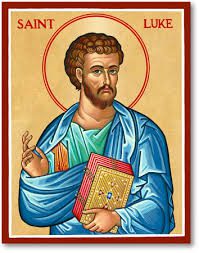 In recent decades, New Testament scholars have given Saint Luke his due honor. As the author of the Gospel of Luke and the book of Acts, Luke authored even more of the New Testament than did the Apostle Paul, thus more than any other NT author. These two ministered together multiple times during some of Paul’s missionary journeys. A close, critical reading of all the NT material produced by these two men, Luke and Paul, reveals that they never expressly indicate or proclaim therein that Jesus was God as the subsequent, institutional church did. We will now examine some texts in the Gospel of Luke and Acts which indicate that Luke could not have believed that Jesus was God. Some of the primary evidence that Jesus is not God is that God favored Jesus, was pleased with him, and attested his life so that God gave Jesus the power of the Holy Spirit in order to accomplish all of his miraculous deeds.
Luke probably was a Gentile and thus the only Gentile author of the NT material. He begins his gospel by telling its recipient, the “most excellent Theophilus,” that he, Luke, had “undertaken to set down an orderly account of the events that have been fulfilled among us, just as they were handed on to us by those who from the beginning were eyewitnesses and servants of the word” (Lk 1.1-3 NRSV and throughout). So, Luke explains that much of his information that he had gathered–which by then represented trustworthy oral tradition–came from eyewitnesses who saw and heard Jesus.
It is only Matthew and Luke that include in their gospels a birth narrative about Jesus (Matt. 1.18–2.23; Lk 1.5–2.40). Luke says the angel Gabriel appeared first to Zechariah, soon-to-be father of John the Baptist, and six months later to Mary, soon-to-be mother of Jesus. Gabriel said to Mary, “Do not be afraid, Mary, for you have found favor with God. And now, you will conceive in your womb and bear a son, and you will name him Jesus. He will be great, and will be called the Son of the Most High, and the Lord God will give him the throne of his ancestor David…. The Holy Spirit will come upon you, and the power of the Most High will overshadow you, therefore the child to be born will be holy; he will be called Son of God” (Lk 1.30-32, 35).
Two pieces of evidence from this pre-announcement of Jesus’ birth show that Luke did not think this Jesus, who was to be born, preexisted as a distinct divine personality and came down from heaven to take flesh and become a man. (What I am saying here is not the same as saying what the Gospel of John says, that “the word became flesh” [John 1.14] if you believe as I do that that “word” [logos] was not a distinct personality. Rather, that logos can be described as the expression of God’s mind.)
The two pieces of evidence are that Gabriel (1) clearly distinguishes between Jesus and “the Most High,” who he also identifies as “the Lord God,” and (2) Jesus will be called both Son of the Most High and Son of God. Regarding the first evidence, Jesus cannot be God if there is only one true God, since this God is here distinguished from Jesus. Both Christians and religious Jews claim to believe there is only one true God. Regarding the second evidence, Luke obviously means that Jesus is Son of God on the basis of his Virgin Birth, thus not on the basis that he preexisted as a Logos-God personality that came down from heaven to take flesh and thus become a God-man.
When Jesus was born, Luke says an angel appeared in glory to shepherds in the field nearby (Luke 2.6-8). Luke says, “Then an angel of the Lord stood before them, and … said to them, ‘Do not be afraid; for see–I am bringing you good news of great joy for all the people: to you is born this day in the city of David [Bethlehem] a Savior, who is the Messiah, the Lord. This will be a sign for you: you will find a child wrapped in bands of cloth and lying in a manger.’ And suddenly there was with the angel a multitude of the heavenly host, praising God and saying, ‘Glory to God in the highest heaven'” (vv. 9-13). Again, these angels distinguish between Jesus and this God who dwells in heaven. Notice that the first angel identifies Jesus as “Savior, who is the Messiah.” That is to be the good news that people should afterwards proclaim about Jesus, not that he is God.
Then Jesus was brought to the temple for circumcision on his eight day (Luke 2.21-22). Luke says of an elderly, righteous man named Simeon, “It had been revealed to him by the Holy Spirit that he would not see death before he had seen the Lord’s Messiah” (Luke 2.26). Again, Jesus is not identified as God but as the human Messiah of Israel.
Luke then relates the only story in the Bible about Jesus’ youth, when his family attended Passover at the temple in Jerusalem and they lost the twelve-year old Jesus as he was asking questions and conversing most intelligently with the Torah teachers (Luke 2.41-51). Then Luke provides this summary statement, “And Jesus increased in wisdom and in years, and in divine and human favor” (v. 52). Thus, Jesus was not only growing physically but also in favor with God. That is not possible if Jesus was God.
Like the synoptists, Luke records John’s baptism of Jesus in the Jordan River (Luke 3.1-22). Also likewise, Luke says, “when Jesus also had been baptized and was praying, the heaven was opened, and the Holy Spirit descended upon him in bodily form like a dove. And a voice came from heaven, ‘You are my Son, the Beloved; with you I am well pleased” (v. 22). Why was Jesus baptized with the Holy Spirit if he was God? That is, what need did he have of this anointing if he was God? And it would be very axiomatic for God to say he was well pleased with Jesus if he, too, was God.
Luke is most known in his gospel for telling about various incidents in which the Holy Spirit acted in the life of Jesus during his ministry. (On this, see a whole chapter in my book Solving the Samaritan Riddle.) For example, we read that after he was baptized by John, “Jesus, full of the Holy Spirit, returned from the Jordan and was led by the Spirit in the wilderness, where for forty days he was tempted by the devil” (Luke 4.1-2). Of course, if Jesus was God he could not really have been tempted because James, Jesus’ brother, writes, “God cannot be tempted by evil” (James 1.13).
Luke recounts the devil’s three temptations of Jesus and then says, “Jesus, filled with the power of the Spirit, returned to Galilee” (Luke 4.14). Luke relates that Jesus soon went to the synagogue on the sabbath and read before the congregation from Isaiah in the scroll as follows: “The Spirit of the Lord is upon me, because has anointed me to bring good news to the poor” and etc. (v. 18). Jesus then gave the scroll back and said, “Today this scripture has been fulfilled in your hearing” (v. 21). He meant that it applied to him. So, this text meant that God anointed Jesus with God’s Holy Spirit. But if Jesus was God, he didn’t need any anointing of the Spirit.
Then when Jesus was crucified, died, and arose from the dead, he appeared to his band of disciples and explained, “Thus it is written that the Messiah is to suffer and to rise from the dead on the third day, and that repentance and forgiveness of sins is to be proclaimed in his name to all nations, beginning from Jerusalem” (Luke 24.46-47). So, Jesus here identifies himself as Israel’s Messiah, not as Israel’s God which Martin Luther proclaimed (“I know of no other God than one called Jesus Christ”). And Jesus affirms the angel’s identification of himself as “Savior”–referring to his dying on the cross for our sins–by saying sins will be forgiven in his name.
Finally, what about the book of Acts? I could go on and on with this theme in that book. For instance, of all of the over twenty evangelistic sermons which Luke records in bits and pieces therein, they never identify Jesus as God whereas the thrust of many of them is to tell who Jesus was. For example, Luke’s first sermon that records in Acts is the Apostle Peter’s first sermon that he probably ever delivered in his life. It was on the first day of Pentecost following Jesus’ ascension to heaven only ten days prior (Acts 1.9-11; 2.1). Peter, empowered by the Holy Spirit, proclaimed to the thousands of Jews listening him, “You are Israelites, listen to what I have to say: Jesus of Nazareth, a man attested to you by God with deeds of power, wonders, and signs that God did through him among you” (v. 22). I ask, how can Jesus be God if he was “a man attested … by God”? NO WAY! Jesus did not do all of his miraculous deeds by some intrinsic power peculiar to himself as a deity but as his God worked through him with the Holy Spirit.
Now, many Christians who believe Jesus is God will respond to what I have said thus far by claiming that these biblical texts about Jesus apply only to his humanity and thus not to his supposed deity. But there is nothing in the NT about this let alone that Jesus even has two natures–a human nature and a divine nature–as this view presupposes. That is reading something into the sacred text that is not there. Did not God say in holy writ, “Every word of God proves true;… Do not add to his words, or else he will rebuke you, and you will be found a liar” (Proverbs 30.5-6). I think Saint Luke would utter “Amen.”
…………….
To see a list of titles of 130+ posts (2-3 pages) that are about Jesus not being God in the Bible, with a few about God not being a Trinity, at Kermit Zarley Blog click “Chistology” in the header bar. Most are condensations of my book, The Restitution of Jesus Christ. See my website servetustheevangelical.com, which is all about this book, with reviews, etc. Learn about my books and purchase them at kermitzarley.com. I was a Trinitarian for 22 years before reading myself out of it in the Bible.
Previous Post

March 19, 2017
Trump's Wall Will Be a Miniature Compared to the Size of Babylon's Wall
Next Post

March 23, 2017 Which Came First: Paul's Letters or the Synoptic Gospels?
Browse Our Archives
Select a Category Angels Billy Graham Blog Description Book Reviews Christian Living Christianity Christology Church History Current Events Deity of Christ? Disarmament Eschatology Evangelicalism Ezekiel 38-39 Film Reviews God Golf Gospel Harmonization Health History Holy Spirit Incarnation? Interview Islam Israeli-Palestinian Conflict Jesus Last Empire Literary Announcements Major Championship Winners Masters Monotheism My Books New Testament Old Testament Politics Primitive Weapons Ryder Cup Science Society of Biblical Literature The Bible The Restitution of Jesus Christ Trinitarianism Trinity? Uncategorized Unconditional Love? War on Terrorism
Select a Month October 2026 September 2026 August 2026 July 2026 June 2026 May 2026 April 2026 March 2026 February 2026 January 2026 December 2025 November 2025 October 2025 September 2025 August 2025 July 2025 June 2025 May 2025 April 2025 March 2025 February 2025 January 2025 December 2024 November 2024 October 2024 September 2024 August 2024 July 2024 June 2024 May 2024 April 2024 March 2024 February 2024 January 2024 December 2023 November 2023 October 2023 September 2023 August 2023 July 2023 June 2023 May 2023 April 2023 March 2023 February 2023 January 2023 December 2022 November 2022 October 2022 September 2022 August 2022 July 2022 June 2022 May 2022 April 2022 March 2022 February 2022 January 2022 December 2021 November 2021 October 2021 September 2021 August 2021 July 2021 June 2021 May 2021 April 2021 March 2021 February 2021 January 2021 December 2020 November 2020 October 2020 September 2020 August 2020 July 2020 June 2020 May 2020 April 2020 March 2020 February 2020 January 2020 December 2019 November 2019 October 2019 September 2019 August 2019 July 2019 June 2019 May 2019 April 2019 March 2019 February 2019 January 2019 December 2018 November 2018 October 2018 September 2018 August 2018 July 2018 June 2018 May 2018 April 2018 March 2018 February 2018 January 2018 December 2017 November 2017 October 2017 September 2017 August 2017 July 2017 June 2017 May 2017 April 2017 March 2017 February 2017 January 2017 December 2016 November 2016 October 2016 September 2016 August 2016 July 2016 June 2016 May 2016 April 2016 March 2016 February 2016 January 2016 December 2015 November 2015 October 2015 September 2015 August 2015 July 2015 June 2015 May 2015 April 2015 March 2015 February 2015 January 2015 December 2014 November 2014 October 2014 September 2014 July 2014 June 2014 May 2014 April 2014 March 2014 February 2014 January 2014 December 2013 November 2013 October 2013 September 2013 August 2013 July 2013 June 2013 May 2013 April 2013
Follow Us!
TAKE THE
Religious Wisdom Quiz
Who became king after David and built the first Temple in Jerusalem?
Select your answer to see how you score.
Rehoboam Adonijah Solomon Absalom
Books by This Author Books by Kermit Zarley Blog
Related posts from Kermit Zarley Blog

The Nicene Creed's Birthplace Is Found Buried in...

God Is the Father Alone, and Jesus Is...

Did Jesus Literally Come Down from Heaven?

Today is the 1,700th Anniversary of the Nicene...
TRENDING AT PATHEOS Progressive Christian

In "Irreplaceable," our book on vocation and technology, Trevor Sutton and I...

I was strolling through the top floor of the brand new Parthenon...

What Does Gêvâh Mean For Kimberley Guifoyle &...
This week, a lot of the news is focused on Kimberly Guilfoyle....

INNER CIRCLE: Profound Mystery (Of Christ In All...
Ephesians 5:31-32 “For this reason, a man will leave his father and...

Do Not Rejoice When Your Enemy Falls: The...
Turning an execution into a public spectacle is a disturbing expression of...

'The Chosen' S6 Trailer: The Passion Gets Very...
Not many watching 'The Chosen' worry about spoilers, but just because they...
view all Progressive Christian blogs
Ad-Free & Subscriber Log-In Subscription Support
- About Us
- 2026 Calendar
- Videos
- Podcasts
- Library of World Religions
- Faith In Media Tracker
- Advertise With Us
- Write for Us
- Privacy Policy
- Terms of Service
- Do Not Sell My Data
- Contact Us
- Radiant Digital
- Manage Newsletter Subscriptions
- Unsubscribe From Notifications
- Sitemap
Copyright 2008-2026, Patheos. All rights reserved.
Subscription Support Ad-Free & Subscriber Log-In
Follow Patheos