
BuddhistCatholicContemplativeEvangelicalGeneral ChristianHinduJewishLatter-day SaintMuslimNew VisionsProgressive Christian
Beliefs
- Buddhist
- Catholic
- Contemplative
- Evangelical
- General Christian
- Hindu
- Jewish
- Latter-day Saint
- More Voices
- Muslim
- New Visions
- Pagan
- Progressive Christian
Topics
- Religion News
- Food and Religion
- Sports and Religion
- Religious Art
- Religious Music and Entertainment
- Religious Events
- History and Religion
- Style and Religion
- Politics and Religion
- Women in Religion
- Recreation Outdoors and Religion
- Business Finance and Religion
- Careers Workplace and Religion
- Education and Religion
- Family Parenting and Religion
- Health Fitness and Religion
- Home and Religion
- Relationships and Religion
- Technology and Religion
- Travel and Religion
Columnists
- Buddhist Columnists
- Business Finance and Religion Columnists
- Careers Workplace and Religion Columnists
- Catholic Columnists
- Contemplative Columnists
- Education and Religion Columnists
- Evangelists Columnists
- Family Parenting and Religion Columnists
- General Christian Columnists
- Health Fitness and Religion Columnists
- Hindu Columnists
- History and Religion Columnists
- Home and Religion Columnists
- Jewish Columnists
- More Voices Columnists
- Latter Day Columnists
- Muslim Columnists
- New Visions Columnists
- Nonreligious Columnists
- Pagan Columnists
- Politics and Religion Columnists
- Progressive Columnists
- Recreation Outdoors and Religion Columnists
- Relationships and Religion Columnists
- Religion News Columnists
- Religious Art Columnists
- Religious Events Columnists
- Religious Music and Entertainment Columnists
- Sports and Religion Columnists
- Style and Religion Columnists
- Technology and Religion Columnists
- Travel and Religion Columnists
- Women in Religion Columnists
Resource Library
- 2026 Calendar
- Library of World Religions
- The 100 Most Holy Places on Earth
- Patheos Answers
- Podcasts
- Videos
- Faith Leaders Database
- Anglican Episcopalian
- Bahai
- Baptist
- Buddhism
- Christianity
- Confucianism
- Eastern Orthodoxy
- Hinduism
- Holiness and Pentecostal
- ISKCON
- Islam
- Judaism
- Lutheran
- Methodist
- The Church of Jesus Christ of Latter-day Saints
- New Age
- Paganism
- Presbytarian and Reformed
- Protestantism
- Religion Behind the Scenes
- Roman Catholic
- Scientology
- Shia Islam
- Sikhism
- Sufism
- Sunni Islam
- Taoism
- Zen
- See all religions
Research Tools
 Ad-Free & Subscriber Log-In Subscription Support
Ad-Free & Subscriber Log-In Subscription Support
Follow Patheos 

- Trending:
- Forgiveness
- |
- Marriage
- |
- Consciousness
- |
- Death Penalty
- |
- Election
- |
- Halloween

-
Categories
-
Christian Living
-
Christology
-
Golf
-
My Books
- Home
- Progressive Christian
- Religion News
- Did the Risen Jesus Appear in “Another Form” or Not?
Did the Risen Jesus Appear in “Another Form” or Not?
Last updated on: May 23, 2017 at 12:50 am by Kermit Zarley
Did the Risen Jesus Appear in “Another Form” or Not? 2017-05-23T00:50:14-07:00 Kermit Zarley
Patheos Explore the world's faith through different perspectives on religion and spirituality! Patheos has the views of the prevalent religions and spiritualities of the world.
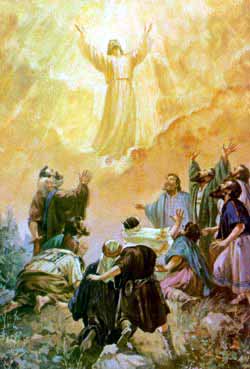 All four New Testament gospels tell about Jesus being crucified, dying on the cross, being entombed, and then rising from the dead on the third day. (The expression, “after three days,” in Mark is a Semitic idiom meaning “third day” in other synoptics). Then all four of these gospels relate various narratives about the risen Jesus appearing to his disciples the following days. He conversed with them, ate and drank with them, and they even literally touched him. Ghosts can’t eat and drink or be touched.
Luke says regarding Jesus’ disciples, “he presented himself alive to them by many convincing proofs, appearing to them during forty days and speaking about the kingdom of God” (Acts 1.3 NRSV and throughout). Then Luke relates that upon Mount Olivet, “they were watching, he was lifted up, and a cloud took him out of their sight. While he was going and they were gazing up toward heaven, suddenly two men in white robes stood by them. They said ‘Men of Galilee, why do you stand looking upward toward heaven? This Jesus, who has been taken up from you into heaven, will come in the same way as you saw him go into heaven'” (vv. 9-11).
Many Bible readers have questioned what form the risen Jesus had when he appeared to his disciples after his resurrection. Did he have a body like his previous body? Or was it somehow different? In some of the either ten or eleven resurrection appearances recorded in these four NT gospels, the risen Jesus instantly appeared and disappeared, even in a room or rooms in which the door was closed if not locked. This phenomena in itself suggests that Jesus’ resurrection body was of a different sort than his previous, physical body. Plus, the Apostle Paul later says the risen Jesus had “a spiritual body.” He explains concerning the human body its later resurrection, “It is sown a physical body, it is raised a spiritual body. If there is a physical body, there is also a spiritual body” (1 Corinthians 15.44).
Luke also tells one episode that occurred only hours after Jesus was resurrected. Luke says two disciples were walking to Emmaus, apparently a town a seven miles from Jerusalem. They were discussing the news about Jesus’ purported resurrection that Sunday morning (Luke 24.13-14). Luke continues, “While they were talking and discussing, Jesus himself came near and went with them, but their eyes were kept from recognizing him” (vv. 15-16). He then engaged them in conversation. They arrived at their destination and invited Jesus to eat with them. Luke says, “he took bread, blessed and broke it, and gave it to them. Then their eyes were opened, and they recognized him; and he vanished from their sight” (vv. 30-31). Luke says they then returned to Jerusalem and told it to the other disciples (vv. 33-34).
So, Luke 24 says the risen Jesus appeared to two disciples and they did not recognize him. It was not because he looked strange, but because of something that had been done to them, i.e., their eyes.
The same may have happened to Mary Magdalene when she first saw the risen Jesus the second time she visited the tomb that morning. For the Fourth Evangelist relates, “But Mary stood weeping outside the tomb. As she wept, she bent over to look into the tomb; and she saw two angels in white, sitting where the body of Jesus had been lying, one at the head and the other at the feet. They said to her, ‘Woman, why are you weeping?’ She said to them, ‘They have taken away my Lord, and I do not know where they have laid him.’ When she had said this, she turned around and saw Jesus standing there, but she did not know that it was Jesus. Jesus said to her, ‘Woman, why are you weeping? Whom are you looking for?’ Supposing him to be the gardener, she said to him, ‘Sir, if you have carried him away, tell me where you have laid him, and I will take him away.’ Jesus said to her, ‘Mary!’ She turned and said to him in Hebrew, ‘Rabbouni!’ (which means Teacher)” (John 20.11-16). Now, Mary’s eyesight may have been blurred from crying, so that she did not see properly, but her initial failure to see that it was Jesus could have been due to God preventing her eyes from seeing properly as occurred with the two men walking to Emmaus.
However, Mark 16.9-10 tells a slightly different story. It says the risen Jesus appeared to Mary Magdalene. She reported it to the disciples, but they did not believe it. Then Mark says of Jesus, “After this he appeared in another form to two of them, as they were walking into the country. And they went back and told the rest” (vv. 12-13). This report obviously refers to the same incident Luke reports in Luke 24.13-35. Yet this brief, Markan report says the risen Jesus appeared in “a different form” (Gr. etera morphe), whereas Luke’s much fuller account says of these two disciples, “their eyes were kept from recognizing him.” Is this not a contradiction? If so, can we trust the Bible?
This account of Jesus’ appearing to the two disciples on the road to Emmaus is an example of why modern Bible readers should be careful to read Bible footnotes or columnar references. Most modern English Bibles explain that the Greek manuscript evidence for the ending of the Gospel of Mark is in question. That is, Mark ends at Mark 16.8 or it has some additional verses. There are two main variants which scholars call the Short Ending and Long Ending. The Short Ending reads, “All that had been commanded them they told briefly to those around Peter. And afterward Jesus himself sent out through them, from east to west, the sacred and imperishable proclamation of eternal salvation.” And the Long Ending is Mark 16.9-20, which appears in most Bibles. There are other variants for the ending of Mark in the Greek manuscript evidence, but these are the main ones.
It is textual-critical scholars who spend their lives studying the Greek manuscripts of the New Testament and therefore put together the Greek New Testament. The two main Greek New Testaments, from which modern English Bibles are translated, are the United Bible Societies 4th edition of the Greek New Testament and Nestle’s 27th edition of the Greek New Testament. Both of these Greek New Testaments indicate that the long reading of Mark 16.9-20 is questionable as to whether or not it was part of the original Gospel of Mark. And most modern English Bibles mention this in a footnote or a columnar reference.
These scholars have many reasons for concluding that Mark 16.9-20 probably was not part of the original Gospel of Mark. Difference in style and vocabulary are some. I think this difference between Luke and Mark about the two disciples on the road to Emmaus is another. That is, these two accounts of it are in disagreement. It is much more likely that Luke provides the correct account, that the two disciples could not recognize the risen Jesus because something had happened to their eyes that prevented them from doing so, not that he appeared in a different form as the questionable Mark 16.9 says.
Still, what kind of body did the resurrected Jesus have? To answer this, I think it best for Bible believers to try to lay aside speculation and only rely on certainties as revealed in scripture.
First, Jesus’ body certainly was immortal, since both Old and New Testaments attest to this concerning the future resurrection of the dead. Jesus, as Paul explains, is the first fruits of that yet future resurrection of all of God’s deceased people (1 Corinthians 15.20-23).
Second, Jesus’ resurrection body must have been a reformation of his dead physical body. We know this because the women discovered that Jesus’ body was missing, and the angels explained that it was because Jesus had risen from the dead (Matt. 28.2-6; Mark 16.5-6; Luke 24.2-9, 22-23; John 20.11-16). But what of the difference in gospel accounts, in which two say two angels/men appeared, and the other two gospels say it was one angel. The correct answer must be the same as with the different reporting about the number of women who went to the tomb that morning. It was two angels (who appeared as men), but probably one of them did the recorded speaking. And there were multiple women, but John only mentions Mary because of his sole account about her encountering Jesus.
Third, the risen Jesus could appear and disappear instantly and even in locked rooms.
Fourth, the risen Jesus ate and drank in the presence of his disciples (Luke 24.42-43; Acts 10.41; John 21.12-13). And they even touched him (1 John 1.1; cf. Luke 24.39; John 20.27).
Beyond these biblical statements about Jesus’ resurrection body, we ought not speculate. It was a spiritual body, as Paul says; yet the risen Jesus could speak, eat food, be touched, and bear the marks of the nail prints in his hands/wrists and feet.
Previous Post

January 24, 2017
National Endowment for the Humanities to Be Eliminated
Next Post

January 25, 2017 Donald Trump Acknowledges God
Browse Our Archives
Select a Category Angels Billy Graham Blog Description Book Reviews Christian Living Christianity Christology Church History Current Events Deity of Christ? Disarmament Eschatology Evangelicalism Ezekiel 38-39 Film Reviews God Golf Gospel Harmonization Health History Holy Spirit Incarnation? Interview Islam Israeli-Palestinian Conflict Jesus Last Empire Literary Announcements Major Championship Winners Masters Monotheism My Books New Testament Old Testament Politics Primitive Weapons Ryder Cup Science Society of Biblical Literature The Bible The Restitution of Jesus Christ Trinitarianism Trinity? Uncategorized Unconditional Love? War on Terrorism
Select a Month October 2026 September 2026 August 2026 July 2026 June 2026 May 2026 April 2026 March 2026 February 2026 January 2026 December 2025 November 2025 October 2025 September 2025 August 2025 July 2025 June 2025 May 2025 April 2025 March 2025 February 2025 January 2025 December 2024 November 2024 October 2024 September 2024 August 2024 July 2024 June 2024 May 2024 April 2024 March 2024 February 2024 January 2024 December 2023 November 2023 October 2023 September 2023 August 2023 July 2023 June 2023 May 2023 April 2023 March 2023 February 2023 January 2023 December 2022 November 2022 October 2022 September 2022 August 2022 July 2022 June 2022 May 2022 April 2022 March 2022 February 2022 January 2022 December 2021 November 2021 October 2021 September 2021 August 2021 July 2021 June 2021 May 2021 April 2021 March 2021 February 2021 January 2021 December 2020 November 2020 October 2020 September 2020 August 2020 July 2020 June 2020 May 2020 April 2020 March 2020 February 2020 January 2020 December 2019 November 2019 October 2019 September 2019 August 2019 July 2019 June 2019 May 2019 April 2019 March 2019 February 2019 January 2019 December 2018 November 2018 October 2018 September 2018 August 2018 July 2018 June 2018 May 2018 April 2018 March 2018 February 2018 January 2018 December 2017 November 2017 October 2017 September 2017 August 2017 July 2017 June 2017 May 2017 April 2017 March 2017 February 2017 January 2017 December 2016 November 2016 October 2016 September 2016 August 2016 July 2016 June 2016 May 2016 April 2016 March 2016 February 2016 January 2016 December 2015 November 2015 October 2015 September 2015 August 2015 July 2015 June 2015 May 2015 April 2015 March 2015 February 2015 January 2015 December 2014 November 2014 October 2014 September 2014 July 2014 June 2014 May 2014 April 2014 March 2014 February 2014 January 2014 December 2013 November 2013 October 2013 September 2013 August 2013 July 2013 June 2013 May 2013 April 2013
Follow Us!
TAKE THE
Religious Wisdom Quiz
Who said, "Shall we accept good from God, and not trouble?"
Select your answer to see how you score.
Jeremiah Job Moses Solomon
Books by This Author Books by Kermit Zarley Blog
Related posts from Kermit Zarley Blog

Stephen Hawking Said "Losers" Boast about IQ—That's Trump

Trump Should Retake his Old Name Drumpf that...
Counting the Cost Before Going to War
Financial Disclosure: Trump Profits Billions as President
TRENDING AT PATHEOS Progressive Christian

Methodist Central Hall and Westminster Abbey
Situated on the same square is Methodist Central Hall and Westminster Abbey. ...

57th Dove Awards Honor Dolly Parton, Crown New...
On gospel music’s biggest night, the 57th annual GMA Dove Awards honored...

The First Eucharistic Controversy: Christ’s Real Presence
For Catholics, the Eucharist is the source and summit of the Christian...

What a Stop Sign Can Teach Us About...
How to Make a Decision When You Can't Hear God Main point:...

Archdiocese Hosts Military Marriage Retreat in Germany
RASTATT, Germany — The transient military lifestyle, with its frequent deployments and...

Nearly every morning, I make the drive to Detroit with my high-school-age...
view all Progressive Christian blogs
Ad-Free & Subscriber Log-In Subscription Support
- About Us
- 2026 Calendar
- Videos
- Podcasts
- Library of World Religions
- Faith In Media Tracker
- Advertise With Us
- Write for Us
- Privacy Policy
- Terms of Service
- Do Not Sell My Data
- Contact Us
- Radiant Digital
- Manage Newsletter Subscriptions
- Unsubscribe From Notifications
- Sitemap
Copyright 2008-2026, Patheos. All rights reserved.
Subscription Support Ad-Free & Subscriber Log-In
Follow Patheos