
BuddhistCatholicContemplativeEvangelicalGeneral ChristianHinduJewishLatter-day SaintMuslimNew VisionsProgressive Christian
Beliefs
- Buddhist
- Catholic
- Contemplative
- Evangelical
- General Christian
- Hindu
- Jewish
- Latter-day Saint
- More Voices
- Muslim
- New Visions
- Pagan
- Progressive Christian
Topics
- Religion News
- Food and Religion
- Sports and Religion
- Religious Art
- Religious Music and Entertainment
- Religious Events
- History and Religion
- Style and Religion
- Politics and Religion
- Women in Religion
- Recreation Outdoors and Religion
- Business Finance and Religion
- Careers Workplace and Religion
- Education and Religion
- Family Parenting and Religion
- Health Fitness and Religion
- Home and Religion
- Relationships and Religion
- Technology and Religion
- Travel and Religion
Columnists
- Buddhist Columnists
- Business Finance and Religion Columnists
- Careers Workplace and Religion Columnists
- Catholic Columnists
- Contemplative Columnists
- Education and Religion Columnists
- Evangelists Columnists
- Family Parenting and Religion Columnists
- General Christian Columnists
- Health Fitness and Religion Columnists
- Hindu Columnists
- History and Religion Columnists
- Home and Religion Columnists
- Jewish Columnists
- More Voices Columnists
- Latter Day Columnists
- Muslim Columnists
- New Visions Columnists
- Nonreligious Columnists
- Pagan Columnists
- Politics and Religion Columnists
- Progressive Columnists
- Recreation Outdoors and Religion Columnists
- Relationships and Religion Columnists
- Religion News Columnists
- Religious Art Columnists
- Religious Events Columnists
- Religious Music and Entertainment Columnists
- Sports and Religion Columnists
- Style and Religion Columnists
- Technology and Religion Columnists
- Travel and Religion Columnists
- Women in Religion Columnists
Resource Library
- 2026 Calendar
- Library of World Religions
- The 100 Most Holy Places on Earth
- Patheos Answers
- Podcasts
- Videos
- Faith Leaders Database
- Anglican Episcopalian
- Bahai
- Baptist
- Buddhism
- Christianity
- Confucianism
- Eastern Orthodoxy
- Hinduism
- Holiness and Pentecostal
- ISKCON
- Islam
- Judaism
- Lutheran
- Methodist
- The Church of Jesus Christ of Latter-day Saints
- New Age
- Paganism
- Presbytarian and Reformed
- Protestantism
- Religion Behind the Scenes
- Roman Catholic
- Scientology
- Shia Islam
- Sikhism
- Sufism
- Sunni Islam
- Taoism
- Zen
- See all religions
Research Tools
 Ad-Free & Subscriber Log-In Subscription Support
Ad-Free & Subscriber Log-In Subscription Support
Follow Patheos 

- Trending:
- Forgiveness
- |
- Marriage
- |
- Consciousness
- |
- Death Penalty
- |
- Election
- |
- Halloween

-
Categories
-
Christian Living
-
Christology
-
Golf
-
My Books
- Home
- Progressive Christian
- Religion News
- Did Paul Teach Unconditional Obedience to Civil Rulers?
Did Paul Teach Unconditional Obedience to Civil Rulers?
Last updated on: May 2, 2021 at 7:02 pm by Kermit Zarley
Did Paul Teach Unconditional Obedience to Civil Rulers? 2021-05-02T19:02:38-07:00 Kermit Zarley
Patheos Explore the world's faith through different perspectives on religion and spirituality! Patheos has the views of the prevalent religions and spiritualities of the world.
 The Apostle Paul wrote in his magisterial, theologically in-depth, and lengthy letter to “all God’s beloved in Rome, who are called to be saints” (Romans 1.7 NRSV), that they should do as follows:
13.1 Let every person be subject to the governing authorities; for there is no authority except from God, and those authorities that exist have been instituted by God. 2Therefore whoever resists authority resists what God has appointed, and those who resist will incur judgment. 3For rulers are not a terror to good conduct, but to bad. Do you wish to have no fear of the authority? Then do what is good, and you will receive its approval; 4for it is God’s servant for your good. But if you do what is wrong, you should be afraid, for the authority does not bear the sword in vain! It is the servant of God to execute wrath on the wrongdoer. 5Therefore one must be subject, not only because of wrath but also because of conscience. 6For the same reason you also pay taxes, for the authorities are God’s servants, busy with this very thing. 7Pay to all what is due them—taxes to whom taxes are due, revenue to whom revenue is due, respect to whom respect is due, honor to whom honor is due.
We live in an era, which may be most common in Evangelicalism, in which church pastors and other Christian leaders sometimes have over emphasized the application of scripture to our Christian lives without scrutiny. This may be due to some church denominations being so centered on ritual and liturgy that their people have lacked applying biblical truth to their daily lives. But sometimes, this application of scripture is done indiscriminately, thus without considering the various scripture genres or the intent of the scripture writer. The result can be a misapplication of scripture.
One common example of failure to consider the Bible’s genres concerns Proverbs 22.6 (ESV). It reads, “Train a child in the way he should go; even when he is old he will not depart from it.” Many Christian parents have claimed this text as a divine promise. Thus, they have believed that God will not allow their children to depart from the Christian faith they taught them. But this is a misapplication of scripture caused by failure to realize that proverbs are not promises but wisdom sayings that are generally, but not always, true. That is, biblical proverbs are not meant to be applicable to every situation in life for all people.
I have had Christian friends who grieved at the waywardness of one or more of their children, even of some who have become agnostics or atheists, and these parents have cited Proverbs 22.6 as if it was a promise. Some have done so in hope that their children would return to the Lord, which might happen, or in perplexity that Proverbs 22.6 was not proving true of their child.
Another such text is Romans 13.1-7. It is sometimes misapplied due to a failure to realize Paul’s intent in writing it, that he was addressing a current situation in his time. Paul was a Roman citizen, and he was writing to the Christians at Rome, the capital of the Roman Empire. German scholars call this sitz im leben, meaning “setting in life,” which also means “situation in life.” Scholars generally think Paul wrote Romans in the late A.D. 50s.
Judea, Samaria, and Galilee were not part of the Roman Empire even though geographically located within the confines of it. They were in subjugation to the Roman Empire. Jews longed for the day when this would not be the case, so that they would be totally free citizens and be able to worship God freely.
One of Jesus’ twelve apostles, Simon the Zealot, apparently had been a member of the political-religious Zealot party that advocated the overthrow of Roman rule by all means possible, including armed force. The Zealots later instigated and led the First Jewish Revolt of A.D. 66-70. This suggests Paul could have been concerned, only a few years earlier, about Christians, especially Jewish Christians, obeying the Roman government.
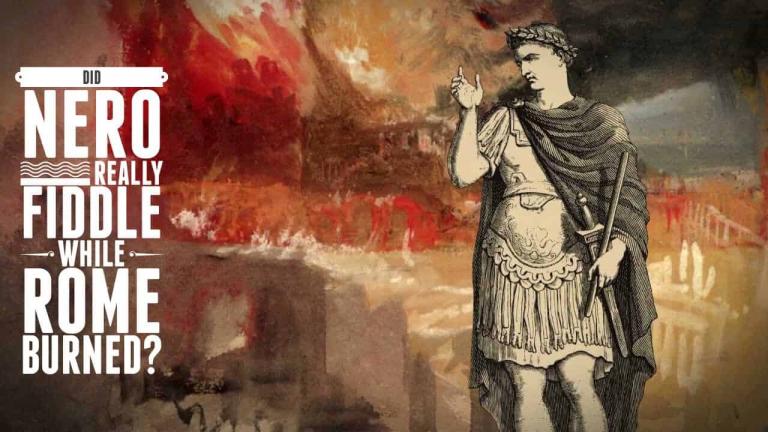
Thus, Paul probably wrote Romans 13.1-7 with the current situation in mind. At that time, Nero (reign: A.D. 54-68) was the emperor. During the mid-60s to his suicidal death in 68, Nero became a tyrant who initiated the first, certain persecution of Christians in the Roman Empire.
For instance, in A.D. 64 a great fire broke out in Rome, starting in Circus Maximus. Many Roman citizens said the madman Emperor Nero started it on purpose. Nero deflected this accusation by unjustly blaming Jewish Christians for starting it. Besides feeding them to the lions for sport, he had hundreds of them crucified, attached to stakes, covered in tar, and burnt as human torches at night for amusement at his garden parties. Would the Apostle Paul have been telling those Christians that they should “honor” Emperor Nero as “the servant of God to execute wrath”? Hardly!
However, historians generally think Nero was not this way during his early reign. Thus, the Roman Empire was not persecuting or executing Christians in the years leading up to Paul’s writing of Romans. That is why Paul could write to the Christians at Rome to “be subject to the governing authorities” and that they “have been instituted by God.” He says that the empire’s “rulers are not a terror to good conduct, but to bad.” He can even say that they are “God’s servant for your good.” All of these exhortations apply throughout history to many political regimes, but certainly not to all. There have been many evil dictators throughout history and around the world who mistreated their citizens most brutally for no ethically justifiable reasons. Paul does not have in mind these exceptions to his general principles. Rather, he is addressing sitz im leben.
Esteemed, Roman Catholic, New Testament scholar Joseph A. Fitzmyer explains in his commentary on Romans (p. 664), “When Paul wrote Romans, ‘Judaism was on the brink of catastrophe as a result of its longstanding resistance to Roman imperialism. An emerging Christianity,… was inevitably caught up in the crisis of Jewish-Roman relations. What was the right posture to adopt toward Rome?'” Fitzmyer says Paul answers in Romans 13.1-7. Fitzmyer well explains, “Paul’s discussion of the relation of Christians to civil authorities, nevertheless, remains on the level of general principles.”
Romans 13.1-7 raises questions about governmental mistreatment of its citizens. Just think of the American Revolution or, much worse, Nazis-ruling Germany and its WWII Holocaust.
Closer to home, we Americans all know that we became a nation because the colonists revolted against the king of England’s highly unfair “taxation without their representation” in England’s Parliament. It resulted in the American Revolution.
Some American colonists who were Christians opposed that revolution, citing Romans 13.1-7. One was Benjamin Franklin’s son, a lawyer. Father and son had such a rupture in the relationship about the colonies revolt, and father Benjamin’s significant role in it, that the younger Franklin moved to England where he lived the rest of his life.
Paul goes on to say specifically in Romans 13.6-7, “pay taxes,… Pay to all what is due to them–taxes to whom taxes are due,… honor to whom honor is due.” The American colonists sure did not do any of that. If you apply what Paul says here to the American Revolution, then the colonists disobeyed what Paul says and therefore disobeyed God if Paul wrote under the influence of the Holy Spirit of God, as I believe he did. And I surely don’t need to say anymore about Adolf Hitler and the Nazis.
Moreover, Christians could have been very opposed to Roman government officials since Roman Governor Pontius Pilate of Judea condemned and executed Jesus. Fitzmyer says Paul’s “knowledge of Pilate’s involvement did not deter him from recognizing the legitimate role that Pilate had as a civil authority.”
Fitzmyer continues concerning Romans 13.1-7 (pp. 664-65), “The passage has created a major problem in modern theological discussion because Paul’s teaching has at times been invoked to justify any sort of human government. The supposition running through vv 1-7 is that the civil authorities are good and are conducting themselves rightly in seeking the interests of the political community. Paul does not envisage the possibility of either a totalitarian or a tyrannical government or one failing to cope with the just rights of individual citizens or of a minority group…. Moreover, the concept of legitimate civil disobedience is beyond his ken. Paul is not discussing in exhaustive fashion the relation of Christians to governing authorities.”
It is the same with the apostle Peter in 1 Peter 2.17 which reads in the NRSV, “Honor everyone. Love the family of believers. Fear God. Honor the emperor.” Peter wrote this to the Jewish “exiles of the Dispersion in Pontus, Galatia, Cappadocia, Asia and Bthynia” (1 Pet 1.1), thus not to German Christians living under Hitler and the Nazi rule in the 1930s. And scholars believe Peter wrote this letter in the early 60s, probably before the fire at Rome in 64. Had Peter written it during Nero’s later rule, Peter likely would have had a different message. Thus, Bible believers need to be careful in applying scripture to diverse situations in other periods of history.
[Pastor Jack Wellman’s blog named Christian Crier is one of the most popular on patheos.com. I like to read it. His recent post, “What Does the Bible Say about Domestic Violence and Abuse?” caused me to interact with him in his Comments section of this post. That caused me to then write this related post. Notice Jack’s nice comment below.]
Civil Obedience or Disobedience
Previous Post

October 17, 2016
The PGA Tour's Brenden Steele Redeems Himself at Napa
Next Post

October 18, 2016 Hilary Clinton and The Fellowship
Browse Our Archives
Select a Category Angels Billy Graham Blog Description Book Reviews Christian Living Christianity Christology Church History Current Events Deity of Christ? Disarmament Eschatology Evangelicalism Ezekiel 38-39 Film Reviews God Golf Gospel Harmonization Health History Holy Spirit Incarnation? Interview Islam Israeli-Palestinian Conflict Jesus Last Empire Literary Announcements Major Championship Winners Masters Monotheism My Books New Testament Old Testament Politics Primitive Weapons Ryder Cup Science Society of Biblical Literature The Bible The Restitution of Jesus Christ Trinitarianism Trinity? Uncategorized Unconditional Love? War on Terrorism
Select a Month October 2026 September 2026 August 2026 July 2026 June 2026 May 2026 April 2026 March 2026 February 2026 January 2026 December 2025 November 2025 October 2025 September 2025 August 2025 July 2025 June 2025 May 2025 April 2025 March 2025 February 2025 January 2025 December 2024 November 2024 October 2024 September 2024 August 2024 July 2024 June 2024 May 2024 April 2024 March 2024 February 2024 January 2024 December 2023 November 2023 October 2023 September 2023 August 2023 July 2023 June 2023 May 2023 April 2023 March 2023 February 2023 January 2023 December 2022 November 2022 October 2022 September 2022 August 2022 July 2022 June 2022 May 2022 April 2022 March 2022 February 2022 January 2022 December 2021 November 2021 October 2021 September 2021 August 2021 July 2021 June 2021 May 2021 April 2021 March 2021 February 2021 January 2021 December 2020 November 2020 October 2020 September 2020 August 2020 July 2020 June 2020 May 2020 April 2020 March 2020 February 2020 January 2020 December 2019 November 2019 October 2019 September 2019 August 2019 July 2019 June 2019 May 2019 April 2019 March 2019 February 2019 January 2019 December 2018 November 2018 October 2018 September 2018 August 2018 July 2018 June 2018 May 2018 April 2018 March 2018 February 2018 January 2018 December 2017 November 2017 October 2017 September 2017 August 2017 July 2017 June 2017 May 2017 April 2017 March 2017 February 2017 January 2017 December 2016 November 2016 October 2016 September 2016 August 2016 July 2016 June 2016 May 2016 April 2016 March 2016 February 2016 January 2016 December 2015 November 2015 October 2015 September 2015 August 2015 July 2015 June 2015 May 2015 April 2015 March 2015 February 2015 January 2015 December 2014 November 2014 October 2014 September 2014 July 2014 June 2014 May 2014 April 2014 March 2014 February 2014 January 2014 December 2013 November 2013 October 2013 September 2013 August 2013 July 2013 June 2013 May 2013 April 2013
Follow Us!
TAKE THE
Religious Wisdom Quiz
What does Revelation say about anyone who adds to the words of the prophecy?
Select your answer to see how you score.
God will add to them the plagues described in this scroll They will be cursed They will be judged They will lose their salvation
Books by This Author Books by Kermit Zarley Blog
Related posts from Kermit Zarley Blog

Trump's Desperate Moves Before Mid-Term Election Are Hurting

Christians Are Not Sexual Prudes as the Media...
Israeli-Palestinian Conflict Getting Much Worse

Wyndam Clark Wins BMW Championship
TRENDING AT PATHEOS Progressive Christian

'Super Scam Me' Exposes AI Jon Bon Jovi...
Leslie Pickett believed she was in a relationship with Jon Bon Jovi....

The Brazilian Remake of Kendricks' 'Flywheel' Opens in...
“Flywheel,” the story that launched the Kendrick Brothers’ filmmaking career is getting...

The Dangers of Gradual Accommodation (Winking at Sin)
Recently, the “law of gradualness” resurfaced during the opening of a weeklong,...

The Iron Gates and the Lion of the...
Yesterday, I didn't finish my report about, well, yesterday. So I'll...

The Image: On the Horror of Capitalism and...
The Image Then went the Pharisees, and took counsel how they might...

We are approaching the date of our new American national holiday: October...
view all Progressive Christian blogs
Ad-Free & Subscriber Log-In Subscription Support
- About Us
- 2026 Calendar
- Videos
- Podcasts
- Library of World Religions
- Faith In Media Tracker
- Advertise With Us
- Write for Us
- Privacy Policy
- Terms of Service
- Do Not Sell My Data
- Contact Us
- Radiant Digital
- Manage Newsletter Subscriptions
- Unsubscribe From Notifications
- Sitemap
Copyright 2008-2026, Patheos. All rights reserved.
Subscription Support Ad-Free & Subscriber Log-In
Follow Patheos