
BuddhistCatholicContemplativeEvangelicalGeneral ChristianHinduJewishLatter-day SaintMuslimNew VisionsProgressive Christian
Beliefs
- Buddhist
- Catholic
- Contemplative
- Evangelical
- General Christian
- Hindu
- Jewish
- Latter-day Saint
- More Voices
- Muslim
- New Visions
- Pagan
- Progressive Christian
Topics
- Religion News
- Food and Religion
- Sports and Religion
- Religious Art
- Religious Music and Entertainment
- Religious Events
- History and Religion
- Style and Religion
- Politics and Religion
- Women in Religion
- Recreation Outdoors and Religion
- Business Finance and Religion
- Careers Workplace and Religion
- Education and Religion
- Family Parenting and Religion
- Health Fitness and Religion
- Home and Religion
- Relationships and Religion
- Technology and Religion
- Travel and Religion
Columnists
- Buddhist Columnists
- Business Finance and Religion Columnists
- Careers Workplace and Religion Columnists
- Catholic Columnists
- Contemplative Columnists
- Education and Religion Columnists
- Evangelists Columnists
- Family Parenting and Religion Columnists
- General Christian Columnists
- Health Fitness and Religion Columnists
- Hindu Columnists
- History and Religion Columnists
- Home and Religion Columnists
- Jewish Columnists
- More Voices Columnists
- Latter Day Columnists
- Muslim Columnists
- New Visions Columnists
- Nonreligious Columnists
- Pagan Columnists
- Politics and Religion Columnists
- Progressive Columnists
- Recreation Outdoors and Religion Columnists
- Relationships and Religion Columnists
- Religion News Columnists
- Religious Art Columnists
- Religious Events Columnists
- Religious Music and Entertainment Columnists
- Sports and Religion Columnists
- Style and Religion Columnists
- Technology and Religion Columnists
- Travel and Religion Columnists
- Women in Religion Columnists
Resource Library
- 2026 Calendar
- Library of World Religions
- The 100 Most Holy Places on Earth
- Patheos Answers
- Podcasts
- Videos
- Faith Leaders Database
- Anglican Episcopalian
- Bahai
- Baptist
- Buddhism
- Christianity
- Confucianism
- Eastern Orthodoxy
- Hinduism
- Holiness and Pentecostal
- ISKCON
- Islam
- Judaism
- Lutheran
- Methodist
- The Church of Jesus Christ of Latter-day Saints
- New Age
- Paganism
- Presbytarian and Reformed
- Protestantism
- Religion Behind the Scenes
- Roman Catholic
- Scientology
- Shia Islam
- Sikhism
- Sufism
- Sunni Islam
- Taoism
- Zen
- See all religions
Research Tools
 Ad-Free & Subscriber Log-In Subscription Support
Ad-Free & Subscriber Log-In Subscription Support
Follow Patheos 

- Trending:
- Forgiveness
- |
- Marriage
- |
- Consciousness
- |
- Death Penalty
- |
- Election
- |
- Halloween

-
Categories
-
Christian Living
-
Christology
-
Golf
-
My Books
- Home
- Progressive Christian
- Religion News
- Review of Tom Wright’s “Jesus and the Identity of God”
Review of Tom Wright’s “Jesus and the Identity of God”
Last updated on: November 23, 2018 at 12:02 pm by Kermit Zarley
Review of Tom Wright’s “Jesus and the Identity of God” 2018-11-23T12:02:28-07:00 Kermit Zarley
Patheos Explore the world's faith through different perspectives on religion and spirituality! Patheos has the views of the prevalent religions and spiritualities of the world.
“Jesus and the Identity of God” by N. Thomas Wright in Ex Auditu, 1998, 14, 42-56
Tom (N. T.) Wright is a very cordial and unusual fellow in that he is a leading New Testament (NT) scholar and now a retired Anglican bishop. You don’t see that combination of scholar and churchman much.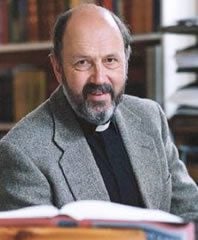
Tom begins this 1998 article by saying that when he began his higher theological education, most NT scholars were saying Jesus was not God mostly for two reasons: (1) no sane man could possibly think or say he was God, and (2) no Jewish man, influenced by Torah, could possibly think or say he was God. I agree, but Wright does not. In the remainder of this article, Tom attempts to prove these reasons wrong so that the NT does identify Jesus as being God.
But Tom Wright is here referring to the theological landscape in which he lived—England. In 1998, the situation was and still is quite different here in the U.S., with the majority of its population still consisting of church goers. Actually, editor John Hick’s book, The Myth of God Incarnate (1977), had an enormous effect on turning Brits against the belief that Jesus is God even though many of its contributors were in good standing in their Anglican Church.
Wright says the question, “Was Jesus God,” is a trick question because it assumes we know what the word “God” means. Thus, he goes to some length, as in other writings on this subject, in discussing mostly pagan views of “God” during the first century. I don’t see the logic in Tom’s assertion it is a trick question, as I have blogged about before. I do take comfort in the fact that he here says most NT scholars do not believe Jesus is God. However, I depart far from these Enlightenment folks who also say Jesus was not Israel’s Messiah or did not accomplish miracles or atone for the sins of others, such as me, or did not arise from the dead, so that Tom Wright and I wholeheartedly agree on these matters. (Those who read my blog know that I was a Trinitarian Christian for 22 years and then “read myself out of it” starting with my personal Bible reading and then wrote a book on my findings entitled The Restitution of Jesus Christ.)
Tom twice says “the NT writers offer an incipient trinitarian theology.” This is the view espoused by some other outstanding NT scholars who are Trinitarian, but I don’t think it is convincing. For example, when you look at the NT evidence, which consists mostly of eight NT texts in which “God/Father,” “Jesus/Christ/Son,” and “Spirit/Holy Spirit” are only mentioned together, mostly by Paul, there is no indication they are three persons, let alone three persons co-equal and co-eternal as the traditional, institutional church doctrine of the Trinity states.
I applaud Tom in chiding church fathers in their development of Trinitarianism for not using biblical but Greek philosophical language and categories. Thus he says, “orthodox theology has been … expressing Christian truth in non-biblical patristic and subsequent formulations.” He desires to change this. He admits, “Jewish polemic has often suggested that the Trinity and the Incarnation, those great pillars of patristic theology, are sheer paganization. I shall argue against this view as well.” I think Jews are right about that. Tom then says of Jesus, “the NT writers” were “ascribing something like ‘divinity’ to him.” Why say “something like divinity”? Tom is a colorful speaker and writer, but I find that in his doing so sometimes he sacrifices being lucid. This is why I like reading Jimmy Dunn so much.
Tom then very briefly treats some of the major, critical NT texts that leading traditionalist scholars cite to support their view that the NT identifies Jesus as being God. (I treat all of them at length in my book The Restitution of Jesus Christ; and see a “List” of over 60 of my posts on 10/4/2015 that represent condensations of this book.) Tom says of 1 Cor 8.6 that Paul “adapts the Shema itself, placing Jesus within it…. This is possibly the single most revolutionary Christological formulation in the whole of early Christianity, staking out a high Christology founded within the very citadel of Jewish monotheism.”
WOW! I couldn’t disagree more. The Shema, of course, refers to Deuteronomy 6.4-5. Wright, Richard Bauckham, and Larry Hurtado agree about this and write on it often. I don’t see why they cannot see that “adapting the Shema” is changing it. The Bible has dire warnings against changing God’s words. Paul surely would not do that. My friend Sir Anthony Buzzard—professor emeritus at Atlanta Bible College and one who calls himself a Biblical Unitarian—writes against this viewpoint often. He describes it as “splitting the Shema.” For the life of me, I cannot see how these Trinitarian scholars find this in Paul saying, “there is no God but one,” and then his adding, “there is one God, the Father.” Paul clearly says, here, the one God is the Father, so that Jesus cannot be God. I regard John 17.3, 1 Cor 8.4-6, and Eph 4.4-6 as the strongest NT evidence that only the Father is God, so that Jesus cannot be God. I add Mark 12.32-34 and John 5.44 as Jesus indicating he is not God.
Tom also says, “what had happened in Jesus was the unique and personal action of the one God of Israel.” I couldn’t agree more. But God acting in and through Jesus—which happens because God indwells Jesus most fully (e.g., John 10.38; 14.7-11)—is very different from saying Jesus is God or anyway Wright wants to express that which, in my opinion, ends up the same. Tom is like other Trinitarian NT scholars who don’t make this distinction clear with their language. For example, Tom here writes, as he often does, of Jesus being “the embodiment of Israel’s God” or “identified with Israel’s God.” He means by this language the same thing most Trinitarians mean when they say “Jesus is God.” But this Wright language does not mean that to me. Instead, I believe God indwelt Jesus, thus embodied him; but I do not think that means the same as Jesus being God. And Jesus being “identified with Israel’s God” merely means for me that Jesus had a familial relationship with God, which also does not mean Jesus is God. So, I get frustrated reading theologians like Wright when they speak or write unclearly. Why does he do that? As I have posted before, I think it’s because Tom knows that to say straight out that “Jesus is God” flies in the face of some NT texts, and if he were to do so his dialogue associates in the academy would pounce on him with vigor. Thus, I call it “dancing” around the question—the question of whether or not Jesus was and is God.
As one who has studied biblical eschatology for over fifty years, I do not think Tom Wright’s views on this subject are very sound. (See herein “Tom Wright’s Faulty Christology.”) He is a partial preterist who overly emphasizes YHWH returning to Zion (Dunn agrees with me) and thereby deemphasizes Jesus’ second coming, even writing sarcastically against those who interpret Jesus’ Olivet Discourse literally, as I do, about clouds, stars, and such concerning chaos in the cosmos at Jesus’ second coming.
Tom writes herein of Daniel 7.9-10, saying it means “Israel’s God sharing his throne with another.” He addresses this more fully in his Jesus and Victory of God (pp. 524-29). He says (p. 625), “Daniel’s vision implies that there are two figures seated on thrones.” Not at all. The text says “thrones were set in place, and an Ancient One took his throne” (v. 9 NRSV and throughout), referring to God the Father. Rabbi Akiba had limited these thrones to two, as Wright does. Akiba identified Simon Bar Khokhba as the Messiah equal to God who sits on the other throne. That ignited the Second Jewish Revolt (132-135 CE) that resulted in the 1750-year old Jewish Diaspora. On the contrary, the end of the vision account reads, “The court sat in judgment and the books were opened.” This indicates a judgment scene in heaven in which angel-judges must be those who sit on the “thrones” mentioned in v. 10. I believe, as does Richard Bauckham, that these are the angelic “twenty-four elders” mentioned in the book of Revelation.
To make matters worse, Wright adds to his above quote, “(something expressly denied, of course, in Isaiah 42-8).” Wow again! Then what about Ps 110.1 and the NT repeatedly saying it was fulfilled when the risen Jesus ascended to heaven and sat down with God the Father on his throne at his right side? That is sharing the throne. First of all, Tom, I thought you didn’t believe biblical writers disagreed with each other. Or am I missing something here? Secondly, where does Isaiah do this. Tom may think, as some do, that it is where Isaiah speaks on behalf of God, saying, “I am the LORD, that is my name; my glory I give to no other” (v. 8). Some suppose this includes the idea that Yahweh will not share his throne with anyone else. But that is divorcing this text from its context. Isaiah writes throughout Isaiah 42-55 of Yahweh’s suffering servant, and Christians believe this righteous, suffering servant was Jesus. And in Isaiah 42.6, Isaiah says on behalf of Yahweh about his suffering, righteous servant, “I have given you as a covenant to the people [Israel], a light to the nations.” So, Yahweh means in v. 8 that he will give his glory to none other than the one he makes as a covenant and gives to Israel—his servant.
Moreover, Isaiah later states concerning Israel, “Arise, shine; for your light has come, and the glory of the LORD has risen upon you” (Isaiah 60.1). So, God certainly does share his glory—the Shekinah—which he does with Israel but chiefly with his righteous, suffering servant and Messiah. The next verses indicate that this saying heralds the climactic “day of the LORD” at the end of the age when Messiah will bring with him the consummated kingdom of God to earth.
Tom then says of Jesus, “He believes himself called to do and be what in the scriptures only Israel’s God did and was.” But that doesn’t necessarily make Jesus God. Here is the crux of the matter for such theologians as Tom Wright. Notice the word “only.” They think Jesus is God, even though they won’t flatly state it this way, because he did things that had always been understood to be things that only God does, and because Jesus did such things that indicates he is God. In my opinion, this human reasoning—and that is what it is since I don’t think it is stated in scripture—is flawed.
For example, Jews always thought the forgiveness that God gives is reserved only for him, and for a human to claim the same prerogative impinges the character of God as the only sovereign. Remember when Jesus said to the paralytic let down through the roof, “Son, your sins are forgiven” (Mark 2.5). Then we read, “Now some of the scribes were sitting there, questioning in their hearts, ‘Why does this fellow speak in this way? It is blasphemy! Who can forgive sins but God alone?’ At once Jesus perceived in his spirit that they were discussing these questions among themselves; and he said to them, ‘Why do you raise such questions in your hearts? Which is easier, to say to the paralytic, ‘Your sins are forgiven,’ or to say, ‘Stand up and take your mat and walk’? But so that you may know that the Son of Man [Jesus] has authority on earth to forgive sins’—he said to the paralytic—‘I say to you, stand up, take your mat and go to your home.’ And he stood up, and immediately took the mat and went out before all of them; so that they were all amazed and glorified God, saying, ‘We have never seen anything like this!’” (vv. 6-12).
So, Jesus declared that due to his being the Son of Man, he has authority to forgive sins just as God forgives sin. Jesus just didn’t say during this incident how it was that he had this authority. But the implication is that God gave it to him. In contrast, these Jews thought that was usurping God’s majesty and thus blasphemy. Trinitarians have thought the same about this incident. That is, they have thought that only God can forgive sins, and since Jesus forgave this paralytic man his sins, Jesus must be God.
On the contrary, God gave the Son of Man this authority to forgive sins. That is what the Johannine Jesus told about himself when he said, “The Father judges no one but has given all judgment to the Son” (John 5.22). Of course, the authority to judge includes the authority to forgive. Then Jesus explained why the Father gave him this authority. He said, “he has given him authority to execute judgment, because he is the Son of Man” (v. 27).
Why did God give Jesus authority to forgive because he is the Son of Man? The answer is in the next verses after what we considered in Daniel 7.9-10. We read of a royal ceremony in which the Son of Man is brought before the Ancient of Days and given a kingdom of peoples from every ethnicity, nation, and language who will serve him, and this kingdom will be eternal (vv. 13-14). That is the kingdom of God that Jesus preached and taught in his many parables. And this mention of “one like a son of man” only occurs here in the Old Testament. So, God gave Jesus authority to forgive sins because he gave him this great kingdom, which includes his being judge. Notice that God gave Jesus this kingdom and its authority, not because he was God but, because he was the Son of Man.
Tom again says here as elsewhere, “I do not think Jesus ‘knew he was God.’” Tom also says, as Larry Hurtado is so well known for saying, that Jesus was God (though they won’t say it straight out like that) because he embodied God’s Torah, Wisdom, Word/Logos, Shekinah, etc. On the contrary, Jesus did embody these, but only because that was God revealing himself in Jesus, which, as I constantly explain, is not the same thing as Jesus being God.
Tom says further, “if you start with the God of the Exodus, or Isaiah, of creation and covenant, of the Psalms, and ask what that God might be like, were he to become human, you will find that he might look very much like Jesus of Nazareth…. That, for me, is the theological significance of the earthy Jesus.” Here Tom refers to classical Incarnation—God becomes man, and that man is Jesus. As I constantly say, that is not just God indwelling Jesus, which I believe.
Tom admits that the church established “a docetic Jesus, which in turn generated the protest of the eighteenth century and historical scholarship”—that is, the quest for the historical Jesus. I object to Tom then saying Jesus rode into Jerusalem “denouncing the Temple.”
Tom Wright concludes by saying of Jesus, “Ecce Deus,” meaning “Behold, God.” I would say amen to that if he meant “behold, the God who reveals himself fully in Jesus the Nazarene” or words to that effect. That is what I think the Apostle Thomas meant when he first saw the imprints of the nails in the hands/wrists and the hole in the side of the Master, his Lord Jesus, and promptly exclaimed, “My Lord, and my God” (John 20.28; cf. 14.9-11).
See my other posts about this: “Tom Wright Says Jesus Didn’t Know He Was God” and “Does Tom Wright Believe Jesus Is God?”
…………….
To see a list of titles of 130+ posts (2-3 pages) that are about Jesus not being God in the Bible, with a few about God not being a Trinity, at Kermit Zarley Blog click “Chistology” in the header bar. Most are condensations of my book, The Restitution of Jesus Christ. See my website servetustheevangelical.com, which is all about this book, with reviews, etc. Learn about my books and purchase them at kermitzarley.com. I was a Trinitarian for 22 years before reading myself out of it in the Bible.
Previous Post

August 11, 2016
I Am Not a Heretic
Next Post

August 18, 2016 When Jesus Hung on the Cross, God Suffered Too
Browse Our Archives
Select a Category Angels Billy Graham Blog Description Book Reviews Christian Living Christianity Christology Church History Current Events Deity of Christ? Disarmament Eschatology Evangelicalism Ezekiel 38-39 Film Reviews God Golf Gospel Harmonization Health History Holy Spirit Incarnation? Interview Islam Israeli-Palestinian Conflict Jesus Last Empire Literary Announcements Major Championship Winners Masters Monotheism My Books New Testament Old Testament Politics Primitive Weapons Ryder Cup Science Society of Biblical Literature The Bible The Restitution of Jesus Christ Trinitarianism Trinity? Uncategorized Unconditional Love? War on Terrorism
Select a Month October 2026 September 2026 August 2026 July 2026 June 2026 May 2026 April 2026 March 2026 February 2026 January 2026 December 2025 November 2025 October 2025 September 2025 August 2025 July 2025 June 2025 May 2025 April 2025 March 2025 February 2025 January 2025 December 2024 November 2024 October 2024 September 2024 August 2024 July 2024 June 2024 May 2024 April 2024 March 2024 February 2024 January 2024 December 2023 November 2023 October 2023 September 2023 August 2023 July 2023 June 2023 May 2023 April 2023 March 2023 February 2023 January 2023 December 2022 November 2022 October 2022 September 2022 August 2022 July 2022 June 2022 May 2022 April 2022 March 2022 February 2022 January 2022 December 2021 November 2021 October 2021 September 2021 August 2021 July 2021 June 2021 May 2021 April 2021 March 2021 February 2021 January 2021 December 2020 November 2020 October 2020 September 2020 August 2020 July 2020 June 2020 May 2020 April 2020 March 2020 February 2020 January 2020 December 2019 November 2019 October 2019 September 2019 August 2019 July 2019 June 2019 May 2019 April 2019 March 2019 February 2019 January 2019 December 2018 November 2018 October 2018 September 2018 August 2018 July 2018 June 2018 May 2018 April 2018 March 2018 February 2018 January 2018 December 2017 November 2017 October 2017 September 2017 August 2017 July 2017 June 2017 May 2017 April 2017 March 2017 February 2017 January 2017 December 2016 November 2016 October 2016 September 2016 August 2016 July 2016 June 2016 May 2016 April 2016 March 2016 February 2016 January 2016 December 2015 November 2015 October 2015 September 2015 August 2015 July 2015 June 2015 May 2015 April 2015 March 2015 February 2015 January 2015 December 2014 November 2014 October 2014 September 2014 July 2014 June 2014 May 2014 April 2014 March 2014 February 2014 January 2014 December 2013 November 2013 October 2013 September 2013 August 2013 July 2013 June 2013 May 2013 April 2013
Follow Us!
TAKE THE
Religious Wisdom Quiz
Which Gospel was written by a doctor?
Select your answer to see how you score.
Luke Matthew John Mark
Books by This Author Books by Kermit Zarley Blog
Related posts from Kermit Zarley Blog

The Nicene Creed's Birthplace Is Found Buried in...

God Is the Father Alone, and Jesus Is...

Did Jesus Literally Come Down from Heaven?
Today is the 1,700th Anniversary of the Nicene...
TRENDING AT PATHEOS Progressive Christian

Nearly every morning, I make the drive to Detroit with my high-school-age...

The Real AI Story Is Adoption Without Trust
Artificial intelligence has crossed a political threshold. It is no longer a...

A new article, written by Jeff Lindsay and Gale L. Pooley,...

Swimfan: Forgotten Aughts Pleasures
This is a recovery effort. In 2002, My Big Fat Greek Wedding...

Top Three Anti-Catholic Lies About Catholicism
This is my initial transcript for the video, "THE 3 WORST...

Pope Leo Celebrates Mass for Nurses & Docs...
I don't have any idea how he did it, but Pope Leo...
view all Progressive Christian blogs
Ad-Free & Subscriber Log-In Subscription Support
- About Us
- 2026 Calendar
- Videos
- Podcasts
- Library of World Religions
- Faith In Media Tracker
- Advertise With Us
- Write for Us
- Privacy Policy
- Terms of Service
- Do Not Sell My Data
- Contact Us
- Radiant Digital
- Manage Newsletter Subscriptions
- Unsubscribe From Notifications
- Sitemap
Copyright 2008-2026, Patheos. All rights reserved.
Subscription Support Ad-Free & Subscriber Log-In
Follow Patheos