
BuddhistCatholicContemplativeEvangelicalGeneral ChristianHinduJewishLatter-day SaintMuslimNew VisionsProgressive Christian
Beliefs
- Buddhist
- Catholic
- Contemplative
- Evangelical
- General Christian
- Hindu
- Jewish
- Latter-day Saint
- More Voices
- Muslim
- New Visions
- Pagan
- Progressive Christian
Topics
- Religion News
- Food and Religion
- Sports and Religion
- Religious Art
- Religious Music and Entertainment
- Religious Events
- History and Religion
- Style and Religion
- Politics and Religion
- Women in Religion
- Recreation Outdoors and Religion
- Business Finance and Religion
- Careers Workplace and Religion
- Education and Religion
- Family Parenting and Religion
- Health Fitness and Religion
- Home and Religion
- Relationships and Religion
- Technology and Religion
- Travel and Religion
Columnists
- Buddhist Columnists
- Business Finance and Religion Columnists
- Careers Workplace and Religion Columnists
- Catholic Columnists
- Contemplative Columnists
- Education and Religion Columnists
- Evangelists Columnists
- Family Parenting and Religion Columnists
- General Christian Columnists
- Health Fitness and Religion Columnists
- Hindu Columnists
- History and Religion Columnists
- Home and Religion Columnists
- Jewish Columnists
- More Voices Columnists
- Latter Day Columnists
- Muslim Columnists
- New Visions Columnists
- Nonreligious Columnists
- Pagan Columnists
- Politics and Religion Columnists
- Progressive Columnists
- Recreation Outdoors and Religion Columnists
- Relationships and Religion Columnists
- Religion News Columnists
- Religious Art Columnists
- Religious Events Columnists
- Religious Music and Entertainment Columnists
- Sports and Religion Columnists
- Style and Religion Columnists
- Technology and Religion Columnists
- Travel and Religion Columnists
- Women in Religion Columnists
Resource Library
- 2026 Calendar
- Library of World Religions
- The 100 Most Holy Places on Earth
- Patheos Answers
- Podcasts
- Videos
- Faith Leaders Database
- Anglican Episcopalian
- Bahai
- Baptist
- Buddhism
- Christianity
- Confucianism
- Eastern Orthodoxy
- Hinduism
- Holiness and Pentecostal
- ISKCON
- Islam
- Judaism
- Lutheran
- Methodist
- The Church of Jesus Christ of Latter-day Saints
- New Age
- Paganism
- Presbytarian and Reformed
- Protestantism
- Religion Behind the Scenes
- Roman Catholic
- Scientology
- Shia Islam
- Sikhism
- Sufism
- Sunni Islam
- Taoism
- Zen
- See all religions
Research Tools
 Ad-Free & Subscriber Log-In Subscription Support
Ad-Free & Subscriber Log-In Subscription Support
Follow Patheos 

- Trending:
- Forgiveness
- |
- Marriage
- |
- Consciousness
- |
- Death Penalty
- |
- Election
- |
- Halloween

-
Categories
-
Christian Living
-
Christology
-
Golf
-
My Books
- Home
- Progressive Christian
- Religion News
- Review of Dr. Harvey Cox’s book, “The Future of Faith”
Review of Dr. Harvey Cox’s book, “The Future of Faith”
Last updated on: September 2, 2016 at 4:28 pm by Kermit Zarley
Review of Dr. Harvey Cox’s book, “The Future of Faith” 2016-09-02T16:28:33-07:00 Kermit Zarley
Patheos Explore the world's faith through different perspectives on religion and spirituality! Patheos has the views of the prevalent religions and spiritualities of the world.
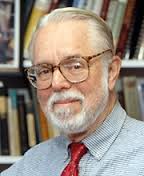 Harvey Cox was a professor of the history of religion and philosophy at Harvard University for forty-four years, from 1965 to his retirement in 2009. I attended his speech at Arizona State University on January 28, 2016, and afterwards met and talked with him. See my post about it the next day, on January 29, 2016, entitled “Dr. Harvey Cox: Leader of Liberal Christianity.” He spoke on “The Five Changes Happening in Religion and the World Now.” Some of it was taken from his most recent book, The Future of Faith (HarperOne, 2009). I purchased copy of it then, which he autographed, and I just now finished reading it. He also accepted a copy of my most recent book, Solving the Samaritan Riddle, since it is largely about Pentecostalism which he addresses at length in his book.
In this book, Cox distinguishes three phases that have occur red mostly in the history of Christianity. The first stage he designates “The Age of Faith,” which he says characterized the first three centuries of the church. When Roman Emperor Constantine gathered together 318 bishops of the Catholic Church at the Nicene Council in 325 to settle the so-called Arian controversy, Cox says the Age of Faith ended and the second phase began, which he calls the Age of Belief, due mostly to development of a church hierarchy and this involvement with the state of the Nicene Creed.
However, later in his book the Harvard professor says of early church fathers Ignatius and Irenaeus, who lived in the second century, “Both authoritarians, they were hardly advocates of participatory democracy. . . . their influence ultimately plunged Christianity farther down the slope toward creed and hierarchy. . . . The standard textbooks credit them for strengthening the early church to fight ‘heresy’ by solidifying its hierarchical structure” (p. 92).
Thus, Cox, as I am somewhat, is anti-creedal. His church background is northern Baptist, and most Baptists have been at least non-creedal. Cox views the efforts of the church in succeeding centuries in its crafting of many creeds, which some call “doctrinal statements,” as destructive of genuine Christianity that previously had focused mostly on loving God and neighbor and focusing mostly on making Jesus Lord. Henceforth, the Roman Catholic Church did much heresy hunting as demonstrated by its Inquisition during the Middle Ages.
So, Harvey Cox follows some other historians of religion who distinguish a difference between “faith,” which he defines as a “deep-seated confidence” (p. 3), and “belief,” which he describes as “more like opinion.” I think it is difficult to so distinguish these words, but I get his point.
Cox says in 385, “A synod of bishops condemned a man named Priscillian of Avila for heresy, and by order of the emperor Maximus he and six of his followers were beheaded. . . . He was the first Christian to be executed by his fellow Christians for his religious views. But he was by no means the last. One historian estimates that in the two and a half centuries after Constantine, Christian imperial authorities put twenty-five thousand to death for their lack of creedal correctness” (pp. 6-7).
Cox says, “The Age of Belief lasted roughly fifteen hundred years” (p. 7). He explains, “The vast majority of people were illiterate and, even if they heard the priests intoning creeds in the churches, did not understand the Latin. Confidence in Christ was their primary orientation, and hope for his Kingdom their motivating drive. Most people accepted the official belief codes of the church, albeit without much thought” (pp. 7-8).
Cox shows that recent archaeological discoveries, including the Nag Hammadi gnostic scrolls in 1945, proves that early Christianity was more theologically diverse than especially the early Catholic Church had claimed. He rightly alleges that its clerical hierarchy was developed to gain control over parishioners and create a system of doctrine. He says the Church’s creation of its papacy and supposed “apostolic succession” to support it was without biblical foundation and that it stifled freedom of the spirit. Cox condemns it as “a self-justifying fiction” (p. 66).
Cox observes, “Now we stand on the threshold of a new chapter in the Christian story. Despite dire forecasts of its decline, Christianity is growing faster than it ever has before, but mainly outside the West and in movements that accent spiritual experience, discipleship, and hope; pay scant attention to creeds; and flourish without hierarchies. We are not witnessing the beginning of a ‘post-Constantinian era’” (p. 8). Cox identifies this change as the third phase in the history of Christianity, saying, “I would like to suggest we call it the ‘Age of the Spirit.’” He says this is happening partly because people are “searching for community” (p. 12). Cox says one sociologist estimates that “40 percent of all adult Americans belong to one or another of a variety of small groups both in and out of churches.” Harvey thinks this Age of the Spirit is somewhat of a return to the Age of Faith of the early Christians.
Cox’s liberalism surfaces most acutely when he addresses the idea of God raising Jesus from the dead. I mentioned this disbelief at length when I reviewed the book by agnostic scholar Bart Ehrman entitled How Jesus Became God and Geza Vermes’ book The Resurrection: Fact or Myth. Cox says of the accounts of the Jesus’ resurrection in the New Testament gospels, “The stories of the Resurrection, as hard as they are for modern ears to comprehend, mean that the life Jesus lived and the project he pursued (the Kingdom of God), did not perish at the crucifixion, but continued in the lives of those who carried on what he had begun” (p. 52).
On the contrary, those “stories” clearly are about Jesus’ disciples having several experiences during the forty days between Jesus’ resurrection and heavenly ascension in which they literally saw the risen Jesus, talked to him, ate and drank with him, and some even touched him. I maintain that these disciples eventually believed that God had indeed raised Jesus from the dead with a mortal, resurrection body and that if it is not so, there never would have been any Christianity. I say this because I am convinced that there is no other explanation that accounts for the change of mind of Jesus’ disciples–such as Peter denying him and then being the foremost preacher those early days according to Acts—going from discouragement to strong boldness in preaching that Jesus had indeed risen from the dead.
I am predominantly a futurist concerning the book of Revelation. Thus, I strongly disagree with Cox saying, “the biblical book of Revelation should be as an anti-Roman diatribe” (p. 9). This viewpoint has been adopted in recent times by many New Testament scholars, but I think it is wrong headed. They buttress this position by asserting that Revelation was authored in the 90s or later, whereas I have several reasons for believing it was authored in the 60s.
Cox seems to adopt pacifism by saying Roman Christians of the first three centuries refused military service and that this changed when Constantine made Christianity a legal religion in 318 (p. 79). Many who make this connection often omit saying that Christians were so affected by what was on the soldiers shields. Prior to that, Roman armies had names of Roman gods engraved on their shields, to which Christians objected. But from 318 on, Constantine had his soldiers engrave their shields with a cross. It was because, on the eve of the battle of the Milvian Bridge, Constantine claimed to have seen the image of a cross in the sky with the caption, “in this sign conquer.” Constantine’s mother Helena was a devout Christian.
Cox does well in claiming that the words orthodoxy and heresy by Christian church leaders need to be scrutinized since those deemed orthodox often were merely the ones who won the theological argument, largely due to politics. I agree with Cox that that clearly was the case regarding the Nicene Council and its creed. He says the winners “make the rules and write the books” (p. 94). He also acknowledges that the losers who write books get them all burned up by the winners, as was the case with Arius and many others in church history. It is interesting to me that that can’t happen anymore because of digital books and the Internet.
The remainder of The Future of Faith is a lot about the experiences of Dr. Harvey Cox that substantiate what he has so far laid down in this book. Some of them are very interesting, such as his visits to the Vatican and private meeting with Catholic Cardinal Joseph Ratzinger, who at the time was the prefect of the Congregation of the Doctrine of the Faith, the successor of the Inquisition, and later became pope. He said Ratzinger affirmed that troubles in the Church are rightly handled by its hierarchy and that Catholic doctrine is correctly a merging of early Christianity and Greek philosophy. That admission shocked me.
In conclusion, I respect Dr. Harvey Cox and think he is a delightful fellow. I recommend his book, The Future of Faith, as an interesting assessment of the history of Christianity. I agree with a lot of it and learned many things about history. I just don’t see how liberal Christians like him seem to deny Jesus’ bodily resurrection since, according to the New Testament, it was so important to the early Christians such as Peter and Paul that they were willing to risk their lives in preaching it wherever they went.
Previous Post

May 2, 2016
Is the Formation of Assyria Near?
Next Post
May 8, 2016 "The Sons of God" in Genesis 6 Were Men, Not Angels: Part 1 of 2
Browse Our Archives
Select a Category Angels Billy Graham Blog Description Book Reviews Christian Living Christianity Christology Church History Current Events Deity of Christ? Disarmament Eschatology Evangelicalism Ezekiel 38-39 Film Reviews God Golf Gospel Harmonization Health History Holy Spirit Incarnation? Interview Islam Israeli-Palestinian Conflict Jesus Last Empire Literary Announcements Major Championship Winners Masters Monotheism My Books New Testament Old Testament Politics Primitive Weapons Ryder Cup Science Society of Biblical Literature The Bible The Restitution of Jesus Christ Trinitarianism Trinity? Uncategorized Unconditional Love? War on Terrorism
Select a Month October 2026 September 2026 August 2026 July 2026 June 2026 May 2026 April 2026 March 2026 February 2026 January 2026 December 2025 November 2025 October 2025 September 2025 August 2025 July 2025 June 2025 May 2025 April 2025 March 2025 February 2025 January 2025 December 2024 November 2024 October 2024 September 2024 August 2024 July 2024 June 2024 May 2024 April 2024 March 2024 February 2024 January 2024 December 2023 November 2023 October 2023 September 2023 August 2023 July 2023 June 2023 May 2023 April 2023 March 2023 February 2023 January 2023 December 2022 November 2022 October 2022 September 2022 August 2022 July 2022 June 2022 May 2022 April 2022 March 2022 February 2022 January 2022 December 2021 November 2021 October 2021 September 2021 August 2021 July 2021 June 2021 May 2021 April 2021 March 2021 February 2021 January 2021 December 2020 November 2020 October 2020 September 2020 August 2020 July 2020 June 2020 May 2020 April 2020 March 2020 February 2020 January 2020 December 2019 November 2019 October 2019 September 2019 August 2019 July 2019 June 2019 May 2019 April 2019 March 2019 February 2019 January 2019 December 2018 November 2018 October 2018 September 2018 August 2018 July 2018 June 2018 May 2018 April 2018 March 2018 February 2018 January 2018 December 2017 November 2017 October 2017 September 2017 August 2017 July 2017 June 2017 May 2017 April 2017 March 2017 February 2017 January 2017 December 2016 November 2016 October 2016 September 2016 August 2016 July 2016 June 2016 May 2016 April 2016 March 2016 February 2016 January 2016 December 2015 November 2015 October 2015 September 2015 August 2015 July 2015 June 2015 May 2015 April 2015 March 2015 February 2015 January 2015 December 2014 November 2014 October 2014 September 2014 July 2014 June 2014 May 2014 April 2014 March 2014 February 2014 January 2014 December 2013 November 2013 October 2013 September 2013 August 2013 July 2013 June 2013 May 2013 April 2013
Follow Us!
TAKE THE
Religious Wisdom Quiz
What does "Ebenezer" mean, as in the stone Samuel set up?
Select your answer to see how you score.
Stone of David Stone of help Stone of God Stone of Law
Books by This Author Books by Kermit Zarley Blog
Related posts from Kermit Zarley Blog

New Book Affirms John's Gospel Is Historically Reliable

New Book a Powerful Witness that Science Indicates...

Misbehavior of Ryder Cup Fans in New York...

My New Book about the Christian Movement on...
TRENDING AT PATHEOS Progressive Christian

The Sermon on the Mount, Part I: Matthew...
The Sermon on the Mount, Part I (Matthew 4:12-5:12) St. Matthew moves...

What's up from Crossway: Reviewing some of their latest A few weeks...

Janie Learns the Way of the Cross: A...
Teaching children about Jesus' Passion can be challenging. Many parents and educators...

Looking For Good Catholic Writing - October 2026
He alone extends the heavens, and he walks upon the waves of...

In "Irreplaceable," our book on vocation and technology, Trevor Sutton and I...

I was strolling through the top floor of the brand new Parthenon...
view all Progressive Christian blogs
Ad-Free & Subscriber Log-In Subscription Support
- About Us
- 2026 Calendar
- Videos
- Podcasts
- Library of World Religions
- Faith In Media Tracker
- Advertise With Us
- Write for Us
- Privacy Policy
- Terms of Service
- Do Not Sell My Data
- Contact Us
- Radiant Digital
- Manage Newsletter Subscriptions
- Unsubscribe From Notifications
- Sitemap
Copyright 2008-2026, Patheos. All rights reserved.
Subscription Support Ad-Free & Subscriber Log-In
Follow Patheos