
BuddhistCatholicContemplativeEvangelicalGeneral ChristianHinduJewishLatter-day SaintMuslimNew VisionsProgressive Christian
Beliefs
- Buddhist
- Catholic
- Contemplative
- Evangelical
- General Christian
- Hindu
- Jewish
- Latter-day Saint
- More Voices
- Muslim
- New Visions
- Pagan
- Progressive Christian
Topics
- Religion News
- Food and Religion
- Sports and Religion
- Religious Art
- Religious Music and Entertainment
- Religious Events
- History and Religion
- Style and Religion
- Politics and Religion
- Women in Religion
- Recreation Outdoors and Religion
- Business Finance and Religion
- Careers Workplace and Religion
- Education and Religion
- Family Parenting and Religion
- Health Fitness and Religion
- Home and Religion
- Relationships and Religion
- Technology and Religion
- Travel and Religion
Columnists
- Buddhist Columnists
- Business Finance and Religion Columnists
- Careers Workplace and Religion Columnists
- Catholic Columnists
- Contemplative Columnists
- Education and Religion Columnists
- Evangelists Columnists
- Family Parenting and Religion Columnists
- General Christian Columnists
- Health Fitness and Religion Columnists
- Hindu Columnists
- History and Religion Columnists
- Home and Religion Columnists
- Jewish Columnists
- More Voices Columnists
- Latter Day Columnists
- Muslim Columnists
- New Visions Columnists
- Nonreligious Columnists
- Pagan Columnists
- Politics and Religion Columnists
- Progressive Columnists
- Recreation Outdoors and Religion Columnists
- Relationships and Religion Columnists
- Religion News Columnists
- Religious Art Columnists
- Religious Events Columnists
- Religious Music and Entertainment Columnists
- Sports and Religion Columnists
- Style and Religion Columnists
- Technology and Religion Columnists
- Travel and Religion Columnists
- Women in Religion Columnists
Resource Library
- 2026 Calendar
- Library of World Religions
- The 100 Most Holy Places on Earth
- Patheos Answers
- Podcasts
- Videos
- Faith Leaders Database
- Anglican Episcopalian
- Bahai
- Baptist
- Buddhism
- Christianity
- Confucianism
- Eastern Orthodoxy
- Hinduism
- Holiness and Pentecostal
- ISKCON
- Islam
- Judaism
- Lutheran
- Methodist
- The Church of Jesus Christ of Latter-day Saints
- New Age
- Paganism
- Presbytarian and Reformed
- Protestantism
- Religion Behind the Scenes
- Roman Catholic
- Scientology
- Shia Islam
- Sikhism
- Sufism
- Sunni Islam
- Taoism
- Zen
- See all religions
Research Tools
 Ad-Free & Subscriber Log-In Subscription Support
Ad-Free & Subscriber Log-In Subscription Support
Follow Patheos 

- Trending:
- Forgiveness
- |
- Marriage
- |
- Consciousness
- |
- Death Penalty
- |
- Election
- |
- Halloween

-
Categories
-
Christian Living
-
Christology
-
Golf
-
My Books
- Home
- Progressive Christian
- Religion News
- The Blessed Hope of Christians is Resurrection, Not Death
The Blessed Hope of Christians is Resurrection, Not Death
Last updated on: November 28, 2015 at 4:16 pm by Kermit Zarley
The Blessed Hope of Christians is Resurrection, Not Death 2015-11-28T16:16:40-07:00 Kermit Zarley
Patheos Explore the world's faith through different perspectives on religion and spirituality! Patheos has the views of the prevalent religions and spiritualities of the world.
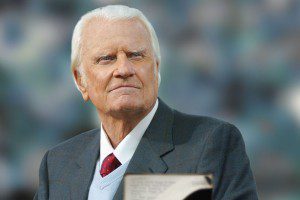 I love evangelist Billy Graham. For me, he was probably the greatest man of God in the twentieth century. I achieved one of my life goals in meeting this world-famous yet humble man. He spoke to our PGA Tour Bible Study multiple times. He even endorsed my first book, The Gospels Interwoven. In my new book, Solving the Samaritan Riddle: Peter’s Kingdom Keys Explain Early Spirit Baptism, I tell a story from my friendship with Billy, when I asked him what he thought of evangelist and faith-healer Oral Roberts.
Today, ninety-seven year old Billy Graham has a new book entitled Where I Am: Heaven, Eternity and our Life Beyond. Although I haven’t read the book, he seems to lament in it about continuing to live on earth at his ripe old age when he could die and immediately go to heaven to be with Jesus. That’s what almost all Christiants believe–that when we die we then go to heaven to thereafter enjoy conscious bliss.
The early Christians did not believe that; rather, that teaching comes from Greek philosophy as Jewish New Testament scholar Alan Segal shows in his masterful book, Life After Death: A History of the Afterlife in Western Civilization (2004). I believed in “going to heaven when we die” until my mid-forties only because, as most Christians, that was what I was taught. Then I attended a convention in my hometown of metro-Houston that was about resurrection and thus afterlife as taught in the Bible.
Christianity Today magazine (October 15, 2015) reports about Billy Graham’s new book and says of him, “Just after his ninety-fifth birthday, Mr. Graham proclaimed with resolve, ‘When I die, tell others that I’ve gone to my Lord and Savior Jesus Christ – that’s where I am.'”
The main title of Billy’s book, Where I Am, comes from Jesus’ words said at the Last Supper. According only to the Gospel of John, Jesus said to his disciples, “In my Father’s house are many rooms. . . . I am going there to prepare a place for you. And if I go and prepare a place for you, I will come back and take you to be with me that you also may be where I am” (John 14.2-4 NIV herein unless otherwise noted).
How does Billy Graham apply Jesus’ words, “where I am”? He seems to think Jesus meant that when we die we will be with him in heaven. But that understanding divorces these words from their context. Jesus surely meant that he was going to go to his Father’s (=God’s) house in heaven–referring to his heavenly ascendion forty days after his resurrection–to prepare rooms there for his people. Then he said, “I will come back and take you to be with me.” Jesus, here, clearly refers to what almost all Christians have rightly called “the second coming of Christ,” which Billy Graham preached often in his career.
The second coming of Christ will be that future moment when Jesus literally will return from heaven to earth. He predicted this in his Olivet Discourse a few days prior (Matt. 24.30). And weeks later, when the resurrected Jesus ascended from Mt. Olivet into heaven, two angels appeared and announced to his disciples, “This same Jesus, who has been taken from you into heaven, will come back in the same way you have seen him go into heaven” (Acts 1.11).
Notice that Jesus meant his disciples would be “where I am” because they would be “with me.” And he said they would be “with him” right after he comes back, that is, at his second coming. But in Billy Graham’s new book, he takes Jesus’ words, “where I am,” out of this context and gives them another context, which is our death. With all due respect for Billy Graham, that is not what Jesus was saying here.
Billy says in this book, “death for the Christian is just the entryway to eternity, where the eternal God welcomes us in. The Bible says [actually Jesus said], ‘He who hears My word and believes in Him who sent Me has everlasting life, and shall not come into judgment, but has passed from death to life’ (John 5:24).” Jesus, here, surely means that when we truly believe in him we are promised eternal life, as if it is credited to our account. But Jesus did not mean that we experience such immortality then, or even upon death, but at the resurrection. For that is what he meant when he added, “a time is coming when all who are in their graves will hear his [Jesus’] voice and come out–those who have done good will rise to live, and those who have done evil will rise to be condemned” (vv. 28-29). This will happen at Jesus’ return.
Also according only to the Gospel of John, Jesus raised his friend Lazarus of Bethany from the dead (John 11.1-44). When Jesus arrived there at Bethany, Lazarus had been dead for four days. Jesus then said to his sister Martha, “‘Your brother will rise again.’ Martha answered, ‘I know he will rise again in the resurrection at the last day'” (vv. 23-24). Martha was right in saying this. She believed God’s people would live again at the resurrection, but not before. But Billy Graham says, “death for the Christian is just the entryway to eternity, where the eternal God welcomes us in,” meaning into our eternal home. That is not what Martha believed because it is incompatible with her scriptures, that is, our the Old Testament.
The Old Testament is full of information, more so than the New Testament, about what happens to the souls of all humans beings between their physical death and resurrection, what biblical scholars call “the intermediate state.” Wise King Solomon said, “the dead know nothing” (Ecclesiastes 9.5). He adds, “Whatever your hand finds to do, do with your might; for there is no work or thought or knowledge or wisdom in Sheol to which you are going” (v. 10 NRSV). So, there is no human consciousness during the intermediate state. But what did Solomon mean by Sheol? I have blogged about it multiple times.
The word Sheol occurs sixty-seven times in the Hebrew Bible (=Old Testament). Unfortunately, some English Bibles translate it “grave” or “pit” or the like. But Sheol is the name of a place, so that it should be transliterated rather than translated. Sheol in the Hebrew Bible corresponds to the Hades in the Greek New Testament. The Greeks generally believed as the Hebrews and many other ancients did, that when people die their souls go to a place in the underworld that Hebrews called Sheol and Greeks called Hades. Thus, despite Philippians 1.21-23 and 2 Corinthians 5. 1-8, the New Testament does not change this belief that is stated often in the Old Testament.
The common notion that when Christians die they go to heaven does not accord with the Old Testament. Moreover, it opposes it by making death, rather than resurrection, their hope. Jesus did not teach anything about the afterlife that differs from the Old Testament. The hope of the Old Testament is resurrection, not death (e.g., Job 19.25-26; Isaiah 25.8; 26.19; Daniel 12.2-3). The Apostle Paul called resurrection “the blessed hope” and that it will occur when Jesus returns (Titus 2.13).
So, when we Christians die and our souls go to Sheol, and we will be unconscious there until the heavenly trumpet blasts to awake us and we hear Jesus shout to us. Then we will arise with perfect resurection bodies and ascend to meet our Lord Jesus in the air. We will be “with him” and be where he is for all eternity. That is our Christian hope. That is what the world does not have. That is victory over death.
But Billy Graham always did get it right about how we can obtain the promise of eternal life. It is by believing that Jesus died for our sins on the cross and arose from the dead. Our hope in resurrection, and thus the promise to us of eternal life, was made possible by Jesus’ resurrection from the dead. Hallelujah!
[Also see the last post, on November 11, 2015, “Where Will the Righteous Go at the Resurrection?”]
Previous Post
November 11, 2015
Where Will the Righteous Go at the Resurrection?
Next Post
November 13, 2015 Tom Wright Says Jesus Didn't Know He Was God
Browse Our Archives
Select a Category Angels Billy Graham Blog Description Book Reviews Christian Living Christianity Christology Church History Current Events Deity of Christ? Disarmament Eschatology Evangelicalism Ezekiel 38-39 Film Reviews God Golf Gospel Harmonization Health History Holy Spirit Incarnation? Interview Islam Israeli-Palestinian Conflict Jesus Last Empire Literary Announcements Major Championship Winners Masters Monotheism My Books New Testament Old Testament Politics Primitive Weapons Ryder Cup Science Society of Biblical Literature The Bible The Restitution of Jesus Christ Trinitarianism Trinity? Uncategorized Unconditional Love? War on Terrorism
Select a Month October 2026 September 2026 August 2026 July 2026 June 2026 May 2026 April 2026 March 2026 February 2026 January 2026 December 2025 November 2025 October 2025 September 2025 August 2025 July 2025 June 2025 May 2025 April 2025 March 2025 February 2025 January 2025 December 2024 November 2024 October 2024 September 2024 August 2024 July 2024 June 2024 May 2024 April 2024 March 2024 February 2024 January 2024 December 2023 November 2023 October 2023 September 2023 August 2023 July 2023 June 2023 May 2023 April 2023 March 2023 February 2023 January 2023 December 2022 November 2022 October 2022 September 2022 August 2022 July 2022 June 2022 May 2022 April 2022 March 2022 February 2022 January 2022 December 2021 November 2021 October 2021 September 2021 August 2021 July 2021 June 2021 May 2021 April 2021 March 2021 February 2021 January 2021 December 2020 November 2020 October 2020 September 2020 August 2020 July 2020 June 2020 May 2020 April 2020 March 2020 February 2020 January 2020 December 2019 November 2019 October 2019 September 2019 August 2019 July 2019 June 2019 May 2019 April 2019 March 2019 February 2019 January 2019 December 2018 November 2018 October 2018 September 2018 August 2018 July 2018 June 2018 May 2018 April 2018 March 2018 February 2018 January 2018 December 2017 November 2017 October 2017 September 2017 August 2017 July 2017 June 2017 May 2017 April 2017 March 2017 February 2017 January 2017 December 2016 November 2016 October 2016 September 2016 August 2016 July 2016 June 2016 May 2016 April 2016 March 2016 February 2016 January 2016 December 2015 November 2015 October 2015 September 2015 August 2015 July 2015 June 2015 May 2015 April 2015 March 2015 February 2015 January 2015 December 2014 November 2014 October 2014 September 2014 July 2014 June 2014 May 2014 April 2014 March 2014 February 2014 January 2014 December 2013 November 2013 October 2013 September 2013 August 2013 July 2013 June 2013 May 2013 April 2013
Follow Us!
TAKE THE
Religious Wisdom Quiz
What did Nehemiah do upon reading that Moabites and Ammonites were forbidden in God's assembly?
Select your answer to see how you score.
Rebuilt the altar Started a fast Closed the gates Expelled them
Books by This Author Books by Kermit Zarley Blog
Related posts from Kermit Zarley Blog
Trump's Gaza Reconstruction Plan Is on Track

Comparing Memorial Day to God's Day

Europe Could Dump Trump/USA and Form a More...

Netanyahu: "Jesus Christ Has No Advantage Over Genghis...
TRENDING AT PATHEOS Progressive Christian

The Sermon on the Mount, Part I: Matthew...
The Sermon on the Mount, Part I (Matthew 4:12-5:12) St. Matthew moves...

What's up from Crossway: Reviewing some of their latest A few weeks...

Janie Learns the Way of the Cross: A...
Teaching children about Jesus' Passion can be challenging. Many parents and educators...

Looking For Good Catholic Writing - October 2026
He alone extends the heavens, and he walks upon the waves of...

In "Irreplaceable," our book on vocation and technology, Trevor Sutton and I...

I was strolling through the top floor of the brand new Parthenon...
view all Progressive Christian blogs
Ad-Free & Subscriber Log-In Subscription Support
- About Us
- 2026 Calendar
- Videos
- Podcasts
- Library of World Religions
- Faith In Media Tracker
- Advertise With Us
- Write for Us
- Privacy Policy
- Terms of Service
- Do Not Sell My Data
- Contact Us
- Radiant Digital
- Manage Newsletter Subscriptions
- Unsubscribe From Notifications
- Sitemap
Copyright 2008-2026, Patheos. All rights reserved.
Subscription Support Ad-Free & Subscriber Log-In
Follow Patheos