
BuddhistCatholicContemplativeEvangelicalGeneral ChristianHinduJewishLatter-day SaintMuslimNew VisionsProgressive Christian
Beliefs
- Buddhist
- Catholic
- Contemplative
- Evangelical
- General Christian
- Hindu
- Jewish
- Latter-day Saint
- More Voices
- Muslim
- New Visions
- Pagan
- Progressive Christian
Topics
- Religion News
- Food and Religion
- Sports and Religion
- Religious Art
- Religious Music and Entertainment
- Religious Events
- History and Religion
- Style and Religion
- Politics and Religion
- Women in Religion
- Recreation Outdoors and Religion
- Business Finance and Religion
- Careers Workplace and Religion
- Education and Religion
- Family Parenting and Religion
- Health Fitness and Religion
- Home and Religion
- Relationships and Religion
- Technology and Religion
- Travel and Religion
Columnists
- Buddhist Columnists
- Business Finance and Religion Columnists
- Careers Workplace and Religion Columnists
- Catholic Columnists
- Contemplative Columnists
- Education and Religion Columnists
- Evangelists Columnists
- Family Parenting and Religion Columnists
- General Christian Columnists
- Health Fitness and Religion Columnists
- Hindu Columnists
- History and Religion Columnists
- Home and Religion Columnists
- Jewish Columnists
- More Voices Columnists
- Latter Day Columnists
- Muslim Columnists
- New Visions Columnists
- Nonreligious Columnists
- Pagan Columnists
- Politics and Religion Columnists
- Progressive Columnists
- Recreation Outdoors and Religion Columnists
- Relationships and Religion Columnists
- Religion News Columnists
- Religious Art Columnists
- Religious Events Columnists
- Religious Music and Entertainment Columnists
- Sports and Religion Columnists
- Style and Religion Columnists
- Technology and Religion Columnists
- Travel and Religion Columnists
- Women in Religion Columnists
Resource Library
- 2026 Calendar
- Library of World Religions
- The 100 Most Holy Places on Earth
- Patheos Answers
- Podcasts
- Videos
- Faith Leaders Database
- Anglican Episcopalian
- Bahai
- Baptist
- Buddhism
- Christianity
- Confucianism
- Eastern Orthodoxy
- Hinduism
- Holiness and Pentecostal
- ISKCON
- Islam
- Judaism
- Lutheran
- Methodist
- The Church of Jesus Christ of Latter-day Saints
- New Age
- Paganism
- Presbytarian and Reformed
- Protestantism
- Religion Behind the Scenes
- Roman Catholic
- Scientology
- Shia Islam
- Sikhism
- Sufism
- Sunni Islam
- Taoism
- Zen
- See all religions
Research Tools
 Ad-Free & Subscriber Log-In Subscription Support
Ad-Free & Subscriber Log-In Subscription Support
Follow Patheos 

- Trending:
- Forgiveness
- |
- Marriage
- |
- Consciousness
- |
- Death Penalty
- |
- Election
- |
- Halloween

-
Categories
-
Christian Living
-
Christology
-
Golf
-
My Books
- Home
- Progressive Christian
- Religion News
- Review of Andy Angel’s Book Entitled “Angels”
Review of Andy Angel’s Book Entitled “Angels”
Last updated on: September 2, 2016 at 4:49 pm by Kermit Zarley
Review of Andy Angel’s Book Entitled “Angels” 2016-09-02T16:49:39-07:00 Kermit Zarley
Patheos Explore the world's faith through different perspectives on religion and spirituality! Patheos has the views of the prevalent religions and spiritualities of the world.
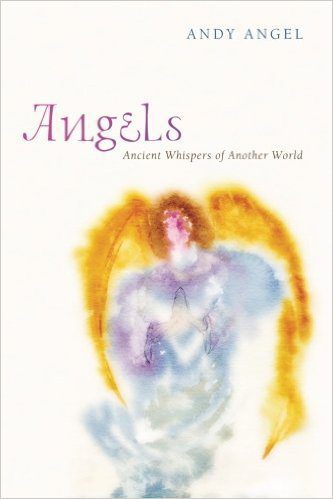 Author: Andy Angel
Title: Angels: Ancient Whisper of Another World
Publisher: Cascade Books, an Imprint of Wipf and Stock Publishers
Date of Publication: 2012
Page Count: xiv, 197
That figures! A guy with the last name “Angel” had to write a book about angels. When I first saw the title of this book and the author’s name, my jaw dropped and I did a double take.
Andy Angel is Director of Extension Studies at St. John’s College in Nottingham, England. He is also a professor of New Testament (NT) there. He wrote Chaos and the Son of Man (2006). But with this book, Andy Angel takes up a subject that underwent much neglect in past centuries that now is undergoing a revival.
Andy Angel does a commendable job on this book, Angels: Ancient Whisper of Another World. He asks the common questions people ask about angels and tries to answer them. His bibliography reveals that he is widely read on this subject, since it consists of thirteen pages in fine print for a book of only 161 pages of text. Plus, Andy cites mostly distinguished scholars. He cites primarily the Bible’s presentation of angels. But Andy also quotes many texts from Jewish inter-testamental literature. These latter I regard mostly as commentaries on the Jewish Bible (Old Testament=OT).
In chapter 1, “Are Angels Real?,” the author asks this question and then says, “Some of the Protestant Reformers have left us a legacy of mocking belief in angels” (p. 1). It is mostly due to Roman Catholic beliefs in angels that are strange. Of course, rationalists have always rejected the concept of angels. Andy then acknowledges a change in our post-modern world by saying, “Interest in angels has grown in the last few decades” (p. 2).
I agree with Andy Angel’s description of angels as personal beings. He explains, “They are spirits—they possess intelligence, emotion, and will” (p. 10). But I disagree with Andy in saying, “Angels are incorporeal; they have no bodies. They are spirits” (p. 10). He repeatedly assumes that “bodies” can be only physical. This assumption does not coincide with the Bible.
The Bible abundantly presents angels as always having human-looking form that humans literally see and that angels can appear and disappear instantly. These biblical narratives suggest that angels have human-like form that is not physical. None of these narratives include instances in which people actually touch these angelic forms, but that is not the case with the resurrected Jesus.
The same instantaneous appearing and disappearing that angels do occurred with the post-resurrection appearances of Jesus (e.g., Matt. 28.9; Luke 24.31, 36; John 20.19, 26; cf. Mark 16.9, 12, 14). But some of Jesus’ disciples touched his resurrected body. For instance, Matthew informs that when the women discovered Jesus’ tomb empty early Sunday morning, “they left the tomb quickly with fear and great joy, and ran to tell his disciples. Suddenly Jesus met them and said, ‘Greetings!’ And they came to him, took hold of his feet, and worshiped him” (Matt. 28.8-9).
Luke reports that when Jesus’ disciples were gathered together that first Easter evening, “While they were talking about this, Jesus himself stood among them and said to them, ‘Peace be with you.’ They were startled and terrified, and thought that they were seeing a ghost. He said to them, ‘Why are you frightened, and why do doubts arise in your hearts? Look at my hands and my feet; see that it is I myself. Touch me and see; for a ghost does not have flesh and bones as you see that I have.’ And when he had said this he showed them his hands and his feet” (Luke 24.36-40). Then Jesus ate some fish to prove he was neither ghost nor angel (vv. 41-43). And Peter later said of himself and others that they “were chosen by God as witnesses, and who ate and drank with him [Jesus] after he rose from the dead” (Acts 10.41).
Moreover, the Apostle Paul teaches about the nature of the resurrection body by saying of the mortal, human body, “It is sown a physical body, it is raised a spiritual body. If there is a physical body, there is also a spiritual body” (1 Corinthians 15.44). So, I don’t think Andy Angel considers that there are physical bodies of humans and there will be spiritual bodies of humans. Being spirit does not negate spirit form.
In Chapter 4, the author rightly acknowledges that God has seven archangels, that his archangel Michael is the commander-in-chief of God’s angelic armies in heaven (e.g., YHWH of hosts), and that angels were involved in God’s giving of his Law to Moses on Mount Sinai (Acts 7.38, 53; Galatians 3.19; cf. Hebrews 2.2).
In Chapter 1, Andy had said, “God is incorporeal. God is spirit or mind and to this extent has a similar nature to angels” (p. 13). In Chapter 5, “What Do Angels Look Like?” he states again, “Angels are created spirits. They are essentially incorporeal, they have no bodies” (p. 49). Again, Andy doesn’t recognize that angels have actual form, whether or not it should be designated a spiritual body.
The author then asserts, “As spirits, angels are not only incorporeal but invisible” (p. 50). No way! Several biblical accounts tell of humans literally seeing and conversing with angels (e.g., Daniel 9.21-27; 10.10-21; 12.5-13; Matt. 28.2-7; Mark 16.5-7; Luke 24.4-7; John 20.12-13; Acts 1.9-11). Andy also says, “angels in heaven are created male. Angels are male spirits” (p. 50). On the contrary, see my post on 10/13/14, “The Bible Doesn’t Say God Created the Angels.”) Andy adds, “Angels are spirits … of the male gender” (p. 57, cf. p. 65). See below for my view of angels being asexual.
God himself is presented in the Bible numerous times as having form that is visible to angels and sometimes seen in vision by humans (1 Kings 22.19; Isaiah 6; Ezekiel 1; Daniel 7.9-14, 22; Revelation 4-5; 22.4). In the biblical accounts of humans having visions of God, nothing in those texts indicate God’s form should not be understood literally. (However, I think God can change his appearance.) Moreover, Jesus once said to his interlocutors, “The Father who sent me has himself testified on my behalf. You have never heard his voice or seen his form” (John 5.37).
So, Jesus implies God has form. Most Bible-believers acknowledge that God the Father literally has a voice. Then, to be consistent about this above saying of Jesus, God the Father must also have form that at least his angels can literally see.
Most Bible believers object to this idea of God having form. It is largely due to the Bible’s strong condemnation of idolatry. Thus, it is thought that belief in God having form could lead to making an idol of it. But I think that is a case of throwing out the baby with the bathwater. Thus, I think Jewish Merkabah mystics are right in their focus on God having form and riding a wheeled chariot as Ezekiel saw in his vision, saying, “there was something like a throne in appearance like sapphire; and seated above the likeness of a throne was something that seemed like a human form…. This was the appearance of the likeness of the glory of the LORD” (Ezekiel 1.26, 28).
Some Jewish, inter-testamental literature narrates certain humans such as Elijah, Abraham, or Moses literally going to heaven and returning. Andy Angel affirms this by saying angels sometimes “take a person on a tour of heaven” (p. 57). But this view conflicts with Jesus saying, “No one has ascended into heaven except the one who descended from heaven, the Son of man,” referring to himself (John 3.13).
In Chapter 6, “Do Angels Have Sex?” Andy answers, “Only the wicked ones” (p. 59). I disagree strongly. Andy takes this view largely because he aligns with the present majority of scholars who interpret “the sons of God” in Genesis 6.2 as wicked angels, whereas I believe they are men who went astray.
I like what Bruce Waltke says of this difficult text in Genesis 6.1-4. He first presents three main interpretations of it: (1) the godly line, being the sons of Seth, took wives from among the ungodly line, being the daughters of Cain; (2) angels had sexual relations with female humans; and (3) the “royal tyrannical successors of Lamech … claimed for themselves deity, violated the divine order by forming royal harems, and perverted their mandate to rule the earth under God” (Genesis: A Commentary, p. 116). The (1) interpretation has been most popular among Christians, and the (2) interpretation was popular among Jews even predating Christianity, and it has had a revival among scholars in modern times. Waltke concludes, “The best solution is to combine the ‘angelic’ interpretation with the ‘divine king’ view. The tyrants were demon possessed” (p. 117).
I was taught the (2) interpretation early in my theological education. But I soon rejected it, and still do, mostly because Jesus told the Sadducees, who didn’t believe in resurrection, “when they rise from the dead, they neither marry nor are given in marriage, but are like angels in heaven” (Mark 12.25). So, Jesus clearly says angels are asexual. Thus, angels do not have sexual organs and therefore cannot procreate.
I regard Chapter 7, “Do People Become Angels When They Die?” as rather silly. But some people sincerely ask this, and some scholars speak of “angelomorphism.” Andy quotes Daniel 12.1-3, which says resurrected people will “shine like the brightness of the sky” and “like the stars forever and ever.” Then I think Andy errs in saying, “In effect, Daniel says here that the righteous are to become angels” (pp. 70-71).
In Chapter 8, the author rightly accepts biblical accounts of guardian angels over nations, which is confirmed in Exodus 23.20-22; 33.2; Daniel 10.13, 21.
In Chapter 9, Andy well affirms a biblical truth that many believers puzzle over, that the OT often portrays God “like a warrior with real angelic armies…. Even the name of God, the ‘LORD of Hosts,’ reflects this—the ‘hosts’ of which it speaks are the armies of angels” (p. 88). He refers to God’s angels. Indeed, when God overthrew Pharaoh’s armies in the sea, Moses afterwards wrote a song that said, “The LORD is a warrior” (Exodus 15.3). And Isaiah writes, “The LORD goes forth like a soldier, like a warrior he stirs up fury” (Isaiah 42.13). Andy then cites various texts from the Dead Sea Scrolls that divulge much information about this subject (pp. 92-95). And upon quoting from Revelation, Andy well says of Jesus at his second coming, “Jesus leads the army of the heavenly hosts and clearly acts as their commander” (p. 98).
In Chapter 10, “Is Satan Misunderstood?” Andy does well in describing Satan as the tempter and a prosecuting attorney who appears before God in heaven as affirmed in Job 1.6-12; 2.1-6; Revelation 12.9-10. But I disagree with him saying Satan is presented in these Job texts as a “member of the divine council” (p. 107, cf. p. 113).
In Chapter 11, “Principalities and Powers,” the author well relates that angels have a hierarchy. The Apostle Paul affirms this in some of his NT epistles. Andy also rightly says that angels often come from heaven and watch humans. (See “holy watchers” in Daniel 4.13, 17, 23; cf. Hebrews 1.14; and see especially 1 Enoch.)
In Chapter 12, “Bewitched,” Andy briefly addresses angel-induced magic and demon possession. He cites psychiatrist David Instone-Brewer, who is also one of my favorite biblical exegetes, on the reality of demon possession (p. 145-46).
In the final Chapter 13, “Why Angels?” Andy correlates “the explosion of interest in angels in second temple Judaism” with our western world “since the 1980s” (p. 150-51). Interestingly, Andy Angel also says, “Angels are more like most of us” (p. 155). Moreover, he relates that he used to not quite believe in the reality of angels, but now he does (pp. 158-59). He concludes by admitting, “I remain devoid of angel experiences…. I do not hanker after angel encounters either” (p. 160). With this the author silences any possible curious readers who may overly desire to see an angel.
Previous Post

October 18, 2015
Emiliano Grillo Wins First PGA Tour Tournament
Next Post
October 23, 2015 Kim Davis Is Wrong
Browse Our Archives
Select a Category Angels Billy Graham Blog Description Book Reviews Christian Living Christianity Christology Church History Current Events Deity of Christ? Disarmament Eschatology Evangelicalism Ezekiel 38-39 Film Reviews God Golf Gospel Harmonization Health History Holy Spirit Incarnation? Interview Islam Israeli-Palestinian Conflict Jesus Last Empire Literary Announcements Major Championship Winners Masters Monotheism My Books New Testament Old Testament Politics Primitive Weapons Ryder Cup Science Society of Biblical Literature The Bible The Restitution of Jesus Christ Trinitarianism Trinity? Uncategorized Unconditional Love? War on Terrorism
Select a Month October 2026 September 2026 August 2026 July 2026 June 2026 May 2026 April 2026 March 2026 February 2026 January 2026 December 2025 November 2025 October 2025 September 2025 August 2025 July 2025 June 2025 May 2025 April 2025 March 2025 February 2025 January 2025 December 2024 November 2024 October 2024 September 2024 August 2024 July 2024 June 2024 May 2024 April 2024 March 2024 February 2024 January 2024 December 2023 November 2023 October 2023 September 2023 August 2023 July 2023 June 2023 May 2023 April 2023 March 2023 February 2023 January 2023 December 2022 November 2022 October 2022 September 2022 August 2022 July 2022 June 2022 May 2022 April 2022 March 2022 February 2022 January 2022 December 2021 November 2021 October 2021 September 2021 August 2021 July 2021 June 2021 May 2021 April 2021 March 2021 February 2021 January 2021 December 2020 November 2020 October 2020 September 2020 August 2020 July 2020 June 2020 May 2020 April 2020 March 2020 February 2020 January 2020 December 2019 November 2019 October 2019 September 2019 August 2019 July 2019 June 2019 May 2019 April 2019 March 2019 February 2019 January 2019 December 2018 November 2018 October 2018 September 2018 August 2018 July 2018 June 2018 May 2018 April 2018 March 2018 February 2018 January 2018 December 2017 November 2017 October 2017 September 2017 August 2017 July 2017 June 2017 May 2017 April 2017 March 2017 February 2017 January 2017 December 2016 November 2016 October 2016 September 2016 August 2016 July 2016 June 2016 May 2016 April 2016 March 2016 February 2016 January 2016 December 2015 November 2015 October 2015 September 2015 August 2015 July 2015 June 2015 May 2015 April 2015 March 2015 February 2015 January 2015 December 2014 November 2014 October 2014 September 2014 July 2014 June 2014 May 2014 April 2014 March 2014 February 2014 January 2014 December 2013 November 2013 October 2013 September 2013 August 2013 July 2013 June 2013 May 2013 April 2013
Follow Us!
TAKE THE
Religious Wisdom Quiz
What is the correct order of the seven churches addressed in Revelation?
Select your answer to see how you score.
Ephesus, Pergamum, Smyrna, Sardis, Thyatira, Laodicea, Philadelphia Ephesus, Smyrna, Pergamum, Thyatira, Sardis, Philadelphia, Laodicea Smyrna, Ephesus, Thyatira, Pergamum, Philadelphia, Sardis, Laodicea Laodicea, Philadelphia, Sardis, Thyatira, Pergamum, Smyrna, Ephesus
Books by This Author Books by Kermit Zarley Blog
Related posts from Kermit Zarley Blog

New Book Affirms John's Gospel Is Historically Reliable
New Book a Powerful Witness that Science Indicates...

Misbehavior of Ryder Cup Fans in New York...

My New Book about the Christian Movement on...
TRENDING AT PATHEOS Progressive Christian

The Problem with False Prophets
Miller’s Station UMC| 10/18/26| Anchor Verse: Jeremiah 23: 1, 9-23 I...

Emotion in Early Christianity by Andrew Crislip
Andrew Crislip’s Emotion in Early Christianity examines an often overlooked dimension of...

16 Spiritual Touchstones for a More Grounded Life
After decades of spiritual study, here are 16 principles I try...

Catholic Evangelization: Sharing Your Faith Every Day
Welcome back to the Graceful Awakening mini-series called, “From Faith to Mission.” ...

The Pillar of the Boatmen: the Ancient Monument...
The Pillar of the Boatmen is a Romano-Gaulish sculpture that dates from...

In one sense walking into Westminster Abbey is like walking down the...
view all Progressive Christian blogs
Ad-Free & Subscriber Log-In Subscription Support
- About Us
- 2026 Calendar
- Videos
- Podcasts
- Library of World Religions
- Faith In Media Tracker
- Advertise With Us
- Write for Us
- Privacy Policy
- Terms of Service
- Do Not Sell My Data
- Contact Us
- Radiant Digital
- Manage Newsletter Subscriptions
- Unsubscribe From Notifications
- Sitemap
Copyright 2008-2026, Patheos. All rights reserved.
Subscription Support Ad-Free & Subscriber Log-In
Follow Patheos