
BuddhistCatholicContemplativeEvangelicalGeneral ChristianHinduJewishLatter-day SaintMuslimNew VisionsProgressive Christian
Beliefs
- Buddhist
- Catholic
- Contemplative
- Evangelical
- General Christian
- Hindu
- Jewish
- Latter-day Saint
- More Voices
- Muslim
- New Visions
- Pagan
- Progressive Christian
Topics
- Religion News
- Food and Religion
- Sports and Religion
- Religious Art
- Religious Music and Entertainment
- Religious Events
- History and Religion
- Style and Religion
- Politics and Religion
- Women in Religion
- Recreation Outdoors and Religion
- Business Finance and Religion
- Careers Workplace and Religion
- Education and Religion
- Family Parenting and Religion
- Health Fitness and Religion
- Home and Religion
- Relationships and Religion
- Technology and Religion
- Travel and Religion
Columnists
- Buddhist Columnists
- Business Finance and Religion Columnists
- Careers Workplace and Religion Columnists
- Catholic Columnists
- Contemplative Columnists
- Education and Religion Columnists
- Evangelists Columnists
- Family Parenting and Religion Columnists
- General Christian Columnists
- Health Fitness and Religion Columnists
- Hindu Columnists
- History and Religion Columnists
- Home and Religion Columnists
- Jewish Columnists
- More Voices Columnists
- Latter Day Columnists
- Muslim Columnists
- New Visions Columnists
- Nonreligious Columnists
- Pagan Columnists
- Politics and Religion Columnists
- Progressive Columnists
- Recreation Outdoors and Religion Columnists
- Relationships and Religion Columnists
- Religion News Columnists
- Religious Art Columnists
- Religious Events Columnists
- Religious Music and Entertainment Columnists
- Sports and Religion Columnists
- Style and Religion Columnists
- Technology and Religion Columnists
- Travel and Religion Columnists
- Women in Religion Columnists
Resource Library
- 2026 Calendar
- Library of World Religions
- The 100 Most Holy Places on Earth
- Patheos Answers
- Podcasts
- Videos
- Faith Leaders Database
- Anglican Episcopalian
- Bahai
- Baptist
- Buddhism
- Christianity
- Confucianism
- Eastern Orthodoxy
- Hinduism
- Holiness and Pentecostal
- ISKCON
- Islam
- Judaism
- Lutheran
- Methodist
- The Church of Jesus Christ of Latter-day Saints
- New Age
- Paganism
- Presbytarian and Reformed
- Protestantism
- Religion Behind the Scenes
- Roman Catholic
- Scientology
- Shia Islam
- Sikhism
- Sufism
- Sunni Islam
- Taoism
- Zen
- See all religions
Research Tools
 Ad-Free & Subscriber Log-In Subscription Support
Ad-Free & Subscriber Log-In Subscription Support
Follow Patheos 

- Trending:
- Forgiveness
- |
- Marriage
- |
- Consciousness
- |
- Death Penalty
- |
- Election
- |
- Halloween

-
Categories
-
Christian Living
-
Christology
-
Golf
-
My Books
- Home
- Progressive Christian
- Religion News
- Review of Dunn’s Book, Jesus and the Spirit
Review of Dunn’s Book, Jesus and the Spirit
Last updated on: September 2, 2016 at 5:39 pm by Kermit Zarley
Review of Dunn’s Book, Jesus and the Spirit 2016-09-02T17:39:39-07:00 Kermit Zarley
Patheos Explore the world's faith through different perspectives on religion and spirituality! Patheos has the views of the prevalent religions and spiritualities of the world.
 I recently read James D.G. Dunn’s book entitled Jesus and the Spirit: A Study of the Religious and Charismatic Experience of Jesus and the First Christians as Reflected in the New Testament, published in 1975. It was his second book. Jimmy, as his friends call him, went on to become one of the premier New Testament (NT) scholars in the world and perhaps the foremost scholar on Christology, largely due to his book published in 1980 entitled Christology in the Making (short title), published in 1980 and now in its third edition.
I read this book mostly because of my interest in Jesus’ self-consciousness regarding his identity and his experience of the Spirit. So, that is what I will focus on in this review, that is, the first four chapters, so that it is not complete review of the book.
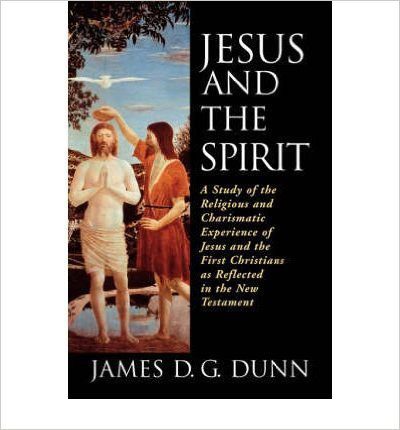 Dunn begins this book with an Introduction (p. 1) by quoting a scholar who writes, “The core of religion is religious experience.” I think this is quite true. I first experienced God and Jesus when I was “born again” at age thirteen by receiving Jesus into my life in a prayer with my Sunday school teacher. When I went to college, I began my theological education by attending a Bible church that was sort of a mini-seminary. I learned a lot about the Bible and Christian theology in the next twelve years there, but the pastor de-emphasized personal experience by substituting what he called “Bible doctrine.” And he, like many American Evangelicals, denied that Christian faith is a “religion,” a word he redefined as man doing good works to attain God’s approval. I eventually came to prefer to use words as the dictionary defines them. Accordingly, religious experience is a wide-ranging concept.
Jimmy also says in this Introduction (p. 6), “this volume serves as something of a sequel to my earlier study, Baptism in the Holy Spirit” (short title), published in 1970. In that first book, he lays out Spirit baptism in the NT. In this second book, he focuses on Jesus’ experience of the Spirit, and that of the early Christians, as in the NT. So, in the review I will consider only what Dunn says of Jesus’ experience.
Dunn asks (p. 11, italics always his), “What was Jesus’ experience of God?” He adds, “I am not asking, What was Jesus’ concept of God, his teaching about God.” Dunn says, “traditional, classic Christianity strongly affirms the deity of Jesus—that Jesus of Nazareth was God become man…. traditional Christianity has recognized, however inadequately, that whatever else he is, Jesus is (a?) man before God…. who prays to God.”
Dunn says (pp. 12-13) among NT scholars in the nineteenth century “it has become almost commonplace to deny writing a biographical study of Jesus or of saying anything about his self-consciousness or ‘inner life.’” He says these two concepts should be separated and that something of the latter can be determined. Dunn adds, “it is my contention that we are in a position to see fairly deeply into Jesus’ experience of God at certain points [in the NT], and so may begin to understand how he conceived of his relation with God,” thus (p. 13), “Jesus faith in God.”
Dunn doesn’t say, but the question arises, “How can Jesus have faith in God if he is God?” Thomas Aquinas (Summa Theologica, 3.7.3), whom the Roman Catholic Church regards as the greatest post-apostolic theologian of all, taught the beatific vision and so answered, “From the first moment of his conception Christ had the full vision of God in his essence … Therefore he could not have had faith.” This was his logical conclusion due to his traditional belief that Jesus was God.
Dunn begins this examination of Jesus’ experience of God by saying (p. 16), “Jesus regarded prayer as of first importance.” Jimmy then says of the NT gospels (p. 38), “the evidence permits us to speak only of Jesus’ consciousness of an intimate relationship with God, not of awareness of metaphysical sonship, nor of a ‘divine consciousness’, (far less conscious of being ‘Second Person of the Trinity’!). Even to speak of a consciousness of ‘divine sonship’ is misleading. And certainly to speak of an awareness of preexistence goes far beyond the evidence.”
How did Jesus conceive of the Spirit of God? Dunn informs (p. 47), “’Spirit of God’ in Judaism denoted the power of God.” Indeed, Judaism has always differed with Christianity in claiming that the Holy Spirit is not a person, and that is why Jewish scholars do not capitalize “spirit” when referring to God whereas Christians do.
Jimmy explains (p. 62), “quite basic to Jesus’ experience of God,… was his sense of sonship and his consciousness of Spirit.” Jesus had this unshakable sense of having divine authority due to his exorcisms and healings (pp. 69-82. Yet Dunn says, (p. 91) “The fact is that we cannot analyse the content of Jesus’ self-consciousness in any detail. We cannot answer with any precision the question, Who did Jesus think he was?… All we can say is that he lived out of a consciousness of sonship and power.” Dunn asserts (p. 15), “it is highly questionable whether Jesus thought of himself in terms of titles at all.”
I disagree with this. Jesus certainly knew God sent him to be the Messiah of Israel. Yes, he did invoke what scholars came to call “the Messianic secret;” but this reserve in so identifying himself publicly was to avoid being put to death before his time. For, he once asked his disciples, “Who do you say that I am?” (Matt. 16.15; Mark 8.29; Luke 9.20). Matthew writes, “”Simon Peter answered, ‘You are the Messiah, the Son of the living God’” (Matt. 16.16 nrsv). Only Matthew adds, “And Jesus answered, ‘Blessed are you, Simon’” (v. 17), and then Jesus expounds about his church and promises to give Peter the keys of the kingdom (vv. 18-19). This response reveals that Jesus approved of Peter’s identification of him as Israel’s Messiah. But some scholars don’t think Matt. 16.18-19 is historically authentic largely due to the lack of multiple attestation (=not in any other gospel).
Besides, Jesus finally admitted it publicly, though obliquely, at his hearing before the Sanhedrin. The high priest Caiaphas demanded of him, “‘tell us if you are the Messiah, the Son of God.’ Jesus said to him, ‘You have said so. But I tell you, From now on you will see the Son of Man seated at the right hand of Power and coming on the clouds of heaven’” (Matt. 26.63-64 niv). Jesus here clearly identified himself as “one like a son of man” in Daniel 7.13. According to the NT gospels, “Son of Man” was Jesus’ favorite title of self-identification. According to my book The Gospels Interwoven, he said it 37 or 38 times in his gospel sayings. Daniel 7.14 reveals that this title portrays a greater authority, since it is worldwide, than that of Israel’s Messiah.
Dunn writes about the historical Jesus concept as set forth by historical-critical scholars when he states (p. 92), “if we can indeed properly speak of the ‘divinity’ of the historical Jesus, we can only do so in terms of his experience of God; his ‘divinity’ means his relationship with the Father as son and the Spirit of God in him.”
In his other books, Dunn makes it clear he believes in “developmental Christology.” His PhD instructor C.F.D. Moule pub forth that hypothesis most notably in The Origin of Christology (1977). So, Dunn doesn’t think Jesus believed he was God; yet Dunn accepts the later development that the church correctly decided that Jesus was God. Nevertheless, Jimmy sometimes disparages the doctrine of the Trinity. And he does not think the earliest Jewish Christians worshipped Jesus as God. (See my post on September 13, 2013, which is a review of his book, Did the First Christians Worship Jesus? The New Testament Evidence [2010]).
Previous Post

December 10, 2014
2014--Not a Good Year for Israel
Next Post
December 14, 2014 Torturing the U.S. National Conscience
Browse Our Archives
Select a Category Angels Billy Graham Blog Description Book Reviews Christian Living Christianity Christology Church History Current Events Deity of Christ? Disarmament Eschatology Evangelicalism Ezekiel 38-39 Film Reviews God Golf Gospel Harmonization Health History Holy Spirit Incarnation? Interview Islam Israeli-Palestinian Conflict Jesus Last Empire Literary Announcements Major Championship Winners Masters Monotheism My Books New Testament Old Testament Politics Primitive Weapons Ryder Cup Science Society of Biblical Literature The Bible The Restitution of Jesus Christ Trinitarianism Trinity? Uncategorized Unconditional Love? War on Terrorism
Select a Month October 2026 September 2026 August 2026 July 2026 June 2026 May 2026 April 2026 March 2026 February 2026 January 2026 December 2025 November 2025 October 2025 September 2025 August 2025 July 2025 June 2025 May 2025 April 2025 March 2025 February 2025 January 2025 December 2024 November 2024 October 2024 September 2024 August 2024 July 2024 June 2024 May 2024 April 2024 March 2024 February 2024 January 2024 December 2023 November 2023 October 2023 September 2023 August 2023 July 2023 June 2023 May 2023 April 2023 March 2023 February 2023 January 2023 December 2022 November 2022 October 2022 September 2022 August 2022 July 2022 June 2022 May 2022 April 2022 March 2022 February 2022 January 2022 December 2021 November 2021 October 2021 September 2021 August 2021 July 2021 June 2021 May 2021 April 2021 March 2021 February 2021 January 2021 December 2020 November 2020 October 2020 September 2020 August 2020 July 2020 June 2020 May 2020 April 2020 March 2020 February 2020 January 2020 December 2019 November 2019 October 2019 September 2019 August 2019 July 2019 June 2019 May 2019 April 2019 March 2019 February 2019 January 2019 December 2018 November 2018 October 2018 September 2018 August 2018 July 2018 June 2018 May 2018 April 2018 March 2018 February 2018 January 2018 December 2017 November 2017 October 2017 September 2017 August 2017 July 2017 June 2017 May 2017 April 2017 March 2017 February 2017 January 2017 December 2016 November 2016 October 2016 September 2016 August 2016 July 2016 June 2016 May 2016 April 2016 March 2016 February 2016 January 2016 December 2015 November 2015 October 2015 September 2015 August 2015 July 2015 June 2015 May 2015 April 2015 March 2015 February 2015 January 2015 December 2014 November 2014 October 2014 September 2014 July 2014 June 2014 May 2014 April 2014 March 2014 February 2014 January 2014 December 2013 November 2013 October 2013 September 2013 August 2013 July 2013 June 2013 May 2013 April 2013
Follow Us!
TAKE THE
Religious Wisdom Quiz
Who was swallowed by a great fish for three days?
Select your answer to see how you score.
Noah Daniel Solomon Jonah
Books by This Author Books by Kermit Zarley Blog
Related posts from Kermit Zarley Blog

Stephen Hawking Said "Losers" Boast about IQ—That's Trump

Good Friday Is Today. And Then What?

New Book Affirms John's Gospel Is Historically Reliable

Did Jesus Literally Come Down from Heaven?
TRENDING AT PATHEOS Progressive Christian

The Sermon on the Mount, Part I: Matthew...
The Sermon on the Mount, Part I (Matthew 4:12-5:12) St. Matthew moves...

What's up from Crossway: Reviewing some of their latest A few weeks...

Janie Learns the Way of the Cross: A...
Teaching children about Jesus' Passion can be challenging. Many parents and educators...

Looking For Good Catholic Writing - October 2026
He alone extends the heavens, and he walks upon the waves of...

In "Irreplaceable," our book on vocation and technology, Trevor Sutton and I...

I was strolling through the top floor of the brand new Parthenon...
view all Progressive Christian blogs
Ad-Free & Subscriber Log-In Subscription Support
- About Us
- 2026 Calendar
- Videos
- Podcasts
- Library of World Religions
- Faith In Media Tracker
- Advertise With Us
- Write for Us
- Privacy Policy
- Terms of Service
- Do Not Sell My Data
- Contact Us
- Radiant Digital
- Manage Newsletter Subscriptions
- Unsubscribe From Notifications
- Sitemap
Copyright 2008-2026, Patheos. All rights reserved.
Subscription Support Ad-Free & Subscriber Log-In
Follow Patheos