
BuddhistCatholicContemplativeEvangelicalGeneral ChristianHinduJewishLatter-day SaintMuslimNew VisionsProgressive Christian
Beliefs
- Buddhist
- Catholic
- Contemplative
- Evangelical
- General Christian
- Hindu
- Jewish
- Latter-day Saint
- More Voices
- Muslim
- New Visions
- Pagan
- Progressive Christian
Topics
- Religion News
- Food and Religion
- Sports and Religion
- Religious Art
- Religious Music and Entertainment
- Religious Events
- History and Religion
- Style and Religion
- Politics and Religion
- Women in Religion
- Recreation Outdoors and Religion
- Business Finance and Religion
- Careers Workplace and Religion
- Education and Religion
- Family Parenting and Religion
- Health Fitness and Religion
- Home and Religion
- Relationships and Religion
- Technology and Religion
- Travel and Religion
Columnists
- Buddhist Columnists
- Business Finance and Religion Columnists
- Careers Workplace and Religion Columnists
- Catholic Columnists
- Contemplative Columnists
- Education and Religion Columnists
- Evangelists Columnists
- Family Parenting and Religion Columnists
- General Christian Columnists
- Health Fitness and Religion Columnists
- Hindu Columnists
- History and Religion Columnists
- Home and Religion Columnists
- Jewish Columnists
- More Voices Columnists
- Latter Day Columnists
- Muslim Columnists
- New Visions Columnists
- Nonreligious Columnists
- Pagan Columnists
- Politics and Religion Columnists
- Progressive Columnists
- Recreation Outdoors and Religion Columnists
- Relationships and Religion Columnists
- Religion News Columnists
- Religious Art Columnists
- Religious Events Columnists
- Religious Music and Entertainment Columnists
- Sports and Religion Columnists
- Style and Religion Columnists
- Technology and Religion Columnists
- Travel and Religion Columnists
- Women in Religion Columnists
Resource Library
- 2026 Calendar
- Library of World Religions
- The 100 Most Holy Places on Earth
- Patheos Answers
- Podcasts
- Videos
- Faith Leaders Database
- Anglican Episcopalian
- Bahai
- Baptist
- Buddhism
- Christianity
- Confucianism
- Eastern Orthodoxy
- Hinduism
- Holiness and Pentecostal
- ISKCON
- Islam
- Judaism
- Lutheran
- Methodist
- The Church of Jesus Christ of Latter-day Saints
- New Age
- Paganism
- Presbytarian and Reformed
- Protestantism
- Religion Behind the Scenes
- Roman Catholic
- Scientology
- Shia Islam
- Sikhism
- Sufism
- Sunni Islam
- Taoism
- Zen
- See all religions
Research Tools
 Ad-Free & Subscriber Log-In Subscription Support
Ad-Free & Subscriber Log-In Subscription Support
Follow Patheos 

- Trending:
- Forgiveness
- |
- Marriage
- |
- Consciousness
- |
- Death Penalty
- |
- Election
- |
- Halloween

-
Categories
-
Christian Living
-
Christology
-
Golf
-
My Books
- Home
- Progressive Christian
- Religion News
- What Does “Your Kingdom Come” Mean in “the Lord’s Prayer”?
What Does “Your Kingdom Come” Mean in “the Lord’s Prayer”?
Last updated on: October 30, 2014 at 2:36 pm by Kermit Zarley
What Does “Your Kingdom Come” Mean in “the Lord’s Prayer”? 2014-10-30T14:36:07-07:00 Kermit Zarley
Patheos Explore the world's faith through different perspectives on religion and spirituality! Patheos has the views of the prevalent religions and spiritualities of the world.
According to the gospels of Matthew and Luke, Jesus taught his disciples how to pray. This model prayer has been popularly called “the Lord’s Prayer,” with “Lord” referring to Jesus. Both Matthew and Luke provide a similar version of it, with Luke’s being shorter (Matthew 6.9-13; Luke 11.2-4). Both prayers begin by addressing God as “Father.” That was Jesus’ favorite way of referring to God. Calling God “Father” obviously is a recognition of an relationship with God similar to what a son or a daughter would have ideally with his or her human father.
Then both Matthew and Luke relate that Jesus next told his disciples to pray to the Father, “hallowed be your name.” (I am using the New Revised Standard Version.) What is God’s name? Many Christians say it is “Father.” But the Old Testament is quite clear that the name of God is the Hebrew word YHWH or yhwh, which scholars usually translate Yahweh, Yehwah/Yehvah, or the like (e.g., Exodus 3.15). This uncertainty is due to ancient Hebrew not having vowels. It’s also because the proper pronunciation of God’s name was lost because for a few centuries Hebrew was sort of a dead language. Thus, Yahweh is God’s name, and “Father” is a title for God.
To say that God’s name is hallowed means it is holy. The word in the Greek text here is hagiazo, the verbal from of hagios, which literally means “set apart.” The meaning is that God’s name is to be reverenced by being set apart from the mundane affairs of humans. It has the same meaning as in the Ten Commandments: “You shall not make wrongful use of the name of the LORD [YHWH] your God” (Exodus 20.7).
Both Matthew and Luke then say that Jesus’ next words in this model prayer are, “Your kingdom come.” This translates the Greek text elthato e basileia sou. The verb eltheto is an aorist imperative, so that the phrase means “let your kingdom come.” It is usually assumed that this is a request that God would presently usher in his kingdom upon earth as promised in scripture. Jews have often prayed the Kaddish Prayer which includes, “may his kingdom come speedily and soon.” But what is the kingdom?
The phrase, “kingdom of God,” refers to God’s reign or rule. During at least the past two centuries, New Testament scholars argued about what Jesus meant by “the kingdom of God.” Many of Jesus’ parables about the kingdom of God obviously refer to it being present during that time. But other parables and teachings of Jesus reveal that the kingdom of God is eschatological, meaning that it will come in the future. During the latter half of the twentieth century, scholars came to a consensus about Jesus’ teaching on the kingdom of God. They agreed, and I think they were right, that it has both a present aspect, which they called “the realized kingdom,” and a future aspect, which they called “the eschatological kingdom.” Thus, the realized kingdom is spiritual which occurs in peoples’ hearts, whereas the eschatological kingdom will come with outward glory and be fully consummated at some future date.
Accordingly, Jesus could mean in his Lord’s Prayer that we are to ask God for the realized kingdom to be increasingly manifested now in our hearts. But I don’t think Jesus meant that we are to ask God for the eschatological kingdom to come now because that would conflict with certain gospel teachings of Jesus and many other biblical teachings about the endtimes. For example, Jesus taught concerning his future coming with the eschatological kingdom in great glory, “But about that day and hour no one knows, neither the angels of heaven, nor the Son, but only the Father” (Matthew 24.36; cf. Mark 13.32). Thus, Jesus here indicates that that future day is already fixed and only God foreknows it. And when the risen Jesus appeared to his disciples, Luke relates, “they asked him, ‘Lord, is this the time when you will restore the kingdom to Israel?’ He replied, ‘It is not for you to know the times or periods that the Father has set by his own authority'” (Acts 1.7). So, it is God the Father who predetermines such times, including Jesus’ coming with the eschatological kingdom. And the Apostle Paul preached at Athens that God “commands all people every where to repent, because he has fixed a day on which he will have the world judged in righteousness by a man”–Jesus (Acts 17.31). Thus, we ought not to pray that Jesus will return now with the eschatological kingdom of God, for that would be a failure to recognize that God has already determined when that will happen.
There are other reasons why it is improper to pray for Jesus to return now. To do so would be a failure to recognize, or believe, that the Bible predicts that certain things must happen on earth before Jesus can return with his eschatological kingdom. That things: the temple rebuilt at Jerusalem (2 Thessalonians 2.4; Revelation 11.1), the apostasy (Matthew 24.12; 2 Thess 2.3), the rise of the final Antichrist (“little horn” of Daniel 7.8, 20-22; 8.9-12, 23; 2 Thess 2.3; 1 John 2.18; Rev 13), the regular sacrifice removed and “the abomination of desolation” set up in its place in the Jerusalem temple (Dan 8.11-14; 9.27; 11.31; 12.11; Matt 24.14; Mark 13.14), and the great tribulation that Christians must suffer when the Antichrist declares war on them and conquer them (Dan 7.21, 25; 8.24; 11.32-35; 12.7; Rev 12.17; 13.7). These and many other prophecies must be fulfilled before Jesus can return with his consummated, glorious kingdom.
So, it is right to pray “Your kingdom come” referring to the realized kingdom being manifested more in our lives. And it is right to use that phrase in the Lord’s Prayer as meaning a recognition that the eschatological kingdom will come in the future according to God’s plan, and then God’s will will be done as it is in heaven. But to pray that Jesus comes now with the eschatological kingdom is a failure to understand God’s prophetic word as set forth in scripture.
(For more information, see my website stillherebooks.com and view two lists of such prophecies there.)
Previous Post

October 23, 2014
The Bible Is Not "the Word of God"
Next Post
October 31, 2014 What Does Maranatha Mean?
Browse Our Archives
Select a Category Angels Billy Graham Blog Description Book Reviews Christian Living Christianity Christology Church History Current Events Deity of Christ? Disarmament Eschatology Evangelicalism Ezekiel 38-39 Film Reviews God Golf Gospel Harmonization Health History Holy Spirit Incarnation? Interview Islam Israeli-Palestinian Conflict Jesus Last Empire Literary Announcements Major Championship Winners Masters Monotheism My Books New Testament Old Testament Politics Primitive Weapons Ryder Cup Science Society of Biblical Literature The Bible The Restitution of Jesus Christ Trinitarianism Trinity? Uncategorized Unconditional Love? War on Terrorism
Select a Month October 2026 September 2026 August 2026 July 2026 June 2026 May 2026 April 2026 March 2026 February 2026 January 2026 December 2025 November 2025 October 2025 September 2025 August 2025 July 2025 June 2025 May 2025 April 2025 March 2025 February 2025 January 2025 December 2024 November 2024 October 2024 September 2024 August 2024 July 2024 June 2024 May 2024 April 2024 March 2024 February 2024 January 2024 December 2023 November 2023 October 2023 September 2023 August 2023 July 2023 June 2023 May 2023 April 2023 March 2023 February 2023 January 2023 December 2022 November 2022 October 2022 September 2022 August 2022 July 2022 June 2022 May 2022 April 2022 March 2022 February 2022 January 2022 December 2021 November 2021 October 2021 September 2021 August 2021 July 2021 June 2021 May 2021 April 2021 March 2021 February 2021 January 2021 December 2020 November 2020 October 2020 September 2020 August 2020 July 2020 June 2020 May 2020 April 2020 March 2020 February 2020 January 2020 December 2019 November 2019 October 2019 September 2019 August 2019 July 2019 June 2019 May 2019 April 2019 March 2019 February 2019 January 2019 December 2018 November 2018 October 2018 September 2018 August 2018 July 2018 June 2018 May 2018 April 2018 March 2018 February 2018 January 2018 December 2017 November 2017 October 2017 September 2017 August 2017 July 2017 June 2017 May 2017 April 2017 March 2017 February 2017 January 2017 December 2016 November 2016 October 2016 September 2016 August 2016 July 2016 June 2016 May 2016 April 2016 March 2016 February 2016 January 2016 December 2015 November 2015 October 2015 September 2015 August 2015 July 2015 June 2015 May 2015 April 2015 March 2015 February 2015 January 2015 December 2014 November 2014 October 2014 September 2014 July 2014 June 2014 May 2014 April 2014 March 2014 February 2014 January 2014 December 2013 November 2013 October 2013 September 2013 August 2013 July 2013 June 2013 May 2013 April 2013
Follow Us!
TAKE THE
Religious Wisdom Quiz
Who interpreted Pharaoh’s dreams in Egypt?
Select your answer to see how you score.
Moses Daniel Aaron Joseph
Books by This Author Books by Kermit Zarley Blog
Related posts from Kermit Zarley Blog
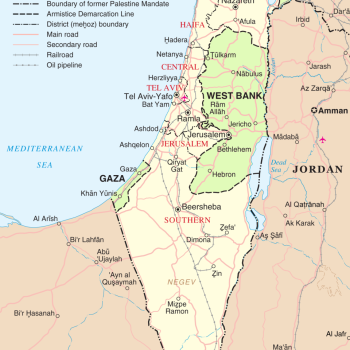
Trump's Gaza Reconstruction Plan Is on Track

Comparing Memorial Day to God's Day

Europe Could Dump Trump/USA and Form a More...
Netanyahu: "Jesus Christ Has No Advantage Over Genghis...
TRENDING AT PATHEOS Progressive Christian

The Problem with False Prophets
Miller’s Station UMC| 10/18/26| Anchor Verse: Jeremiah 23: 1, 9-23 I...

Emotion in Early Christianity by Andrew Crislip
Andrew Crislip’s Emotion in Early Christianity examines an often overlooked dimension of...

16 Spiritual Touchstones for a More Grounded Life
After decades of spiritual study, here are 16 principles I try...

Catholic Evangelization: Sharing Your Faith Every Day
Welcome back to the Graceful Awakening mini-series called, “From Faith to Mission.” ...

The Pillar of the Boatmen: the Ancient Monument...
The Pillar of the Boatmen is a Romano-Gaulish sculpture that dates from...

In one sense walking into Westminster Abbey is like walking down the...
view all Progressive Christian blogs
Ad-Free & Subscriber Log-In Subscription Support
- About Us
- 2026 Calendar
- Videos
- Podcasts
- Library of World Religions
- Faith In Media Tracker
- Advertise With Us
- Write for Us
- Privacy Policy
- Terms of Service
- Do Not Sell My Data
- Contact Us
- Radiant Digital
- Manage Newsletter Subscriptions
- Unsubscribe From Notifications
- Sitemap
Copyright 2008-2026, Patheos. All rights reserved.
Subscription Support Ad-Free & Subscriber Log-In
Follow Patheos