
BuddhistCatholicContemplativeEvangelicalGeneral ChristianHinduJewishLatter-day SaintMuslimNew VisionsProgressive Christian
Beliefs
- Buddhist
- Catholic
- Contemplative
- Evangelical
- General Christian
- Hindu
- Jewish
- Latter-day Saint
- More Voices
- Muslim
- New Visions
- Pagan
- Progressive Christian
Topics
- Religion News
- Food and Religion
- Sports and Religion
- Religious Art
- Religious Music and Entertainment
- Religious Events
- History and Religion
- Style and Religion
- Politics and Religion
- Women in Religion
- Recreation Outdoors and Religion
- Business Finance and Religion
- Careers Workplace and Religion
- Education and Religion
- Family Parenting and Religion
- Health Fitness and Religion
- Home and Religion
- Relationships and Religion
- Technology and Religion
- Travel and Religion
Columnists
- Buddhist Columnists
- Business Finance and Religion Columnists
- Careers Workplace and Religion Columnists
- Catholic Columnists
- Contemplative Columnists
- Education and Religion Columnists
- Evangelists Columnists
- Family Parenting and Religion Columnists
- General Christian Columnists
- Health Fitness and Religion Columnists
- Hindu Columnists
- History and Religion Columnists
- Home and Religion Columnists
- Jewish Columnists
- More Voices Columnists
- Latter Day Columnists
- Muslim Columnists
- New Visions Columnists
- Nonreligious Columnists
- Pagan Columnists
- Politics and Religion Columnists
- Progressive Columnists
- Recreation Outdoors and Religion Columnists
- Relationships and Religion Columnists
- Religion News Columnists
- Religious Art Columnists
- Religious Events Columnists
- Religious Music and Entertainment Columnists
- Sports and Religion Columnists
- Style and Religion Columnists
- Technology and Religion Columnists
- Travel and Religion Columnists
- Women in Religion Columnists
Resource Library
- 2026 Calendar
- Library of World Religions
- The 100 Most Holy Places on Earth
- Patheos Answers
- Podcasts
- Videos
- Faith Leaders Database
- Anglican Episcopalian
- Bahai
- Baptist
- Buddhism
- Christianity
- Confucianism
- Eastern Orthodoxy
- Hinduism
- Holiness and Pentecostal
- ISKCON
- Islam
- Judaism
- Lutheran
- Methodist
- The Church of Jesus Christ of Latter-day Saints
- New Age
- Paganism
- Presbytarian and Reformed
- Protestantism
- Religion Behind the Scenes
- Roman Catholic
- Scientology
- Shia Islam
- Sikhism
- Sufism
- Sunni Islam
- Taoism
- Zen
- See all religions
Research Tools
 Ad-Free & Subscriber Log-In Subscription Support
Ad-Free & Subscriber Log-In Subscription Support
Follow Patheos 

- Trending:
- Forgiveness
- |
- Marriage
- |
- Consciousness
- |
- Death Penalty
- |
- Election
- |
- Halloween

-
Categories
-
Christian Living
-
Christology
-
Golf
-
My Books
- Home
- Progressive Christian
- Religion News
- Review of a Scholarly Book About Angels
Review of a Scholarly Book About Angels
Last updated on: September 2, 2016 at 5:34 pm by Kermit Zarley
Review of a Scholarly Book About Angels 2016-09-02T17:34:55-07:00 Kermit Zarley
Patheos Explore the world's faith through different perspectives on religion and spirituality! Patheos has the views of the prevalent religions and spiritualities of the world.
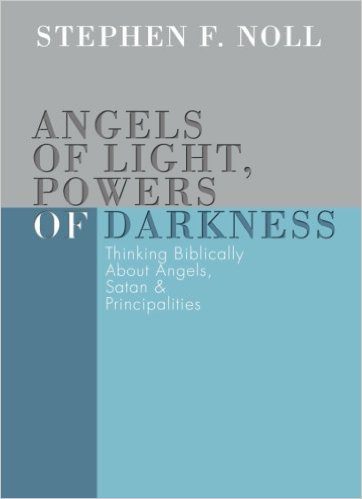 Title: Angels of Light, Powers of Darkness: Thinking Biblically About Angels, Satan & Principalities
Author: Stephen F. Noll; Publisher: InterVarsity; Publication Date: 1998; Pages: 255
Reviewer: Kermit Zarley. Bible quotations are from the NRSV unless otherwise noted.
The subject of angels, and especially Satan, went out of vogue in the western world with Enlightenment. But in our present age of post-modernity, angels and heaven are having a serious comeback. It’s partly due to New Age. However, nearly all books written on these subjects are on the popular level and usually concern merely peoples’ experiences.
Stephen Noll is professor of biblical studies and academic dean at Trinity Episcopal School for Ministry in Ambridge, Pennsylvania. His biblically oriented book on angels is endorsed on its back cover by two scholars. Richard J. Bauckham, a distinguished New Testament (NT) scholar says this book is “well-informed” in “biblical scholarship.” And Peter H. Davids claims it “should be a standard on the topic for years to come.” The preface says Bauckham and Larry Hurtado “assisted with particular parts” of the book.
The Bible often mentions angels. Noll rightly views them as personal, spiritual beings. Yet he relates, “the Bible does not attempt to explain logically the nature and activity of spiritual beings” (p. 14). Perhaps this dearth of information contributes to why Noll observes, “most theologians neglect the heavenly angels” (p. 198). Bible believers therefore are left with many unanswered questions about angels. This book helps.
Noll writes from “an evangelical perspective” and thus “understand[ing] the Bible to be the word of God written” (p. 27). He begins in Chapter 1 by briefly setting forth the angelology of various leading thinkers in church history, such as Augustine, Thomas Aquinas, John Calvin, John Milton, John Locke, Friedrich Schleiermacher, Karl Barth, who wrote 250 pages on angels in his famed Church Dogmatics, and liberal Walter Wink, who treats angels as impersonal powers and dismisses Satan as a negative force in God!
I think Chapter 2 is the best of the eight chapters in this book. It’s about a subject that has become of interest to me in recent years. Noll says there is a similar correspondence between the ancient, polytheistic, pagan beliefs in multiple gods and angels in the Bible. So, Noll repeatedly characterizes angels in the Bible as “divine beings,” which I cannot accept. Noll briefly addresses the conflict of this identification with monotheistic belief in Judaism and Christianity (pp. 33-34). Yet Noll says of the Bible, “It is not possible to make a clean semantic distinction between angels and gods” (p. 31). Some biblical texts seem to support his assertion, especially psalms that mention God’s council members (Ps 82.1; 97.9; 135.5; 136.2; 138.1). In them, the Hebrew text applies the word elohim, which means “God/god” or “gods,” to these council members, who also are called “the holy ones” (Ps 89.5-7).
Most Christians are unaware that the Bible portrays God as having a council with which he meets regularly in heaven (cf. 1 Kgs 22.19). In Job 1.6 and 2.1, the members of this assembly are literally called “the sons of God,” which the NRSV renders “heavenly beings.” Scholars generally regard them as a certain class of angels. Noll thinks the (seven?) archangels may be included in this council (p. 40), but I doubt it (cf. 1 Thes 4.16; Jude 9; Rev 8.1; 15.1). He is right in saying the seraphim and cherubim are not council members (e.g., Gen 3.24; Isa 6.2).
I believe, as does Richard Bauckham, that the members of God’s heavenly council are the enthroned, twenty-four “elders” in heaven who are mentioned repeatedly in the book of Revelation (Rev 4.4, 10; 5.6, 8, 14; 11.6; 19.4), and it is their thrones that are set up in the royal coronation ceremony in heaven mentioned in Dan 7.9.[1] Noll is quite right in saying, “The divine assembly shows that God’s lordship is supreme but not totalitarian” (p. 47).
Noll is right in distinguishing two overall classes of angels: God’s angels and Satan’s angels (e.g., Rev 12.7-9), meaning Satan is their leader or chief. And Noll rightly views all of God’s angels as his heavenly “host,” which is his army. This idea should not be thought inappropriate for the God of the Bible, especially due to the conflict between good and evil, God and Satan. The Song of Moses says, “The LORD is a warrior; the LORD is his name” (Ex 15.3). And Isaiah prophesies, “The LORD goes forth like a soldier, like a warrior he stirs up his fury; he cries out, he shouts aloud, he shows himself mighty against his foes” (Isa 42.13). Isaiah says of the endtime, “For the LORD will come in fire, and his chariots like the whirlwind,… and those slain by the LORD shall be many” (Isa 66.15).
Noll (p. 44) also states, “While the LORD is the divine warrior par excellence, he also has a glorious ‘commander of the army of the LORD’ (Josh 5:13-15).” Noll rightly regards this commander as Michael the archangel, the guardian angel of Israel, and the head of God’s angelic army in heaven (Ex 23.20-23; 33.2; Dan 10.21; 12.1; Jude 9; Rev 12.7-9).
I think Noll does well to liken God and his heavenly council with the myths in Canaanite literature about its gods regularly meeting together with the chief of god named El (p. 35). But it can be disturbing for Bible readers to learn this, since God in the Hebrew Bible is also called el, the shortened form of elohim.
My biggest disagreement with Noll in his book is that he repeatedly asserts the idea that the angelic members of God’s heavenly council mentioned in Ps 82 are “by no means pure” (p. 36). Thus he alleges, “The old divine council was contaminated by evil figures and was itself judged as corrupt” (p. 145). Psalm 82 begins (in the NRSV), “God has taken his place in the divine council; in the midst of the gods he holds judgment: ‘How long will you judge unjustly and show partiality to the wicked?’” (vv. 1-2). God then chastises these “gods” (elohim) for not caring for the lowly of society. Then we read, “I say, ‘You are gods, children of the Most High, all of you; nevertheless, you shall die like mortals, and fall like any prince’” (vv. 6-7). Despite the expression “the divine council” in v. 1, vv. 6-7 cannot refer to God’s heavenly council of angels because it says they “shall die like mortals,” that is, like all other people. Angels are not physical beings. Angels are spirit beings. Spirit cannot die. Only physical life dies.
The fallacy of Noll’s interpretation of Ps 82 becomes most evident when we examine Jesus’ reference to it, which Noll surprisingly ignores. Modern scholars sometimes purposely ignore the NT when interpreting the Old Testament (OT). Jesus said, “The Father and I are one” (Jn 10.30). The Jews misunderstood him to be “making yourself God” (v. 33). Jesus denied it by citing Ps 82 in saying, “Is it not written in your law, ‘I said, you are gods’? If those to whom the word of God came were called ‘gods’” (vv. 34-35), and the remainder of his response is not pertinent to our subject. Those to whom that word of God came were humans, not angels. So, Jesus meant that the psalmist referred to sinful rulers of Israel.
In Chapter 3, I think Noll makes the common mistake of presuming that God created the angels. The Jewish Encyclopedia well observes, “Upon the important problem of the origin of angels Biblical writers do not touch; but it is inferred that angels existed before the Creation (Gen. i. 26; Job, xxxviii. 7).” Indeed, Job 38.7 says that when God completed his creation, “the morning stars sang together and all the heavenly beings shouted for joy.” Christian, systematic theologians often cite only two biblical passages to support their view that God created the angels. They are Psalm 148.1-5 and Colossians 1.16. It is by means clear that these texts indicate that God created the angels. Perhaps I will blog about them another day.
Contrary to most scholars nowadays, Noll says he accepts, as I do, the old interpretation that the Bible presents a hierarchical, three-tiered view of existence in which there is an underworld, earth, and a heaven where God dwells that is an actual place “high” above earth (pp. 50-53). I think this is why God is often called in the Bible “the Most High (God).” Bible readers underappreciate this title for him. Perhaps it is because they do not have a view of heaven in which it is a place very far “above” the earth. But I don’t mean a physical location. Noll is right that God, angels, and heaven are spirit, not physical (p. 68).
I think Noll errs by interpreting “the sons of God” in Gen 6.2 and v. 4 as angels of Satan who cohabitated with women, resulting in them giving birth to the “Nephilim” who supposedly were giants (pp. 55-56). This interpretation of Gen 6.1-4 appears in the non-canonical 1 Enoch (chs. 6-7) and Jubilees (5.1-2; 7.22-25), apocalyptic texts in inter-testamental Jewish literature. I am amazed that this interpretation of Gen 6.1-4 recently has gained immense acceptance with biblical scholars. Noll repeatedly trumpets this interpretation in his book. To make matters worse, he doesn’t even mention or interact with opposing interpretations.
I was taught this “angelic interpretation” of Gen 6.1-4 in my youth. But I soon rejected it since there are so many biblical injunctions and logical arguments against it. Foremost is that when the Sadducees, who did not believe in the idea of the resurrection of the human body, challenged Jesus about this, he said of humans, “in the resurrection they neither marry nor are given in marriage, but are like angels in heaven” (Mt 22.30 and parallels).
So, Jesus clearly meant that angels do not have sexual intercourse or procreate. How so? Angels are like God by having no gender and therefore no sexual organs. That is why we read of creation, “Then God said, ‘Let us make humankind in our image, according to our likeness;…’ So God created humankind in his image, in the image of God he created them; male and female he created them” (Gen 1.26-27). The words “male and female” are added since God is neither. And recall that the Jewish Encyclopedia citation above interprets the “us” in this Genesis text as referring to angels, which I think is correct.
I don’t need to say much about Noll’s Chapter 4, “Angels and the Triune God.” Readers of my books and/or this blog know I was a Trinitarian for twenty-two years and that I later wrote a 600-page book, entitled The Restitution of Jesus Christ (2008), wherein I cite 400+ scholars as I biblically refute the church doctrine of the Trinity and that Jesus is God. Yet I believe all other major teachings of the church about Jesus. I just think church fathers got this wrong.
Chapter 5, “The Fallen Angel,” is about Satan, whom Noll rightly interprets as an angelic, personal being who is chief of the angels opposed to God and his angels. Although the Bible has many narratives in which angels literally have appeared to human beings by looking very human-like and speaking, Noll makes the interesting observations that “Satan never appears in personal form anywhere in the Bible, except possibly in the temptation of Jesus” (p. 102), and “Satan never uses the sacred name YHWH” (p. 105), which is God’s name. The book of Revelation identifies “the ancient serpent, who is called the Devil and Satan” (Rev 12.9). Because Satan, in the form of a serpent in the Garden of Eden, caused the Fall of man (Gen 3), Noll speaks of “the general problem of theodicy” (p. 99). But this issue is exacerbated by the unbiblical notion that God created Satan and his angels.
Noll states (p. 120), “A fall presumes Satan’s prior residence in heaven with angels, where he does appear in the Old Testament (1 Kings 22:21; Job 1-2; Zech 3:1-7)…. Satan is an intelligent being who converses with God and human beings…. The Bible never directly calls him an angel, or ‘son of god.’ He has no personal name equivalent to YHWH or Jesus or even Michael. Satan, devil, Beelzebub and the like are titles.” I agree and disagree with this.
What do people mean by “the fall of Satan”? They usually mean that (1) Satan was a perfect creation of God and that he afterwards spiritually fell into sin prior to or during Gen 3, and/or (2) Satan resided in heaven but literally fell from heaven to earth during the time of Jesus with no further access to heaven. The first view is an assumption unsupported from the Bible, and I think the second view is erroneous. It is usually based on two scriptures. First, Jesus said, “I watched Satan fall from heaven like a flash of lightning” (Lk 10.18). It is generally assumed that Jesus meant Satan literally fell from heaven at that moment and that this is corroborated by Rev 12.7-9 about Michael and his angels fighting a war in heaven with Satan and his angels, who were defeated and then cast out of heaven to earth. But it is wrong to apply that to Jesus’ time since the context of this passage is the endtimes on earth. And this text reveals that Satan and his angels still reside there in heaven until this future war occurs, since it says, “there was no longer any place for them in heaven” (v. 8).
However, this raises the question, “what is heaven”? If we mean according to the Bible, that is a difficult question I don’t have space here to engage. But briefly, I think the heaven where God and his angels dwell is a separate location from the larger heaven that includes the dwelling place of Satan and his angels. Both Jewish and pagan, apocalyptic literature include much speculation about heaven having several levels, usually three, seven, or ten. And whatever the apostle Paul meant, he did write of himself, apparently, “I know a person in Christ who fourteen years ago was caught up to the third heaven” (2 Cor 12.2).
Many Bible believers also cite Isa 14.3-21 and Eze 28.1-23 as referring to the supposed spiritual fall of Satan. But both of those texts are about a human king or prince, not Satan. It is wrongly assumed that the person featured therein cannot be an actual man. I plan to be saying much about the Isaiah text in a future volume of my STILL HERE series.
Noll is right in saying Satan, the devil, and Beelzebub are not names but titles. In fact, the word “Satan” occurs every time except once in the original text of the Bible with the article as “the satan.” English versions never include it, and I think they should. It is comparable to calling Jesus “the Messiah/messiah.” Satan is a Hebrew word meaning “adversary.” When Satan and his angels lose that war in heaven and are cast down to earth, God’s angels will proclaim in a loud voice, “Now have come the salvation and the power and the kingdom of our God and the authority of his Messiah, for the accuser of our [human] comrades has been thrown down, who accuses them day and night before our God” (Rev 12.10). This recalls Satan standing before God in heaven and, like a prosecuting attorney, accusing righteous Job on earth (Job 1-2).
But contrary to Noll, I think Satan does have a personal name. It appears four times in the Bible, all in the same place—in Leviticus 16. It is Azazel. This chapter represents instruction for the most important day of the year for ancient Jews—Yom Kippur, which means “Day of Atonement.” And on this most sober day of complete fasting, at the temple in Jerusalem the high priest conducted a very mysterious ritual involving two goats and the casting of lots. One stone lot had Hebrew writing on it meaning “for Yhwh,” and the other stone lot had Hebrew writing on it meaning “for Azazel.” The high priest reached into a box with both hands, pulled out the two lots, and placed one lot on the head of one goat and the other lot on the head of the other goat. The goat for Yhwh was first sacrificed on the altar. The goat for Azazel was then escorted about ten miles due east into the desolate Judean wilderness and released alive. Years later, Jews changed this element of their tradition which Moses had given them and pushed the goat over a cliff to its death.
There has never been any consensus among either Jewish or Christian scholars about the meaning of this ritual. Christians generally have thought the “goat for Yhwh” symbolized Jesus’ crucifixion death and that the “goat for Azazel” referred to God removing human sins far away due to Jesus’ death. I think this interpretation of the goat for Yhwh is correct, but this interpretation of the goat for Azazel is incorrect. (See my book, Warrior from Heaven, pp. 85-98). Instead, the goat for Azazel symbolizes the Israelites being removed from their land and buffeted by Satan as they wandered about in the wilderness of the nations. Thus, Azazel is the personal name of Satan just as Yhwh/YHWH is the personal name of God. And in case readers don’t know, since Hebrew at one time was a rather dead language, we don’t know for sure how Yhwh/YHWH should be pronounced, whether Yahweh, Yehwah, etc.
Chapter 6, “Principalities and Powers,” is standard fare that needs little comment. I thought it interesting that Noll says, “Demons are not heavenly beings; they are associated with death and the underworld” (p. 133). Most Bible believers think demons are fallen angels. Most of this chapter is about the Apostle Paul’s teaching about Satan’s angelic hierarchy. I don’t like Noll saying of Rev 12.9, “John draws on the myth of the fallen watchers” (p. 144). Much Jewish, inter-testamental literature has speculative commentary on angels mentioned in the biblical book of Daniel that describes them as “watchers” of humans on earth (Dan 4.13, 17, 23). It is not a myth. Angels are intensely interested in humans (e.g., Heb 1.14; 2.5-7). Many of them, both holy and evil, come to earth and watch human beings. I have a book manuscript that is partly about this subject, and I intend it for my STILL HERE series.
Chapter 7, entitled “Holy Angels As Messengers and Militants,” I find quite stimulating. Noll compares pagan literature about assemblies and wars of their gods with the Bible. Then he states, “Military victory therefore forms a central image of the mighty acts of salvation throughout the Bible” (pp. 156-57). He well adds concerning angels (p. 171), “there are national guardians” (Dan 10:21; 12:1).” Noll discusses Mt 18.10 and asks, “Does the Bible clearly teach that everyone has a guardian angel? I think that claim goes beyond the evidence of the texts” (p. 172).
I strongly disagree with Noll in saying, “in the New Testament, however, holy angels are described as escorting the soul to heaven” (p. 175). The only NT text that can give people the common idea of saintly souls going to heaven is Luke’s single account of Jesus’ parable in Luke 16 about a rich man and a poor beggar named Lazarus who both died. Jesus said, “the poor man died and was carried away by the angels to be with Abraham” (v. 22). People assume that Abraham’s soul resides in heaven because they believe in the immortality of the soul. But that is a Greek, philosophical concept that is not supported in the Bible despite the two main texts Christians cite for it: 2 Cor 5.1-8; Phil 1.21-23. And Greek philosophers ridiculed the Hebrew concept of the future resurrection of the human body because Greeks regarded flesh as evil or the source of evil (cf. Ac 17.32.) The OT teaches clearly that when people die their souls go to “Sheol,” a Hebrew word that appears 67 times in the Hebrew Bible. It corresponds to the Greek concept of the so-called “underworld” that they name Hades. The writers of the Hebrew Bible clearly meant that when people die their souls go “down” to Sheol, a place they described as located inside the earth.
Randy Alcorn has written the best-selling book about heaven entitled Heaven. But Noll has written a more scholarly book about angels that touches on heaven with the following, excellent excerpt on p. 178 about heaven in the OT with which I will end this book review:
First, heaven (Heb. Pl. samayim; Greek sing. Or pl. ouranos [oi] is thought of as singular in comparison with earth (“heaven and earth”) but as multilevel when thought of in itself. The idea of three heavens incorporates the expanse of the sky, the domain of angels and the dwelling place of God, the “heaven of heavens” (Deut 10:14; Neh 9:6). The idea of seven heavens is not found in Scripture but symbolizes the fullness of the heavenly world.
Second, since the earthly tabernacle is said to be patterned after what is above (Ex 25:40), heaven is portrayed as a kind of temple complex, with the Lord dwelling in the “holy of holies.” The visions of the divine council are not, in my opinion, set in the heavenly sanctuary. Possibly the idea of the Lord’s throne includes his palace (Heb. hekal) or the courts outside it, where he takes his seat for periodic meetings of the sons of God (Ps 82:1). As for other “intimate angels” (archangels, or angels of the presence), their place in heaven is not specified in the Old Testament; but by analogy with the priests of the Jerusalem temple, they may be thought to serve regularly in the holy place.
[1] Kermit Zarley, The Restitution of Jesus Christ, 168-69; Richard Bauckham, The Theology of the Book of Revelation, 34.
Previous Post

September 17, 2014
Should Egypt Give the Restive North Sinai to Palestinians?
Next Post
September 24, 2014 Islamic State of Iraq and Syria
Browse Our Archives
Select a Category Angels Billy Graham Blog Description Book Reviews Christian Living Christianity Christology Church History Current Events Deity of Christ? Disarmament Eschatology Evangelicalism Ezekiel 38-39 Film Reviews God Golf Gospel Harmonization Health History Holy Spirit Incarnation? Interview Islam Israeli-Palestinian Conflict Jesus Last Empire Literary Announcements Major Championship Winners Masters Monotheism My Books New Testament Old Testament Politics Primitive Weapons Ryder Cup Science Society of Biblical Literature The Bible The Restitution of Jesus Christ Trinitarianism Trinity? Uncategorized Unconditional Love? War on Terrorism
Select a Month October 2026 September 2026 August 2026 July 2026 June 2026 May 2026 April 2026 March 2026 February 2026 January 2026 December 2025 November 2025 October 2025 September 2025 August 2025 July 2025 June 2025 May 2025 April 2025 March 2025 February 2025 January 2025 December 2024 November 2024 October 2024 September 2024 August 2024 July 2024 June 2024 May 2024 April 2024 March 2024 February 2024 January 2024 December 2023 November 2023 October 2023 September 2023 August 2023 July 2023 June 2023 May 2023 April 2023 March 2023 February 2023 January 2023 December 2022 November 2022 October 2022 September 2022 August 2022 July 2022 June 2022 May 2022 April 2022 March 2022 February 2022 January 2022 December 2021 November 2021 October 2021 September 2021 August 2021 July 2021 June 2021 May 2021 April 2021 March 2021 February 2021 January 2021 December 2020 November 2020 October 2020 September 2020 August 2020 July 2020 June 2020 May 2020 April 2020 March 2020 February 2020 January 2020 December 2019 November 2019 October 2019 September 2019 August 2019 July 2019 June 2019 May 2019 April 2019 March 2019 February 2019 January 2019 December 2018 November 2018 October 2018 September 2018 August 2018 July 2018 June 2018 May 2018 April 2018 March 2018 February 2018 January 2018 December 2017 November 2017 October 2017 September 2017 August 2017 July 2017 June 2017 May 2017 April 2017 March 2017 February 2017 January 2017 December 2016 November 2016 October 2016 September 2016 August 2016 July 2016 June 2016 May 2016 April 2016 March 2016 February 2016 January 2016 December 2015 November 2015 October 2015 September 2015 August 2015 July 2015 June 2015 May 2015 April 2015 March 2015 February 2015 January 2015 December 2014 November 2014 October 2014 September 2014 July 2014 June 2014 May 2014 April 2014 March 2014 February 2014 January 2014 December 2013 November 2013 October 2013 September 2013 August 2013 July 2013 June 2013 May 2013 April 2013
Follow Us!
TAKE THE
Religious Wisdom Quiz
Who said, "To obey is better than sacrifice"?
Select your answer to see how you score.
Solomon David Isaiah Samuel
Books by This Author Books by Kermit Zarley Blog
Related posts from Kermit Zarley Blog

New Book Affirms John's Gospel Is Historically Reliable

Trump Is Still Talking about Going to Heaven
New Book a Powerful Witness that Science Indicates...

Misbehavior of Ryder Cup Fans in New York...
TRENDING AT PATHEOS Progressive Christian

How to Make a Decision When You Can't...
Main point: It’s much more valuable to stay close to God so...

Archdiocese Hosts Military Marriage Retreat in Germany
RASTATT, Germany — The transient military lifestyle, with its frequent deployments and...

Nearly every morning, I make the drive to Detroit with my high-school-age...

The Real AI Story Is Adoption Without Trust
Artificial intelligence has crossed a political threshold. It is no longer a...

A new article, written by Jeff Lindsay and Gale L. Pooley,...

Swimfan: Forgotten Aughts Pleasures
This is a recovery effort. In 2002, My Big Fat Greek Wedding...
view all Progressive Christian blogs
Ad-Free & Subscriber Log-In Subscription Support
- About Us
- 2026 Calendar
- Videos
- Podcasts
- Library of World Religions
- Faith In Media Tracker
- Advertise With Us
- Write for Us
- Privacy Policy
- Terms of Service
- Do Not Sell My Data
- Contact Us
- Radiant Digital
- Manage Newsletter Subscriptions
- Unsubscribe From Notifications
- Sitemap
Copyright 2008-2026, Patheos. All rights reserved.
Subscription Support Ad-Free & Subscriber Log-In
Follow Patheos