
BuddhistCatholicContemplativeEvangelicalGeneral ChristianHinduJewishLatter-day SaintMuslimNew VisionsProgressive Christian
Beliefs
- Buddhist
- Catholic
- Contemplative
- Evangelical
- General Christian
- Hindu
- Jewish
- Latter-day Saint
- More Voices
- Muslim
- New Visions
- Pagan
- Progressive Christian
Topics
- Religion News
- Food and Religion
- Sports and Religion
- Religious Art
- Religious Music and Entertainment
- Religious Events
- History and Religion
- Style and Religion
- Politics and Religion
- Women in Religion
- Recreation Outdoors and Religion
- Business Finance and Religion
- Careers Workplace and Religion
- Education and Religion
- Family Parenting and Religion
- Health Fitness and Religion
- Home and Religion
- Relationships and Religion
- Technology and Religion
- Travel and Religion
Columnists
- Buddhist Columnists
- Business Finance and Religion Columnists
- Careers Workplace and Religion Columnists
- Catholic Columnists
- Contemplative Columnists
- Education and Religion Columnists
- Evangelists Columnists
- Family Parenting and Religion Columnists
- General Christian Columnists
- Health Fitness and Religion Columnists
- Hindu Columnists
- History and Religion Columnists
- Home and Religion Columnists
- Jewish Columnists
- More Voices Columnists
- Latter Day Columnists
- Muslim Columnists
- New Visions Columnists
- Nonreligious Columnists
- Pagan Columnists
- Politics and Religion Columnists
- Progressive Columnists
- Recreation Outdoors and Religion Columnists
- Relationships and Religion Columnists
- Religion News Columnists
- Religious Art Columnists
- Religious Events Columnists
- Religious Music and Entertainment Columnists
- Sports and Religion Columnists
- Style and Religion Columnists
- Technology and Religion Columnists
- Travel and Religion Columnists
- Women in Religion Columnists
Resource Library
- 2026 Calendar
- Library of World Religions
- The 100 Most Holy Places on Earth
- Patheos Answers
- Podcasts
- Videos
- Faith Leaders Database
- Anglican Episcopalian
- Bahai
- Baptist
- Buddhism
- Christianity
- Confucianism
- Eastern Orthodoxy
- Hinduism
- Holiness and Pentecostal
- ISKCON
- Islam
- Judaism
- Lutheran
- Methodist
- The Church of Jesus Christ of Latter-day Saints
- New Age
- Paganism
- Presbytarian and Reformed
- Protestantism
- Religion Behind the Scenes
- Roman Catholic
- Scientology
- Shia Islam
- Sikhism
- Sufism
- Sunni Islam
- Taoism
- Zen
- See all religions
Research Tools
 Ad-Free & Subscriber Log-In Subscription Support
Ad-Free & Subscriber Log-In Subscription Support
Follow Patheos 

- Trending:
- Forgiveness
- |
- Marriage
- |
- Consciousness
- |
- Death Penalty
- |
- Election
- |
- Halloween

- Home
- Progressive Christian
- INNER CIRCLE: The Solitary One
INNER CIRCLE: The Solitary One
Last updated on: September 22, 2023 at 6:11 pm by Keith Giles
INNER CIRCLE: The Solitary One 2023-09-22T18:11:03+00:00 Keith Giles
Patheos Explore the world's faith through different perspectives on religion and spirituality! Patheos has the views of the prevalent religions and spiritualities of the world.
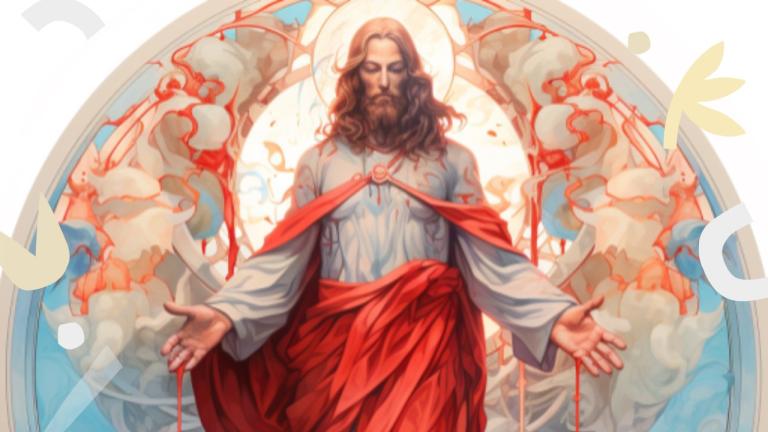
IMAGE: Keith Giles
SAYING 75
Jesus said, “There are many standing at the door, but it is the solitary one who will enter the bridal chamber.”
By now, the meaning behind these sayings of Jesus from the Gospel of Thomas should begin to become more apparent to you. As in this saying where Jesus, once again, contrasts for us the foolishness and emptiness of “the many” as compared to the success and the wisdom of “the solitary one.”
Over and over again in these sayings we see Jesus referring to the Kingdom as being accessible only to the one and not to the many. As when he speaks of the “wise fisherman” [saying 8] who discards all of the many little fish in favor of the one large fish, or when he speaks of how entering the Kingdom of God hinges on understanding how the two must become one [saying 24], Jesus here, once again, tells us that the many will stand at the door of the bridal chamber but only the one, single, solitary, integrated, whole person may enter in.
The metaphor used here – the bridal chamber – is a common reference for the Kingdom of God in the New Testament writings, and it suggests that ultimate intimacy with God – as when a husband knows his wife on their wedding night and they become one flesh. This metaphor, alluded to in the Gospel of John, is about our scandalous union with the Divine as when Jesus says:
“Now this is eternal life: to know [ginosko] God and His Son…” [John 17:3]
That word “Ginosko” in the Greek is the same word used for the kind of “knowing” that only comes when two people – say a husband and a wife – engage in sexual intercourse and fully experience one another in the most intimate and vulnerable union of body and soul.
This is why the Bridal Chamber metaphor works so well in this case. It’s a vivid image of the sort of scandalous intimacy experienced between flesh and spirit – The human and the Divine, or God and mankind – when we fully encounter God in the most transformative way possible.
As F.F. Bruce says:
“The ‘bridal chamber’ figures in several Gnostic texts as the place where the soul is reunited with its proper element; it is accessible only to the ‘single’ (in the sense of Saying 4, and 49). The Valentinian Gnostics observed a sacrament of the bridal chamber, through which light was received. According to the Gospel of Philip (a Valentinian collection of sayings identified, like the Gospel of Thomas, among the Nag Hammadi papyri), ‘if any one becomes a son of the bridal chamber, he will receive the light; if any one does not receive it while he is in this place, he will not receive it in the other place’ (Saying 127).] There is a superficial resemblance to the parable of the ten virgins (Matthew 25.1-13), but it is to the wedding feast, not to the bridal chamber, that the wise virgins are admitted.“[1]
So, for anyone to “enter the bridal chamber” they must be single or solitary. Not “single” in the sense that they are not yet married – although one could make a case that being single is, itself, another metaphor to describe someone who is devoted only to God – but “single” in the sense that they are not divided within themselves. In other words, as long as we embrace this notion of separation from God or from others, we remain outside the bridal chamber.
Until we can fully embrace the reality of our Oneness with God and with all things and all people, our entry into the bridal chamber is granted and we experience the rapturous ecstasy of Divine union with God first-hand.
[1] Jesus and Christian Origins Outside the New Testament, F.F. Bruce, pp. 141-142
**
My son, David Giles, just published his very first novel – THERE ONCE WERE ORANGE GROVES – and it’s available right now on Amazon.
There Once Were Orange Groves is an autofiction meta-novel about two siblings, Audrey and Jacob, who are both grieving the sudden passing of their father. It’s all about stories, finding beauty in the little things, and the places those moments inhabit.
In addition to winning the William Shanebeck Award for Excellence in Creative Writing [2020], David Giles lives in Portland, Oregon and creates original music in his spare time.
His new novel has been praised by authors and readers alike.


**
Keith Giles is the best-selling author of the Jesus Un series. He has appeared on CNN, USA Today, BuzzFeed, and John Fugelsang’s “Tell Me Everything.” He hosts the Second Cup with Keith podcast, and co-hosts the Apostates Anonymous podcast, and the Heretic Happy Hour Podcast.
His latest book, SOLA DEUS: What If God Is All Of Us? is available now on Amazon in Paperback and Kindle HERE>
Find out more about online courses HERE>
Previous Post

September 20, 2023
Making Peace With Your Inner Self
Next Post

September 29, 2023 INNER CIRCLE: The Treasure That Endures
Recent Comments
"Googled: “In psychology and everyday language, intelligence is the capacity to learn, understand, reason, think ..."
"It's so weird to me how anyone thinks that getting basic income is in any ..."
"Sounds very much like what Pope Leo wrote in Magnifica Humanitas - a lot of ..."
"As it is written in the canonical Gospels:But as many as received Him, to them ..."
INNER CIRCLE: God’s Transcending Love
Browse Our Archives
Select a Category Art Biblicism Christian Politics Cosmic Christ Deconstruction Discipleship Dispensationalism Divine Unity Ekklesia End Time Stuff Eschatology Evergreen Following Jesus Gender General Christian Topics Gnostics God's Love Gospel of Judas Gospel of Mary Gospel of Philip Gospel of the Kingdom Gospel of Thomas Gospel of Truth Hell Historical Jesus Inner Circle Investigative Reporting Islam LGBTQ Issues Marriage Mental/Emotional Health Mystery Non-Duality Philosophy Podcast Poetry Politics Poverty Preemptive Love Prophecy Psychology Quantum Theology Racism Reconstruction Satire Sex Technology Theology Uncategorized Universalism
Select a Month October 2026 September 2026 August 2026 July 2026 June 2026 May 2026 April 2026 March 2026 February 2026 January 2026 December 2025 November 2025 October 2025 September 2025 August 2025 July 2025 June 2025 May 2025 April 2025 March 2025 February 2025 January 2025 December 2024 November 2024 October 2024 September 2024 August 2024 July 2024 June 2024 May 2024 April 2024 March 2024 February 2024 January 2024 December 2023 November 2023 October 2023 September 2023 August 2023 July 2023 June 2023 May 2023 April 2023 March 2023 February 2023 January 2023 December 2022 November 2022 October 2022 September 2022 August 2022 July 2022 June 2022 May 2022 April 2022 March 2022 February 2022 January 2022 December 2021 November 2021 October 2021 September 2021 August 2021 July 2021 June 2021 May 2021 April 2021 March 2021 February 2021 January 2021 December 2020 November 2020 October 2020 September 2020 August 2020 July 2020 June 2020 May 2020 April 2020 March 2020 February 2020 January 2020 December 2019 November 2019 October 2019 September 2019 August 2019 July 2019 June 2019 May 2019 April 2019 March 2019 February 2019 January 2019 December 2018 November 2018 October 2018 September 2018 August 2018 July 2018 June 2018 May 2018 April 2018 March 2018 February 2018 January 2018 December 2017 November 2017
Follow Us!
TAKE THE
Religious Wisdom Quiz
What did Nehemiah do upon reading that Moabites and Ammonites were forbidden in God's assembly?
Select your answer to see how you score.
Rebuilt the altar Started a fast Expelled them Closed the gates
Books by This Author Books by Keith Giles
Related posts from Keith Giles

INNER CIRCLE: Profound Mystery (Of Christ In All...

INNER CIRCLE: Awaken the Sleeper

INNER CIRCLE: In Every Respect

TRENDING AT PATHEOS Progressive Christian

Janie Learns the Way of the Cross: A...
Teaching children about Jesus' Passion can be challenging. Many parents and educators...

Looking For Good Catholic Writing - October 2026
He alone extends the heavens, and he walks upon the waves of...

In "Irreplaceable," our book on vocation and technology, Trevor Sutton and I...

I was strolling through the top floor of the brand new Parthenon...

What Does Gêvâh Mean For Kimberley Guifoyle &...
This week, a lot of the news is focused on Kimberly Guilfoyle....

INNER CIRCLE: Profound Mystery (Of Christ In All...
Ephesians 5:31-32 “For this reason, a man will leave his father and...
view all Progressive Christian blogs
What Are Your Thoughts?leave a comment
Ad-Free & Subscriber Log-In Subscription Support
- About Us
- 2026 Calendar
- Videos
- Podcasts
- Library of World Religions
- Faith In Media Tracker
- Advertise With Us
- Write for Us
- Privacy Policy
- Terms of Service
- Do Not Sell My Data
- Contact Us
- Radiant Digital
- Manage Newsletter Subscriptions
- Unsubscribe From Notifications
- Sitemap
Copyright 2008-2026, Patheos. All rights reserved.
Subscription Support Ad-Free & Subscriber Log-In
Follow Patheos