
BuddhistCatholicContemplativeEvangelicalGeneral ChristianHinduJewishLatter-day SaintMuslimNew VisionsProgressive Christian
Beliefs
- Buddhist
- Catholic
- Contemplative
- Evangelical
- General Christian
- Hindu
- Jewish
- Latter-day Saint
- More Voices
- Muslim
- New Visions
- Pagan
- Progressive Christian
Topics
- Religion News
- Food and Religion
- Sports and Religion
- Religious Art
- Religious Music and Entertainment
- Religious Events
- History and Religion
- Style and Religion
- Politics and Religion
- Women in Religion
- Recreation Outdoors and Religion
- Business Finance and Religion
- Careers Workplace and Religion
- Education and Religion
- Family Parenting and Religion
- Health Fitness and Religion
- Home and Religion
- Relationships and Religion
- Technology and Religion
- Travel and Religion
Columnists
- Buddhist Columnists
- Business Finance and Religion Columnists
- Careers Workplace and Religion Columnists
- Catholic Columnists
- Contemplative Columnists
- Education and Religion Columnists
- Evangelists Columnists
- Family Parenting and Religion Columnists
- General Christian Columnists
- Health Fitness and Religion Columnists
- Hindu Columnists
- History and Religion Columnists
- Home and Religion Columnists
- Jewish Columnists
- More Voices Columnists
- Latter Day Columnists
- Muslim Columnists
- New Visions Columnists
- Nonreligious Columnists
- Pagan Columnists
- Politics and Religion Columnists
- Progressive Columnists
- Recreation Outdoors and Religion Columnists
- Relationships and Religion Columnists
- Religion News Columnists
- Religious Art Columnists
- Religious Events Columnists
- Religious Music and Entertainment Columnists
- Sports and Religion Columnists
- Style and Religion Columnists
- Technology and Religion Columnists
- Travel and Religion Columnists
- Women in Religion Columnists
Resource Library
- 2026 Calendar
- Library of World Religions
- The 100 Most Holy Places on Earth
- Patheos Answers
- Podcasts
- Videos
- Faith Leaders Database
- Anglican Episcopalian
- Bahai
- Baptist
- Buddhism
- Christianity
- Confucianism
- Eastern Orthodoxy
- Hinduism
- Holiness and Pentecostal
- ISKCON
- Islam
- Judaism
- Lutheran
- Methodist
- The Church of Jesus Christ of Latter-day Saints
- New Age
- Paganism
- Presbytarian and Reformed
- Protestantism
- Religion Behind the Scenes
- Roman Catholic
- Scientology
- Shia Islam
- Sikhism
- Sufism
- Sunni Islam
- Taoism
- Zen
- See all religions
Research Tools
 Ad-Free & Subscriber Log-In Subscription Support
Ad-Free & Subscriber Log-In Subscription Support
Follow Patheos 

- Trending:
- Forgiveness
- |
- Marriage
- |
- Consciousness
- |
- Death Penalty
- |
- Election
- |
- Halloween

- Home
- Progressive Christian
- INNER CIRCLE: As Heaven Fades Away
INNER CIRCLE: As Heaven Fades Away
Last updated on: July 8, 2022 at 3:45 am by Keith Giles
INNER CIRCLE: As Heaven Fades Away 2022-07-08T03:45:41+00:00 Keith Giles
Patheos Explore the world's faith through different perspectives on religion and spirituality! Patheos has the views of the prevalent religions and spiritualities of the world.
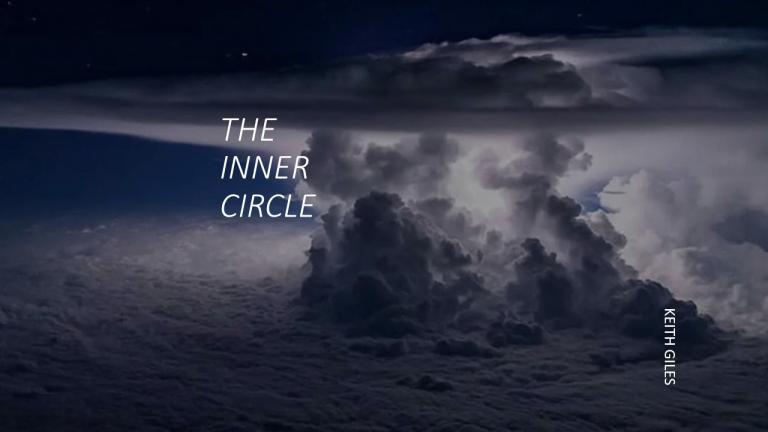
Image: Pexels
Saying 11: “Jesus said: “This heaven will pass away, and the one above it will pass away; and those who are dead are not alive, and those who are living will not die. In the days when you ate of what is dead, you made of it what is living. When you come to be light, what will you do? On the day when you were one, you became two. But when you have become two, what will you do?”
It’s quite likely that saying 11 is actually two sayings rather than one. We could possibly argue that it’s three sayings in one, but at any rate, the first sentence appears to be about heaven, while the second saying seems to be about the differences between what is alive and what is dead, with a potential third saying focused on what happens one becomes two.
Let’s take each saying one at a time and see if we can make sense of what Jesus is trying to show us here.
In the first saying, Jesus says that “This heaven will pass away, and the one above it will pass away.” What we need to keep in mind is that the “heaven” he is referring to here is not the spiritual reality where we often imagine God dwells. We know this isn’t what Jesus is referring to simply because, all throughout the Gospel of Thomas, we are reminded that God is not separate from God’s creation. Therefore, there is no such thing as a “heaven” where God exists apart from the rest of reality. This idea is an illusion that Jesus has come to eradicate. So, it’s possible on one level that what Jesus means to say is that our concept of heaven as a separate place where God dwells apart from us is what will “pass away” as we begin to realize the truth of our Oneness and connectivity with God.
However, since Jesus adds that “the one above it will [also] pass away”, we might need to reconsider that explanation. It’s more likely that when Jesus refers to “this heaven” he’s talking literally about the sky where the birds of the air fly, and “the one above it” is the realm of the moon, the sun and the stars above us. This was the common use of those terms, even in the New Testament.
When Paul speaks of being taken up into the “third heaven” [2 Cor. 12:2-4], he’s cluing us into the First Century mindset where the first heaven was the sky, the second heaven was outer space, and he third heaven was the spiritual realm where Almighty God was.
So, when Jesus says that “this heaven” and “the one above it will pass away” he’s saying that the first and second heavens are temporary. By default then, the third heaven, which he doesn’t mention by name, is all that will endure for eternity. Why? Because it is the only realm that defines all of reality. Everyone and everything – both God and humanity – exist, right now, together, as one in this third heaven which is all there is or ever will be.
In other words, Jesus is saying that the sky we see by day, and the heavens we see by night are illusions that will one day vanish and cease to exist. The physical realm will eventually crumble and all that will remain is the ultimate reality which is understood to be defined as the Universal Oneness of all things.
Now, let’s look at the second saying found here:
“Those who are dead are not alive, and those who are living will not die. In the days when you ate of what is dead, you made of it what is living.”
As with several other sayings of Jesus from this Gospel of Thomas, the first part of this statement appears to be painfully obvious. Of course, the dead are not alive. That’s why they’re dead. But, then why does Jesus follow this up by saying, “…and those who are living will not die.”? That statement does not appear self-evident. In fact, it’s more than a little confusing. How can Jesus claim that “those who are living will not die”, especially when we have experienced quite the opposite?
Could it be that Jesus wants us to understand that death, like the first and second heavens above us, are not true expressions of reality? If so, then when he says “those who are dead are not alive and those who are living will not die”, he wants us to consider another possibility: that death is an illusion and that those who are alive [as we all are when we begin our lived mortal experience in this world] will remain alive and not die, even if they appear dead for a moment. The illusion of death, like the illusions of the sky and the universe around us, will one day fade away. What will remain is life, and the reality of our eternal Oneness with the Creator of all things, and one another.
Jesus concludes this passage by adding, “In the days when you ate of what is dead, you made of it what is living.” What could this possibly point to? What exactly is meant by “…when you ate of what is dead…”?
One idea might be that he’s referring to “the days when” we once believed in the illusion of death and separation from God and others. Before we understood the truth of Oneness and Connectivity, we were eating or consuming “what is dead” and by doing so, we “made of it what is living.”
Or, in other words, we once believed a lie about reality that tricked us into thinking that what was dead [false] was alive [true]. In contrast, now that we eat of what is alive, what this makes in us is life – true life – that is based on reality rather than illusions.
Perhaps this is why Jesus ends this section by asking us, “When you come to be light, what will you do?” This feels as if it’s flowing directly out of the previous statement where the negative thought of “eating what is dead” is contrasted with what happens when we “come to be light” and realize how we have been living in darkness.
Yet, there is one final question for us to consider which comes back to the notions of division and separation when Jesus rounds out this long saying by asking:
“On the day when you were one, you became two. But when you have become two, what will you do?”
Once more, Jesus wants us to continually question our perception of reality. The “day when [we] were one” is the day you were born into consciousness in this present reality. From the beginning – and even before the beginning – you were One with the Source of all life. But, even as you took your first few breaths in this life, you “became two” when you began to believe the illusion of separation was real. Once you have “become two”, or believed the lie of separation from God and others, “what will you do?” The only hope for you is to return to that place of original Oneness with the One True God whom you can never be separated from – ever.
It’s fascinating to me how often we hear pastors and Bible teachers point to the story of Adam and Eve in Genesis as evidence of our separation from God. Yet, the story never once says that eating of the Tree of the Knowledge of Good and Evil created a separation between God and humanity. Not once. We read of how they were separated from the Tree of Life in the Garden, which was why they were expelled from Eden. But, the story does not say that humanity was ever separated from God at all. In fact, what we read is that God went out from the Garden with them, and clothed them, and cared for them, and watched over them, and their children, just as when they were in the Garden before.
That story also tells us that the lie the serpent told them in the Garden was that they were not already equal with God. What Eve and Adam accepted by eating of the fruit was the lie that they needed something outside of themselves to become like God. How could they be more like God than to be made in God’s image, both male and female? How could they be any more like God than to be filled with the very life breath of God which filled their own lungs and made alive by God’s indwelling presence?
We continually suffer from this same delusion of separation from God today, every time we buy into the notion that God is “up there” and we are “down here”; that our sins prevent God from engaging with us, or loving us, or accepting us, that God is anywhere other than our own inner being.
We are where God is, and God is where we are. We are God’s hands. We are God’s feet. We are God’s voice. We are God’s presence in this world; the Incarnation of Christ where God dwells by His Eternal Spirit.
The more we know this, meditate on this, and live out of this unshakeable truth, the more this truth will transform us and change us into the beautiful image of Christ from the inside out.
**

CAN YOU FIND THE SECRET LINK?
Answer the questions right and you’ll uncover something fun.
**
Keith Giles is the author of the 7-part best-selling Jesus Un book series from Quoir Publishing. Keith is also the host of Second Cup with Keith [a new solo podcast available now on the Ethos Radio App, for Apple and Android and on Spotify; and the Heretic Happy Hour Podcast and the new Apostate’s Anonymous podcast with Matthew Distefano**.**
Previous Post

June 29, 2022
INNER CIRCLE: Casting Fire
Next Post

July 12, 2022 INNER CIRCLE: Trolling The Disciples
Browse Our Archives
Select a Category Art Biblicism Christian Politics Cosmic Christ Deconstruction Discipleship Dispensationalism Divine Unity Ekklesia End Time Stuff Eschatology Evergreen Following Jesus Gender General Christian Topics Gnostics God's Love Gospel of Judas Gospel of Mary Gospel of Philip Gospel of the Kingdom Gospel of Thomas Gospel of Truth Hell Historical Jesus Inner Circle Investigative Reporting Islam LGBTQ Issues Marriage Mental/Emotional Health Mystery Non-Duality Philosophy Podcast Poetry Politics Poverty Preemptive Love Prophecy Psychology Quantum Theology Racism Reconstruction Satire Sex Technology Theology Uncategorized Universalism
Select a Month October 2026 September 2026 August 2026 July 2026 June 2026 May 2026 April 2026 March 2026 February 2026 January 2026 December 2025 November 2025 October 2025 September 2025 August 2025 July 2025 June 2025 May 2025 April 2025 March 2025 February 2025 January 2025 December 2024 November 2024 October 2024 September 2024 August 2024 July 2024 June 2024 May 2024 April 2024 March 2024 February 2024 January 2024 December 2023 November 2023 October 2023 September 2023 August 2023 July 2023 June 2023 May 2023 April 2023 March 2023 February 2023 January 2023 December 2022 November 2022 October 2022 September 2022 August 2022 July 2022 June 2022 May 2022 April 2022 March 2022 February 2022 January 2022 December 2021 November 2021 October 2021 September 2021 August 2021 July 2021 June 2021 May 2021 April 2021 March 2021 February 2021 January 2021 December 2020 November 2020 October 2020 September 2020 August 2020 July 2020 June 2020 May 2020 April 2020 March 2020 February 2020 January 2020 December 2019 November 2019 October 2019 September 2019 August 2019 July 2019 June 2019 May 2019 April 2019 March 2019 February 2019 January 2019 December 2018 November 2018 October 2018 September 2018 August 2018 July 2018 June 2018 May 2018 April 2018 March 2018 February 2018 January 2018 December 2017 November 2017
Follow Us!
TAKE THE
Religious Wisdom Quiz
True or False: The Corinthians were told that if Christ has not been raised, their preaching and faith are useless.
Select your answer to see how you score.
TRUE FALSE
Books by This Author Books by Keith Giles
Related posts from Keith Giles

INNER CIRCLE: Profound Mystery (Of Christ In All...

INNER CIRCLE: Awaken the Sleeper

INNER CIRCLE: In Every Respect

TRENDING AT PATHEOS Progressive Christian

A new article, written by Jeff Lindsay and Gale L. Pooley,...

Swimfan: Forgotten Aughts Pleasures
This is a recovery effort. In 2002, My Big Fat Greek Wedding...

Top Three Anti-Catholic Lies About Catholicism
This is my initial transcript for the video, "THE 3 WORST...

Pope Leo Celebrates Mass for Nurses & Docs...
I don't have any idea how he did it, but Pope Leo...

The Sermon on the Mount, Part I: Matthew...
The Sermon on the Mount, Part I (Matthew 4:12-5:12) St. Matthew moves...

What's up from Crossway: Reviewing some of their latest A few weeks...
view all Progressive Christian blogs
Ad-Free & Subscriber Log-In Subscription Support
- About Us
- 2026 Calendar
- Videos
- Podcasts
- Library of World Religions
- Faith In Media Tracker
- Advertise With Us
- Write for Us
- Privacy Policy
- Terms of Service
- Do Not Sell My Data
- Contact Us
- Radiant Digital
- Manage Newsletter Subscriptions
- Unsubscribe From Notifications
- Sitemap
Copyright 2008-2026, Patheos. All rights reserved.
Subscription Support Ad-Free & Subscriber Log-In
Follow Patheos