
BuddhistCatholicContemplativeEvangelicalGeneral ChristianHinduJewishLatter-day SaintMuslimNew VisionsProgressive Christian
Beliefs
- Buddhist
- Catholic
- Contemplative
- Evangelical
- General Christian
- Hindu
- Jewish
- Latter-day Saint
- More Voices
- Muslim
- New Visions
- Pagan
- Progressive Christian
Topics
- Religion News
- Food and Religion
- Sports and Religion
- Religious Art
- Religious Music and Entertainment
- Religious Events
- History and Religion
- Style and Religion
- Politics and Religion
- Women in Religion
- Recreation Outdoors and Religion
- Business Finance and Religion
- Careers Workplace and Religion
- Education and Religion
- Family Parenting and Religion
- Health Fitness and Religion
- Home and Religion
- Relationships and Religion
- Technology and Religion
- Travel and Religion
Columnists
- Buddhist Columnists
- Business Finance and Religion Columnists
- Careers Workplace and Religion Columnists
- Catholic Columnists
- Contemplative Columnists
- Education and Religion Columnists
- Evangelists Columnists
- Family Parenting and Religion Columnists
- General Christian Columnists
- Health Fitness and Religion Columnists
- Hindu Columnists
- History and Religion Columnists
- Home and Religion Columnists
- Jewish Columnists
- More Voices Columnists
- Latter Day Columnists
- Muslim Columnists
- New Visions Columnists
- Nonreligious Columnists
- Pagan Columnists
- Politics and Religion Columnists
- Progressive Columnists
- Recreation Outdoors and Religion Columnists
- Relationships and Religion Columnists
- Religion News Columnists
- Religious Art Columnists
- Religious Events Columnists
- Religious Music and Entertainment Columnists
- Sports and Religion Columnists
- Style and Religion Columnists
- Technology and Religion Columnists
- Travel and Religion Columnists
- Women in Religion Columnists
Resource Library
- 2026 Calendar
- Library of World Religions
- The 100 Most Holy Places on Earth
- Patheos Answers
- Podcasts
- Videos
- Faith Leaders Database
- Anglican Episcopalian
- Bahai
- Baptist
- Buddhism
- Christianity
- Confucianism
- Eastern Orthodoxy
- Hinduism
- Holiness and Pentecostal
- ISKCON
- Islam
- Judaism
- Lutheran
- Methodist
- The Church of Jesus Christ of Latter-day Saints
- New Age
- Paganism
- Presbytarian and Reformed
- Protestantism
- Religion Behind the Scenes
- Roman Catholic
- Scientology
- Shia Islam
- Sikhism
- Sufism
- Sunni Islam
- Taoism
- Zen
- See all religions
Research Tools
 Ad-Free & Subscriber Log-In Subscription Support
Ad-Free & Subscriber Log-In Subscription Support
Follow Patheos 

- Trending:
- Forgiveness
- |
- Marriage
- |
- Consciousness
- |
- Death Penalty
- |
- Election
- |
- Halloween

- Home
- Progressive Christian
- Why Jesus Did NOT Have To Die On The Cross
Why Jesus Did NOT Have To Die On The Cross
Last updated on: July 29, 2020 at 9:42 pm by Keith Giles
Why Jesus Did NOT Have To Die On The Cross 2020-07-29T21:42:57+00:00 Keith Giles
Patheos Explore the world's faith through different perspectives on religion and spirituality! Patheos has the views of the prevalent religions and spiritualities of the world.
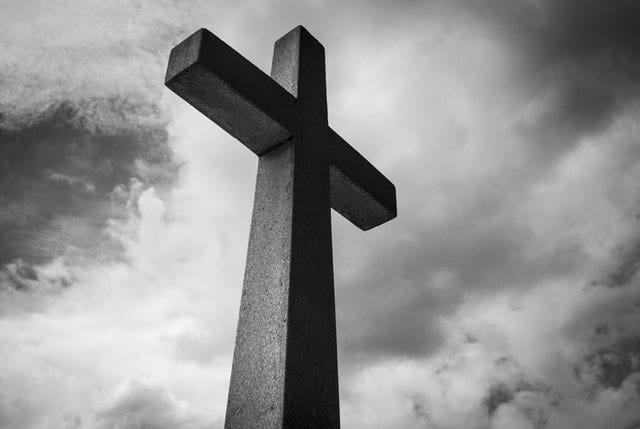
Honestly, I think at least once a week I hear someone invoke the phrase, “This is why Jesus died on the cross” or ask the question, “Why did Jesus have to die?” or some other variation of the concept.
Here’s the thing: Jesus did NOT have to die on the cross.
In other words, God did not require Jesus to be crucified to fulfill some mystical prophecy.
However, it is clear that the death of Jesus was expected from the very beginning. So, whereas we might say that Jesus didn’t need to be crucified [specifically], it was inevitable and necessary for Jesus to die [or to taste death].
How do we know this? Because once Christ became flesh, death became inevitable. Once Immortality became clothed with Mortality; once the Incorruptible took on Corruptibility; Once God became Man, death was a foregone conclusion. It couldn’t have ended any other way.
The decision for Christ to take on flesh indicated an intention to experience death, one way or the other.
So, once the Incarnation took place, the death of Jesus was already in play. Just as everyone one of us who is born must one day taste death, so, too, did Christ agree to die simply by virtue of being united with us in our mortal bodies.
And, I would argue, that the death of Christ – no matter how it had taken place – would have resulted in the salvation and transformation of all mankind, with or without the cross.
The plan all along was for Christ to become incarnate in a body of flesh so that the seed of immortality could be planted into the soil of mortality [death] and the resurrection power of Christ could forever liberate us from the power of the grave.
As Jesus phrased it: “Truly, truly, I say to you, unless a grain of wheat falls into the earth and dies, it remains alone; but if it dies, it bears much fruit.” [John 12:24]
So, it was always the plan for Christ to die. This is how the power of death was broken. The resurrection life of Christ invaded the realm of death and turned it inside out. The light of the world descended into the depths of outer darkness and illuminated it from within.
Or, as Paul phrases it in the inverse here in 1 Corinthians 15:
“For this perishable must put on the imperishable, and this mortal must put on immortality. But when this perishable will have put on the imperishable, and this mortal will have put on immortality, then will come about the saying that is written, “Death is swallowed up in victory. O death, where is your victory? O death, where is your sting?” The sting of death is sin, and the power of sin is the law; but thanks be to God, who gives us the victory through our Lord Jesus Christ.” [1 Cor. 15:53-57]
See, because Christ the imperishable one took on perishable flesh, and because the immortal one became mortal, we [the mortal ones] are qualified to take on immortality [now that we are all “in Christ” and Christ is now in us].
Whether Jesus had died from cholera, or typhoid fever, or old age, or yes, by the hands of men who nailed him to a Roman cross, is irrelevant. Regardless of the “how”, the “what” was always in full view: Christ became flesh and experienced death so that we could put on immortality and share in the life of Christ forever.
Paul says as much in the very same chapter of 1 Corinthians:
“But now Christ has been raised from the dead, the first fruits of those who are asleep. For since by a man came death, by a man also came the resurrection of the dead. For as in Adam all die, so also in Christ all will be made alive. “ [1 Cor. 15:20-22]
So, Christ knew he would die from the start. But how he would die wasn’t inevitable, or even contingent upon the success of his mission. Once Christ took on mortal flesh everything was set in motion.
To be clear, God did not send Jesus to be crucified. We [humans] decided that Jesus would die in this way. But there was nothing magical or specific about crucifixion itself that accomplished God’s plan. Christ’s obedience, even unto death on a cross, is what mattered most.
Over the years I think too much has been made about the cross, specifically, as if drowning Jesus would’ve thwarted the entire salvation operation, or as if food poisoning would’ve been insufficient for us to have counted his death as a victory over sin and death.
We chose the cross as the means of Christ’s death. Peter and the other Disciples say it over and over again:
“…this Man, delivered over by the predetermined plan and foreknowledge of God, you nailed to a cross by the hands of godless men and put Him to death.” Acts 2:23
“ but put to death the Prince of life, the one whom God raised from the dead, a fact to which we are witnesses.” Acts 3:15
“The God of our fathers raised up Jesus, whom you had put to death by hanging Him on a cross.” Acts 5:30
“Which one of the prophets did your fathers not persecute? They killed those who had previously announced the coming of the Righteous One, whose betrayers and murderers you have now become;” Acts 7:52
What we did was kill Jesus.
What God did was to raise him up again.
We crucified Jesus.
God did not.
Certainly, Jesus knew that he would most likely be crucified by the Roman authorities. That wasn’t hard to guess. Even Plato predicted, hundreds of years prior to Christ, that a truly righteous man would be beaten and crucified if we ever got our hands on him. [See Plato’s Republic, Book II.360-61]
So, while the death of Christ was inevitable, his crucifixion was not.
The answer, then, to the question, “Why did Jesus have to die?” is answered simply: “Because he became human at his Incarnation.”
But the answer to the question, “Why did Jesus die on the cross?” is answered by admitting that our reaction to Christ’s innocence, righteousness and radical love was to nail him to a cross.
Yes, Jesus died “for our sins” in that it was our sins that nailed him to the cross. But, even as we were in the process of nailing him there, his forgiveness was instantaneous and complete. “Father, forgive them, for they know not what they do.”
In Christ, we are reconciled to God. In Christ, our sins are not being counted against us. In Christ, we experience freedom and newness of life.
Our choice was to crucify. His choice was to love and forgive.
**
FREE DOWNLOAD: The e-book “Unraveled: More Thoughts On Christian Entanglement” by Keith Giles is available now as a free PDF. If you’d like a FREE download of the entire 85-page book, you can grab one HERE
Keith Giles and his wife, Wendy, work with Peace Catalyst International to help build relationships between Christians and Muslims in El Paso, TX. Keith was formerly a licensed and ordained minister who walked away from organized church over a decade ago to start a home fellowship that gave away 100% of the offering to the poor in the community. Today he is the author of several best-selling books, including “Jesus Undefeated: Condemning the False Doctrine of Eternal Torment” which is available now on Amazon.
Previous Post

July 22, 2020
Does God Work All Things Together For Our Good? Not Exactly.
Next Post

August 3, 2020 The Forgotten Female Disciples of Jesus
Browse Our Archives
Select a Category Art Biblicism Christian Politics Cosmic Christ Deconstruction Discipleship Dispensationalism Divine Unity Ekklesia End Time Stuff Eschatology Evergreen Following Jesus Gender General Christian Topics Gnostics God's Love Gospel of Judas Gospel of Mary Gospel of Philip Gospel of the Kingdom Gospel of Thomas Gospel of Truth Hell Historical Jesus Inner Circle Investigative Reporting Islam LGBTQ Issues Marriage Mental/Emotional Health Mystery Non-Duality Philosophy Podcast Poetry Politics Poverty Preemptive Love Prophecy Psychology Quantum Theology Racism Reconstruction Satire Sex Technology Theology Uncategorized Universalism
Select a Month October 2026 September 2026 August 2026 July 2026 June 2026 May 2026 April 2026 March 2026 February 2026 January 2026 December 2025 November 2025 October 2025 September 2025 August 2025 July 2025 June 2025 May 2025 April 2025 March 2025 February 2025 January 2025 December 2024 November 2024 October 2024 September 2024 August 2024 July 2024 June 2024 May 2024 April 2024 March 2024 February 2024 January 2024 December 2023 November 2023 October 2023 September 2023 August 2023 July 2023 June 2023 May 2023 April 2023 March 2023 February 2023 January 2023 December 2022 November 2022 October 2022 September 2022 August 2022 July 2022 June 2022 May 2022 April 2022 March 2022 February 2022 January 2022 December 2021 November 2021 October 2021 September 2021 August 2021 July 2021 June 2021 May 2021 April 2021 March 2021 February 2021 January 2021 December 2020 November 2020 October 2020 September 2020 August 2020 July 2020 June 2020 May 2020 April 2020 March 2020 February 2020 January 2020 December 2019 November 2019 October 2019 September 2019 August 2019 July 2019 June 2019 May 2019 April 2019 March 2019 February 2019 January 2019 December 2018 November 2018 October 2018 September 2018 August 2018 July 2018 June 2018 May 2018 April 2018 March 2018 February 2018 January 2018 December 2017 November 2017
Follow Us!
TAKE THE
Religious Wisdom Quiz
What Christian group is known for singing acapella during worship?
Select your answer to see how you score.
Methodists Churches of Christ Catholics Baptists
Books by This Author Books by Keith Giles
Related posts from Keith Giles

INNER CIRCLE: Profound Mystery (Of Christ In All...

INNER CIRCLE: Awaken the Sleeper

INNER CIRCLE: In Every Respect

TRENDING AT PATHEOS Progressive Christian

The Sermon on the Mount, Part I: Matthew...
The Sermon on the Mount, Part I (Matthew 4:12-5:12) St. Matthew moves...

What's up from Crossway: Reviewing some of their latest A few weeks...

Janie Learns the Way of the Cross: A...
Teaching children about Jesus' Passion can be challenging. Many parents and educators...

Looking For Good Catholic Writing - October 2026
He alone extends the heavens, and he walks upon the waves of...

In "Irreplaceable," our book on vocation and technology, Trevor Sutton and I...

I was strolling through the top floor of the brand new Parthenon...
view all Progressive Christian blogs
Ad-Free & Subscriber Log-In Subscription Support
- About Us
- 2026 Calendar
- Videos
- Podcasts
- Library of World Religions
- Faith In Media Tracker
- Advertise With Us
- Write for Us
- Privacy Policy
- Terms of Service
- Do Not Sell My Data
- Contact Us
- Radiant Digital
- Manage Newsletter Subscriptions
- Unsubscribe From Notifications
- Sitemap
Copyright 2008-2026, Patheos. All rights reserved.
Subscription Support Ad-Free & Subscriber Log-In
Follow Patheos