
BuddhistCatholicContemplativeEvangelicalGeneral ChristianHinduJewishLatter-day SaintMuslimNew VisionsProgressive Christian
Beliefs
- Buddhist
- Catholic
- Contemplative
- Evangelical
- General Christian
- Hindu
- Jewish
- Latter-day Saint
- More Voices
- Muslim
- New Visions
- Pagan
- Progressive Christian
Topics
- Religion News
- Food and Religion
- Sports and Religion
- Religious Art
- Religious Music and Entertainment
- Religious Events
- History and Religion
- Style and Religion
- Politics and Religion
- Women in Religion
- Recreation Outdoors and Religion
- Business Finance and Religion
- Careers Workplace and Religion
- Education and Religion
- Family Parenting and Religion
- Health Fitness and Religion
- Home and Religion
- Relationships and Religion
- Technology and Religion
- Travel and Religion
Columnists
- Buddhist Columnists
- Business Finance and Religion Columnists
- Careers Workplace and Religion Columnists
- Catholic Columnists
- Contemplative Columnists
- Education and Religion Columnists
- Evangelists Columnists
- Family Parenting and Religion Columnists
- General Christian Columnists
- Health Fitness and Religion Columnists
- Hindu Columnists
- History and Religion Columnists
- Home and Religion Columnists
- Jewish Columnists
- More Voices Columnists
- Latter Day Columnists
- Muslim Columnists
- New Visions Columnists
- Nonreligious Columnists
- Pagan Columnists
- Politics and Religion Columnists
- Progressive Columnists
- Recreation Outdoors and Religion Columnists
- Relationships and Religion Columnists
- Religion News Columnists
- Religious Art Columnists
- Religious Events Columnists
- Religious Music and Entertainment Columnists
- Sports and Religion Columnists
- Style and Religion Columnists
- Technology and Religion Columnists
- Travel and Religion Columnists
- Women in Religion Columnists
Resource Library
- 2026 Calendar
- Library of World Religions
- The 100 Most Holy Places on Earth
- Patheos Answers
- Podcasts
- Videos
- Faith Leaders Database
- Anglican Episcopalian
- Bahai
- Baptist
- Buddhism
- Christianity
- Confucianism
- Eastern Orthodoxy
- Hinduism
- Holiness and Pentecostal
- ISKCON
- Islam
- Judaism
- Lutheran
- Methodist
- The Church of Jesus Christ of Latter-day Saints
- New Age
- Paganism
- Presbytarian and Reformed
- Protestantism
- Religion Behind the Scenes
- Roman Catholic
- Scientology
- Shia Islam
- Sikhism
- Sufism
- Sunni Islam
- Taoism
- Zen
- See all religions
Research Tools
 Ad-Free & Subscriber Log-In Subscription Support
Ad-Free & Subscriber Log-In Subscription Support
Follow Patheos 

- Trending:
- Forgiveness
- |
- Marriage
- |
- Consciousness
- |
- Death Penalty
- |
- Election
- |
- Halloween

- Home
- Progressive Christian
- Why Paul Literally Takes the Old Testament Figuratively
Why Paul Literally Takes the Old Testament Figuratively
Last updated on: December 17, 2018 at 3:12 am by Keith Giles
Why Paul Literally Takes the Old Testament Figuratively 2018-12-17T03:12:08+00:00 Keith Giles
Patheos Explore the world's faith through different perspectives on religion and spirituality! Patheos has the views of the prevalent religions and spiritualities of the world.

One of the more refreshing things about reading David Bentley Hart’s excellent translation of the New Testament is how often his notes reflect an entirely different set of suppositions than most of us have been handed by our pastors and Sunday School teachers over the years.
*
For example, reading through 1 Corinthians chapter 10 – where Paul uses examples from the Old Testament scriptures to provide examples to the church in Corinth about how they shouldn’t murmur, or gossip, or complain as the Hebrews did when they wandered in the desert – you may run across this verse where Paul says:
* .
“Now these things have become typological figures for us, so that we may not lust after evil things, as ended those men lusted.” [v. 6]
.*
Or, even further down where he says:
.
*
“Now these things happened to them figuratively, and were written for the purpose of our admonition, for whom the ends of the ages have arrived.” [v. 11]
.
*
And, then you may scroll down and follow this footnote where Hart tells us:
.
*
“As should be obvious, Paul frequently allegorizes the Hebrew scripture; the “spiritual reading” of scripture typical of the Church Fathers of the early centuries was not their invention, nor just something borrowed from pagan culture, but was already a widely accepted hermeneutical practice among Jewish scholars. So it is not anachronistic to read Paul here as saying that the stories he is repeating are not accurate historical accounts of actual events, but allegorical tales composed for the edification of readers.” [The New Testament: A Translation, David Bentley Hart, pg. 336]
.*
What’s more, you might also find yourself reading this verse in Galatians where, after Paul uses the lesson about Abraham’s two sons to point us to the differences between the Old and the New Covenants, he says:
.*
“These things are told allegorically.” [Galatians 4:24]
.*
And below this you might find Hart’s notation that reads:
.*
“Again, one should not assume that Paul does not mean precisely what he says, and takes the tale to be essentially (not merely secondarily) allegorical. His interpretative habits are rarely literalist.” [The New Testament: A Translation, David Bentley Hart, pg. 376]
.
*
So, if you take Paul’s word’s at face value, what you come away with is that Paul – a Pharisee of Pharisees, taught by Gamaliel, and a student of the Hebrew Scriptures par excellence – read the Old Covenant scriptures not as literal historical accounts of actual events, but as figurative parables written to teach us certain lessons and morals.
.*
The reason, of course, why I find this so refreshing is that I am daily bombarded by Christians who argue that Jesus and Paul believed the Old Testament Scriptures were historical events and literally true. As if the fact that Jesus references Noah means that he believed the flood was an actual event, or the fact that Paul references the exodus means he believes everything about it was literally true.
.*
One can use a story to teach something without believing it to be historical or literal. As when your Pastor references something about Aslan or quotes Gandalf to make a point, or when anyone refers to a scene in the Matrix or Harry Potter to remind us of an important truth. These are not powerful lessons because they are true; they are powerful because we can clearly see the point through the lesson of the story that we all remember and share in common.
.*
We can value the Scriptures, and love the truth it contains without believing it to be completely historical or literally true. Don’t believe me? Just look at Jesus and Paul, and most of the early Church Fathers who never took the Scriptures literally, but always took them seriously.
.*
The Old Testament can still be inspired without being infallible or inerrant. The same way a song can be inspired and point us to a higher truth about life, or about God, or about ourselves and no one asks if the song is infallible or inerrant because that is the wrong question. God has spoken to us through Scripture, and through songs, and nature, and art, and by His Spirit, but none of these avenues need to be considered literal to be true, or historical to be profound. It’s the truth itself that is valuable, not the historicity of the story, or the literalness of the illustration.
.
**
Keith Giles was formerly a licensed and ordained minister who walked away from organized church 11 years ago, to start a home fellowship that gave away 100% of the offering to the poor in the community.
Today, He and his wife live in Meridian, Idaho, awaiting their next adventure.
His new book “Jesus Unbound: Liberating the Word of God from the Bible”, is available now on Amazon and features a Foreword by author Brian Zahnd.
He is also the author of the Amazon best-seller, “Jesus Untangled: Crucifying Our Politics To Pledge Allegiance To The Lamb” with a Foreword by Greg Boyd.
Keith also co-hosts the Heretic Happy Hour Podcast on iTunes and Podbean.
BONUS: Want to unlock exclusive content including blog articles, short stories, music, podcasts, videos and more? Visit my Patreon page.
Previous Post

December 14, 2018
The Savage Sword of Jesus?
Next Post

December 17, 2018 Unwrapping Presence
Browse Our Archives
Select a Category Art Biblicism Christian Politics Cosmic Christ Deconstruction Discipleship Dispensationalism Divine Unity Ekklesia End Time Stuff Eschatology Evergreen Following Jesus Gender General Christian Topics Gnostics God's Love Gospel of Judas Gospel of Mary Gospel of Philip Gospel of the Kingdom Gospel of Thomas Gospel of Truth Hell Historical Jesus Inner Circle Investigative Reporting Islam LGBTQ Issues Marriage Mental/Emotional Health Mystery Non-Duality Philosophy Podcast Poetry Politics Poverty Preemptive Love Prophecy Psychology Quantum Theology Racism Reconstruction Satire Sex Technology Theology Uncategorized Universalism
Select a Month October 2026 September 2026 August 2026 July 2026 June 2026 May 2026 April 2026 March 2026 February 2026 January 2026 December 2025 November 2025 October 2025 September 2025 August 2025 July 2025 June 2025 May 2025 April 2025 March 2025 February 2025 January 2025 December 2024 November 2024 October 2024 September 2024 August 2024 July 2024 June 2024 May 2024 April 2024 March 2024 February 2024 January 2024 December 2023 November 2023 October 2023 September 2023 August 2023 July 2023 June 2023 May 2023 April 2023 March 2023 February 2023 January 2023 December 2022 November 2022 October 2022 September 2022 August 2022 July 2022 June 2022 May 2022 April 2022 March 2022 February 2022 January 2022 December 2021 November 2021 October 2021 September 2021 August 2021 July 2021 June 2021 May 2021 April 2021 March 2021 February 2021 January 2021 December 2020 November 2020 October 2020 September 2020 August 2020 July 2020 June 2020 May 2020 April 2020 March 2020 February 2020 January 2020 December 2019 November 2019 October 2019 September 2019 August 2019 July 2019 June 2019 May 2019 April 2019 March 2019 February 2019 January 2019 December 2018 November 2018 October 2018 September 2018 August 2018 July 2018 June 2018 May 2018 April 2018 March 2018 February 2018 January 2018 December 2017 November 2017
Follow Us!
TAKE THE
Religious Wisdom Quiz
What river did the Israelites cross to enter the Promised Land?
Select your answer to see how you score.
Jordan River Nile River Euphrates River Tigris River
Books by This Author Books by Keith Giles
Related posts from Keith Giles

God Is the Subconscious Mind: A New Theory...

Jesus and Marx: Where They Both Agree

INNER CIRCLE: Our Solidarity with Christ
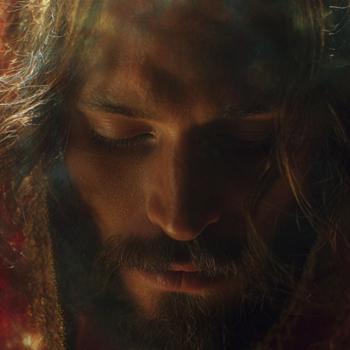
The Metaphorical Miracles of Jesus
TRENDING AT PATHEOS Progressive Christian

Nearly every morning, I make the drive to Detroit with my high-school-age...

The Real AI Story Is Adoption Without Trust
Artificial intelligence has crossed a political threshold. It is no longer a...

A new article, written by Jeff Lindsay and Gale L. Pooley,...

Swimfan: Forgotten Aughts Pleasures
This is a recovery effort. In 2002, My Big Fat Greek Wedding...

Top Three Anti-Catholic Lies About Catholicism
This is my initial transcript for the video, "THE 3 WORST...

Pope Leo Celebrates Mass for Nurses & Docs...
I don't have any idea how he did it, but Pope Leo...
view all Progressive Christian blogs
Ad-Free & Subscriber Log-In Subscription Support
- About Us
- 2026 Calendar
- Videos
- Podcasts
- Library of World Religions
- Faith In Media Tracker
- Advertise With Us
- Write for Us
- Privacy Policy
- Terms of Service
- Do Not Sell My Data
- Contact Us
- Radiant Digital
- Manage Newsletter Subscriptions
- Unsubscribe From Notifications
- Sitemap
Copyright 2008-2026, Patheos. All rights reserved.
Subscription Support Ad-Free & Subscriber Log-In
Follow Patheos