
BuddhistCatholicContemplativeEvangelicalGeneral ChristianHinduJewishLatter-day SaintMuslimNew VisionsProgressive Christian
Beliefs
- Buddhist
- Catholic
- Contemplative
- Evangelical
- General Christian
- Hindu
- Jewish
- Latter-day Saint
- More Voices
- Muslim
- New Visions
- Pagan
- Progressive Christian
Topics
- Religion News
- Food and Religion
- Sports and Religion
- Religious Art
- Religious Music and Entertainment
- Religious Events
- History and Religion
- Style and Religion
- Politics and Religion
- Women in Religion
- Recreation Outdoors and Religion
- Business Finance and Religion
- Careers Workplace and Religion
- Education and Religion
- Family Parenting and Religion
- Health Fitness and Religion
- Home and Religion
- Relationships and Religion
- Technology and Religion
- Travel and Religion
Columnists
- Buddhist Columnists
- Business Finance and Religion Columnists
- Careers Workplace and Religion Columnists
- Catholic Columnists
- Contemplative Columnists
- Education and Religion Columnists
- Evangelists Columnists
- Family Parenting and Religion Columnists
- General Christian Columnists
- Health Fitness and Religion Columnists
- Hindu Columnists
- History and Religion Columnists
- Home and Religion Columnists
- Jewish Columnists
- More Voices Columnists
- Latter Day Columnists
- Muslim Columnists
- New Visions Columnists
- Nonreligious Columnists
- Pagan Columnists
- Politics and Religion Columnists
- Progressive Columnists
- Recreation Outdoors and Religion Columnists
- Relationships and Religion Columnists
- Religion News Columnists
- Religious Art Columnists
- Religious Events Columnists
- Religious Music and Entertainment Columnists
- Sports and Religion Columnists
- Style and Religion Columnists
- Technology and Religion Columnists
- Travel and Religion Columnists
- Women in Religion Columnists
Resource Library
- 2026 Calendar
- Library of World Religions
- The 100 Most Holy Places on Earth
- Patheos Answers
- Podcasts
- Videos
- Faith Leaders Database
- Anglican Episcopalian
- Bahai
- Baptist
- Buddhism
- Christianity
- Confucianism
- Eastern Orthodoxy
- Hinduism
- Holiness and Pentecostal
- ISKCON
- Islam
- Judaism
- Lutheran
- Methodist
- The Church of Jesus Christ of Latter-day Saints
- New Age
- Paganism
- Presbytarian and Reformed
- Protestantism
- Religion Behind the Scenes
- Roman Catholic
- Scientology
- Shia Islam
- Sikhism
- Sufism
- Sunni Islam
- Taoism
- Zen
- See all religions
Research Tools
 Ad-Free & Subscriber Log-In Subscription Support
Ad-Free & Subscriber Log-In Subscription Support
Follow Patheos 

- Trending:
- Forgiveness
- |
- Marriage
- |
- Consciousness
- |
- Death Penalty
- |
- Election
- |
- Halloween

- Home
- Progressive Christian
- What’s So Great About Constantine?
What’s So Great About Constantine?
Last updated on: December 7, 2018 at 12:55 am by Keith Giles
What’s So Great About Constantine? 2018-12-07T00:55:14+00:00 Keith Giles
Patheos Explore the world's faith through different perspectives on religion and spirituality! Patheos has the views of the prevalent religions and spiritualities of the world.
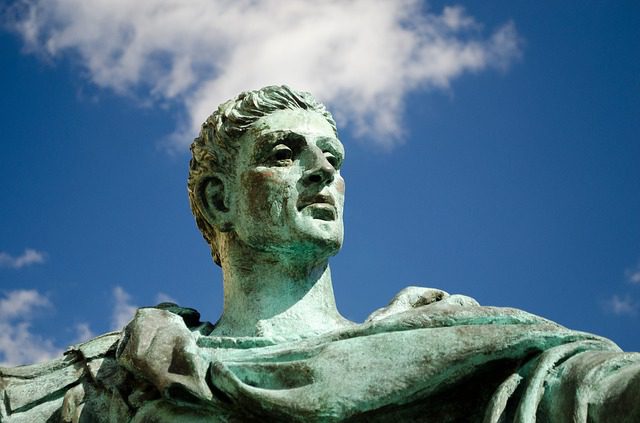
If you listen to any Bible Scholar or Christian teacher long enough and you’ll no doubt hear something – good or bad – about Constantine.
Some think he was God’s gift to the Church – because he helped to end persecution against Christians and gave Christianity legitimacy in the Roman Empire.
Others doubt the sincerity of his conversion experience – because the Jesus in his vision only showed up to bless his battle plans and helped him to kill lots of those who opposed the Roman Empire. [And that doesn’t sound like the Jesus we see in the Gospels].
Still others say that Constantine introduced hierarchy into the Church, giving more prominence to the Bishop, and later to the Pastor after the Reformation.
And, still others add that Constantine also merged the Church with the power of the State and entangled Christianity with Empire.
I agree with all but the first group of people.
What’s more, I also think that Constantine’s influence on the Christian Church was tragic and un-Christlike. He took the Nazarene Movement away from humility, love and service to all, and made it about power structures, hierarchy and the fear-based control of others.
Unfortunately, one of the primary ways that Constantine accomplished this dark shift in Christianity was by overseeing the Canonization of Scriptures which were then used to determine who was “in” and who was “out”.
Soon after this is when the church started persecuting Herself. [Ironically, since many embraced Constantine for helping to end Roman persecution of the Church, but then very quickly the Church was doing all the persecuting of Christians, leaving the Romans more free time to oppress the other trouble-makers].
As my friend, Mike Schellman noted:
“Before Constantine, Christians made judgments about the legitimacy of certain writings. After Constantine, writings made judgments about certain kinds of Christians. That is not to say that certain outsiders were once insiders – but rather that no group [previously] had the authority of the state backing up its claim on the truth.”
This is the key. In the years prior to Constantine’s suspicious “conversion” to Christianity, Christians disagreed about all sorts of things. But, there was a balance of power where no one group had any authority to condemn any other group. Nor is there much indication that they wanted to do so. Remember, all Christians were equally persecuted by the State. So, even if I might disagree with a brother or a sister about the nature of Christ, or the atonement – or even about which of Paul’s epistles were legitimate – at the end of the day we were all in the same family of God. The persecution they faced was blind to any particular doctrines. That meant that most Christians were also a bit blind about it, too.
Now, it’s sadly true that establishing power structures within the Body of Christ was something that had already started to formulate prior to Constantine’s influence. But, once he arrived on the scene, it became another useful tactic to re-fashion Christianity into a club that – along with a single definition of Orthodoxy – could be used to beat people into submission.
Under Constantine, Christianity became more about exercising power over others, whereas previously it had been more about acting in humility and love to exercise a quiet form of “power under” others.
Once the Christian Church had power – the power of the Sword which had previously rested in the hands of the State – She lost Her true power – the kind that comes from sincere love, genuine compassion and the miracle of a transformed life.
Orthodoxy quickly overshadowed Orthopraxy as the standard for determining who was – and who was not – a Christian. Prior to Constantine, a Christian was defined as someone who put the teachings of Jesus into practice in their daily life. That’s Orthopraxy. But after Constantine’s influence, a Christian was defined by what someone believed, and whether or not they agreed with the doctrines of the “true” Church. That’s Orthodoxy.
For my money, I’d rather go back to a version of Christianity that is more focused on being Christlike, than on determining who is right and who is wrong about theology.
One version is a lot closer to what Jesus set in motion. The other smells a bit too much like something a Pagan Emperor might dream up the night before a big, bloody battle against the enemies of the Empire.
Give me Jesus.
**
LISTEN to a 2 part debate between myself and Christian Historian Al Baker called “What’s Go Great About Constantine?”
**
Keith Giles was formerly a licensed and ordained minister who walked away from organized church 11 years ago, to start a home fellowship that gave away 100% of the offering to the poor in the community.
His new book “Jesus Unbound: Liberating the Word of God from the Bible”, is available now on Amazon and features a Foreword by author Brian Zahnd.
He is also the author of the Amazon best-seller, “Jesus Untangled: Crucifying Our Politics To Pledge Allegiance To The Lamb” with a Foreword by Greg Boyd.
Keith also co-hosts the Heretic Happy Hour Podcast on iTunes and Podbean. He and his wife live in Meridian, Idaho, awaiting their next adventure.
BONUS: Want to unlock exclusive content including blog articles, short stories, music, podcasts, videos and more? Visit my Patreon page.
Previous Post

December 5, 2018
When God Seems Far Away
Next Post

December 12, 2018 The Gospel of Us
Browse Our Archives
Select a Category Art Biblicism Christian Politics Cosmic Christ Deconstruction Discipleship Dispensationalism Divine Unity Ekklesia End Time Stuff Eschatology Evergreen Following Jesus Gender General Christian Topics Gnostics God's Love Gospel of Judas Gospel of Mary Gospel of Philip Gospel of the Kingdom Gospel of Thomas Gospel of Truth Hell Historical Jesus Inner Circle Investigative Reporting Islam LGBTQ Issues Marriage Mental/Emotional Health Mystery Non-Duality Philosophy Podcast Poetry Politics Poverty Preemptive Love Prophecy Psychology Quantum Theology Racism Reconstruction Satire Sex Technology Theology Uncategorized Universalism
Select a Month October 2026 September 2026 August 2026 July 2026 June 2026 May 2026 April 2026 March 2026 February 2026 January 2026 December 2025 November 2025 October 2025 September 2025 August 2025 July 2025 June 2025 May 2025 April 2025 March 2025 February 2025 January 2025 December 2024 November 2024 October 2024 September 2024 August 2024 July 2024 June 2024 May 2024 April 2024 March 2024 February 2024 January 2024 December 2023 November 2023 October 2023 September 2023 August 2023 July 2023 June 2023 May 2023 April 2023 March 2023 February 2023 January 2023 December 2022 November 2022 October 2022 September 2022 August 2022 July 2022 June 2022 May 2022 April 2022 March 2022 February 2022 January 2022 December 2021 November 2021 October 2021 September 2021 August 2021 July 2021 June 2021 May 2021 April 2021 March 2021 February 2021 January 2021 December 2020 November 2020 October 2020 September 2020 August 2020 July 2020 June 2020 May 2020 April 2020 March 2020 February 2020 January 2020 December 2019 November 2019 October 2019 September 2019 August 2019 July 2019 June 2019 May 2019 April 2019 March 2019 February 2019 January 2019 December 2018 November 2018 October 2018 September 2018 August 2018 July 2018 June 2018 May 2018 April 2018 March 2018 February 2018 January 2018 December 2017 November 2017
Follow Us!
TAKE THE
Religious Wisdom Quiz
What does Paul teach about doing all things without?
Select your answer to see how you score.
Making mistakes Eating bread Grumbling or arguing Being seen
Books by This Author Books by Keith Giles
Related posts from Keith Giles

God Is the Subconscious Mind: A New Theory...

Mercy For Maga? How To Respond When They...
Jesus and Marx: Where They Both Agree
INNER CIRCLE: Our Solidarity with Christ
TRENDING AT PATHEOS Progressive Christian

The First Eucharistic Controversy: Christ’s Real Presence
For Catholics, the Eucharist is the source and summit of the Christian...

How to Make a Decision When You Can't...
Main point: It’s much more valuable to stay close to God so...

Archdiocese Hosts Military Marriage Retreat in Germany
RASTATT, Germany — The transient military lifestyle, with its frequent deployments and...

Nearly every morning, I make the drive to Detroit with my high-school-age...

The Real AI Story Is Adoption Without Trust
Artificial intelligence has crossed a political threshold. It is no longer a...

A new article, written by Jeff Lindsay and Gale L. Pooley,...
view all Progressive Christian blogs
Ad-Free & Subscriber Log-In Subscription Support
- About Us
- 2026 Calendar
- Videos
- Podcasts
- Library of World Religions
- Faith In Media Tracker
- Advertise With Us
- Write for Us
- Privacy Policy
- Terms of Service
- Do Not Sell My Data
- Contact Us
- Radiant Digital
- Manage Newsletter Subscriptions
- Unsubscribe From Notifications
- Sitemap
Copyright 2008-2026, Patheos. All rights reserved.
Subscription Support Ad-Free & Subscriber Log-In
Follow Patheos