
BuddhistCatholicContemplativeEvangelicalGeneral ChristianHinduJewishLatter-day SaintMuslimNew VisionsProgressive Christian
Beliefs
- Buddhist
- Catholic
- Contemplative
- Evangelical
- General Christian
- Hindu
- Jewish
- Latter-day Saint
- More Voices
- Muslim
- New Visions
- Pagan
- Progressive Christian
Topics
- Religion News
- Food and Religion
- Sports and Religion
- Religious Art
- Religious Music and Entertainment
- Religious Events
- History and Religion
- Style and Religion
- Politics and Religion
- Women in Religion
- Recreation Outdoors and Religion
- Business Finance and Religion
- Careers Workplace and Religion
- Education and Religion
- Family Parenting and Religion
- Health Fitness and Religion
- Home and Religion
- Relationships and Religion
- Technology and Religion
- Travel and Religion
Columnists
- Buddhist Columnists
- Business Finance and Religion Columnists
- Careers Workplace and Religion Columnists
- Catholic Columnists
- Contemplative Columnists
- Education and Religion Columnists
- Evangelists Columnists
- Family Parenting and Religion Columnists
- General Christian Columnists
- Health Fitness and Religion Columnists
- Hindu Columnists
- History and Religion Columnists
- Home and Religion Columnists
- Jewish Columnists
- More Voices Columnists
- Latter Day Columnists
- Muslim Columnists
- New Visions Columnists
- Nonreligious Columnists
- Pagan Columnists
- Politics and Religion Columnists
- Progressive Columnists
- Recreation Outdoors and Religion Columnists
- Relationships and Religion Columnists
- Religion News Columnists
- Religious Art Columnists
- Religious Events Columnists
- Religious Music and Entertainment Columnists
- Sports and Religion Columnists
- Style and Religion Columnists
- Technology and Religion Columnists
- Travel and Religion Columnists
- Women in Religion Columnists
Resource Library
- 2026 Calendar
- Library of World Religions
- The 100 Most Holy Places on Earth
- Patheos Answers
- Podcasts
- Videos
- Faith Leaders Database
- Anglican Episcopalian
- Bahai
- Baptist
- Buddhism
- Christianity
- Confucianism
- Eastern Orthodoxy
- Hinduism
- Holiness and Pentecostal
- ISKCON
- Islam
- Judaism
- Lutheran
- Methodist
- The Church of Jesus Christ of Latter-day Saints
- New Age
- Paganism
- Presbytarian and Reformed
- Protestantism
- Religion Behind the Scenes
- Roman Catholic
- Scientology
- Shia Islam
- Sikhism
- Sufism
- Sunni Islam
- Taoism
- Zen
- See all religions
Research Tools
 Ad-Free & Subscriber Log-In Subscription Support
Ad-Free & Subscriber Log-In Subscription Support
Follow Patheos 

- Trending:
- Forgiveness
- |
- Marriage
- |
- Consciousness
- |
- Death Penalty
- |
- Election
- |
- Halloween

- Home
- Progressive Christian
- Why Is Jesus Violent In Revelation?
Why Is Jesus Violent In Revelation?
Last updated on: March 1, 2018 at 4:39 pm by Keith Giles
Why Is Jesus Violent In Revelation? 2018-03-01T16:39:48+00:00 Keith Giles
Patheos Explore the world's faith through different perspectives on religion and spirituality! Patheos has the views of the prevalent religions and spiritualities of the world.
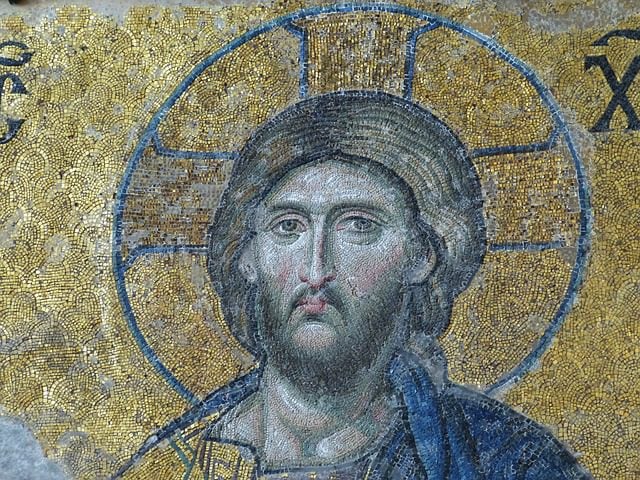
According to the book of Revelation, when Jesus returns He will bring an army and strike down His enemies in a bloody war.
Before I get into this one, let’s start off with a few observations: First, this objection seeks to temper the numerous commands of Jesus to love our enemies, turn the other cheek and bless those who curse us by saying, “Look! Jesus gets violent in the end” as if this negates His clear commands to His disciples.
It does not.
Whatever Jesus has commanded, we must obey. Regardless of what might happen in the future, we here today are still expected to follow Jesus as our Lord. As He says, “Why do you call me ‘Lord, Lord’ and do not do what I say?” (Luke 6:46)
Secondly, just because Jesus acts as the Judge of all mankind—as He is seen doing in these Apocalyptic passages within Revelation—it does not follow that we are also allowed to act as judges.
In fact, we are specifically told by Jesus not to judge others, and we are reminded by Paul that our calling is to feed our enemies and to allow God to be the judge who repays them for any evils they may have done.
“Do not repay anyone evil for evil. Be careful to do what is right in the eyes of everyone. If it is possible, as far as it depends on you, live at peace with everyone. Do not take revenge, my dear friends, but leave room for God’s wrath, for it is written: “It is mine to avenge; I will repay,” says the Lord. On the contrary: ‘If your enemy is hungry, feed him; if he is thirsty, give him something to drink. In doing this, you will heap burning coals on his head.’ Do not be overcome by evil, but overcome evil with good.” (Romans 12:17-21)
So, what exactly is going on in Revelation? Why do we see a picture of Jesus that looks so radically different than what we see in the Gospels? How did He go from the suffering servant who said, “Father, forgive them for they know not what they do” to the guy on a white horse with a sword coming out of his mouth and wearing a robe dipped in blood?
Let’s look at Revelation Chapter 19 where most of this violent imagery is found.
Especially these verses:
“I saw heaven standing open and there before me was a white horse, whose rider is called Faithful and True. With justice he judges and wages war. His eyes are like blazing fire, and on his head are many crowns. He has a name written on him that no one knows but he himself. He is dressed in a robe dipped in blood, and his name is the Word of God. The armies of heaven were following him, riding on white horses and dressed in fine linen, white and clean. Coming out of his mouth is a sharp sword with which to strike down the nations. “He will rule them with an iron scepter.” He treads the winepress of the fury of the wrath of God Almighty. On his robe and on his thigh he has this name written: King of kings and Lord of lords.
“And I saw an angel standing in the sun, who cried in a loud voice to all the birds flying in midair, ‘Come, gather together for the great supper of God, so that you may eat the flesh of kings, generals, and the mighty, of horses and their riders, and the flesh of all people, free and slave, great and small.’
“Then I saw the beast and the kings of the earth and their armies gathered together to wage war against the rider on the horse and his army. But the beast was captured, and with it the false prophet who had performed the signs on its behalf. With these signs he had deluded those who had received the mark of the beast and worshiped its image. The two of them were thrown alive into the fiery lake of burning sulfur. The rest were killed with the sword coming out of the mouth of the rider on the horse, and all the birds gorged themselves on their flesh.” (Revelation 19:11-21)
Pastor Mark Driscoll famously celebrated the gore of Revelation at one time, saying that Jesus is depicted here as “a prize fighter with a tattoo down His leg, a sword in His hand and the commitment to make someone bleed.” For some Christians, this picture of Jesus is the one they prefer. Driscoll himself has said that he finds great comfort in this violent picture of Jesus because, “…that is a guy I can worship. I cannot worship the hippie, diaper, halo Christ because I cannot worship a guy I can beat up.”
For those who embrace a more violent Gospel, this seemingly violent Jesus serves as a welcome buffer against the Jesus they appear to fear the most: The Jesus who commands them to love their enemies and turn the other cheek. But what is really happening here? Is Jesus suddenly a warmonger who delights in slaughtering thousands of His enemies? What happened to the command that we should love our enemies? Are we held to a higher standard that God? Isn’t the admonition to love our enemies connected to God’s love for the just and the unjust? Aren’t we imitating God when we do this? How then can we explain these passages in light of the Sermon on the Mount?
First of all, we have to recognize that the book of Revelation is a different genre of Biblical literature than the Gospels are. In the same way that none of us would read a fantasy novel like “The Lord of the Rings” the same way we might read a romance novel, or a children’s story, we cannot read all genre’s of Biblical literate the same way either.
The book of Revelation is an example of apocalyptic literature. As such, it contains certain motifs and even borrows specific metaphors from other apocalyptic sections of books like Isaiah, Jeremiah, Ezekiel and Daniel. These images and metaphors are never to be taken literally. The original audiences for these writings did not believe that the smoke from a city that was judged by God would literally rise up forever and ever. They understood that this was hyperbole intended to illustrate that the finality of such judgment was absolute—as far as those who received that judgment were concerned. In the Gospels, even Jesus referred to these same apocalyptic metaphors whenever he prophesied the destruction of Jerusalem and the end of the Jewish age. (See Matthew 24, Mark 13 and Luke 21)
So, if we understand that the images we read about in Revelation are not intended to be literal, that can help us on one level, but we still may wonder what exactly is going on and what is it we are supposed to glean from passages like chapter 19?
First of all, Revelation 19 shows us a picture of Jesus as the Judge of the World. He has been given authority by the Father to judge the nations. The sword is not in His hand, as Driscoll claims. It is coming out of His mouth. Why is that? Why does Jesus pull a sword out of His mouth like a magician on a carnival sideshow? Again, because this isn’t meant to be taken literally. The sword that comes out of His mouth is symbolic. It tells us that the judgments spoken by Jesus have authority. His words hold the power of life and death. Those who follow His words have life. Those who reject His words will die.
Simply put: Jesus came warning his people that if they did not repent of their desire to violently rebel against their enemies [the Romans], that they would die a horrible death. He gave them another path to follow. He offered them the opportunity to disarm their oppressors by loving them, blessing them, going the extra mile and praying for them. He reminded them that the peacemakers are blessed, not the violent revolutionaries. He painted a very vivid picture for them of what this destruction would look like if they did not repent and turn around to follow in this path He was offering to them.
The judgment pronounced was not a warning of what Jesus would do to them if they did not obey Him, it was a warning of what they would reap if they did not stop sowing seeds of rebellion.
The robe Jesus wears is dipped in blood, but we must keep in mind that this blood is not the blood of His enemies. It is His own blood. Jesus has the authority to judge because He has suffered and died and risen from the dead to sit at the right hand of the Father. The Lamb who was slain is given the authority to open the seals of the scroll and to execute judgment. Only the Lamb who was slain is worthy. No one else.
Still, we have to admit that the imagery near the end of the chapter is quite gruesome. Birds are called to gorge themselves on the flesh of the slain. But, again, we have to remember that the connection between the apocalyptic hyperbole and the actual fulfillment is not the same thing.
When God prophesied against Egypt in Isaiah 19, we read that God will be seen “riding on a swift cloud” (v.1) as He comes to judge that nation. This is not a literal event. God is not saddling up a cloud and riding into battle against Egypt. The fulfillment of that image is when the armies of an invading nation ride into battle against Egypt and destroy her cities. In other words, these fantastic images of God (or Jesus) riding into battle against the people of the earth to do battle with them is fulfilled when the armies of other nations rise up and attack. There is always a practical fulfillment to these sorts of prophecies, as we see whenever God’s prophets proclaim judgment on nations using these kinds of apocalyptic hyperbole.
In Ezekiel 39 when God prophesies against Assyria (or Gog) He says “I will give you to the birds of prey of every sort and the beasts of the field to be devoured.” (v.4) This is the exact same apocalyptic hyperbole used in Revelation 19 to describe the fate of those who will be judged by the words spoken by Jesus against those who reject Him as their King.
Simply put, Jesus is the righteous judge. He has said that those who reject Him will perish. This is the sword that comes out of His mouth. Those who refuse to repent and to take up their cross to follow the enemy-loving path of Jesus will die by the sword. The author of Revelation borrows violent apocalyptic hyperbole found in the Old Covenant scriptures to illustrate this truth. He expresses it in dramatic, yes even violent metaphorical terminology, but if we boil everything down all that is really happening in Revelation 19 is that Jesus, who is the Judge, speaks life to those who love Him and those who reject that life receive the fruit of their decisions, which is death.
But Jesus takes no pleasure in the death of anyone. Not even those who reject Him. His love for you is the same as His love for Hitler. That is to say: enough to die for both of you and to extend to everyone the same mercy, grace and forgiveness.
The images of Jesus riding into battle on a white horse with a sword coming out of His mouth are meant to call people to repentance. It is intended to warn those who have rejected Jesus as Lord of their ultimate fate—which is certain death—if they refuse to accept the life that is available only through Christ.
We know, by the way, that this judgment was fulfilled against those who rejected Christ’s teachings in AD 70 when the Roman army surrounded Jerusalem and destroyed the city, and the Temple. Those who rejected the command to love their enemies [the Romans] and who refused to turn the other cheek, go the extra mile and put away their swords were cut down as Jesus warned them they would be. Those who followed Jesus were saved from this destruction. They escaped this fate by trusting in His teaching and putting this love into practice right up until the very end.
The irony is that those who missed Jesus the first time were looking for a violent warrior Messiah who would come riding in to rescue them from their oppressors with bloody violence. If we look around us today, I think we can see that not very much has changed.
**
Keith Giles is the author of “Jesus Untangled: Crucifying Our Politics To Pledge Allegiance To The Lamb” and co-host of the Heretic Happy Hour Podcast. He and his wife live in Orange, CA with their two sons and are part of a house church that gives away 100% of the offering to help the poor in their community.
Previous Post

March 1, 2018
The Christian Bill of Rights
Next Post

March 2, 2018 Contradictory Christianity
Browse Our Archives
Select a Category Art Biblicism Christian Politics Cosmic Christ Deconstruction Discipleship Dispensationalism Divine Unity Ekklesia End Time Stuff Eschatology Evergreen Following Jesus Gender General Christian Topics Gnostics God's Love Gospel of Judas Gospel of Mary Gospel of Philip Gospel of the Kingdom Gospel of Thomas Gospel of Truth Hell Historical Jesus Inner Circle Investigative Reporting Islam LGBTQ Issues Marriage Mental/Emotional Health Mystery Non-Duality Philosophy Podcast Poetry Politics Poverty Preemptive Love Prophecy Psychology Quantum Theology Racism Reconstruction Satire Sex Technology Theology Uncategorized Universalism
Select a Month October 2026 September 2026 August 2026 July 2026 June 2026 May 2026 April 2026 March 2026 February 2026 January 2026 December 2025 November 2025 October 2025 September 2025 August 2025 July 2025 June 2025 May 2025 April 2025 March 2025 February 2025 January 2025 December 2024 November 2024 October 2024 September 2024 August 2024 July 2024 June 2024 May 2024 April 2024 March 2024 February 2024 January 2024 December 2023 November 2023 October 2023 September 2023 August 2023 July 2023 June 2023 May 2023 April 2023 March 2023 February 2023 January 2023 December 2022 November 2022 October 2022 September 2022 August 2022 July 2022 June 2022 May 2022 April 2022 March 2022 February 2022 January 2022 December 2021 November 2021 October 2021 September 2021 August 2021 July 2021 June 2021 May 2021 April 2021 March 2021 February 2021 January 2021 December 2020 November 2020 October 2020 September 2020 August 2020 July 2020 June 2020 May 2020 April 2020 March 2020 February 2020 January 2020 December 2019 November 2019 October 2019 September 2019 August 2019 July 2019 June 2019 May 2019 April 2019 March 2019 February 2019 January 2019 December 2018 November 2018 October 2018 September 2018 August 2018 July 2018 June 2018 May 2018 April 2018 March 2018 February 2018 January 2018 December 2017 November 2017
Follow Us!
TAKE THE
Religious Wisdom Quiz
Who said, "The Lord said to my Lord, ‘Sit at my right hand’"?
Select your answer to see how you score.
David Isaiah Moses Solomon
Books by This Author Books by Keith Giles
Related posts from Keith Giles

INNER CIRCLE: In Every Respect

INNER CIRCLE: All One In Christ
INNER CIRCLE: Christ Lives Within Us

TRENDING AT PATHEOS Progressive Christian

The Sermon on the Mount, Part I: Matthew...
The Sermon on the Mount, Part I (Matthew 4:12-5:12) St. Matthew moves...

What's up from Crossway: Reviewing some of their latest A few weeks...

Janie Learns the Way of the Cross: A...
Teaching children about Jesus' Passion can be challenging. Many parents and educators...

Looking For Good Catholic Writing - October 2026
He alone extends the heavens, and he walks upon the waves of...

In "Irreplaceable," our book on vocation and technology, Trevor Sutton and I...

I was strolling through the top floor of the brand new Parthenon...
view all Progressive Christian blogs
Ad-Free & Subscriber Log-In Subscription Support
- About Us
- 2026 Calendar
- Videos
- Podcasts
- Library of World Religions
- Faith In Media Tracker
- Advertise With Us
- Write for Us
- Privacy Policy
- Terms of Service
- Do Not Sell My Data
- Contact Us
- Radiant Digital
- Manage Newsletter Subscriptions
- Unsubscribe From Notifications
- Sitemap
Copyright 2008-2026, Patheos. All rights reserved.
Subscription Support Ad-Free & Subscriber Log-In
Follow Patheos