
BuddhistCatholicContemplativeEvangelicalGeneral ChristianHinduJewishLatter-day SaintMuslimNew VisionsProgressive Christian
Beliefs
- Buddhist
- Catholic
- Contemplative
- Evangelical
- General Christian
- Hindu
- Jewish
- Latter-day Saint
- More Voices
- Muslim
- New Visions
- Pagan
- Progressive Christian
Topics
- Religion News
- Food and Religion
- Sports and Religion
- Religious Art
- Religious Music and Entertainment
- Religious Events
- History and Religion
- Style and Religion
- Politics and Religion
- Women in Religion
- Recreation Outdoors and Religion
- Business Finance and Religion
- Careers Workplace and Religion
- Education and Religion
- Family Parenting and Religion
- Health Fitness and Religion
- Home and Religion
- Relationships and Religion
- Technology and Religion
- Travel and Religion
Columnists
- Buddhist Columnists
- Business Finance and Religion Columnists
- Careers Workplace and Religion Columnists
- Catholic Columnists
- Contemplative Columnists
- Education and Religion Columnists
- Evangelists Columnists
- Family Parenting and Religion Columnists
- General Christian Columnists
- Health Fitness and Religion Columnists
- Hindu Columnists
- History and Religion Columnists
- Home and Religion Columnists
- Jewish Columnists
- More Voices Columnists
- Latter Day Columnists
- Muslim Columnists
- New Visions Columnists
- Nonreligious Columnists
- Pagan Columnists
- Politics and Religion Columnists
- Progressive Columnists
- Recreation Outdoors and Religion Columnists
- Relationships and Religion Columnists
- Religion News Columnists
- Religious Art Columnists
- Religious Events Columnists
- Religious Music and Entertainment Columnists
- Sports and Religion Columnists
- Style and Religion Columnists
- Technology and Religion Columnists
- Travel and Religion Columnists
- Women in Religion Columnists
Resource Library
- 2026 Calendar
- Library of World Religions
- The 100 Most Holy Places on Earth
- Patheos Answers
- Podcasts
- Videos
- Faith Leaders Database
- Anglican Episcopalian
- Bahai
- Baptist
- Buddhism
- Christianity
- Confucianism
- Eastern Orthodoxy
- Hinduism
- Holiness and Pentecostal
- ISKCON
- Islam
- Judaism
- Lutheran
- Methodist
- The Church of Jesus Christ of Latter-day Saints
- New Age
- Paganism
- Presbytarian and Reformed
- Protestantism
- Religion Behind the Scenes
- Roman Catholic
- Scientology
- Shia Islam
- Sikhism
- Sufism
- Sunni Islam
- Taoism
- Zen
- See all religions
Research Tools
 Ad-Free & Subscriber Log-In Subscription Support
Ad-Free & Subscriber Log-In Subscription Support
Follow Patheos 

- Trending:
- Forgiveness
- |
- Marriage
- |
- Consciousness
- |
- Death Penalty
- |
- Election
- |
- Halloween

- Home
- Progressive Christian
- Answering Questions About the Old Covenant and the New Covenant
Answering Questions About the Old Covenant and the New Covenant
Last updated on: May 24, 2018 at 2:01 am by Keith Giles
Answering Questions About the Old Covenant and the New Covenant 2018-05-24T02:01:57+00:00 Keith Giles
Patheos Explore the world's faith through different perspectives on religion and spirituality! Patheos has the views of the prevalent religions and spiritualities of the world.
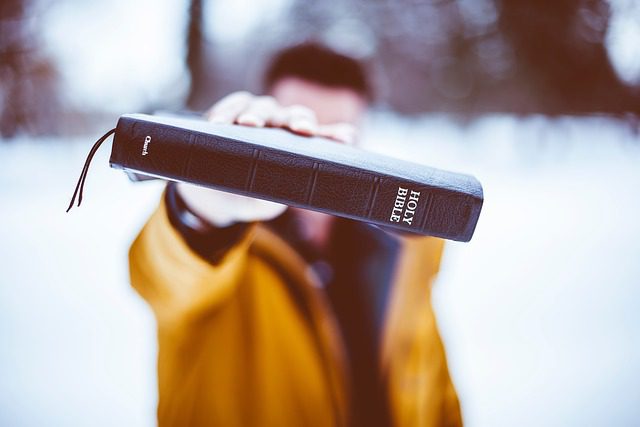
Image: Pixabay
Why do you say the Old Covenant is “obsolete”?
Because in Hebrews 8:13 we read: “By calling this covenant “new,” he has made the first one obsolete; and what is obsolete and aging will soon disappear.”
But, how can the OT be obsolete if Jesus said he did not come to abolish the Law but to fulfill it?
Jesus said: “Do not think that I have come to abolish the Law or the Prophets; I have not come to abolish them but to fulfill them. I tell you the truth, until heaven and earth disappear, not the smallest letter, not the least stroke of a pen, will by any means disappear from the Law until everything is accomplished.” ( Matthew 5:17-18)
There are two qualifiers here: One is that the Law will not disappear “until Heaven and Earth disappear”, and the second qualifier is that the Law will not disappear until “everything is accomplished.”
So, first Jesus assures us that His mission is to fulfill or to accomplish the Law, and then He tells us that the Law will not disappear “until everything is accomplished.”
“Was everything accomplished?”
And the answer is: Yes!
“When he had received the drink, Jesus said, “It is finished.” With that, he bowed his head and gave up his spirit.” (John 19:30)
The Greek word Jesus used here is literally “accomplished”.
So here, on the cross, Jesus declares that He has accomplished His mission to “fulfill the Law”, just as He set out to do.
Plus, Jesus prayed to the Father before the cross and confirmed: “I have glorified You on earth by accomplishing the work You gave Me to do” [John 17:4]
What does that mean, then, according to the two qualifiers Jesus placed on the Law? It means that since everything has been accomplished, the Law has now disappeared.
Maybe this is why Paul the Apostle told us that, on the cross, Jesus actually DID “abolish the Law” by fulfilling (or “accomplishing”) it?
“For He Himself is our peace, who made both groups into one, and broke down the barrier of the dividing wall, by abolishing in His flesh the enmity, which is the Law of commandments contained in ordinances, that in Himself He might make the two into one new man, thus establishing peace.” (Eph. 2:15)
Elsewhere Paul also affirms for us that “Christ is the end of the law.” (Rom. 10:4).
Furthermore, Paul explains for us the differences between the Old Covenant and the New Covenant – not once but twice.
The first time, in 2 Corinthians, Paul contrasts the Old and the New Covenant saying:
“Now if the ministry that brought death, which was engraved in letters on stone, [that’s the Old Covenant] came with glory, so that the Israelites could not look steadily at the face of Moses because of its glory, fading though it was, [the Old was “fading”] will not the ministry of the Spirit [that’s the New Covenant] be even more glorious?”
“If the ministry that condemns men [the Old] is glorious, how much more glorious is the ministry that brings righteousness! [that’s the New] For what was glorious [the Old] has no glory now in comparison with the surpassing glory. And if what was fading away [the Old] came with glory, how much greater is the glory of that which lasts! [the New] – (2 Corinthians 3:7-11)
So, Paul tells us the following about the Old Covenant:
- It brought death
- Its glory was fading
- It condemns men
- It was glorious (past tense)
- It now has no glory
- It is fading away
The New Covenant, in contrast :
- Is More glorious than the Old Covenant
- Brings righteousness
- Has a glory that is surpassing
- Is everlasting
The second contrast and comparison that Paul does between the Old and the New Covenant is here in Galatians:
“The women (Hagar and Sarah) represent two covenants. One covenant is from Mount Sinai and bears children who are to be slaves: This is Hagar. Now Hagar stands for Mount Sinai in Arabia and corresponds to the present city of Jerusalem, because she is in slavery with her children. But the Jerusalem that is above is free, and she is our mother.” (Galatians 4:24-26)
“But what does Scripture say? “Get rid of the slave woman and her son, for the slave woman’s son will never share in the inheritance with the free woman’s son.” Therefore, brothers and sisters, we are not children of the slave woman, but of the free woman.” (Gal.4: 30-31)
Now what does Paul say about the Old Covenant?
The Old Covenant:
- Is from Mount Sinai (where the 10 Commandments were given)
- Bears children who are slaves
- Corresponds to the earthly Jerusalem
- Is in slavery with her children
- Should be cast out of our presence
- Will not share in the inheritance of Christ
- Is not our Mother
Paul says the New Covenant:
- Bears children who are free
- Is of the heavenly New Jerusalem, not the physical city
- Is our true Mother
- Shares in the inheritance of Christ
To drive the point home even further, Paul tells us many times:
“We are not under the law” (Rom. 6:14; Gal. 5:18).
“We are dead to the law” (Rom. 7:4).
“We are delivered from the law” (Rom. 7:6).
Therefore, those who are in Christ are not under the Ten Commandments but under the “Law of Christ” as Paul says:
“Carry each other’s burdens, and in this way you will fulfill the law of Christ.” (Galatians 6:2)
But what about the Jewish people, then? Aren’t they God’s Chosen people?
That depends on what you mean by “Israel” and “Chosen”. Paul pointed out to us that not everyone who claims to be “Israel” is actually, truly “Israel” in God’s eyes.
“For not all who are descended from Israel are Israel. Nor because they are his descendants are they all Abraham’s children.” (Romans 9:6)
John the Baptist said the same thing to the Pharisees who wanted to claim that they were “Children of Abraham” (or “Israel”) and therefore blessed and favored of God. He said to them:
“And do not think you can say to yourselves, ‘We have Abraham as our father.’ I tell you that out of these stones God can raise up children for Abraham. The ax is already at the root of the trees, and every tree that does not produce good fruit will be cut down and thrown into the fire.” (Matt. 3:9-10)
So, the true “Israel of God” is actually found in Galatians where Paul assures us that:
“If you belong to Christ, then you are Abraham’s seed, and heirs according to the promise.” (Galatians 3:29)
Where does that leave the unbelieving Jewish people? The answer is troubling, and it should give us sincere pause and cause us to fall on our knees and cry out to God for their salvation.
Consider this:
“Who is the liar? It is whoever denies that Jesus is the Christ. Such a person is the antichrist—denying the Father and the Son.” (1 John 2:22)
The Jewish people today who deny Jesus is the Messiah have neither the Father, nor the Son. They are without christ and they are lost without Him.
But I thought they were God’s “Chosen” people?
Consider what the Apostle Peter says about the Christians he writes to in his epistle:
“But you are a chosen people, a royal priesthood, a holy nation, God’s special possession, that you may declare the praises of him who called you out of darkness into his wonderful light. Once you were not a people, but now you are the people of God; once you had not received mercy, but now you have received mercy.” (1 Peter 2:9-10)
Who, then, is the true Israel of God according to the New Testament?
Anyone who is in Christ.
Who are the “Chosen people” of God?
Those who put their hope in Jesus as their Lord and King.
So, the Jews are no longer the “Chosen people of God”?
Let’s go back and look at what the Jewish people were “Chosen” for in the first place. Were they chosen to be saved? No, because salvation depends upon trust in Christ as Lord and Savior.
What we find is that God chose the Jews to be the people group from whom the Messiah would be born. That’s it.
So, since Jesus was born a Jew, they have fulfilled their calling. There’s nothing more for them to be “chosen” for.
Christians, according to Peter, are now the “Chosen of God” to carry the message of the Gospel to every nation. This is our calling as God’s “chosen people”.
How can you say the 10 Commandments are no longer relevant for Christians today?
Because the 10 commandments were the terms of the Old Covenant (which is obsolete and vanishing).
“Moses was there with the Lord forty days and forty nights without eating bread or drinking water. And he wrote on the tablets the words of the covenant—the Ten Commandments.” (Exodus 34:28)
“He declared to you his covenant, the Ten Commandments, which he commanded you to follow and then wrote them on two stone tablets.” (Deut. 4:13)
The Ten Commandments are only mentioned (by name) three times in the entire Bible. Here in these two scriptures referenced above, and also in Deut.10:4. But in each case it is clear that God gave the Ten Commandments to the Jews as a Covenant. (Note: There are many other terms used such as “Tablets of Stone”, “Stone Tables”, etc.)
Also because the 10 Commandments were a covenant between Himself and with the Nation of Israel, not with the entire world:
“Then the Lord said to Moses, “Write down these words, for in accordance with these words I have made a covenant with you and with Israel.” (Exodus 34:27)
Without this Covenant, the Jewish people had no basis for being called a nation. If this Covenant was in force, then they would have a claim to the promises included in the Covenant, but if they broke this Covenant then they would lose all their status as God’s chosen people and their status as a nation.
“Now if you obey me fully and keep my covenant, then out of all nations you will be my treasured possession. Although the whole earth is mine, you will be for me a kingdom of priests and a holy nation.’ These are the words you are to speak to the Israelites.” (Exodus 19:5-6)
In much the same way that the Constitution is a document that outlines the laws of our nation and establishes our system of government, the Ten Commandments (or the Law) outlines God’s terms for establishing the nation state of Israel.
The terms of Israel’s nationhood are dependent upon a few things. First, it says, “If you obey me and keep my covenant, THEN you will be my treasured possession.”
That’s a conditional covenant. We know that the History of Israel records their continual disobedience to God and to His covenant. Because they broke their covenant with God, they were scattered over and over again, until finally they nation of Israel was judged in AD 70 during the destruction of Jerusalem by the Romans, as Jesus predicted it would be (Luke 21) and in the Parable of the Vineyard (Matt. 21:33-46).
Did you know that the promises connected to the Old Covenant have now been offered unconditionally to those who are under the New Covenant?
It’s true! The very same conditional covenant terms spoken to the Jews are repeated in the New Testament as being unconditionally applied to the Church:
“As you come to him, the living Stone—rejected by humans but chosen by God and precious to him— you also, like living stones, are being built into a spiritual house to be a holy priesthood, offering spiritual sacrifices acceptable to God through Jesus Christ.” (1 Peter 2:4-5)
“But you are a chosen people, a royal priesthood, a holy nation, God’s special possession, that you may declare the praises of him who called you out of darkness into his wonderful light.Once you were not a people, but now you are the people of God; once you had not received mercy, but now you have received mercy.” (1 Peter 2:9-10)
Here, Peter declares that Christians “ARE a chosen people, a royal priesthood, a holy nation, God’s special possession…”. The very same conditional promises originally offered to the Jewish nation in Exodus 19:5-6 are now spoken to the Church as being now in effect. So that anyone who is currently found in Christ is the recipient of these promises to be chosen, of the priesthood, a holy nation and God’s special possession. We are also promised to be called the people of God and to receive mercy.
The Good News is that Jesus first came and fulfilled the terms of the Old Covenant, and then He made a New Covenant with anyone who would receive Him as Lord and Savior.
THE TERMS OF THE NEW COVENANT
“I will put my law in their minds and write it on their hearts. I will be their God and they will be my people…and they will all know me from the least to the greatest for I will remember their sins no more.” (Jer. 31:33-34 and Hebrews 8:7-9)
We are now under one Covenant, not two. The first has been fulfilled and is now obsolete:
“In speaking of a new covenant, he makes the first one obsolete. And what is becoming obsolete and growing old is ready to vanish away.” (Hebrew 8:13)
**
Keith Giles is the author of “Jesus Untangled: Crucifying Our Politics To Pledge Allegiance To The Lamb” and the co-host of the Heretic Happy Hour Podcast. He and his wife live in Orange, CA with their two sons and are part of a house church that gives away 100% of their offerings to help the poor in their community.
Previous Post

January 17, 2018
Shocking News About End Times Prophecy
Next Post

January 23, 2018 While You Wait For Jesus, Creation Waits For You
Browse Our Archives
Select a Category Art Biblicism Christian Politics Cosmic Christ Deconstruction Discipleship Dispensationalism Divine Unity Ekklesia End Time Stuff Eschatology Evergreen Following Jesus Gender General Christian Topics Gnostics God's Love Gospel of Judas Gospel of Mary Gospel of Philip Gospel of the Kingdom Gospel of Thomas Gospel of Truth Hell Historical Jesus Inner Circle Investigative Reporting Islam LGBTQ Issues Marriage Mental/Emotional Health Mystery Non-Duality Philosophy Podcast Poetry Politics Poverty Preemptive Love Prophecy Psychology Quantum Theology Racism Reconstruction Satire Sex Technology Theology Uncategorized Universalism
Select a Month October 2026 September 2026 August 2026 July 2026 June 2026 May 2026 April 2026 March 2026 February 2026 January 2026 December 2025 November 2025 October 2025 September 2025 August 2025 July 2025 June 2025 May 2025 April 2025 March 2025 February 2025 January 2025 December 2024 November 2024 October 2024 September 2024 August 2024 July 2024 June 2024 May 2024 April 2024 March 2024 February 2024 January 2024 December 2023 November 2023 October 2023 September 2023 August 2023 July 2023 June 2023 May 2023 April 2023 March 2023 February 2023 January 2023 December 2022 November 2022 October 2022 September 2022 August 2022 July 2022 June 2022 May 2022 April 2022 March 2022 February 2022 January 2022 December 2021 November 2021 October 2021 September 2021 August 2021 July 2021 June 2021 May 2021 April 2021 March 2021 February 2021 January 2021 December 2020 November 2020 October 2020 September 2020 August 2020 July 2020 June 2020 May 2020 April 2020 March 2020 February 2020 January 2020 December 2019 November 2019 October 2019 September 2019 August 2019 July 2019 June 2019 May 2019 April 2019 March 2019 February 2019 January 2019 December 2018 November 2018 October 2018 September 2018 August 2018 July 2018 June 2018 May 2018 April 2018 March 2018 February 2018 January 2018 December 2017 November 2017
Follow Us!
TAKE THE
Religious Wisdom Quiz
True or False: Jeremiah was thrown into a cistern for prophesying against Jerusalem.
Select your answer to see how you score.
TRUE FALSE
Books by This Author Books by Keith Giles
Related posts from Keith Giles

INNER CIRCLE: In Every Respect

INNER CIRCLE: All One In Christ
INNER CIRCLE: Christ Lives Within Us

TRENDING AT PATHEOS Progressive Christian

Swimfan: Forgotten Aughts Pleasures
This is a recovery effort. In 2002, My Big Fat Greek Wedding...

Top Three Anti-Catholic Lies About Catholicism
This is my initial transcript for the video, "THE 3 WORST...

Pope Leo Celebrates Mass for Nurses & Docs...
I don't have any idea how he did it, but Pope Leo...

The Sermon on the Mount, Part I: Matthew...
The Sermon on the Mount, Part I (Matthew 4:12-5:12) St. Matthew moves...

What's up from Crossway: Reviewing some of their latest A few weeks...

Janie Learns the Way of the Cross: A...
Teaching children about Jesus' Passion can be challenging. Many parents and educators...
view all Progressive Christian blogs
Ad-Free & Subscriber Log-In Subscription Support
- About Us
- 2026 Calendar
- Videos
- Podcasts
- Library of World Religions
- Faith In Media Tracker
- Advertise With Us
- Write for Us
- Privacy Policy
- Terms of Service
- Do Not Sell My Data
- Contact Us
- Radiant Digital
- Manage Newsletter Subscriptions
- Unsubscribe From Notifications
- Sitemap
Copyright 2008-2026, Patheos. All rights reserved.
Subscription Support Ad-Free & Subscriber Log-In
Follow Patheos