
BuddhistCatholicContemplativeEvangelicalGeneral ChristianHinduJewishLatter-day SaintMuslimNew VisionsProgressive Christian
Beliefs
- Buddhist
- Catholic
- Contemplative
- Evangelical
- General Christian
- Hindu
- Jewish
- Latter-day Saint
- More Voices
- Muslim
- New Visions
- Pagan
- Progressive Christian
Topics
- Religion News
- Food and Religion
- Sports and Religion
- Religious Art
- Religious Music and Entertainment
- Religious Events
- History and Religion
- Style and Religion
- Politics and Religion
- Women in Religion
- Recreation Outdoors and Religion
- Business Finance and Religion
- Careers Workplace and Religion
- Education and Religion
- Family Parenting and Religion
- Health Fitness and Religion
- Home and Religion
- Relationships and Religion
- Technology and Religion
- Travel and Religion
Columnists
- Buddhist Columnists
- Business Finance and Religion Columnists
- Careers Workplace and Religion Columnists
- Catholic Columnists
- Contemplative Columnists
- Education and Religion Columnists
- Evangelists Columnists
- Family Parenting and Religion Columnists
- General Christian Columnists
- Health Fitness and Religion Columnists
- Hindu Columnists
- History and Religion Columnists
- Home and Religion Columnists
- Jewish Columnists
- More Voices Columnists
- Latter Day Columnists
- Muslim Columnists
- New Visions Columnists
- Nonreligious Columnists
- Pagan Columnists
- Politics and Religion Columnists
- Progressive Columnists
- Recreation Outdoors and Religion Columnists
- Relationships and Religion Columnists
- Religion News Columnists
- Religious Art Columnists
- Religious Events Columnists
- Religious Music and Entertainment Columnists
- Sports and Religion Columnists
- Style and Religion Columnists
- Technology and Religion Columnists
- Travel and Religion Columnists
- Women in Religion Columnists
Resource Library
- 2026 Calendar
- Library of World Religions
- The 100 Most Holy Places on Earth
- Patheos Answers
- Podcasts
- Videos
- Faith Leaders Database
- Anglican Episcopalian
- Bahai
- Baptist
- Buddhism
- Christianity
- Confucianism
- Eastern Orthodoxy
- Hinduism
- Holiness and Pentecostal
- ISKCON
- Islam
- Judaism
- Lutheran
- Methodist
- The Church of Jesus Christ of Latter-day Saints
- New Age
- Paganism
- Presbytarian and Reformed
- Protestantism
- Religion Behind the Scenes
- Roman Catholic
- Scientology
- Shia Islam
- Sikhism
- Sufism
- Sunni Islam
- Taoism
- Zen
- See all religions
Research Tools
 Ad-Free & Subscriber Log-In Subscription Support
Ad-Free & Subscriber Log-In Subscription Support
Follow Patheos 

- Trending:
- Forgiveness
- |
- Marriage
- |
- Consciousness
- |
- Death Penalty
- |
- Election
- |
- Halloween
 Seasons of Grace
- Home
- Catholic
- Why Duke University Should Not Broadcast Islamic Prayer Via Its Chapel Loudspeakers
Why Duke University Should Not Broadcast Islamic Prayer Via Its Chapel Loudspeakers
Last updated on: January 18, 2015 at 7:26 pm by Kathy Schiffer
Why Duke University Should Not Broadcast Islamic Prayer Via Its Chapel Loudspeakers 2015-01-18T19:26:55-05:00 Kathy Schiffer
Patheos Explore the world's faith through different perspectives on religion and spirituality! Patheos has the views of the prevalent religions and spiritualities of the world.

Duke Chapel (Photo courtesy of Duke University)
A few days ago my fellow Patheos blogger over at the Muslim Channel, Dilshad Ali, criticized Duke University in Durham, North Carolina for rescinding its permission to broadcast the Islamic adhan (call to prayer) from its Chapel tower. Dilshad wrote:
For me, if Duke had decided this wasn’t a good thing to do from the very beginning, that would’ve been it. But to decide that the adhan would be called from the Bell Tower, then to withdraw that decision in 24 hours, well it’s just sad. I understand there is a lot more to this story and a lot that the university has to consider. But at the very least, it’s disappointing.
I like Dilshad, and it was hard to witness her hurt and disappointment at this reversal of policy. I think, though, there are some factors which make Duke’s decision the prudent one. I’m pretty sure, too, that Dilshad, if she reflected on it, would likewise not appreciate having a Christian prayer broadcast from the minaret at her local mosque.
FIRST, ABOUT THE CONTROVERSY
Duke University had received a request from the Muslim Student Association for permission to chant the adhan, the call to a weekly prayer service, from the Duke University Chapel bell tower each Friday. For Muslims, the tradition of the call to prayer is a standard part of ritual life in their home communities on their weekly day of prayer. Imam Adeel Zeb, Muslim chaplain at Duke, explained that the adhan serves “…as a reminder to serve our brothers and sisters in humanity.” The adhan, Zeb explained, “brings Muslims back to their purpose in life.”
But news of this accommodation was not well received. Some celebrated the announcement, calling it a welcome message that religious pluralism is respected and honored on the Duke campus. Many others, though, were less than enthusiastic to learn that the Islamic “Allahu Aakbar” would be chanted over the loudspeaker system of the university with its Christian roots.
The Reverend Franklin Graham, son of the famed evangelist Billy Graham and president of the Billy Graham Evangelistic Association, wrote in a Facebook post:
“As Christianity is being excluded from the public square and followers of Islam are raping, butchering, and beheading Christians, Jews, and anyone who doesn’t submit to their Sharia Islamic law, Duke is promoting this in the name of religious pluralism. I call on the donors and alumni to withhold their support from Duke until this policy is reversed.”
In the wake of criticisms, loss of alumni support, and some unspecified security threats, Duke University reversed its policy.
So here we are.
What, exactly, is the prayer that Duke’s Muslim community wanted to have broadcast across campus via an amplified speaker system? The adhan begins and ends with the “Allahu Akbar” that has become so familiar to terror-weary citizens. Yes, it’s a prayer; but it’s the cry voiced by the attackers at Charlie Hebdo, by the men who flew planes into the World Trade Center on September 11, by the pilot of that AirAsia jet that plunged into the Java Sea.
One can’t help but grieve that a prayer has become associated with such terrorist activity; but such is the world in which we live. Here are the words to the adhan:
Allah is great.
I bear witness that there is no God but Allah.
I bear witness that Muhammad is the Messenger of Allah.
Hasten to worship.
Hasten to success.
Prayer is better than sleep.
Allah is great.
There is no God but Allah.
Political analyst and Islam specialist Robert Spencer, an Eastern Rite Catholic who has authored 13 books and who runs the website Jihad Watch, has defined Islam as a political system cloaked in religion. He explains:
— A Muslim, by virtue of being a Muslim, believes in Islamic supremacy.
— Islam rules over all other systems.
— A Muslim rules over all other people who do not believe in Islam.
— They state these things five times daily in their call to prayer (Adhan):
I believe that Duke should not have permitted the Islamic prayer to be broadcast across its campus, for two reasons. Those reasons are (1) Duke’s history and the intent of its founders; and (2) the chasm between Islam and the other great religions, Christianity and Judaism. Here, in a nutshell, my explanations:
1. DUKE’S CHRISTIAN HISTORY
Duke University was instituted as a Christian school, and its founders hoped to impart the Christian gospel. It was founded in 1838 by Methodist and Quaker families. By 1859, the college had changed its name to Trinity College and took as its motto Eruditio et Religio (Knowledge and Religion). The school offered free education to Methodist preachers, in exchange for financial support from the church. As the school grew, the first great expansion of its educational program was the opening of the School of Religion.
Although Duke is no longer a private religious institution and prides itself on its inclusivity, its Christian founders and developers constructed a specifically Christian chapel, and intended that it would be used for Christian worship. “The Duke Chapel is a very visible and powerful and deeply emotional symbol of the university,” said Michael Schoenfeld, vice president for public affairs and government relations. “We need to be even more thoughtful in the way that we address it.”
Duke’s Muslim students–roughly 5% of the student population–are welcomed to pray in a basement meeting room at the church; and that privilege will remain. This week, students gathered for the adhan on the school’s public square, before moving to their regular location in the basement for prayers. But they were not permitted to blast their message of non-inclusivity across the campus.
2. THE INCOMPATIBILITY OF ISLAM WITH OTHER RELIGIONS
Here, I admit, I am not an expert. I would, like most Christians I know, be happy to follow the exhortation of the popular bumper stickers and “COEXIST.” But those who have studied Islam cite the Koran’s call to defeat the infidel. Is Islam just as happy to coexist with me?
I found an instructive interview in the Italian on-line newspaper Libero Quotidiano. In it, esteemed Islam scholar Valentina Colombo explains in detail why Islam is incompatible with other religions.
Dr. Colombo is well prepared to help us better understand the Islamic faith. She teaches Geopolitics of the Islamic World at the European University, Rome and Plural Islam at Atenco Pontificio Regina Apostolorum, Rome. She is Senior Fellow at the European Foundation for Democracy, Brussels. She is a member of the Board of the Guarini Institute for Public Affairs at John Cabot University, Rome; member of the scientific board of the Center Di-con-per Donne, University Tor Vergata, Rome; and a member of the scientific boad of the Institute of High Studies for Women, Rome. After graduating in Arabic Language and Literature from Cattolica University, Milan, she earned a Ph.D. in Islamic Studies from Istituto Universitario Orientale, Naples. She has been a member of Comitato per l’Islam Italiano, Ministry of Interior. She has published various studies on Islam, intellectuals and civil liberties. Her research focuses on the plurality of the Islamic world, radical Islam and liberal intellectuals, radical Islam vs. women’s rights.
Speaking of the inspiration for terrorism within the Quran, Colombo explained that in Islam, there is no authority which approves or disapproves individual interpretations of the sacred text. Even in the case of Charlie Hebdo, militant Islamists had to confront secularism.
But here is the information regarding the Quran which I’d not understood: The book was written by Mohammed in two parts:
- The first part was composed during Mohammed’s time in Medina, when he had become the leader of the local community and Islam became the state religion; and he dreamed of returning to Mecca, his hometown, and win her back.
- The last part contains all the laws and all the dictates concerning the relationship between the Ummah (the Islamic community), and the other. And it is from this last section that militants derive justification for any act related to Islamic terrorism.
The Islamic extremists consider the whole Quran valid. Even today, one can concentrate on some Medina suras and, extrapolating verses, find reasons to fight the infidel–which can be a Christian, Jew, the journalists at Charlie Hebdo, or even the Muslim who does not think like him. Because there is no authority figure, no one can decide which interpretation of the Quran is valid.
But there is also an Islamic tradition. “At the word of God,” said Dr. Colombo, “you add the second source, the hadith, which includes the sayings and deeds of Muhammed. In his official biography, among other things, it is said that Mohammed was killed by his own hand the Jews.” It is believed that he was poisoned by a Jewish woman whom he’d enslaved and taken for his wife.
That reading is not only accepted by the terrorists–but has received wide acceptance among Muslims. If Charlie Hebdo had been printed in Saudi Arabia, for example, its cartoonists would have been condemned to death, according to local law, inspired by the sharia.
“Of course, even if Saudi Arabia officially condemned the attack on Charlie Hebdo,” Dr. Colombo explained, “they imposed at the same time the first part of the sentence on Raif Badawi, thirty-year-old blogger who founded a site of liberal thinkers.” Badawi’s sentence includes one hundred thousand lashes in the public square, 10 years imprisonment, monetary penalty and 10 years without being able to leave the country. And his lawyer, a human rights activist, remains in prison today–arrested under the Anti-Terrorism Act.
Is no one able to challenge the cultural dominance? “There are attempts,” said Colombo. “The institution headed by the Grand Mufti of Egypt, Dar al-Istà, recently published a text. The ideological battle, which explains that all the verses used by ISIS are contextualized as revealed on special occasions and no longer valid for the current situation. Unfortunately, intellectuals and reformers who proposed a historicizing of the text are hanged, as Mahmoud Mohammed Taha in Sudan, or were exiled, as Nasr Abu Zayd in Egypt.”
Next Post

January 18, 2015 41 Years and 55,000,000 Abortions Later....
Browse Our Archives
Select a Category #Synod14 Abortion Abstinence Abuse Addiction Adoption Advent Adventure Advertising Aging Agnosticism All Saints Day All Souls Day Amish Anathema Angels Anglican Animals Annulment Annunciation Apocalypse Apologetics Apostles Apostleship of the Sea Apparitions Archangels Archbishop Cordileone Archbishop Dolan Archbishop Vigneron Archeology Architecture Art Art Buchwald Ash Wednesday Assisted Suicide Astronauts Atheism Athletes Babies Baptism Beatification Beauty Bible Biochemistry Bioethics Birds Bishop Lori Bishops Blasphemy Books Canon Law Canonization Capital Punishment Cardinal Burke Cardinal Dolan Cardinal George Caritas Catechesis Catechism of the Catholic Church Catholic Catholic Education Catholic Higher Education Catholic Social Teaching Celibacy Cemeteries Character Charity Chastity Cheapskate Christian Unity Christmas Churches Civil Rights Cloning Comedy Communion of Saints Community Kitchens Confession Confirmation Conscience Consequences Consistory Constitution Contraception Conversion Cooking Councils of the Church Creativity Criminal Justice Cristero War Crucifixion Crystal Cathedral Culture Death Death and Dying Death Penalty Department of Health and Human Services Diaconate Dictatorship of Relativism Dignity Disability Discrimination Dissidence Divorce Doctors of the Church Early Church Fathers Easter Economics Ecumenism Education Encyclicals Environmentalism Episcopal Church Eucharist Euthanasia Evangelism Evangelists Evangelization Evolution Excuses Facebook Faith Families Family Fashion Fasting Fatherhood Federal Government Feminism Fiction Film First Amendment First Communion For Greater Glory Forgiveness Free Speech Friends Friendship Gender Discrimination Germany Gnosticism Good Friday Government Grace Greed Gregorian Calendar Happiness Health Heaven Heresy History Holidays Holiness Hollywood Holy Land Holy Saturday Holy Spirit Holy Week Holy Year Home Sweet Home Homosexuality Hope Humanism Humility Humor Imagination Immaculate Conception Immigration Impulsivity In Vitro Fertilization Incarnation Indulgences Infallibility Internet Islam Italy Jerusalem Jesus Judaism Justice Kathleen Sebelius Labor Movement LCWR Lent Life Literature Liturgy Lourdes Love Magi Marketing Marriage Martyrdom Martyrs Mary Mass Media Medical Ethics Mexico Michigan Miracles Missionaries Modernism Modesty Monks Monothelitism Motherhood Movies Mushrooms Music Muslim Mystery Mysticism Mythology Nativity Natural Law Nature New Evangelization New Media New Year New Year's Resolutions Nostalgia Obscenity Occult Old Testament Origen Orthodox Orvieto Pallium Papacy Parenting Patience Patriarch Bartholomew Patriotism Peace Peace and Justice Penitence Pentecost People Persecution Philosophy Poetry Political activism Political Correctness Politics Polls Pop Culture Pope Benedict XVI Pope Francis Pope John Paul II Pope John XXIII Pope Paul VI Pope St. Pius X Pope Urban VII Population Prayer Preaching Prejudice Pride Priesthood Pro-Life Protestantism Psychology Purgatory Queenship of Mary Racism Rape Real Presence Reconciliation Reformation Relics Religious Religious Liberty Reliquary Renewal Reproductive Technology Resurrection Rights Romance Rome Royalty Sacraments Sacred Heart Saints Satanism Science Science Fiction Scripture Seal of Confession Secularism Seniors September 11 Seventy Times Seven Sexuality Sharks Sin Smoking Social Communications Social Justice Social Networking Social Sciences Space Exploration Spirituality Sports St. Luke St. Patrick's Day St. Paul St. Peter St. Teresa of Avila Stations of the Cross Steve Jobs Superstition Supreme Court Symbolism Synod Technology Teen Rebellion Television Terrorism Thankfulness Thanksgiving Theology Think This, Not That Tobit Toilets Toys Tradition Traditions Transplants Travel Trinity Twitter U.S. Air Force Uncategorized United Nations USCCB Valentine Vatican Vatican Archives Vatican Blogfest Virtue Vocations Where We Pray White Heart Women World Day of Social Communications World Meeting of Families World News World Youth Day Worship Writing Year of Consecrated Life Year of Faith Year of Mercy Youth
Select a Month December 2015 November 2015 October 2015 September 2015 August 2015 July 2015 June 2015 May 2015 April 2015 March 2015 February 2015 January 2015 December 2014 November 2014 October 2014 September 2014 August 2014 July 2014 June 2014 May 2014 April 2014 March 2014 February 2014 January 2014 December 2013 November 2013 October 2013 September 2013 August 2013 July 2013 June 2013 May 2013 April 2013 March 2013 February 2013 January 2013 December 2012 November 2012 October 2012 September 2012 August 2012 July 2012 June 2012 May 2012 April 2012 March 2012 February 2012 January 2012 December 2011 November 2011 October 2011 September 2011 August 2011 July 2011 June 2011 May 2011 April 2011 March 2011 February 2011 January 2011 December 2010 November 2010 October 2010
TAKE THE
Religious Wisdom Quiz
True or False: Ruth was from Moab and chose to stay with her mother-in-law Naomi.
Select your answer to see how you score.
FALSE TRUE
Related posts from Seasons of Grace
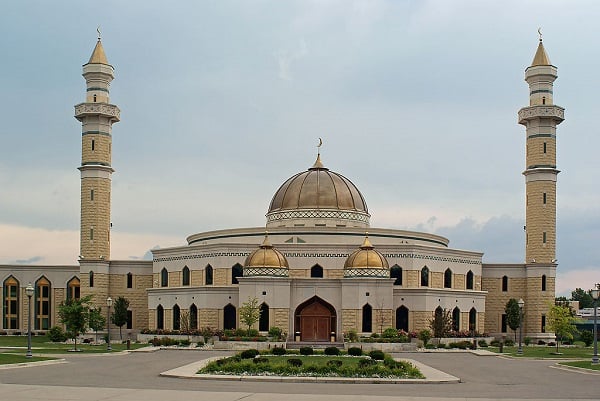
Anti-Islam Rallies Across America on October 10 Contradict...

Saudi Teenager Sentenced to Death by Crucifixion

Good News, Bad News: Stuff Catholics Care About

New Islamic Mosque--Dedicated to the Virgin Mary
TRENDING AT PATHEOS Catholic

Rejecting Doom: Christian Hope And Human Action
Christianity is a religion of hope. We are to have hope and...

It’s What Comes From Within Which Matters
One of the most difficult things for us to understand is why...

Why I Choose the Eucharist Over the Sermon
Choose the Eucharist, Not the Sermon What are we supposed to get...

5 Design Elements Found in Spiritually Rooted Homes
Putting Spirituality Into Home Decor Our homes are more than our living...

Credo: A Story of God Told with the...
About 10 years ago, I began to imagine a personal "Credo" that...

The Anatomy of Divine Revelation in Catholic Thought
The claim that God has made Himself known to human beings is...
view all Catholic blogs
Ad-Free & Subscriber Log-In Subscription Support
- About Us
- 2026 Calendar
- Videos
- Podcasts
- Library of World Religions
- Faith In Media Tracker
- Advertise With Us
- Write for Us
- Privacy Policy
- Terms of Service
- Do Not Sell My Data
- Contact Us
- Radiant Digital
- Manage Newsletter Subscriptions
- Unsubscribe From Notifications
- Sitemap
Copyright 2008-2026, Patheos. All rights reserved.
Subscription Support Ad-Free & Subscriber Log-In
Follow Patheos