
BuddhistCatholicContemplativeEvangelicalGeneral ChristianHinduJewishLatter-day SaintMuslimNew VisionsProgressive Christian
Beliefs
- Buddhist
- Catholic
- Contemplative
- Evangelical
- General Christian
- Hindu
- Jewish
- Latter-day Saint
- More Voices
- Muslim
- New Visions
- Pagan
- Progressive Christian
Topics
- Religion News
- Food and Religion
- Sports and Religion
- Religious Art
- Religious Music and Entertainment
- Religious Events
- History and Religion
- Style and Religion
- Politics and Religion
- Women in Religion
- Recreation Outdoors and Religion
- Business Finance and Religion
- Careers Workplace and Religion
- Education and Religion
- Family Parenting and Religion
- Health Fitness and Religion
- Home and Religion
- Relationships and Religion
- Technology and Religion
- Travel and Religion
Columnists
- Buddhist Columnists
- Business Finance and Religion Columnists
- Careers Workplace and Religion Columnists
- Catholic Columnists
- Contemplative Columnists
- Education and Religion Columnists
- Evangelists Columnists
- Family Parenting and Religion Columnists
- General Christian Columnists
- Health Fitness and Religion Columnists
- Hindu Columnists
- History and Religion Columnists
- Home and Religion Columnists
- Jewish Columnists
- More Voices Columnists
- Latter Day Columnists
- Muslim Columnists
- New Visions Columnists
- Nonreligious Columnists
- Pagan Columnists
- Politics and Religion Columnists
- Progressive Columnists
- Recreation Outdoors and Religion Columnists
- Relationships and Religion Columnists
- Religion News Columnists
- Religious Art Columnists
- Religious Events Columnists
- Religious Music and Entertainment Columnists
- Sports and Religion Columnists
- Style and Religion Columnists
- Technology and Religion Columnists
- Travel and Religion Columnists
- Women in Religion Columnists
Resource Library
- 2026 Calendar
- Library of World Religions
- The 100 Most Holy Places on Earth
- Patheos Answers
- Podcasts
- Videos
- Faith Leaders Database
- Anglican Episcopalian
- Bahai
- Baptist
- Buddhism
- Christianity
- Confucianism
- Eastern Orthodoxy
- Hinduism
- Holiness and Pentecostal
- ISKCON
- Islam
- Judaism
- Lutheran
- Methodist
- The Church of Jesus Christ of Latter-day Saints
- New Age
- Paganism
- Presbytarian and Reformed
- Protestantism
- Religion Behind the Scenes
- Roman Catholic
- Scientology
- Shia Islam
- Sikhism
- Sufism
- Sunni Islam
- Taoism
- Zen
- See all religions
Research Tools
 Ad-Free & Subscriber Log-In Subscription Support
Ad-Free & Subscriber Log-In Subscription Support
Follow Patheos 

- Trending:
- Forgiveness
- |
- Marriage
- |
- Consciousness
- |
- Death Penalty
- |
- Election
- |
- Halloween
 Seasons of Grace
- Home
- Catholic
- The Goshdarned Beefiest Book About Religion in the South
The Goshdarned Beefiest Book About Religion in the South
Last updated on: November 26, 2014 at 8:43 am by Kathy Schiffer
The Goshdarned Beefiest Book About Religion in the South 2014-11-26T08:43:38-05:00 Kathy Schiffer
Patheos Explore the world's faith through different perspectives on religion and spirituality! Patheos has the views of the prevalent religions and spiritualities of the world.
Zounds! Boxes and packages show up in my mailbox and on my doorstep all the time. Since I do book reviews on my Catholic blog, publishers are happy to share their latest books hot-off-the-press, particularly in the field of religion.
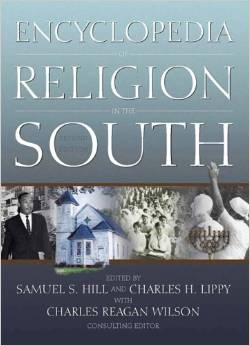 It is rare, though, that I find a package as heavy as the one which arrived this week from Mercer University Press. I was happy to receive the 864-page revised, updated and expanded Encyclopedia of Religion in the South. The editors are Samuel S. Hill and Charles H. Lippy.
This beautiful book was originally published in 1984; the Revised Edition was updated and expanded in 2005 to reflect changes in demographics and cultural norms. The endorsement of Library Journal explains some of the important changes:
“This hefty reference work reflects the growth of studies in Southern Religion and satisfies the need for an accessible compendium of current knowledge of the subject. The denominational and institutional descriptions are admirably succinct and informative. The biographies are also brief and solid…. The good efforts to incorporate black religion into the regional picture demonstrate the progress in knowledge that has been made as well as the empty spaces that remain to be filled.”
The Encyclopedia of Religion in the South includes entries on denominations from Baptist to the Reformed Tradition, from the Society of Friends to Christian Methodist Episcopal.
There are entries on individuals from Oral Roberts to Pat Robertson to Robert Penn Warren.
In its pages, the reader can learn about sects such as Santeria and the Holiness Movement and Utopian communities, as well as more obscure practices such as snake handling.
There are so many articles which caught my eye, I know I’ll refer to the book again and again for research and information.
* * * * *
One concern I had, though, was that as a practicing Catholic, I found the section on my own faith, while truly striving for accuracy, to be imbued with a prejudice and lack of understanding about Catholicism. Let me explain:
The four-page entry on “Roman Catholicism” is excellent. Drawing on the insights of conservative Catholic writers such as Avery Dulles and John Hardon, as well as liberals Gustavo Gutierrez, Hans Kung, Richard McBrien and Karl Rahner, it portrays the Church accurately. For example, it avoids frequent Protestant objections to the papacy, explaining what “infallibility” is and is not:
“It is solemn Catholic teaching that the Pope is infallible, whether he teaches the church authoritatively as an individual or in concert with the other bishops of the church in an ecumenical council, on matters directly pertaining to faith or morals. The charisma of papal infallibility does not mean that the pope is impeccable (incapable of personal sin or error in conduct or thought) or a source of new revelation (the pope cannot create a new doctrine not already found in the historical witness of the Christian tradition or in the scriptures). Papal infallibility must be understood as an essentially negative charisma. It means that the pope in his role as supreme teacher of the church will not lead the church into error on a matter of what is to be believed as part of the deposit of faith or in a course of moral action. Catholic theologians, whether liberal or conservative, all agree that popes historically have exercised the charisma of personal infallibility most rarely in the course of the church’s history.”
I like this, actually. I think it accurately reflects the Catholic Church’s own understanding of infallibility doctrine.
However, in the 12-page entry on “Roman Catholicism (in the South)”, I found several comments which I considered to be inaccurate or prejudicial. The long list of references for that article includes only a few Catholics (i.e., Andrew Greeley, Tracy Ellis, Joseph Fichter), and none of the theologians I would like to have seen among consultants for the book.
Liberal Jesuit theologian Joseph Fichter, who favored a married priesthood and supported feminist causes, seems to be the originator of this problematic section (emphasis mine):
“In the South Catholics have remained both a numerical and a social minority. Unlike the Episcopalians and Presbyterians who were also numerical minorities in the region, Southern Catholics have never fully assimilated into Southern religious culture and styles. Catholicism includes too many non-English people, is subject to a foreign power, and its religious services differ from the Protestant norm. This is accentuated, as Joseph Fichter observes, by the fact that Catholic religious functionaries dress differently, do not marry, and are not hired by their congregations.”
To which I say, “So what’s your point?” Fichter’s prejudice against priestly celibacy, a discipline which could be changed but to which he was expected to adhere in his lifetime, is evident. And assimilation? This will not occur, and should not occur; and my reminder to the Baptist publishers is, “We were here first. If you want all to be the same, then come on home.” And “religious functionaries”? Those are priests. We call them “Father.”
As for the Catholic Church’s minority status, this remains true in the Deep South but there are suggestions that this may be changing. A Pew Forum Religious Landscape Survey in 2004 showed that Catholics in South Carolina, for example, numbered 8%. The numbers were somewhat lower in the most fundamentalist states (5% in Alabama, 5% in Arkansas), but higher in a number of states (24% in Texas, 26% in Florida, and 28% in Louisiana).
In total, Pew Forum researcher Greg Smith reported that in 2007, 15% of Southerners interviewed self-identified as Catholic; that number had increased slightly in 2008 to 16%.
Those statistics make Catholics seem a minority group when “Evangelical Protestants” are lumped together. Break out the Protestant denominations into Southern Baptist, Methodist, Lutheran, Assembly of God, multiple independent churches, and other evangelical and fundamentalist denominations, and the difference is less obvious.
Here’s another quote which leads me to question the objectivity of the writer:
“As the highest executive in the diocese, the bishop is personally responsible for all Catholic units in his territory. Southern bishops are overburdened with administration, largely because of poor management.
“…Overtaxed bishops have developed “bricks and mortar” mentalities preoccupied with internal ecclesiastical and financial matters and wary of involvement in potentially distracting and disruptive social issues.”
Again, I suggest that this was written by someone with an axe to grind, someone who had a decided prejudice against the Catholic Church’s way of doing business. The hierarchical structure of the Catholic Church seems unwieldy, perhaps, to writers for whom each church, each pastor is spiritual leader of his single congregation; but what’s wrong with having pastors at local level preaching and teaching, while the bishop retains responsibility for teaching all? And while bishops are, in fact, concerned about “bricks and mortar,” their primary responsibility is as leaders of souls.
Another line which I thought could well have been restated:
“Catholics joined in the Southern mania of college building in the 19th century, although most of their schools were little more than academies and many were short-lived.”
By my count, there are at least 197 Catholic colleges and universities in the United States–many of them in the South. The Catholic Intellectual Tradition has supported the arts and sciences and has spawned the development of universities world-wide. If some Catholic endeavors are “little more than academies,” perhaps that’s because others are not–and there is need in the world for both accredited universities and other programs of education. Don’t the Protestant denominations have, for example, bible studies which are unaccredited but which fill a valuable need among their adherents? This seems a cheap shot coming from a source book which aspires to objectivity.
One last grouse, if I may: The editors repeatedly refer to Catholic priests, who may have been educated in seminaries in the North, as “carpetbaggers.” The term is derisive, implying that the men who devoted their lives to the Gospel were, in fact, intending to profit from the instability and power vacuum that existed in the South following the Civil War.
But despite the red flags in their coverage of the Catholic Church, this is a reference work which any serious scholar of religion will appreciate.
Next Post

November 21, 2014 Detroit Archbishop Quashes Gay Rights Speaker
Browse Our Archives
Select a Category #Synod14 Abortion Abstinence Abuse Addiction Adoption Advent Adventure Advertising Aging Agnosticism All Saints Day All Souls Day Amish Anathema Angels Anglican Animals Annulment Annunciation Apocalypse Apologetics Apostles Apostleship of the Sea Apparitions Archangels Archbishop Cordileone Archbishop Dolan Archbishop Vigneron Archeology Architecture Art Art Buchwald Ash Wednesday Assisted Suicide Astronauts Atheism Athletes Babies Baptism Beatification Beauty Bible Biochemistry Bioethics Birds Bishop Lori Bishops Blasphemy Books Canon Law Canonization Capital Punishment Cardinal Burke Cardinal Dolan Cardinal George Caritas Catechesis Catechism of the Catholic Church Catholic Catholic Education Catholic Higher Education Catholic Social Teaching Celibacy Cemeteries Character Charity Chastity Cheapskate Christian Unity Christmas Churches Civil Rights Cloning Comedy Communion of Saints Community Kitchens Confession Confirmation Conscience Consequences Consistory Constitution Contraception Conversion Cooking Councils of the Church Creativity Criminal Justice Cristero War Crucifixion Crystal Cathedral Culture Death Death and Dying Death Penalty Department of Health and Human Services Diaconate Dictatorship of Relativism Dignity Disability Discrimination Dissidence Divorce Doctors of the Church Early Church Fathers Easter Economics Ecumenism Education Encyclicals Environmentalism Episcopal Church Eucharist Euthanasia Evangelism Evangelists Evangelization Evolution Excuses Facebook Faith Families Family Fashion Fasting Fatherhood Federal Government Feminism Fiction Film First Amendment First Communion For Greater Glory Forgiveness Free Speech Friends Friendship Gender Discrimination Germany Gnosticism Good Friday Government Grace Greed Gregorian Calendar Happiness Health Heaven Heresy History Holidays Holiness Hollywood Holy Land Holy Saturday Holy Spirit Holy Week Holy Year Home Sweet Home Homosexuality Hope Humanism Humility Humor Imagination Immaculate Conception Immigration Impulsivity In Vitro Fertilization Incarnation Indulgences Infallibility Internet Islam Italy Jerusalem Jesus Judaism Justice Kathleen Sebelius Labor Movement LCWR Lent Life Literature Liturgy Lourdes Love Magi Marketing Marriage Martyrdom Martyrs Mary Mass Media Medical Ethics Mexico Michigan Miracles Missionaries Modernism Modesty Monks Monothelitism Motherhood Movies Mushrooms Music Muslim Mystery Mysticism Mythology Nativity Natural Law Nature New Evangelization New Media New Year New Year's Resolutions Nostalgia Obscenity Occult Old Testament Origen Orthodox Orvieto Pallium Papacy Parenting Patience Patriarch Bartholomew Patriotism Peace Peace and Justice Penitence Pentecost People Persecution Philosophy Poetry Political activism Political Correctness Politics Polls Pop Culture Pope Benedict XVI Pope Francis Pope John Paul II Pope John XXIII Pope Paul VI Pope St. Pius X Pope Urban VII Population Prayer Preaching Prejudice Pride Priesthood Pro-Life Protestantism Psychology Purgatory Queenship of Mary Racism Rape Real Presence Reconciliation Reformation Relics Religious Religious Liberty Reliquary Renewal Reproductive Technology Resurrection Rights Romance Rome Royalty Sacraments Sacred Heart Saints Satanism Science Science Fiction Scripture Seal of Confession Secularism Seniors September 11 Seventy Times Seven Sexuality Sharks Sin Smoking Social Communications Social Justice Social Networking Social Sciences Space Exploration Spirituality Sports St. Luke St. Patrick's Day St. Paul St. Peter St. Teresa of Avila Stations of the Cross Steve Jobs Superstition Supreme Court Symbolism Synod Technology Teen Rebellion Television Terrorism Thankfulness Thanksgiving Theology Think This, Not That Tobit Toilets Toys Tradition Traditions Transplants Travel Trinity Twitter U.S. Air Force Uncategorized United Nations USCCB Valentine Vatican Vatican Archives Vatican Blogfest Virtue Vocations Where We Pray White Heart Women World Day of Social Communications World Meeting of Families World News World Youth Day Worship Writing Year of Consecrated Life Year of Faith Year of Mercy Youth
Select a Month December 2015 November 2015 October 2015 September 2015 August 2015 July 2015 June 2015 May 2015 April 2015 March 2015 February 2015 January 2015 December 2014 November 2014 October 2014 September 2014 August 2014 July 2014 June 2014 May 2014 April 2014 March 2014 February 2014 January 2014 December 2013 November 2013 October 2013 September 2013 August 2013 July 2013 June 2013 May 2013 April 2013 March 2013 February 2013 January 2013 December 2012 November 2012 October 2012 September 2012 August 2012 July 2012 June 2012 May 2012 April 2012 March 2012 February 2012 January 2012 December 2011 November 2011 October 2011 September 2011 August 2011 July 2011 June 2011 May 2011 April 2011 March 2011 February 2011 January 2011 December 2010 November 2010 October 2010
TAKE THE
Religious Wisdom Quiz
Who said "as for me and my house, we will serve the Lord"?
Select your answer to see how you score.
Abraham Peter Paul Joshua
Related posts from Seasons of Grace

LOOKING BACK: Eight Really Big Stories from "Seasons...

Wear the Veil Day: Catholic Young Women Veil...
Ordinariate of the Chair of St. Peter Just...
A Pencil in God's Hand: Mother Teresa's Story...
TRENDING AT PATHEOS Catholic

Rejecting Doom: Christian Hope And Human Action
Christianity is a religion of hope. We are to have hope and...

It’s What Comes From Within Which Matters
One of the most difficult things for us to understand is why...

Why I Choose the Eucharist Over the Sermon
Choose the Eucharist, Not the Sermon What are we supposed to get...

5 Design Elements Found in Spiritually Rooted Homes
Putting Spirituality Into Home Decor Our homes are more than our living...

Credo: A Story of God Told with the...
About 10 years ago, I began to imagine a personal "Credo" that...

The Anatomy of Divine Revelation in Catholic Thought
The claim that God has made Himself known to human beings is...
view all Catholic blogs
Ad-Free & Subscriber Log-In Subscription Support
- About Us
- 2026 Calendar
- Videos
- Podcasts
- Library of World Religions
- Faith In Media Tracker
- Advertise With Us
- Write for Us
- Privacy Policy
- Terms of Service
- Do Not Sell My Data
- Contact Us
- Radiant Digital
- Manage Newsletter Subscriptions
- Unsubscribe From Notifications
- Sitemap
Copyright 2008-2026, Patheos. All rights reserved.
Subscription Support Ad-Free & Subscriber Log-In
Follow Patheos