
BuddhistCatholicContemplativeEvangelicalGeneral ChristianHinduJewishLatter-day SaintMuslimNew VisionsProgressive Christian
Beliefs
- Buddhist
- Catholic
- Contemplative
- Evangelical
- General Christian
- Hindu
- Jewish
- Latter-day Saint
- More Voices
- Muslim
- New Visions
- Pagan
- Progressive Christian
Topics
- Religion News
- Food and Religion
- Sports and Religion
- Religious Art
- Religious Music and Entertainment
- Religious Events
- History and Religion
- Style and Religion
- Politics and Religion
- Women in Religion
- Recreation Outdoors and Religion
- Business Finance and Religion
- Careers Workplace and Religion
- Education and Religion
- Family Parenting and Religion
- Health Fitness and Religion
- Home and Religion
- Relationships and Religion
- Technology and Religion
- Travel and Religion
Columnists
- Buddhist Columnists
- Business Finance and Religion Columnists
- Careers Workplace and Religion Columnists
- Catholic Columnists
- Contemplative Columnists
- Education and Religion Columnists
- Evangelists Columnists
- Family Parenting and Religion Columnists
- General Christian Columnists
- Health Fitness and Religion Columnists
- Hindu Columnists
- History and Religion Columnists
- Home and Religion Columnists
- Jewish Columnists
- More Voices Columnists
- Latter Day Columnists
- Muslim Columnists
- New Visions Columnists
- Nonreligious Columnists
- Pagan Columnists
- Politics and Religion Columnists
- Progressive Columnists
- Recreation Outdoors and Religion Columnists
- Relationships and Religion Columnists
- Religion News Columnists
- Religious Art Columnists
- Religious Events Columnists
- Religious Music and Entertainment Columnists
- Sports and Religion Columnists
- Style and Religion Columnists
- Technology and Religion Columnists
- Travel and Religion Columnists
- Women in Religion Columnists
Resource Library
- 2026 Calendar
- Library of World Religions
- The 100 Most Holy Places on Earth
- Patheos Answers
- Podcasts
- Videos
- Faith Leaders Database
- Anglican Episcopalian
- Bahai
- Baptist
- Buddhism
- Christianity
- Confucianism
- Eastern Orthodoxy
- Hinduism
- Holiness and Pentecostal
- ISKCON
- Islam
- Judaism
- Lutheran
- Methodist
- The Church of Jesus Christ of Latter-day Saints
- New Age
- Paganism
- Presbytarian and Reformed
- Protestantism
- Religion Behind the Scenes
- Roman Catholic
- Scientology
- Shia Islam
- Sikhism
- Sufism
- Sunni Islam
- Taoism
- Zen
- See all religions
Research Tools
 Ad-Free & Subscriber Log-In Subscription Support
Ad-Free & Subscriber Log-In Subscription Support
Follow Patheos 

- Trending:
- Forgiveness
- |
- Marriage
- |
- Consciousness
- |
- Death Penalty
- |
- Election
- |
- Halloween
 Kathryn Lopez
- Home
- Catholic
- Ten Catholic Things that Caught My Eye Today (April 20, 2015)
Ten Catholic Things that Caught My Eye Today (April 20, 2015)
Last updated on: April 20, 2015 at 7:55 am by Kathryn Jean Lopez
Ten Catholic Things that Caught My Eye Today (April 20, 2015) 2015-04-20T07:55:54-05:00 Kathryn Jean Lopez
Patheos Explore the world's faith through different perspectives on religion and spirituality! Patheos has the views of the prevalent religions and spiritualities of the world.
1.
#PopeFrancis at Mass: A Christian "varnish" over a pagan lifestyle isn't Christianity. You must live what you believe.
— Catholic News Svc (@CatholicNewsSvc) April 20, 2015
(More from the homily here.)
2. Magnificat today has a meditation from the book Cum Clamore Valido. It serves as a good Monday examination of conscience and motivator:
[Jesus speaks:] I look for souls bowed down, souls whose will is so identified with my will that they no longer can do anything but cling to it, submit to it, bowing until they merge and disappear in it. And doing that before the least indication, before any manifestation of my good pleasure, of my divine preference.
If you want to unite yourself intimately with my inmost life, keep in mind that my life of intimacy with my Father has always been one of perfect accord with his paternal will. Will perfectly fulfilled and therefore fully glorified.
Meditate on this deeply so that you yourselves may become part of this in all its intimacy. Understand that “will perfectly fulfilled” means “food devoured and savored with the satisfying hunger and permeating flavor of love.” Food devoured with this avidness that takes and consumes all, leaving absolutely nothing.
Food savored with this sweetness and fullness of assent, where the enamored heart entirely takes its stance and from where it draws all its activity Totaliter, Libenter, Suaviter. Totally, Willingly, Sweetly.
Do all of you do this? Do you do it better and better each day?
Remember that the food of my will becomes divinizing only on condition of being devoured and savored, and that in the very proportion you do this you advance with me, by me and in me into the boundless, fathomless depths of divine intimacy.
These are the utterly crucifying paternal wishes that my truly consecrated ones devour with utmost ardor, in the measure that they cause the human me to die that these wishes become divinizing, satisfying, and therefore amiable, loving, utterly adorable.
Here is an effective way to examine how faithfully one adheres to what so pleases my heart: Nothing more, nothing less, nothing other than what my love wants, desires, prefers: “Nothing more,” because the more is often pride; “Nothing less,” because the less is almost always cowardice; “Nothing other,” because this is always a turning away from mortification and an egoistic attachment to one’s own views.
Rather: “All that I want: nothing but what I want, such as I desire and prefer it.”
[Subscribe to Magnificat monthly here.]
3. Today is an #OPPower day: the feast of Dominican saint Agnes of Montepulciano.
4. Fr. Lawrence Lew, O.P.:
We might look at the Eucharist and think it only to be bread and the Mass to be mainly a community celebration. We might be concerned always with material things, worried about surviving and making our way in this world, in our jobs, studies etc; our prayers are thus principally about our earthly needs: food, money, jobs, good health and so on. All these are good but are they are limited transient goods. Today’s Gospel alerts us to the fact that there is more to our human existence than this world and its needs and joys – there is also the spiritual life and our relationship with God which is truly necessary because it relates to our eternal happiness. Thus Jesus says: “Do not labour for the food which perishes, but for the food which endures to eternal life” (Jn 6:27).
Hence, every now and again, certain saints alert us to this through their extraordinary lives. Theirs are lives so marked by infused grace that from an early age they seem to belong to the world to come rather than this world; they are so focussed on God and on attaining heaven. The 13th-century Dominican nun St Agnes of Montepulciano was one such saint and her life is a sign to us.
At the age of just 9, St Agnes entered a convent in Montepulciano. In fact, she’d been begging her parents to allow her to become a nun since the age of 6. At the age of just 15 she established her own convent with papal approval, and this became a Dominican convent. As prioress, St Agnes lived a life of ardent prayer with great humility, totally consecrated to God. And she did so because she loved Christ so deeply and loved humanity as he did. As St Catherine of Siena said: “She had a taste and a hunger for souls”, which is why she became a contemplative nun. For the contemplative life is only possible if there is a hunger for love, and if there is this graced realization that this love can only be satisfied by the Lord.
And so, consecrated religious, and especially saints like St Agnes are signs to all Christians of the primacy of the life of grace. Just as Christ wanted the people of his time to see the signs he worked and so come to believe in him and be saved, so it is in our time. Let us not miss the wonderful works that God does for us to lead us to salvation, namely the sacraments and Liturgy of the Church. Or perhaps Christ is calling you to consecrated religious life? These are not ordinary acts and should never be treated as such. Rather, they are extraordinary signs which are imbued with grace; they are the beautiful works of Christ himself through which he gives us a share in his Paschal Mystery, and unites us to the Blessed Trinity who is Love.
5. For some spiritual reading, her life, written by St. Catherine of Siena’s confessor.
6. Striving Like St. Stephen for the Food that Endures to Eternal Life
7. Pope Benedict XVI, who was elected ten years ago this past weekend:
Is there anyone who does not know Dostoyevsky’s often quoted sentence’. “The Beautiful will save us”? However, people usually forget that Dostoyevsky is referring here to the redeeming Beauty of Christ. We must learn to see Him. If we know Him, not only in words, but if we are struck by the arrow of his paradoxical beauty, then we will truly know him, and know him not only because we have heard others speak about him. Then we will have found the beauty of Truth, of the Truth that redeems. Nothing can bring us into close contact with the beauty of Christ himself other than the world of beauty created by faith and light that shines out from the faces of the saints, through whom his own light becomes visible.
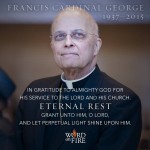
8. Fr. Roger Landry on Cardinal George:
God made a great difference in the life of Francis George and through him and his faith-filled response to divine action also made a great difference in addressing several of the Church’s and the world’s biggest challenges.
(More Cardinal George links here.)
9. From the commentary on the first letter of Peter by Saint Bede the Venerable, in the Liturgy of the hours today:
You are a chosen race, a royal priesthood. This praise was given long ago by Moses to the ancient people of God, and now the apostle Peter rightly gives it to the Gentiles, since they have come to believe in Christ who, as the cornerstone, has brought the nations together in the salvation that belonged to Israel.
Peter calls them a chosen race because of their faith, to distinguish them from those who by refusing to accept the living stone have themselves been rejected. They are a royal priesthood because they are united to the body of Christ, the supreme king and true priest. As sovereign he grants them his kingdom, and as high priest he washes away their sins by the offering of his blood. Peter says they are a royal priesthood; they must always remember to hope for an everlasting kingdom and to offer to God the sacrifice of a blameless life.
They are also called a consecrated nation, a people claimed by God as his own, in accordance with the apostle Paul’s explanation of the prophet’s teaching: My righteous man lives by faith; but if he draws back, I will take no pleasure in him. But we, he says, are not the sort of people who draw back and are lost; we are those who remain faithful until we are saved. In the Acts of the Apostles we read: The Holy Spirit has made you overseers, to care for the Church of God which he bought with his own blood. Thus, through the blood of our Redeemer, we have become a people claimed by God as his own, as in ancient times the people of Israel were ransomed from Egypt by the blood of a lamb.
In the next verse, Peter also makes a veiled allusion to the ancient story, and explains that this story is to be spiritually fulfilled by the new people of God, so that, he says, they may declare his wonderful deeds. Those who were freed by Moses from slavery in Egypt sang a song of triumph to the Lord after they had crossed the Red Sea and Pharaoh’s army had been overwhelmed; in the same way, now that our sins have been washed away in baptism, we too should express fitting gratitude for the gifts of heaven. The Egyptians who oppressed the people of God, and who can also stand for darkness or trials, are an apt symbol of the sins that once oppressed us but have now been destroyed in baptism.
The deliverance of the children of Israel and their journey to the long-promised land correspond with the mystery of our redemption. We are making our way toward the light of our heavenly home with the grace of Christ leading us and showing us the way. The light of his grace was also symbolized by the cloud and the pillar of fire, which protected the Israelites from darkness throughout their journey, and brought them by a wonderful path to their promised homeland.
10.
All we do should be ordered toward receiving the Most Holy Eucharist because it is "the food that endures for eternal life”. #HomilyTweet
— Fr James Bradley (@FrJamesBradley) April 20, 2015
Next Post
April 21, 2015 Ten Catholic Things that Caught My Eye Today (April 21, 2015)
Browse Our Archives
Select a Category B16 Christian Persecution Christianity Today Culture Good Links/Must Read HHS Mandate Holy Land Must Reads Prayer Religious Liberty Uncategorized
Select a Month July 2016 June 2016 May 2016 April 2016 March 2016 February 2016 January 2016 December 2015 November 2015 October 2015 September 2015 August 2015 July 2015 June 2015 May 2015 April 2015 March 2015 February 2015 January 2015 December 2014 November 2014 October 2014 September 2014 August 2014 July 2014 June 2014 May 2014 April 2014 March 2014 February 2014 January 2014 December 2013 November 2013 October 2013 September 2013 August 2013 July 2013 June 2013 May 2013 April 2013 March 2013 February 2013 January 2013 December 2012 November 2012 October 2012 September 2012 August 2012 July 2012 June 2012 May 2012 April 2012 March 2012 February 2012
Follow Us!
TAKE THE
Religious Wisdom Quiz
Who received the Ten Commandments from God?
Select your answer to see how you score.
Moses Joshua Abraham Aaron
Related posts from Kathryn Lopez
Athirst? Moving Deeper into the Trinity
10 Catholic Things that Caught My Eye Today...
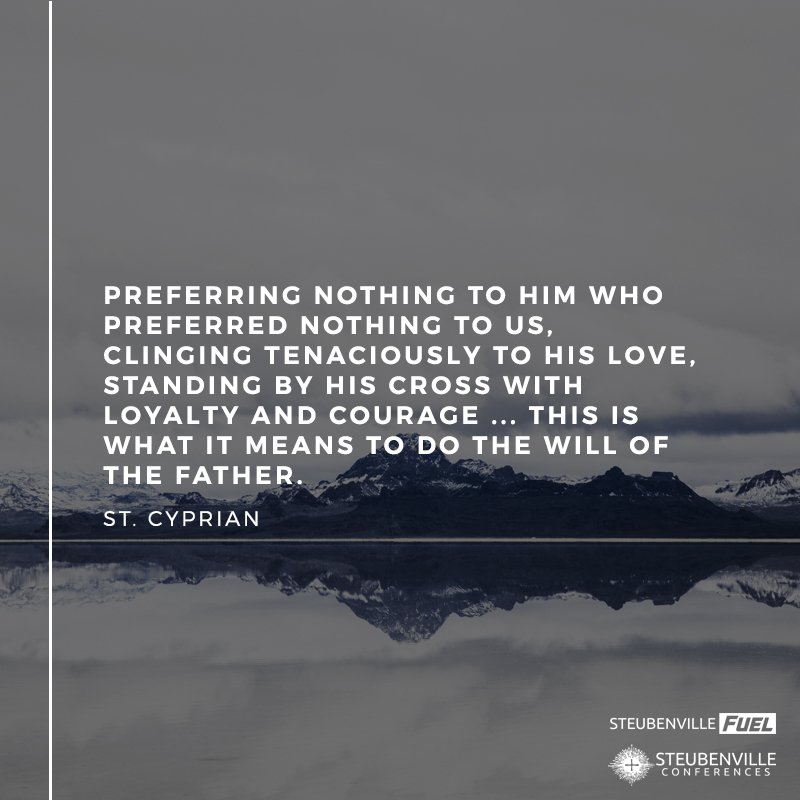
10 Things that Caught My Eye on Maria...
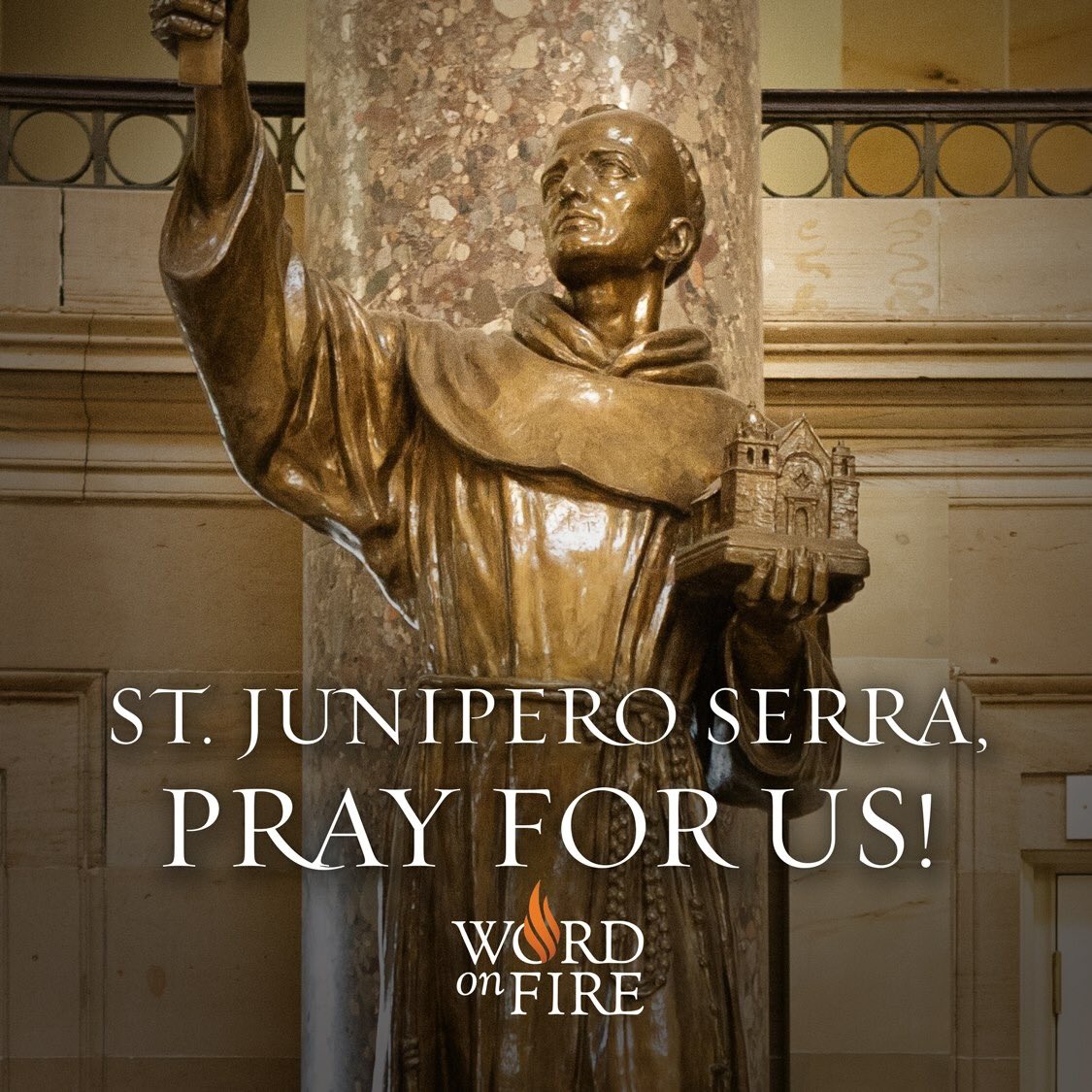
10 Saint Serra Things that Caught My Eye...
TRENDING AT PATHEOS Catholic

Rejecting Doom: Christian Hope And Human Action
Christianity is a religion of hope. We are to have hope and...

It’s What Comes From Within Which Matters
One of the most difficult things for us to understand is why...

Why I Choose the Eucharist Over the Sermon
Choose the Eucharist, Not the Sermon What are we supposed to get...

5 Design Elements Found in Spiritually Rooted Homes
Putting Spirituality Into Home Decor Our homes are more than our living...

Credo: A Story of God Told with the...
About 10 years ago, I began to imagine a personal "Credo" that...

The Anatomy of Divine Revelation in Catholic Thought
The claim that God has made Himself known to human beings is...
view all Catholic blogs
Ad-Free & Subscriber Log-In Subscription Support
- About Us
- 2026 Calendar
- Videos
- Podcasts
- Library of World Religions
- Faith In Media Tracker
- Advertise With Us
- Write for Us
- Privacy Policy
- Terms of Service
- Do Not Sell My Data
- Contact Us
- Radiant Digital
- Manage Newsletter Subscriptions
- Unsubscribe From Notifications
- Sitemap
Copyright 2008-2026, Patheos. All rights reserved.
Subscription Support Ad-Free & Subscriber Log-In
Follow Patheos