
BuddhistCatholicContemplativeEvangelicalGeneral ChristianHinduJewishLatter-day SaintMuslimNew VisionsProgressive Christian
Beliefs
- Buddhist
- Catholic
- Contemplative
- Evangelical
- General Christian
- Hindu
- Jewish
- Latter-day Saint
- More Voices
- Muslim
- New Visions
- Pagan
- Progressive Christian
Topics
- Religion News
- Food and Religion
- Sports and Religion
- Religious Art
- Religious Music and Entertainment
- Religious Events
- History and Religion
- Style and Religion
- Politics and Religion
- Women in Religion
- Recreation Outdoors and Religion
- Business Finance and Religion
- Careers Workplace and Religion
- Education and Religion
- Family Parenting and Religion
- Health Fitness and Religion
- Home and Religion
- Relationships and Religion
- Technology and Religion
- Travel and Religion
Columnists
- Buddhist Columnists
- Business Finance and Religion Columnists
- Careers Workplace and Religion Columnists
- Catholic Columnists
- Contemplative Columnists
- Education and Religion Columnists
- Evangelists Columnists
- Family Parenting and Religion Columnists
- General Christian Columnists
- Health Fitness and Religion Columnists
- Hindu Columnists
- History and Religion Columnists
- Home and Religion Columnists
- Jewish Columnists
- More Voices Columnists
- Latter Day Columnists
- Muslim Columnists
- New Visions Columnists
- Nonreligious Columnists
- Pagan Columnists
- Politics and Religion Columnists
- Progressive Columnists
- Recreation Outdoors and Religion Columnists
- Relationships and Religion Columnists
- Religion News Columnists
- Religious Art Columnists
- Religious Events Columnists
- Religious Music and Entertainment Columnists
- Sports and Religion Columnists
- Style and Religion Columnists
- Technology and Religion Columnists
- Travel and Religion Columnists
- Women in Religion Columnists
Resource Library
- 2026 Calendar
- Library of World Religions
- The 100 Most Holy Places on Earth
- Patheos Answers
- Podcasts
- Videos
- Faith Leaders Database
- Anglican Episcopalian
- Bahai
- Baptist
- Buddhism
- Christianity
- Confucianism
- Eastern Orthodoxy
- Hinduism
- Holiness and Pentecostal
- ISKCON
- Islam
- Judaism
- Lutheran
- Methodist
- The Church of Jesus Christ of Latter-day Saints
- New Age
- Paganism
- Presbytarian and Reformed
- Protestantism
- Religion Behind the Scenes
- Roman Catholic
- Scientology
- Shia Islam
- Sikhism
- Sufism
- Sunni Islam
- Taoism
- Zen
- See all religions
Research Tools
 Ad-Free & Subscriber Log-In Subscription Support
Ad-Free & Subscriber Log-In Subscription Support
Follow Patheos 

- Trending:
- Forgiveness
- |
- Marriage
- |
- Consciousness
- |
- Death Penalty
- |
- Election
- |
- Halloween
 Kathryn Lopez
- Home
- Catholic
- His Name Was Also Francis: 15 Cardinal George Links that Caught My Eye Today (R.I.P.)
His Name Was Also Francis: 15 Cardinal George Links that Caught My Eye Today (R.I.P.)
Last updated on: April 18, 2015 at 12:25 am by Kathryn Jean Lopez
His Name Was Also Francis: 15 Cardinal George Links that Caught My Eye Today (R.I.P.) 2015-04-18T00:25:34-05:00 Kathryn Jean Lopez
Patheos Explore the world's faith through different perspectives on religion and spirituality! Patheos has the views of the prevalent religions and spiritualities of the world.
1.
Cardinal George, 78, dies after long fight with cancer http://t.co/Km1E35W66A pic.twitter.com/QiWS1e86dN
— The Catholic Sun (@thecatholicsun) April 17, 2015
2. Cardinal George on suffering, death, and dying:
If we have to die, why should we live, especially with disease and pain? Each person lives in several systems that answer that question, for better or worse. For many, the desire to love and raise their children and grandchildren gives the basic meaning of their lives. For others, it might be a great project or a historical achievement, which lifts an individual life into a web of consequences that last long beyond physical death. These days, control of one’s personal life is so primary that many see no point in living beyond the moment when they lose a sense of personal autonomy. That’s why assisted suicide has become an arguable “right’” in some people’s system of life. That is, of course, a sign of despair: the world has no meaning beyond the point where I can feel I am in control. But we are never in control. That is a Promethean dream that ends in meaningless tragedy.
People who live this life in relationship to God begin even now to live in his kingdom, proclaimed by the prophets and personalized in Jesus. Eventually, it is this immediately tangible world that becomes the “strange land” and it is the next that beckons us as our true home. This experience cannot be well expressed or understood in the public discourse, because God’s is uniquely a kingdom of self-sacrificing love that transcends this world even as it permeates it in quiet ways. Systems of economic and political power cannot make sense of the realities that are known to us in faith. The faith is often reduced to a political or economic framework that limits understanding. The legal system also limits understanding by forcing facts that can be “documented” into stories that remain always inadequate to actual experience and often concoct an alternative universe.
When I was a young man, I prayed that I might live in such a way that God’s will for the world’s salvation might be realized. That prayer was first answered in a call to make vows of religion in a missionary society consecrated to preaching the Gospel to the poor. It has worked itself out in trying to teach even when I saw the limitations of my own knowledge and of the ideas I was trying to impart, in counseling and coming to terms with the unknown sources of a person’s inner dynamics, in governing my own world-wide religious society and three very different dioceses, in participating in gatherings that help the pope govern the universal church. I experienced limitation in disparate experiences that told me I was no more in control than were the poor I was visiting or living with: being abandoned in an Eskimo fishing village in Greenland; being caught in an exchange of gunfire between guerillas and the Filipino army in Mindanao; being part of a manifestation and attacked by the forces of order in “La Grande Place” in Brussels; walking through the squatter camps in Santiago, Chile, with the Vicariate of Solidarity under the Pinochet regime; being bombed in Jaffna, Sri Lanka, at the start of that country’s long civil war; bargaining for passage and perhaps for life, with soldiers who controlled the crossroads in the interior of the Congo; being refused entry to apartheid South Africa and deported helplessly from India, living in the indignities and shadows of Communist control in the lands of Eastern Europe. I learned I was not in control, and I also experienced personally what the Psalmist chanted long ago: “Put not your trust in princes.”
Without control, we still need security. Throughout life we learn whom we can trust. Sometimes that trust is betrayed, and life itself loses some of its meaning. The betrayal of trust by priests or bishops is especially hard in the community of faith. But that community is also the place where we learn what the Holy Father preached so simply and beautifully on the feast of Mary’s Assumption: God awaits us because he is with us now and wants to bring our life to its fulfillment in his kingdom. History is what God remembers; and God interprets history through the lives of the poor, the first citizens of his kingdom.
We experience the network of faith and love that is God’s Kingdom in our prayers for one another. I am profoundly grateful for the prayers already said and those promised: the Masses offered, the rosaries meditated, the novenas prayed. Over the years, I have seldom written about myself in this column, because the bishop’s job is to point to Christ, not to himself. Even in what will probably be a trying time for me in the next several months, I plan to say little about my cancer and its treatment. How can we know what to say when our knowledge is so limited? I would hope that people might reflect upon God’s goodness and grow closer to Christ. Then even my sickness and, at some point at a still unknown time and way, my death will be an answer to what I prayed many years ago: that I and all those God has given me to know and love here might live in such a way that God’s will for the salvation of the world will be realized. God bless you.
4.
“Conversion is part of the Gospel.” Cardinal George
— Sister Anne (@nunblogger) April 17, 2015
5.
“When God/conscience aren’t tolerated in public square, the State becomes supreme. And we know from history how that goes.” +Cardinal George
— Sr Helena Burns, fsp (@SrHelenaBurns) April 17, 2015
6. The Archdiocese of Chicago’s memorial page.
7. The Chicago Tribune photo gallery on his 17 years of service.
8.
RIP Cardinal Francis George, an inspiration to me as a priest, a defender of the faith and evangelist of culture. pic.twitter.com/BV8fFJ7Ku8
— Fr. Raymond de Souza (@fatherdesouza) April 17, 2015
9. From Cardinal Dolan:
While we have all realized for a while that it was near, the passing of Cardinal Francis George still comes as a jolt, and leaves us with a sense of emptiness and loss.
…
I will miss him as a pastor, friend, and guide, and can only thank God for the gift that he was and will ever be.”
Archbishop Chaput of Philadelphia:
I was deeply saddened today to learn of the death of Cardinal Francis E. George, Archbishop Emeritus of Chicago.
Cardinal George was a close friend over many years, from the time I was a young bishop in Rapid City. We talked often. He was a constant source of good counsel and encouragement. As a fellow religious, he was a model for me of living the Beatitudes well, despite the daily crush of leading a large local Church. As a bishop and a scholar, he was the finest intellect the Church in America has seen in many decades. The only consolation in losing him is knowing that he served the Lord well, and the Lord has welcomed him home.
…
I ask the people of the Archdiocese of Philadelphia to offer prayers for Cardinal George, and our priests to offer Masses for the repose of his soul. All of us are very grateful for the gifts of his life and service to the Universal Church. May God grant him the gift of eternal life, and give peace and consolation to all those who loved, admired, and respected him.
Many more reactions here.
Francis Cardinal George was a humble & generous disciple of Jesus Christ, & a faithful son of the Blessed Virgin Mary. Pray for his soul.
— James D Conley (@bishop_conley) April 17, 2015
10. Father Robert Barron’s video review of Cardinal George’s The Difference God Makes, which today on Facebook he recommended reading if you haven’t.
11. His last address to seminarians.
12.
“God’s kingdom is made present now in the Church, the sacrament of God’s kingdom, through which he acts”. Francis Cardinal George
— FrSteveGrunow (@FrSteveGrunow) April 17, 2015
13. When John Allen asked him if he is a “conservative,” he said:
The liberal/conservative thing, I think, is destructive of the Church’s mission and her life. I’ve said that publicly a lot at times. You’re taking a definition that comes out of nowhere, as far as we’re concerned, it’s a modern distinction, and making it the judgment of the Church’s life. It’s because we’re lazy. You put a label on people, you put a label on something, and it saves you the trouble of thinking.
I find that we are not self-critical as a people of our own thinking. We’re critical of authority, because we’re trained to be that. That’s the liberal/conservative thing … conservatives give authority a pass, liberals don’t. But for both, everything has to do with authority. What’s that got to do with truth? For us, the category that matters is true/false. I just reject that whole liberal/conservative deformation of the character of our lives. If you’re limited to that, as the press has to be because it can’t talk about the faith in its own terms, then somehow or other you’ve betrayed your vocation as a bishop and a priest.
14. Every column he wrote as cardinal archbishop of Chicago is here.
15. From his Easter homily in 2006:
we must recognize what that empty tomb means in order to be who we are, disciples of the Lord Jesus Christ. It is the witnesses, willing to die for their faith, and the working of the Holy Spirit, strengthening the faith in our hearts, that enable us, despite our puzzlement, to believe that Jesus conquered death and has risen. In that faith, we move from puzzlement to challenge. There are many challenges to our faith today. I would mention only two.
The first challenge is to meet the Lord ourselves and accept from him new life. New life means new life, not the completion of our own plans in life or the strengthening of this life or help to follow a path we would choose to follow. New life is life that Christ gives us so that we will be conformed to him, be his disciples inside and out. New life comes with faith and the conversion and surrender to Christ that follows. It means this life transformed, as Christ’s life was transformed in his rising. It’s a challenge to accept this gift, because we will be changed. It’s dangerous to get close to the Risen Christ. It is also joyful, because living Christ’s life means immersion in Christ’s love. Love is self-giving, to the point of self-sacrifice. Jesus gave himself to death for our salvation, because He loves us. Whenever we love someone, we let ourselves be changed by him, by her. Letting Christ love us means being changed, transformed by love. To allow ourselves to be loved by Christ: that is the first challenge.
The second challenge is to share that new life with others. This is the Year of Evangelization in the Archdiocese. Evangelization is simple in concept but difficult in execution. It means telling people, as did Mary Magdalene, Peter and John, that Jesus is risen from the dead. We don’t have to solve all the puzzles to recognize the truth and proclaim it. Proclaiming that Christ is risen means inviting people to be changed by his love. But sharing, even the sharing of an infinite love, is not always welcome; it can be as dangerous to share Christ’s life with others as it is for us to accept new life from him ourselves. Very often, in Jesus’ time as in ours, it is the disadvantaged, the unwanted, the very poor and those who have nothing to lose who are most open to Christ’s love. We can and should learn from them. We puzzle over how to evangelize, how to proclaim that Christ is risen in a world that does not want to be changed by him. Puzzled though we might be, what we are talking about is love, infinite love. Resistant though we all might be, we know we need this love and, at our best, we know we want it, dangerous though love is. The world and each of us in it needs the hope and the healing that only Christ’s love can bring.
Dear friends, this Easter day take comfort in the love offered to us by the Risen Lord. Take courage in relying on his love for us, a love stronger than death. Take the challenge to be changed by him and to be his instrument for changing the world that he redeemed by his passion, death and resurrection. A blessed Easter to you and all those you love. Amen. Alleluia.
Previous Post
April 17, 2015
Ten Catholic Things That Caught My Eye Today (April 17, 2015)
Next Post
April 20, 2015 Ten Catholic Things that Caught My Eye Today (April 20, 2015)
Browse Our Archives
Select a Category B16 Christian Persecution Christianity Today Culture Good Links/Must Read HHS Mandate Holy Land Must Reads Prayer Religious Liberty Uncategorized
Select a Month July 2016 June 2016 May 2016 April 2016 March 2016 February 2016 January 2016 December 2015 November 2015 October 2015 September 2015 August 2015 July 2015 June 2015 May 2015 April 2015 March 2015 February 2015 January 2015 December 2014 November 2014 October 2014 September 2014 August 2014 July 2014 June 2014 May 2014 April 2014 March 2014 February 2014 January 2014 December 2013 November 2013 October 2013 September 2013 August 2013 July 2013 June 2013 May 2013 April 2013 March 2013 February 2013 January 2013 December 2012 November 2012 October 2012 September 2012 August 2012 July 2012 June 2012 May 2012 April 2012 March 2012 February 2012
Follow Us!
TAKE THE
Religious Wisdom Quiz
Who wrote two letters known for emphasizing "truth" and "love"?
Select your answer to see how you score.
Peter John Paul James
Related posts from Kathryn Lopez
Athirst? Moving Deeper into the Trinity
10 Catholic Things that Caught My Eye Today...
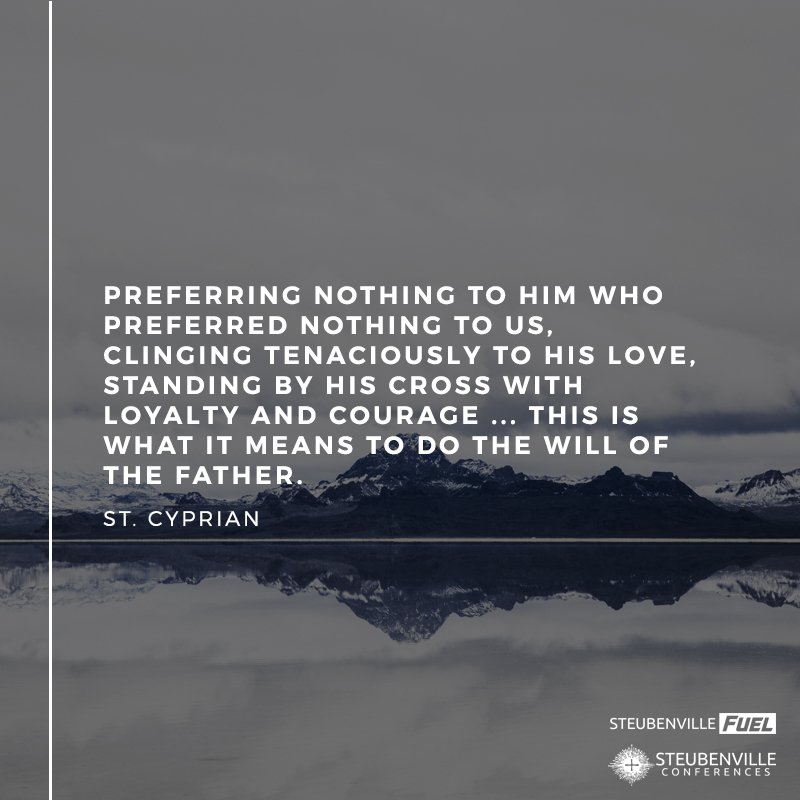
10 Things that Caught My Eye on Maria...
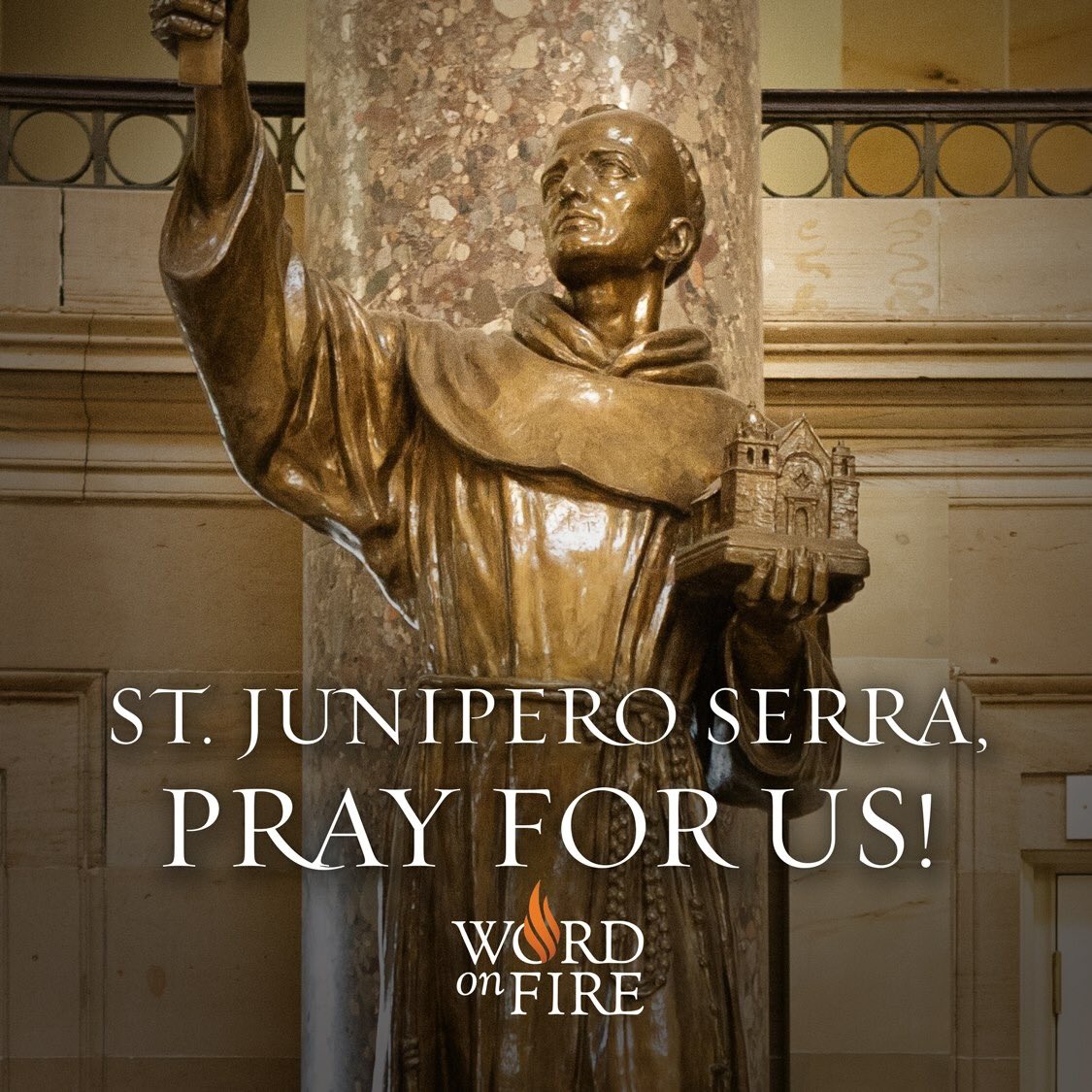
10 Saint Serra Things that Caught My Eye...
TRENDING AT PATHEOS Catholic

Creation, Preservation, and Teleology in Catholic Theology
As I write this, it is very early Monday morning. Like millions...

The Parable Of The Sower And The Word...
One of Christ’s most famous parables is that of the sower who...

Rejecting Doom: Christian Hope And Human Action
Christianity is a religion of hope. We are to have hope and...

Why I Choose the Eucharist Over the Sermon
Choose the Eucharist, Not the Sermon What are we supposed to get...

5 Design Elements Found in Spiritually Rooted Homes
Putting Spirituality Into Home Decor Our homes are more than our living...

Credo: A Story of God Told with the...
About 10 years ago, I began to imagine a personal "Credo" that...
view all Catholic blogs
Ad-Free & Subscriber Log-In Subscription Support
- About Us
- 2026 Calendar
- Videos
- Podcasts
- Library of World Religions
- Faith In Media Tracker
- Advertise With Us
- Write for Us
- Privacy Policy
- Terms of Service
- Do Not Sell My Data
- Contact Us
- Radiant Digital
- Manage Newsletter Subscriptions
- Unsubscribe From Notifications
- Sitemap
Copyright 2008-2026, Patheos. All rights reserved.
Subscription Support Ad-Free & Subscriber Log-In
Follow Patheos