
BuddhistCatholicContemplativeEvangelicalGeneral ChristianHinduJewishLatter-day SaintMuslimNew VisionsProgressive Christian
Beliefs
- Buddhist
- Catholic
- Contemplative
- Evangelical
- General Christian
- Hindu
- Jewish
- Latter-day Saint
- More Voices
- Muslim
- New Visions
- Pagan
- Progressive Christian
Topics
- Religion News
- Food and Religion
- Sports and Religion
- Religious Art
- Religious Music and Entertainment
- Religious Events
- History and Religion
- Style and Religion
- Politics and Religion
- Women in Religion
- Recreation Outdoors and Religion
- Business Finance and Religion
- Careers Workplace and Religion
- Education and Religion
- Family Parenting and Religion
- Health Fitness and Religion
- Home and Religion
- Relationships and Religion
- Technology and Religion
- Travel and Religion
Columnists
- Buddhist Columnists
- Business Finance and Religion Columnists
- Careers Workplace and Religion Columnists
- Catholic Columnists
- Contemplative Columnists
- Education and Religion Columnists
- Evangelists Columnists
- Family Parenting and Religion Columnists
- General Christian Columnists
- Health Fitness and Religion Columnists
- Hindu Columnists
- History and Religion Columnists
- Home and Religion Columnists
- Jewish Columnists
- More Voices Columnists
- Latter Day Columnists
- Muslim Columnists
- New Visions Columnists
- Nonreligious Columnists
- Pagan Columnists
- Politics and Religion Columnists
- Progressive Columnists
- Recreation Outdoors and Religion Columnists
- Relationships and Religion Columnists
- Religion News Columnists
- Religious Art Columnists
- Religious Events Columnists
- Religious Music and Entertainment Columnists
- Sports and Religion Columnists
- Style and Religion Columnists
- Technology and Religion Columnists
- Travel and Religion Columnists
- Women in Religion Columnists
Resource Library
- 2026 Calendar
- Library of World Religions
- The 100 Most Holy Places on Earth
- Patheos Answers
- Podcasts
- Videos
- Faith Leaders Database
- Anglican Episcopalian
- Bahai
- Baptist
- Buddhism
- Christianity
- Confucianism
- Eastern Orthodoxy
- Hinduism
- Holiness and Pentecostal
- ISKCON
- Islam
- Judaism
- Lutheran
- Methodist
- The Church of Jesus Christ of Latter-day Saints
- New Age
- Paganism
- Presbytarian and Reformed
- Protestantism
- Religion Behind the Scenes
- Roman Catholic
- Scientology
- Shia Islam
- Sikhism
- Sufism
- Sunni Islam
- Taoism
- Zen
- See all religions
Research Tools
 Ad-Free & Subscriber Log-In Subscription Support
Ad-Free & Subscriber Log-In Subscription Support
Follow Patheos 

- Trending:
- Forgiveness
- |
- Marriage
- |
- Consciousness
- |
- Death Penalty
- |
- Election
- |
- Halloween
 Kathryn Lopez
- Home
- Catholic
- You Don’t Have to be a Monk to Be Changed and Transformed
You Don’t Have to be a Monk to Be Changed and Transformed
Last updated on: June 12, 2014 at 10:03 am by Kathryn Jean Lopez
You Don’t Have to be a Monk to Be Changed and Transformed 2014-06-12T10:03:29-05:00 Kathryn Jean Lopez
Patheos Explore the world's faith through different perspectives on religion and spirituality! Patheos has the views of the prevalent religions and spiritualities of the world.
With the Beatitudes as our identity card, we are called to live life “changed and transformed” in the Trinity.
Wednesday’s Magnificat had a meditation from Pseudo-Macarius, an Egyptian monk and hermit, that helps those of us who are not in the hermitage.
It began:
Our souls must be changed and transformed from the present state to a new one, to a divine nature, and to become new instead of old, that is, good and kind and faithful from being bitter and faithless. And thus, having become fit, we will be restored to the heavenly kingdom …
It continued:
All things are possible with God, as it happened in the case of the good thief. In a moment through faith he was converted and was restored to Paradise.
How can we — why would we — resist living our days as ones of thanksgiving and praise when we know this?
The good thief was granted mercy from our Lord even as He paid for our sins.
There is nothing, nowhere, God will not grant forgiveness for. We just need to go to Him in sorrow for our sins, wanting to be reconciled with our Creator and Savior.
Our monk continues:
The Lord came for this in order to change us and recreate us and make us, as it is written, “participators of the divine nature” (2 Pt 1:4), and to give to our soul a heavenly soul, that is, the Spirit of the Godhead leading us to every virtue so that we might be able to live eternal life. Therefore, may we believe with our whole heart his inexpressible promises, because “He is true that promised” (Heb 10:23).
The wedding feast of the Lamb. That’s where we are meant for. What else could we ever want?
And so we must let Him order our days in His peace. Pseudo-Macarius goes on:
We must love the Lord and always strive to live in all the virtues and to beseech assiduously and without ceasing in order to receive the promise of the Spirit totally and perfectly so that we may be brought to life even while we are still on this earth.
And he issues a caution:
For if in this world a person would not receive the sanctification of the Spirit through much faith and imploring, and be “made participator of the divine nature” and permeated by grace by which he can fulfill every commandment without blame and purely, he would not be made for the Kingdom of Heaven. Whatever good anyone has obtained here, that same, in that day, will be his life through the Father and the Son and the Holy Spirit forever.
With our fidelity to the Cross, with our commitment to live truly Catholic lives of prayer and discernment of the ways of the Divine Persons, we build the Kingdom of God here, and help those we encounter on the way to Heaven, through our encounter (encuentro!) with the Trinity — God the Father, Son, and Holy Spirit.
It’s so important — and maybe the run-up to Trinity Sunday is a good time to think about this — to have practical routines that help with prayer during the course of busy weeks. Do we wake up and pray? Do we give thanks to God? Do we read the Bible? Do we dip into the lives of the saints?
Magnificat is a good way to help with all of the above. If you don’t subscribe, you might consider doing so. It’s also a great gift. Beautiful, concise, exactly what one needs to keep at nourishing the soul day-by-day. It will help with consoling, directing, and challenging. It will help with staying on course.
(Full disclosure: I’ve done some work with the Magnificat Foundation, which is separate venture but part of the Magnificat family. I’ve been talking up — and addicted to — Magnificat long before that though.)
Also from Magnificat this week:
Every day offers a choice: what sort of reading, what sort of TV, what sort of conversation, what sort of friends will we choose to welcome into our home?
And from St. Paul writing to the Philippians (4:8):
Whatever is true, whatever is honorable, whatever is just, whatever is pure, whatever is lovely, whatever is gracious, if there is any excellence and if there is anything worthy of praise, think about these things.
We celebrated the feast of St. Barnabas this week. St. Barnabas, pray for us that we may be on fire with flame of the Holy Spirit as he and the first Apostles were!
Or as a #homilytweet (can we ever make it trend?) put it:
We pray we have the flame of the #HolySpirit and zeal of #Barnabas to spread the faith of Jesus in the world #homilytweet
— Kathryn Jean Lopez (@kathrynlopez) June 11, 2014
Previous Post

June 10, 2014
Pope Francis on the Christian Life: So Simple & Yet So Difficult
Next Post
June 13, 2014 We Can't Give Up on Politics: Pope Francis & the Restoration Imperative
Browse Our Archives
Select a Category B16 Christian Persecution Christianity Today Culture Good Links/Must Read HHS Mandate Holy Land Must Reads Prayer Religious Liberty Uncategorized
Select a Month July 2016 June 2016 May 2016 April 2016 March 2016 February 2016 January 2016 December 2015 November 2015 October 2015 September 2015 August 2015 July 2015 June 2015 May 2015 April 2015 March 2015 February 2015 January 2015 December 2014 November 2014 October 2014 September 2014 August 2014 July 2014 June 2014 May 2014 April 2014 March 2014 February 2014 January 2014 December 2013 November 2013 October 2013 September 2013 August 2013 July 2013 June 2013 May 2013 April 2013 March 2013 February 2013 January 2013 December 2012 November 2012 October 2012 September 2012 August 2012 July 2012 June 2012 May 2012 April 2012 March 2012 February 2012
Follow Us!
TAKE THE
Religious Wisdom Quiz
Who received the Ten Commandments from God?
Select your answer to see how you score.
Moses Joshua Abraham Aaron
Related posts from Kathryn Lopez
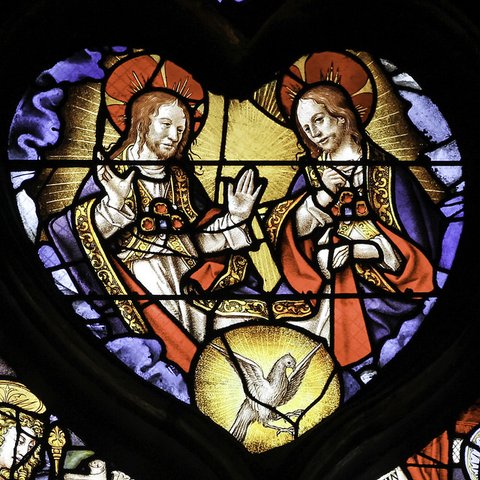
15 Things about the Holy Trinity Today
The Human Family, an Icon of God

The Precious Gift of Each Child

Your love willed this, O Eternal Trinity.
TRENDING AT PATHEOS Catholic

Rejecting Doom: Christian Hope And Human Action
Christianity is a religion of hope. We are to have hope and...

It’s What Comes From Within Which Matters
One of the most difficult things for us to understand is why...

Why I Choose the Eucharist Over the Sermon
Choose the Eucharist, Not the Sermon What are we supposed to get...

5 Design Elements Found in Spiritually Rooted Homes
Putting Spirituality Into Home Decor Our homes are more than our living...

Credo: A Story of God Told with the...
About 10 years ago, I began to imagine a personal "Credo" that...

The Anatomy of Divine Revelation in Catholic Thought
The claim that God has made Himself known to human beings is...
view all Catholic blogs
Ad-Free & Subscriber Log-In Subscription Support
- About Us
- 2026 Calendar
- Videos
- Podcasts
- Library of World Religions
- Faith In Media Tracker
- Advertise With Us
- Write for Us
- Privacy Policy
- Terms of Service
- Do Not Sell My Data
- Contact Us
- Radiant Digital
- Manage Newsletter Subscriptions
- Unsubscribe From Notifications
- Sitemap
Copyright 2008-2026, Patheos. All rights reserved.
Subscription Support Ad-Free & Subscriber Log-In
Follow Patheos