
BuddhistCatholicContemplativeEvangelicalGeneral ChristianHinduJewishLatter-day SaintMuslimNew VisionsProgressive Christian
Beliefs
- Buddhist
- Catholic
- Contemplative
- Evangelical
- General Christian
- Hindu
- Jewish
- Latter-day Saint
- More Voices
- Muslim
- New Visions
- Pagan
- Progressive Christian
Topics
- Religion News
- Food and Religion
- Sports and Religion
- Religious Art
- Religious Music and Entertainment
- Religious Events
- History and Religion
- Style and Religion
- Politics and Religion
- Women in Religion
- Recreation Outdoors and Religion
- Business Finance and Religion
- Careers Workplace and Religion
- Education and Religion
- Family Parenting and Religion
- Health Fitness and Religion
- Home and Religion
- Relationships and Religion
- Technology and Religion
- Travel and Religion
Columnists
- Buddhist Columnists
- Business Finance and Religion Columnists
- Careers Workplace and Religion Columnists
- Catholic Columnists
- Contemplative Columnists
- Education and Religion Columnists
- Evangelists Columnists
- Family Parenting and Religion Columnists
- General Christian Columnists
- Health Fitness and Religion Columnists
- Hindu Columnists
- History and Religion Columnists
- Home and Religion Columnists
- Jewish Columnists
- More Voices Columnists
- Latter Day Columnists
- Muslim Columnists
- New Visions Columnists
- Nonreligious Columnists
- Pagan Columnists
- Politics and Religion Columnists
- Progressive Columnists
- Recreation Outdoors and Religion Columnists
- Relationships and Religion Columnists
- Religion News Columnists
- Religious Art Columnists
- Religious Events Columnists
- Religious Music and Entertainment Columnists
- Sports and Religion Columnists
- Style and Religion Columnists
- Technology and Religion Columnists
- Travel and Religion Columnists
- Women in Religion Columnists
Resource Library
- 2026 Calendar
- Library of World Religions
- The 100 Most Holy Places on Earth
- Patheos Answers
- Podcasts
- Videos
- Faith Leaders Database
- Anglican Episcopalian
- Bahai
- Baptist
- Buddhism
- Christianity
- Confucianism
- Eastern Orthodoxy
- Hinduism
- Holiness and Pentecostal
- ISKCON
- Islam
- Judaism
- Lutheran
- Methodist
- The Church of Jesus Christ of Latter-day Saints
- New Age
- Paganism
- Presbytarian and Reformed
- Protestantism
- Religion Behind the Scenes
- Roman Catholic
- Scientology
- Shia Islam
- Sikhism
- Sufism
- Sunni Islam
- Taoism
- Zen
- See all religions
Research Tools
 Ad-Free & Subscriber Log-In Subscription Support
Ad-Free & Subscriber Log-In Subscription Support
Follow Patheos 

- Trending:
- Forgiveness
- |
- Marriage
- |
- Consciousness
- |
- Death Penalty
- |
- Election
- |
- Halloween
 Kathryn Lopez
- Home
- Catholic
- We’re So Strange
We’re So Strange
Last updated on: December 18, 2013 at 5:10 pm by Kathryn Jean Lopez
We’re So Strange 2013-12-18T17:10:49-05:00 Kathryn Jean Lopez
Patheos Explore the world's faith through different perspectives on religion and spirituality! Patheos has the views of the prevalent religions and spiritualities of the world.
Earlier this year, I interviewed Elizabeth Scalia, known best as “The Anchoress” online, about her book, Strange Gods: Unmasking the Idols in Everyday Life
(which I also wrote about here). Pope Francis keeps talking about the dangers of idolatry in our lives, here are some extended exclusive questions and answers with Elizabeth about our inclinations to idolatry and how to better let God reorder our lives. Strange Gods is a good, accessible book to read, to give, to share, especially these days as we make idols of all kinds of things, maybe even our new pope. And so I give you more Scalia on idols …
KJL: “I am a great idolator and have been all my life.” Why admit such a thing outside of Confession?
Scalia: Actually, that’s a really good point. I know I’ve mentioned it at least once in Confession, but most of the time I’m so busy confessing that that I’ve lost my temper or lied to get off the phone or wished terrible things upon rude drivers -– or more embarrassing sins that I won’t share here — that I’ve not confessed it enough. And clearly I should confess it each time, because if I am failing in other areas, particularly if I am failing in love (which I nearly always am), then I am failing first in love of God, and in this First Commandment. If we are keeping the First Commandment well, we are not breaking the other ones — the rest of the Commandments almost become moot.

But I have no problem with admitting publicly that I am an idolator. Saint Gregory of Nyssa wrote that “ideas create idols; only wonder leads to knowing.” I have sinned, badly, when I have served myself and my own ideas too fully and I am grateful for the mercy of God that some “stinking thinking” has been released. None of us are obliged to air our dirty laundry, but in this case I almost feel like an ex-drunk who admits to his daily struggles in the hopes of helping another by saying, every day, “yes, this is who and what I am, an Idolator, and left to my own devices, I would be lost. ‘Amazing Grace, how sweet the sound that saved a wretch like me.’”
KJL: “When we attach ourselves to something other than God, God’s presence is blocked, unseen, and disconnected from our awareness.” How do we go about seeing Him then?
Scalia: By reading books like Strange Gods! I’m joking, of course, but really, the first step to seeing God is to seek him. Saint Teresa of Avila said, “if in all things you seek Jesus, doubtless you will find him.” Even if we do not know what our idols are, if we do not really have an inkling of just how blocked off we are, prayer provides an opening — prayer we have memorized by rote; prayer that is extemporaneous; prayer based on psalms; even the simplest of prayers, “Help me to find you…” is a start. If a prayer is made sincerely, with a real intention, it will be efficacious in some way. God’s whole intention moves on a spirit of affirmation, so the tiniest “yes” from you will always be answered with a greater “yes” from heaven.
KJL: What is “real-time salvation within the eternal dialogue”?
Scalia: It is making a conscious effort to take a measure of control over our thoughts and ideas — our anger, our fear, our anxiety, our disoriented love, our temptations — by actively asking to be saved from ourselves of a moment. In scripture, when Peter says he wants to walk on the water, like Jesus, Jesus indulges him; He says, “come” and the fisherman steps out of the boat and begins to walk toward Christ. Then Peter notices the wind, and the choppy seas and his own ideas begin to form, and those ideas defeat him; he is no longer walking toward Christ but sinking beneath the waves, and yelling, “Lord, save me!” In those moments we are like Peter; our thoughts and feelings take over and we are in danger of sinking. Crying “Lord, help me,” is action. Since we are being defeated by our minds, we can work within our minds to reclaim our stance. We can, as Saint Benedict of Nursia advises, “dash those thoughts against the cross of Christ” and they are destroyed, and we are saved from them. The eternal dialogue is God saying, “come” and us saying, “save me from myself, so I can . . . ”

KJL: Why is your distinction between engagement and enthrallment important?
Scalia: It runs along similar lines. In Strange Gods I talk about a pro-lifer who was so enthralled with her cause that upon the death of Betty Ford, all she could find to say about that woman’s life was that Mrs. Ford had supported abortion and so, basically, good riddance; with her death more babies might live. That’s enthrallment. That’s very near super-idol territory. Engagement in the cause of life is great. One of the things that engagement fights for is the recognition of the humanity of the baby or the older person or the very ill, and it’s a cause worth engaging in. If it leads you to forgetting the humanity of your foes, though, then you’re enthralled. Enthrallment is dangerous because it moves beyond simply making an idol of, for instance, the fetus, but it permits us to believe we are the idol’s judge or enforcer. As Christ is the Judgement to God’s mercy, we become the henchman to the idol’s shine.
Idolatry is profoundly anti-Christ in that way, it’s the upside-down mirror image.
KJL: “When something is true, there is no point in arguing. We cannot make anyone believe anything.” How does that gel with the Gospel mandate to evangelize?
Scalia: Jesus never said “go out and make them believe you!” In fact, the idea that any Evangelist can “make” someone believe — can install faith into another through sheer insistence and force of will — is a false idea that could lead a well-meaning evangelist to believe he or she, and not God, and God’s grace, has been the impetus of faith, the deliverer of another’s soul. A knowledgeable discussion between an apologist and an atheist is informative but only the Holy Spirit working in the midst can bring about faith.
Jesus essentially told the apostles not to argue, not to insist. He said, “go — proclaim the good news. If they don’t want to hear it, shake the dust off of your sandals and move on.” All you can do is speak the truth, calmly and with as much love as you can, and hope the Holy Spirit — the Advocate — will help carry it into someone’s heart through whatever slight opening there might be. As we see from the saints, often speaking the truth has no effect at all; doing it while the lions are circling, or the flames are licking though . . . that sometimes has an impact.
The popes of our lifetime have embodied this. They don’t argue. None of them argue. They just speak it — more importantly, they visibly live it the way they speak it — and move on, trusting the Holy Spirit. It’s all you can do.
KJL: When making plans, include within them a willingness to bend into the curve of the Holy Spirit, rather than resisting.” Whatever does that mean? This is 2013, haven’t we outgrown such talk?
Scalia: Actually I think we need more of it, because it is a practice that can teach us detachment, and balanced detachment can play a great role in how contented we are as a people. If we include in our plans, as we are making them, the idea that God might effect something completely different than what they had in mind, and if we’re willing, well, there is great power and peace in that. I once gave a woman at church a ride home. She was using a cane because she’d broken her ankle and it hadn’t healed well; two subsequent surgeries hadn’t brought it fully back. She mentioned that she had a long-planned vacation coming up and I asked her what she would do, if she couldn’t walk. She just shrugged it off and said “whatever the Lord wants” so casually that I knew she really meant it. That she would be content to change her plans, even give up her vacation all-together, if that was what she perceived to be God’s will for her. I remembered that shrug for a long time. She was incredibly instructive to me that night. In fact, going back a few questions, that conversation — her casual blowing-off of her plans, for whatever God wanted — was serious evangelism that made a difference in my own life. Very much so.
KJL: You’re a Benedictine oblate. What is that? Are you more religious than the average Christian ought to or needs to be?
Scalia: An oblate is a man or woman who has become attached to a Benedictine monastic community and has made a profession — a lifelong promise — to try to live in accordance with the Rule of Saint Benedict, as much as possible within his or her station: to try to pray the Liturgy of the Hours, when possible, attend mass, visit the sick, practice hospitality (I’m awful at it), etc. An oblate is a true Benedictine, but simply living outside the monastery walls. Mostly what it means is that I felt called to make this connection, quite possibly because I am not a very good Christian at all, and have a great need for the support of the community and the discipline of daily prayers and practices to keep me going. In his Rule, Benedict tells us that one should take no pride in needing more, or feel under-served for needing less. To need more merely means that one is lacking; to need less means one is not. A topsy-turvey, almost counter-intuitive way of thinking, but I believe he is right. God always provides the mechanism by which we are helped along where we are failing. In my case, I need a strong rope to keep me in line. The Rule is my liferope.
KJL: What do you hope everyone walks away from it reflecting on?
Scalia: I hope people take away from it a sense that God loves us completely, unendingly, intimately, and He craves us to draw near. Like the father of the prodigal son, he will run out to us, if only we turn in his direction. If we are already close but grumbling, like the other son, he will walk over and seek us out. All we have to do is sweep aside the distractions, and He is there, ready to love us with a passionate fullness, if we will only let him.
Strange Gods: Unmasking the Idols in Everyday Life
Previous Post
December 18, 2013
Hearts Swelled with Hope
Next Post
December 21, 2013 Full of Grace!: The Blessed Mother, Kate Middleton, and Every Woman
Browse Our Archives
Select a Category B16 Christian Persecution Christianity Today Culture Good Links/Must Read HHS Mandate Holy Land Must Reads Prayer Religious Liberty Uncategorized
Select a Month July 2016 June 2016 May 2016 April 2016 March 2016 February 2016 January 2016 December 2015 November 2015 October 2015 September 2015 August 2015 July 2015 June 2015 May 2015 April 2015 March 2015 February 2015 January 2015 December 2014 November 2014 October 2014 September 2014 August 2014 July 2014 June 2014 May 2014 April 2014 March 2014 February 2014 January 2014 December 2013 November 2013 October 2013 September 2013 August 2013 July 2013 June 2013 May 2013 April 2013 March 2013 February 2013 January 2013 December 2012 November 2012 October 2012 September 2012 August 2012 July 2012 June 2012 May 2012 April 2012 March 2012 February 2012
Follow Us!
TAKE THE
Religious Wisdom Quiz
Which book is the largest by chapters in the Bible?
Select your answer to see how you score.
Isaiah Proverbs Psalms Genesis
Related posts from Kathryn Lopez
Athirst? Moving Deeper into the Trinity
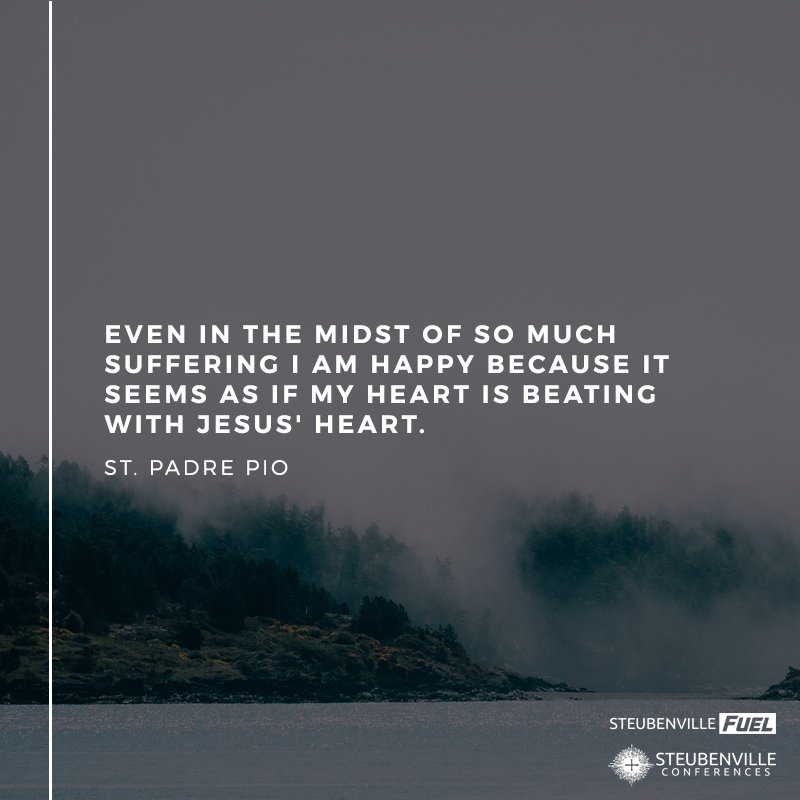
10 Catholic Things that Caught My Eye Today...
10 Things that Caught My Eye on Maria...
10 Saint Serra Things that Caught My Eye...
TRENDING AT PATHEOS Catholic

Rejecting Doom: Christian Hope And Human Action
Christianity is a religion of hope. We are to have hope and...

It’s What Comes From Within Which Matters
One of the most difficult things for us to understand is why...

Why I Choose the Eucharist Over the Sermon
Choose the Eucharist, Not the Sermon What are we supposed to get...

5 Design Elements Found in Spiritually Rooted Homes
Putting Spirituality Into Home Decor Our homes are more than our living...

Credo: A Story of God Told with the...
About 10 years ago, I began to imagine a personal "Credo" that...

The Anatomy of Divine Revelation in Catholic Thought
The claim that God has made Himself known to human beings is...
view all Catholic blogs
Ad-Free & Subscriber Log-In Subscription Support
- About Us
- 2026 Calendar
- Videos
- Podcasts
- Library of World Religions
- Faith In Media Tracker
- Advertise With Us
- Write for Us
- Privacy Policy
- Terms of Service
- Do Not Sell My Data
- Contact Us
- Radiant Digital
- Manage Newsletter Subscriptions
- Unsubscribe From Notifications
- Sitemap
Copyright 2008-2026, Patheos. All rights reserved.
Subscription Support Ad-Free & Subscriber Log-In
Follow Patheos