
BuddhistCatholicContemplativeEvangelicalGeneral ChristianHinduJewishLatter-day SaintMuslimNew VisionsProgressive Christian
Beliefs
- Buddhist
- Catholic
- Contemplative
- Evangelical
- General Christian
- Hindu
- Jewish
- Latter-day Saint
- More Voices
- Muslim
- New Visions
- Pagan
- Progressive Christian
Topics
- Religion News
- Food and Religion
- Sports and Religion
- Religious Art
- Religious Music and Entertainment
- Religious Events
- History and Religion
- Style and Religion
- Politics and Religion
- Women in Religion
- Recreation Outdoors and Religion
- Business Finance and Religion
- Careers Workplace and Religion
- Education and Religion
- Family Parenting and Religion
- Health Fitness and Religion
- Home and Religion
- Relationships and Religion
- Technology and Religion
- Travel and Religion
Columnists
- Buddhist Columnists
- Business Finance and Religion Columnists
- Careers Workplace and Religion Columnists
- Catholic Columnists
- Contemplative Columnists
- Education and Religion Columnists
- Evangelists Columnists
- Family Parenting and Religion Columnists
- General Christian Columnists
- Health Fitness and Religion Columnists
- Hindu Columnists
- History and Religion Columnists
- Home and Religion Columnists
- Jewish Columnists
- More Voices Columnists
- Latter Day Columnists
- Muslim Columnists
- New Visions Columnists
- Nonreligious Columnists
- Pagan Columnists
- Politics and Religion Columnists
- Progressive Columnists
- Recreation Outdoors and Religion Columnists
- Relationships and Religion Columnists
- Religion News Columnists
- Religious Art Columnists
- Religious Events Columnists
- Religious Music and Entertainment Columnists
- Sports and Religion Columnists
- Style and Religion Columnists
- Technology and Religion Columnists
- Travel and Religion Columnists
- Women in Religion Columnists
Resource Library
- 2026 Calendar
- Library of World Religions
- The 100 Most Holy Places on Earth
- Patheos Answers
- Podcasts
- Videos
- Faith Leaders Database
- Anglican Episcopalian
- Bahai
- Baptist
- Buddhism
- Christianity
- Confucianism
- Eastern Orthodoxy
- Hinduism
- Holiness and Pentecostal
- ISKCON
- Islam
- Judaism
- Lutheran
- Methodist
- The Church of Jesus Christ of Latter-day Saints
- New Age
- Paganism
- Presbytarian and Reformed
- Protestantism
- Religion Behind the Scenes
- Roman Catholic
- Scientology
- Shia Islam
- Sikhism
- Sufism
- Sunni Islam
- Taoism
- Zen
- See all religions
Research Tools
 Ad-Free & Subscriber Log-In Subscription Support
Ad-Free & Subscriber Log-In Subscription Support
Follow Patheos 

- Trending:
- Forgiveness
- |
- Marriage
- |
- Consciousness
- |
- Death Penalty
- |
- Election
- |
- Halloween
 Kathryn Lopez
- Home
- Catholic
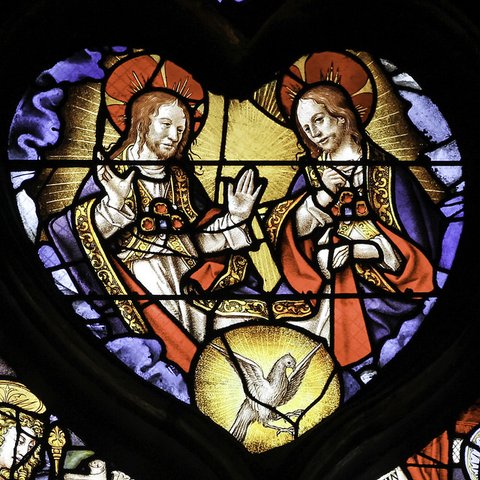
- Your love willed this, O Eternal Trinity.
Your love willed this, O Eternal Trinity.
Last updated on: June 1, 2013 at 6:31 pm by Kathryn Jean Lopez
Your love willed this, O Eternal Trinity. 2013-06-01T18:31:23-05:00 Kathryn Jean Lopez
Patheos Explore the world's faith through different perspectives on religion and spirituality! Patheos has the views of the prevalent religions and spiritualities of the world.
We have been known to make a cult of youth and our own supposed genius. We seek to invent our own wisdom, instead of going to its Source.
Fr. George Rutler reflects on this arrogance with a little help from one of the great women doctors of the Church:
There is a curious study in an academic journal of psychology. The study — titled “Intelligence” — claims that we in the twenty-first century have an average IQ fourteen points lower than the Victorians, a calculation based on how long the brain takes to react. The scientist author claims that this is the result of a backward form of natural selection, with the most intelligent people tending to have fewer children (usually for the wrong reasons), while others now tend to live longer. Some of this smacks of the false science of eugenics, but it does strike at what has been called chronological arrogance, which assumes that people today are smarter than those of the past.
This arrogance is a form of perpetual adolescence, as it thinks the elders of the past were not very bright. But the very existence of civilizations attests to the fact that we have inherited what we did not invent. In 1676, Isaac Newton wrote: “If I have seen a little further, it is by standing on the shoulders of Giants.” This is the common sense that is common only to uncommon minds. The theologian John of Salisbury said the same thing in 1159: “We are like dwarfs sitting on the shoulders of giants. We see more, and things that are more distant, than they did, not because our sight is superior or because we are taller than they, but because they raise us up, and by their great stature add to ours.”
The gigantic theological minds gave us the doctrine of the Holy Eucharist, and less subtle minds in our time find it hard to accept because they will not stand on their shoulders. Or, nearly as bad, thinkers of modest stature may end up shrinking the magnificent Scholastic teaching on Eucharistic transubstantiation into a cloying caricature, with images of a baby Jesus curled up in the Tabernacle, and invitations to pop into church to say “a quick hello to Jesus.” The great Eucharistic doctors never separated the Body and Blood of Christ from the mystery of the Holy Trinity. Saint Catherine of Siena never thought of measuring IQs, and she is a Doctor of the Church even though she was practically illiterate.
He concludes, urging us to pray as Catherine of Siena did:
O Trinity! Eternal Trinity! O, Fire, abyss of Love!
Would it not have been enough to create us after your own image and likeness,
causing us to be re-born through grace and by the Blood of Your Son?
Was it still necessary that You should give us even the Holy Trinity as food for our souls?
Yes, Your love willed this, O Eternal Trinity.
You gave us not only Your Word through Redemption and in the Eucharist.
But You also gave us Yourself in Your fullness of Love for Your creature.
Truly the soul possesses You Who are the supreme Goodness.
On the feast of Corpus Christi, and always, this is our call, this is our life at its deepest. As New York native Dominican Archbishop Augustine DiNoia put it in an Easter Vigil homily: “no one has ever desired anything more than God desires to share the communion of his Trinitarian love with us. This desire gave rise to a plan, a design, of grace and salvation.”
Previous Post

June 1, 2013
Don’t Be Trapped by the Spirit of the World
Next Post
June 1, 2013 Do We Live Constantly with God?
Browse Our Archives
Select a Category B16 Christian Persecution Christianity Today Culture Good Links/Must Read HHS Mandate Holy Land Must Reads Prayer Religious Liberty Uncategorized
Select a Month July 2016 June 2016 May 2016 April 2016 March 2016 February 2016 January 2016 December 2015 November 2015 October 2015 September 2015 August 2015 July 2015 June 2015 May 2015 April 2015 March 2015 February 2015 January 2015 December 2014 November 2014 October 2014 September 2014 August 2014 July 2014 June 2014 May 2014 April 2014 March 2014 February 2014 January 2014 December 2013 November 2013 October 2013 September 2013 August 2013 July 2013 June 2013 May 2013 April 2013 March 2013 February 2013 January 2013 December 2012 November 2012 October 2012 September 2012 August 2012 July 2012 June 2012 May 2012 April 2012 March 2012 February 2012
Follow Us!
TAKE THE
Religious Wisdom Quiz
What Jewish festival celebrates deliverance from Egypt?
Select your answer to see how you score.
Pentecost Passover Purim Tabernacles
Related posts from Kathryn Lopez
15 Things about the Holy Trinity Today
The Human Family, an Icon of God
You Don’t Have to be a Monk to...

The Precious Gift of Each Child
TRENDING AT PATHEOS Catholic

The Parable Of The Sower And The Word...
One of Christ’s most famous parables is that of the sower who...

Rejecting Doom: Christian Hope And Human Action
Christianity is a religion of hope. We are to have hope and...

Why I Choose the Eucharist Over the Sermon
Choose the Eucharist, Not the Sermon What are we supposed to get...

5 Design Elements Found in Spiritually Rooted Homes
Putting Spirituality Into Home Decor Our homes are more than our living...

Credo: A Story of God Told with the...
About 10 years ago, I began to imagine a personal "Credo" that...

The Anatomy of Divine Revelation in Catholic Thought
The claim that God has made Himself known to human beings is...
view all Catholic blogs
Ad-Free & Subscriber Log-In Subscription Support
- About Us
- 2026 Calendar
- Videos
- Podcasts
- Library of World Religions
- Faith In Media Tracker
- Advertise With Us
- Write for Us
- Privacy Policy
- Terms of Service
- Do Not Sell My Data
- Contact Us
- Radiant Digital
- Manage Newsletter Subscriptions
- Unsubscribe From Notifications
- Sitemap
Copyright 2008-2026, Patheos. All rights reserved.
Subscription Support Ad-Free & Subscriber Log-In
Follow Patheos