
BuddhistCatholicContemplativeEvangelicalGeneral ChristianHinduJewishLatter-day SaintMuslimNew VisionsProgressive Christian
Beliefs
- Buddhist
- Catholic
- Contemplative
- Evangelical
- General Christian
- Hindu
- Jewish
- Latter-day Saint
- More Voices
- Muslim
- New Visions
- Pagan
- Progressive Christian
Topics
- Religion News
- Food and Religion
- Sports and Religion
- Religious Art
- Religious Music and Entertainment
- Religious Events
- History and Religion
- Style and Religion
- Politics and Religion
- Women in Religion
- Recreation Outdoors and Religion
- Business Finance and Religion
- Careers Workplace and Religion
- Education and Religion
- Family Parenting and Religion
- Health Fitness and Religion
- Home and Religion
- Relationships and Religion
- Technology and Religion
- Travel and Religion
Columnists
- Buddhist Columnists
- Business Finance and Religion Columnists
- Careers Workplace and Religion Columnists
- Catholic Columnists
- Contemplative Columnists
- Education and Religion Columnists
- Evangelists Columnists
- Family Parenting and Religion Columnists
- General Christian Columnists
- Health Fitness and Religion Columnists
- Hindu Columnists
- History and Religion Columnists
- Home and Religion Columnists
- Jewish Columnists
- More Voices Columnists
- Latter Day Columnists
- Muslim Columnists
- New Visions Columnists
- Nonreligious Columnists
- Pagan Columnists
- Politics and Religion Columnists
- Progressive Columnists
- Recreation Outdoors and Religion Columnists
- Relationships and Religion Columnists
- Religion News Columnists
- Religious Art Columnists
- Religious Events Columnists
- Religious Music and Entertainment Columnists
- Sports and Religion Columnists
- Style and Religion Columnists
- Technology and Religion Columnists
- Travel and Religion Columnists
- Women in Religion Columnists
Resource Library
- 2026 Calendar
- Library of World Religions
- The 100 Most Holy Places on Earth
- Patheos Answers
- Podcasts
- Videos
- Faith Leaders Database
- Anglican Episcopalian
- Bahai
- Baptist
- Buddhism
- Christianity
- Confucianism
- Eastern Orthodoxy
- Hinduism
- Holiness and Pentecostal
- ISKCON
- Islam
- Judaism
- Lutheran
- Methodist
- The Church of Jesus Christ of Latter-day Saints
- New Age
- Paganism
- Presbytarian and Reformed
- Protestantism
- Religion Behind the Scenes
- Roman Catholic
- Scientology
- Shia Islam
- Sikhism
- Sufism
- Sunni Islam
- Taoism
- Zen
- See all religions
Research Tools
 Ad-Free & Subscriber Log-In Subscription Support
Ad-Free & Subscriber Log-In Subscription Support
Follow Patheos 

- Trending:
- Forgiveness
- |
- Marriage
- |
- Consciousness
- |
- Death Penalty
- |
- Election
- |
- Halloween
 Kathryn Lopez
- Home
- Catholic
- For Those Who Suffer
For Those Who Suffer
Last updated on: August 7, 2012 at 3:39 pm by Kathryn Jean Lopez
For Those Who Suffer 2012-08-07T15:39:31-05:00 Kathryn Jean Lopez
Patheos Explore the world's faith through different perspectives on religion and spirituality! Patheos has the views of the prevalent religions and spiritualities of the world.
From the encyclical Salvific Doloris:
Down through the centuries and generations it has been seen that in suffering there is concealed a particular power that draws a person interiorly close to Christ, a special grace. To this grace many saints, such as Saint Francis of Assisi, Saint Ignatius of Loyola and others, owe their profound conversion. A result of such a conversion is not only that the individual discovers the salvific meaning of suffering but above all that he becomes a completely new person. He discovers a new dimension, as it were, of his entire life and vocation. This discovery is a particular confirmation of the spiritual greatness which in man surpasses the body in a way that is completely beyond compare. When this body is gravely ill, totally incapacitated, and the person is almost incapable of living and acting, all the more do interior maturity and spiritual greatness become evident, constituting a touching lesson to those who are healthy and normal.
This interior maturity and spiritual greatness in suffering are certainly the result of a particular conversion and cooperation with the grace of the Crucified Redeemer. It is he himself who acts at the heart of human sufferings through his Spirit of truth, through the consoling Spirit. It is he who transforms, in a certain sense, the very substance of the spiritual life, indicating for the person who suffers a place close to himself. It is he—as the interior Master and Guide—who reveals to the suffering brother and sister this wonderful interchange, situated at the very heart of the mystery of the Redemption. Suffering is, in itself, an experience of evil. But Christ has made suffering the firmest basis of the definitive good, namely the good of eternal salvation. By his suffering on the Cross, Christ reached the very roots of evil, of sin and death. He conquered the author of evil, Satan, and his permanent rebellion against the Creator. To the suffering brother or sister Christ discloses and gradually reveals the horizons of the Kingdom of God: the horizons of a world converted to the Creator, of a world free from sin, a world being built on the saving power of love. And slowly but effectively, Christ leads into this world, into this Kingdom of the Father, suffering man, in a certain sense through the very heart of his suffering. For suffering cannot be transformed and changed by a grace from outside, but from within. And Christ through his own salvific suffering is very much present in every human suffering, and can act from within that suffering by the powers of his Spirit of truth, his consoling Spirit.
This is not all: the Divine Redeemer wishes to penetrate the soul of every sufferer through the heart of his holy Mother, the first and the most exalted of all the redeemed. As though by a continuation of that motherhood which by the power of the Holy Spirit had given him life, the dying Christ conferred upon the ever Virgin Mary a new kind of motherhood—spiritual and universal—towards all human beings, so that every individual, during the pilgrimage of faith, might remain, together with her, closely united to him unto the Cross, and so that every form of suffering, given fresh life by the power of this Cross, should become no longer the weakness of man but the power of God.
Previous Post

August 7, 2012
'we celebrate women'
Next Post
August 7, 2012 Quiet, Soul!
Browse Our Archives
Select a Category B16 Christian Persecution Christianity Today Culture Good Links/Must Read HHS Mandate Holy Land Must Reads Prayer Religious Liberty Uncategorized
Select a Month July 2016 June 2016 May 2016 April 2016 March 2016 February 2016 January 2016 December 2015 November 2015 October 2015 September 2015 August 2015 July 2015 June 2015 May 2015 April 2015 March 2015 February 2015 January 2015 December 2014 November 2014 October 2014 September 2014 August 2014 July 2014 June 2014 May 2014 April 2014 March 2014 February 2014 January 2014 December 2013 November 2013 October 2013 September 2013 August 2013 July 2013 June 2013 May 2013 April 2013 March 2013 February 2013 January 2013 December 2012 November 2012 October 2012 September 2012 August 2012 July 2012 June 2012 May 2012 April 2012 March 2012 February 2012
Follow Us!
TAKE THE
Religious Wisdom Quiz
Who baptized Jesus in the Jordan River?
Select your answer to see how you score.
James John the Baptist Nicodemus Peter
Related posts from Kathryn Lopez
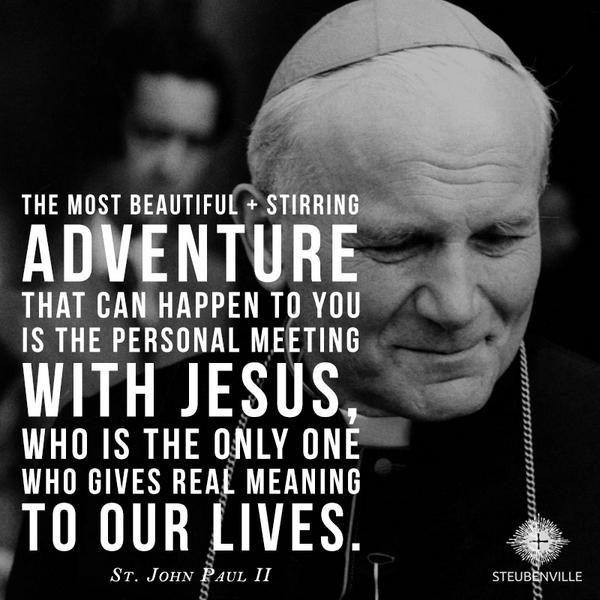
16 Saint John Paul II Things that Caught...

Trusting His Way, the Science of Saints

Pope John Paul II, Marxist, in Bethlehem
TRENDING AT PATHEOS Catholic

The Parable Of The Sower And The Word...
One of Christ’s most famous parables is that of the sower who...

Rejecting Doom: Christian Hope And Human Action
Christianity is a religion of hope. We are to have hope and...

Why I Choose the Eucharist Over the Sermon
Choose the Eucharist, Not the Sermon What are we supposed to get...

5 Design Elements Found in Spiritually Rooted Homes
Putting Spirituality Into Home Decor Our homes are more than our living...

Credo: A Story of God Told with the...
About 10 years ago, I began to imagine a personal "Credo" that...

The Anatomy of Divine Revelation in Catholic Thought
The claim that God has made Himself known to human beings is...
view all Catholic blogs
Ad-Free & Subscriber Log-In Subscription Support
- About Us
- 2026 Calendar
- Videos
- Podcasts
- Library of World Religions
- Faith In Media Tracker
- Advertise With Us
- Write for Us
- Privacy Policy
- Terms of Service
- Do Not Sell My Data
- Contact Us
- Radiant Digital
- Manage Newsletter Subscriptions
- Unsubscribe From Notifications
- Sitemap
Copyright 2008-2026, Patheos. All rights reserved.
Subscription Support Ad-Free & Subscriber Log-In
Follow Patheos