
BuddhistCatholicContemplativeEvangelicalGeneral ChristianHinduJewishLatter-day SaintMuslimNew VisionsProgressive Christian
Beliefs
- Buddhist
- Catholic
- Contemplative
- Evangelical
- General Christian
- Hindu
- Jewish
- Latter-day Saint
- More Voices
- Muslim
- New Visions
- Pagan
- Progressive Christian
Topics
- Religion News
- Food and Religion
- Sports and Religion
- Religious Art
- Religious Music and Entertainment
- Religious Events
- History and Religion
- Style and Religion
- Politics and Religion
- Women in Religion
- Recreation Outdoors and Religion
- Business Finance and Religion
- Careers Workplace and Religion
- Education and Religion
- Family Parenting and Religion
- Health Fitness and Religion
- Home and Religion
- Relationships and Religion
- Technology and Religion
- Travel and Religion
Columnists
- Buddhist Columnists
- Business Finance and Religion Columnists
- Careers Workplace and Religion Columnists
- Catholic Columnists
- Contemplative Columnists
- Education and Religion Columnists
- Evangelists Columnists
- Family Parenting and Religion Columnists
- General Christian Columnists
- Health Fitness and Religion Columnists
- Hindu Columnists
- History and Religion Columnists
- Home and Religion Columnists
- Jewish Columnists
- More Voices Columnists
- Latter Day Columnists
- Muslim Columnists
- New Visions Columnists
- Nonreligious Columnists
- Pagan Columnists
- Politics and Religion Columnists
- Progressive Columnists
- Recreation Outdoors and Religion Columnists
- Relationships and Religion Columnists
- Religion News Columnists
- Religious Art Columnists
- Religious Events Columnists
- Religious Music and Entertainment Columnists
- Sports and Religion Columnists
- Style and Religion Columnists
- Technology and Religion Columnists
- Travel and Religion Columnists
- Women in Religion Columnists
Resource Library
- 2026 Calendar
- Library of World Religions
- The 100 Most Holy Places on Earth
- Patheos Answers
- Podcasts
- Videos
- Faith Leaders Database
- Anglican Episcopalian
- Bahai
- Baptist
- Buddhism
- Christianity
- Confucianism
- Eastern Orthodoxy
- Hinduism
- Holiness and Pentecostal
- ISKCON
- Islam
- Judaism
- Lutheran
- Methodist
- The Church of Jesus Christ of Latter-day Saints
- New Age
- Paganism
- Presbytarian and Reformed
- Protestantism
- Religion Behind the Scenes
- Roman Catholic
- Scientology
- Shia Islam
- Sikhism
- Sufism
- Sunni Islam
- Taoism
- Zen
- See all religions
Research Tools
 Ad-Free & Subscriber Log-In Subscription Support
Ad-Free & Subscriber Log-In Subscription Support
Follow Patheos 

- Trending:
- Forgiveness
- |
- Marriage
- |
- Consciousness
- |
- Death Penalty
- |
- Election
- |
- Halloween

- Home
- Catholic
- Religious Music & Entertainment
- ‘The Story of God’ and the Problem of Evil
‘The Story of God’ and the Problem of Evil
Last updated on: April 27, 2016 at 5:36 pm by Kate O'Hare
‘The Story of God’ and the Problem of Evil 2016-04-27T17:36:04-08:00 Kate O'Hare
Patheos Explore the world's faith through different perspectives on religion and spirituality! Patheos has the views of the prevalent religions and spiritualities of the world.
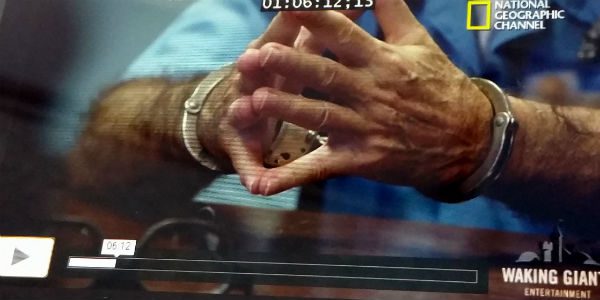 Among those who don’t believe in God, one compelling argument for their position is, “If there was a God that was omniscient and omnipotent, and inherently good, then why does evil exist?”
It’s a simple question, but just because a question can be posed simply doesn’t mean it has a simple answer.
That’s something Morgan Freeman discovers in “Why Does Evil Exist?”, the Sunday, May 1, episode of National Geographic Channel’s documentary series “The Story of God,” airing at 9 p.m. ET/PT.
From Ancient Egypt to Hinduism to Christianity to a scientific discussion of the mind of a serial rapist/murderer, Freeman looks at why people do evil, and how people deal with evil done to them or those they love.
One thing you learn as a Catholic is that the world is not very often an either/or proposition; it’s more of a both/and. We are both good and evil; we do both good and evil. The Catholic viewpoint is not a Manichean idea of a war between good and evil. The universe God created is good, but evil happens within it. And that is because we are free.
But God is not bound by this duality that we see in humanity. God is not a thing with more than one nature, or a personality that can have two sides. God is existence itself, and since existence makes possible everything that there is, it’s good. God is good, and all that He makes is good. But things don’t always remain as they were at the time they were created. To sentient creatures — first, the angels, and then, humanity — God gave free will.
We are not like the inanimate things of the world, which are bound purely by the laws of physics. Nor are we merely animals, which, by virtue of their genetic makeup, have a very specific place in the hierarchy of nature, and live out this biological destiny without confusion. They know what they are, and they know what they must do. These are two things that most humans wrestle with all their lives. We are both flesh and spirit; body and mind; both in the world, and not of it.
And it’s our free will that makes us so.
First, the angels, beings of pure spirit, had it, and some of them — including Lucifer or Satan — used it to rebel against God, who allowed it … since, if He didn’t, the free will would have been an illusion.
Then, humans had it. The rebellious Satan, in the form of a serpent, tempted Eve — who was created good — with the notion of eating of the Tree of the Knowledge of Good and Evil, and thereby becoming like God. Having her human curiosity (a good quality which can also cause great problems), she ate, and then Adam made the choice to follow her lead. Therefore, rather than being pure, innocent creatures who walked with God in cool of the evening, they became the complex, conflicted, intelligent, altruistic, kind, cruel creatures we are today.
Here’s how a Baptist preacher described this to Freeman:
In the Catholic view, because of Original Sin, we are fallen creatures, with both the capacity for great good and for great evil.
This freedom to choose to do what we ought, or to choose to do what we will, is what makes us uniquely human.
We always, though, have that choice — unless we are not in our right minds because of some sort of serious physical or mental illness, or we are possessed by a demon (another form of fallen angel).
Catholicism allows for both science and the supernatural. In modern days, with our greater knowledge of psychology and other sciences, we look first for a temporal answer to evil deeds. Freeman talks to a serial rapist and murderer of women, who demonstrates brain abnormalities particular to psychopaths. But he’s not insane. He knows what he did was wrong, and while he claims he’s powerless against his impulses, he recognizes that society would not be safe were he let loose. He’s a rational person, but he lacks empathy, and so his selfish desires become more important than anything or anyone else. He has both a brain abnormality and is responsible for his crimes.
The Church also allows for the possibility of demonic possession. In the unusual occurrence where possession is believed to be happening, we have exorcism as a remedy.
But barring these things, our free will is our own. And sometimes we use it to commit terrible acts. Even then, Catholics understand that knowledge and circumstances can mitigate a person’s responsibility for what they do. Also, while there is life, there is always the possibility of repentance and redemption, no matter what a person has done. However, this doesn’t lessen the pain and grief from the acts committed, which is a great challenge to faith, even among the most devout.
We also sometimes interpret natural disasters or illness as evil, or as punishments. That’s not the Catholic view. Nature obeys physical laws that don’t have a moral component, and that includes diseases. We can make poor choices that impact how much we suffer from natural occurrences or illness, but in and of themselves, these are morally neutral. The good or evil comes in how we respond to them. And God allows them because that’s how the world works, and it works the same for every living creature, regardless of its relative intrinsic goodness. No one — not even Christ — is immune from suffering, and fairness seldom enters into it.
Now and then, God permits miracles to strengthen our faith, but that’s the exception, not the rule.
When the Biblical Job, beset by evil of every nature, questioned God, he essentially was told that there was no way he could comprehend God’s view of time and space, of how each thing fit into the whole. We have all experienced apparent blessings that turned sour; or apparent curses that were blessings in disguise; and also terrible suffering for which there never appears to be any larger purpose or justification.
Humans can be both victims of supernatural evil, and agents of evil against each other. God allows it, because He allows us to be free. We must freely choose to turn away from evil and to love Him.
All this sounds simple in theory, but it’s brutally hard in reality. But, like a refreshing rain after a scorching day, the darkness of the world makes the light shine brighter. Knowing the hideous things people can do, we appreciate kindness all the more.
And we are asked to be kind, even in the face of the worst others choose to do — because giving good for good is easy, but good for evil is the real challenge.
From Matthew, Chapter 5:
43 “You have heard that it was said, ‘You shall love your neighbor and hate your enemy.’
44 But I say to you, love your enemies, and pray for those who persecute you,
45 that you may be children of your heavenly Father, for he makes his sun rise on the bad and the good, and causes rain to fall on the just and the unjust.
46 For if you love those who love you, what recompense will you have? Do not the tax collectors* do the same?
47 And if you greet your brothers only, what is unusual about that? Do not the pagans do the same?“]
48 So, be perfect, just as your Heavenly Father is perfect.
Images: “Story of God” screenshot
Don’t miss a thing: head over to my other homes at CatholicVote and the Faith & Family Media blog, and like my Facebook page; also like the Patheos Catholic FB page to see what my colleagues have to say.
Previous Post
April 23, 2016
On Mercy: Pope Francis vs. 'Game of Thrones'
Next Post

April 28, 2016 Will Ferrell as Ronald Reagan: So, Alzheimer's Is Funny Now?
Browse Our Archives
Select a Category books breaking news digital media Faith practice food interview jane the virgin media movies music NFL Pope Francis Showbiz 101 social media sports technology television Uncategorized video
Select a Month October 2026 September 2026 August 2026 July 2026 June 2026 May 2026 April 2026 March 2026 February 2026 January 2026 December 2025 November 2025 October 2025 September 2025 August 2025 July 2025 June 2025 May 2025 April 2025 March 2025 February 2025 January 2025 December 2024 November 2024 October 2024 September 2024 August 2024 July 2024 June 2024 May 2024 April 2024 March 2024 February 2024 January 2024 December 2023 November 2023 October 2023 September 2023 August 2023 July 2023 June 2023 May 2023 April 2023 March 2023 February 2023 January 2023 December 2022 November 2022 October 2022 September 2022 August 2022 July 2022 June 2022 May 2022 April 2022 March 2022 February 2022 January 2022 December 2021 November 2021 October 2021 September 2021 August 2021 July 2021 June 2021 May 2021 April 2021 March 2021 February 2021 January 2021 December 2020 November 2020 October 2020 September 2020 August 2020 July 2020 June 2020 May 2020 April 2020 March 2020 February 2020 January 2020 December 2019 November 2019 October 2019 September 2019 August 2019 July 2019 June 2019 May 2019 April 2019 March 2019 February 2019 January 2019 December 2018 November 2018 October 2018 September 2018 August 2018 July 2018 June 2018 May 2018 April 2018 March 2018 February 2018 January 2018 December 2017 November 2017 October 2017 September 2017 August 2017 July 2017 June 2017 May 2017 April 2017 March 2017 February 2017 January 2017 December 2016 November 2016 October 2016 September 2016 August 2016 July 2016 June 2016 May 2016 April 2016 March 2016 February 2016 January 2016 December 2015 November 2015 October 2015 September 2015 August 2015 July 2015 June 2015 May 2015 April 2015 March 2015 February 2015
Follow Us!
TAKE THE
Religious Wisdom Quiz
What animal did Samson kill with his bare hands?
Select your answer to see how you score.
Wolf Bear Leopard Lion
Related posts from Kate O'Hare's Pax Culturati

'The Chosen' S6 Trailer: The Passion Gets Very...

Catholic Mike Ditka: Bear of a Man of...
We Need to Talk About 'Clarkson's Farm'

'Adore Him: He Is Here': On the Red...
TRENDING AT PATHEOS Catholic

Nearly every morning, I make the drive to Detroit with my high-school-age...

The Real AI Story Is Adoption Without Trust
Artificial intelligence has crossed a political threshold. It is no longer a...

A new article, written by Jeff Lindsay and Gale L. Pooley,...

Swimfan: Forgotten Aughts Pleasures
This is a recovery effort. In 2002, My Big Fat Greek Wedding...

Top Three Anti-Catholic Lies About Catholicism
This is my initial transcript for the video, "THE 3 WORST...

Pope Leo Celebrates Mass for Nurses & Docs...
I don't have any idea how he did it, but Pope Leo...
view all Catholic blogs
Ad-Free & Subscriber Log-In Subscription Support
- About Us
- 2026 Calendar
- Videos
- Podcasts
- Library of World Religions
- Faith In Media Tracker
- Advertise With Us
- Write for Us
- Privacy Policy
- Terms of Service
- Do Not Sell My Data
- Contact Us
- Radiant Digital
- Manage Newsletter Subscriptions
- Unsubscribe From Notifications
- Sitemap
Copyright 2008-2026, Patheos. All rights reserved.
Subscription Support Ad-Free & Subscriber Log-In
Follow Patheos