
BuddhistCatholicContemplativeEvangelicalGeneral ChristianHinduJewishLatter-day SaintMuslimNew VisionsProgressive Christian
Beliefs
- Buddhist
- Catholic
- Contemplative
- Evangelical
- General Christian
- Hindu
- Jewish
- Latter-day Saint
- More Voices
- Muslim
- New Visions
- Pagan
- Progressive Christian
Topics
- Religion News
- Food and Religion
- Sports and Religion
- Religious Art
- Religious Music and Entertainment
- Religious Events
- History and Religion
- Style and Religion
- Politics and Religion
- Women in Religion
- Recreation Outdoors and Religion
- Business Finance and Religion
- Careers Workplace and Religion
- Education and Religion
- Family Parenting and Religion
- Health Fitness and Religion
- Home and Religion
- Relationships and Religion
- Technology and Religion
- Travel and Religion
Columnists
- Buddhist Columnists
- Business Finance and Religion Columnists
- Careers Workplace and Religion Columnists
- Catholic Columnists
- Contemplative Columnists
- Education and Religion Columnists
- Evangelists Columnists
- Family Parenting and Religion Columnists
- General Christian Columnists
- Health Fitness and Religion Columnists
- Hindu Columnists
- History and Religion Columnists
- Home and Religion Columnists
- Jewish Columnists
- More Voices Columnists
- Latter Day Columnists
- Muslim Columnists
- New Visions Columnists
- Nonreligious Columnists
- Pagan Columnists
- Politics and Religion Columnists
- Progressive Columnists
- Recreation Outdoors and Religion Columnists
- Relationships and Religion Columnists
- Religion News Columnists
- Religious Art Columnists
- Religious Events Columnists
- Religious Music and Entertainment Columnists
- Sports and Religion Columnists
- Style and Religion Columnists
- Technology and Religion Columnists
- Travel and Religion Columnists
- Women in Religion Columnists
Resource Library
- 2026 Calendar
- Library of World Religions
- The 100 Most Holy Places on Earth
- Patheos Answers
- Podcasts
- Videos
- Faith Leaders Database
- Anglican Episcopalian
- Bahai
- Baptist
- Buddhism
- Christianity
- Confucianism
- Eastern Orthodoxy
- Hinduism
- Holiness and Pentecostal
- ISKCON
- Islam
- Judaism
- Lutheran
- Methodist
- The Church of Jesus Christ of Latter-day Saints
- New Age
- Paganism
- Presbytarian and Reformed
- Protestantism
- Religion Behind the Scenes
- Roman Catholic
- Scientology
- Shia Islam
- Sikhism
- Sufism
- Sunni Islam
- Taoism
- Zen
- See all religions
Research Tools
 Ad-Free & Subscriber Log-In Subscription Support
Ad-Free & Subscriber Log-In Subscription Support
Follow Patheos 

- Trending:
- Forgiveness
- |
- Marriage
- |
- Consciousness
- |
- Death Penalty
- |
- Election
- |
- Halloween

- Home
- Catholic
- Religious Music & Entertainment
- Pew Survey: Religious Folks Are as Religious As Ever
Pew Survey: Religious Folks Are as Religious As Ever
Last updated on: November 3, 2015 at 6:00 am by Kate O'Hare
Pew Survey: Religious Folks Are as Religious As Ever 2015-11-02T23:16:13-08:00 Kate O'Hare
Patheos Explore the world's faith through different perspectives on religion and spirituality! Patheos has the views of the prevalent religions and spiritualities of the world.
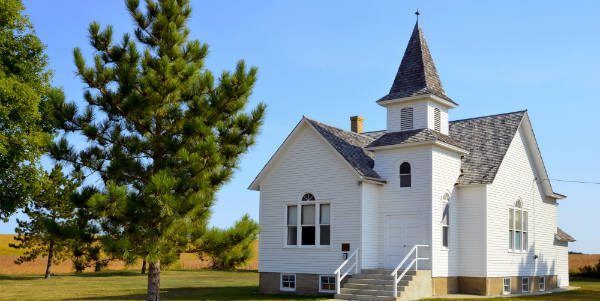
But, the percentage of folks who aren’t religious at all is steadily growing.
Two words, people:
Mission Field.
From the email inbox:
U.S. Public Becoming Less Religious, But…
Pew Research Center Survey Shows Modest Drop in Overall Rates of Belief and Practice, but Religiously Affiliated Americans Are as Observant as Before
WASHINGTON, DC (Nov. 3, 2015) – An extensive new survey by the Pew Research Center of more than 35,000 U.S. adults finds that the percentages who say they believe in God, pray daily and regularly go to church or other religious services all have declined modestly in recent years.
But while Americans, on the whole, are becoming less religious, the survey also finds “a great deal of stability in the U.S. religious landscape.” It shows that the recent decrease in a variety of traditional religious beliefs and practices is largely attributable to the growing minority (now 23%) of Americans who say they do not belong to any organized faith. Among the overwhelming majority (77%) of U.S. adults whodo affiliate with a particular religion, there has been no discernible drop in most measures of religious commitment.
Indeed, by some measures, religiously affiliated Americans have become even more devout in recent years. For example, the percentages of Christian adults who say they regularly read the Bible, share their faith with others and participate in small prayer groups or scripture study groups all have risen since 2007, according to the Pew Research Center report.
“Is America becoming less religious? It depends on where you look,” said Gregory A. Smith, the principal researcher behind the study. “If you’re looking at the public as a whole, then the answer is yes – we find small but statistically significant declines, overall, in belief in God and several other conventional measures of religious commitment. But if you focus just on people who say they belong to a religion – and that’s the vast majority of Americans – they are, on balance, every bit as religious as they were in the recent past.”
The new report is the second major installment of the Pew Research Center’s 2014 U.S. Religious Landscape Study. An initial report, published in May, focused on the changing size and demographic characteristics of U.S. religious groups. It detailed the rapid growth in the number of Americans, particularly in the Millennial generation, who do not identify with any religion – a group sometimes called the “nones.”
The latest report analyzes trends in religious beliefs and practices by comparing data from a 2014 nationwide telephone survey of more than 35,000 Americans with an equally extensive survey that asked many of the same questions about religion in 2007.
Both the 2014 and 2007 surveys show that not all “nones” are non-believers. In fact, the majority of Americans without a religious affiliation say they believe in God. But, on average, the “nones” are far less religiously observant than Americans who identify with a specific faith. And as the “nones” have grown from 16% of U.S. adults in the original Religious Landscape Study in 2007 to 23% in 2014, they have become even less religious, at least by many conventional measures. For example, the share of religiously unaffiliated Americans who say they believe in God dropped from 70% in 2007 to 61% in 2014, while the share who say they seldom or never pray rose from 56% to 62% over the same period.
“The ‘nones’ not only are growing in number, but also distancing themselves even further from traditional, institutional religion,” said Alan Cooperman, director of religion research at the Pew Research Center. “Their growth as a share of the population, coupled with a decline in their self-reported levels of religious observance, is a key factor behind the modest overall drop in the nation’s rates of religious belief and practice.”
At the same time, the vast majority of Americans continue to identify with some religious faith. And this religiously affiliated population – comprising a wide variety of Protestants as well as Catholics, Jews, Mormons, Muslims, Buddhists, Hindus and adherents of other faith traditions – is, on the whole, just as religiously committed today as in 2007, according to the new study.
Among other findings in the new report:
The share of U.S. adults who say they believe in God has declined modestly, from approximately 92% to 89%. The share of Americans who say they are “absolutely certain” God exists has dropped more sharply, from 71% in 2007 to 63% in 2014. And the percentages who say they pray every day, attend religious services regularly and consider religion to be very important in their lives also have ticked down by small but statistically significant margins.
Fully two-thirds of religiously affiliated adults say they pray every day and that religion is “very important” to them, and roughly six-in-ten say they attend religious services at least once or twice a month. Those numbers have changed little, if at all, in recent years. And nearly all religiously affiliated people in the survey (97%) continue to believe in God, though a declining share express this belief with absolute certainty (74% in 2014, down from 79% in 2007). And roughly four-in-ten religiously affiliated adults (41%) now say they rely mainly on their religious beliefs for guidance on questions about right and wrong, up 7 percentage points in seven years.
The study also suggests that in some ways Americans are becoming more spiritual. About six-in-ten adults now say they regularly feel a deep sense of “spiritual peace and well-being,” up 7 percentage points since 2007. And 46% of Americans say they experience a deep sense of “wonder about the universe” at least once a week, also up 7 points over the same period. These indicators have risen more or less across the board, among affiliated and unaffiliated Americans, young and old, men and women, across all major regions of the country.
While there is much continuity in the relationship of religion and politics in the U.S., not everything is fixed in stone. The Landscape Study shows, for example, that nearly all major religious groups have become significantly more accepting of homosexuality in recent years – even groups, such as evangelicals and Mormons, that traditionally have expressed strong opposition to same-sex relationships. Changing attitudes about homosexuality are linked to the same generational forces helping to reshape religious identity and practice in the United States, with Millennials expressing far more acceptance of homosexuality than older adults do. Fully half of Millennials who identify as evangelical Protestants, for instance, now say homosexuality should be accepted by society.
The growth of the “nones” is having a particularly pronounced impact on the Democratic Party coalition. In fact, religious “nones” are now more numerous among Democrats and Democratic-leaning adults than are any of the country’s major religious traditions, such as Catholics, evangelical Protestants, mainline Protestants or members of historically black Protestant denominations. The religiously unaffiliated also are growing within the GOP, though not as quickly, and they remain far outnumbered by evangelicals and less numerous than Catholics or mainline Protestants within the Republican coalition.
These are among the key findings of the 2014 Religious Landscape Study, a follow-up to a 2007 survey on religion in America. The latest survey was conducted among a nationally representative sample of 35,071 adults interviewed by telephone, on both cellphones and landlines, from June 4-Sept. 30, 2014. Findings based on the full sample have a margin of sampling error of plus or minus 0.6 percentage points.
The findings are for immediate release and available at http://www.pewforum.org/2015/11/03/u-s-public-becoming-less-religious/.
See also an updated interactive database of the study’s findings at http://www.pewforum.org/religious-landscape-study/ which allows users to explore the study’s findings about specific religious groups and denominations, as well as about religion in all 50 U.S. states and 22 large metropolitan areas.
Pew Research Center is a nonpartisan fact tank that informs the public about the issues, attitudes and trends shaping America and the world. It does not take policy positions. The center is a subsidiary of The Pew Charitable Trusts, its primary funder. This report was made possible by The Pew Charitable Trusts, which received support for the project from Lilly Endowment Inc.
Image: Wikimedia Commons
Don’t miss a thing: head over to my other home at CatholicVote and like my Facebook page.
Previous Post

November 2, 2015
All Souls: A Personal Prayer for the Faithful Departed
Next Post
November 4, 2015 'The 33': Chilean Miners' Faith Kept Them Alive -- To Meet Pope Francis
Browse Our Archives
Select a Category books breaking news digital media Faith practice food interview jane the virgin media movies music NFL Pope Francis Showbiz 101 social media sports technology television Uncategorized video
Select a Month October 2026 September 2026 August 2026 July 2026 June 2026 May 2026 April 2026 March 2026 February 2026 January 2026 December 2025 November 2025 October 2025 September 2025 August 2025 July 2025 June 2025 May 2025 April 2025 March 2025 February 2025 January 2025 December 2024 November 2024 October 2024 September 2024 August 2024 July 2024 June 2024 May 2024 April 2024 March 2024 February 2024 January 2024 December 2023 November 2023 October 2023 September 2023 August 2023 July 2023 June 2023 May 2023 April 2023 March 2023 February 2023 January 2023 December 2022 November 2022 October 2022 September 2022 August 2022 July 2022 June 2022 May 2022 April 2022 March 2022 February 2022 January 2022 December 2021 November 2021 October 2021 September 2021 August 2021 July 2021 June 2021 May 2021 April 2021 March 2021 February 2021 January 2021 December 2020 November 2020 October 2020 September 2020 August 2020 July 2020 June 2020 May 2020 April 2020 March 2020 February 2020 January 2020 December 2019 November 2019 October 2019 September 2019 August 2019 July 2019 June 2019 May 2019 April 2019 March 2019 February 2019 January 2019 December 2018 November 2018 October 2018 September 2018 August 2018 July 2018 June 2018 May 2018 April 2018 March 2018 February 2018 January 2018 December 2017 November 2017 October 2017 September 2017 August 2017 July 2017 June 2017 May 2017 April 2017 March 2017 February 2017 January 2017 December 2016 November 2016 October 2016 September 2016 August 2016 July 2016 June 2016 May 2016 April 2016 March 2016 February 2016 January 2016 December 2015 November 2015 October 2015 September 2015 August 2015 July 2015 June 2015 May 2015 April 2015 March 2015 February 2015
Follow Us!
TAKE THE
Religious Wisdom Quiz
Who did Jesus call out of the tomb after four days?
Select your answer to see how you score.
Bartimaeus Jairus Lazarus Mary
Related posts from Kate O'Hare's Pax Culturati

'The Chosen' S6 Trailer: The Passion Gets Very...

Catholic Mike Ditka: Bear of a Man of...
We Need to Talk About 'Clarkson's Farm'

'Adore Him: He Is Here': On the Red...
TRENDING AT PATHEOS Catholic

The Pillar of the Boatmen: the Ancient Monument...
The Pillar of the Boatmen is a Romano-Gaulish sculpture that dates from...

In one sense walking into Westminster Abbey is like walking down the...

'Super Scam Me' Exposes AI Jon Bon Jovi...
Leslie Pickett believed she was in a relationship with Jon Bon Jovi....

The Brazilian Remake of Kendricks' 'Flywheel' Opens in...
“Flywheel,” the story that launched the Kendrick Brothers’ filmmaking career is getting...

The Dangers of Gradual Accommodation (Winking at Sin)
Recently, the “law of gradualness” resurfaced during the opening of a weeklong,...

The Iron Gates and the Lion of the...
Yesterday, I didn't finish my report about, well, yesterday. So I'll...
view all Catholic blogs
Ad-Free & Subscriber Log-In Subscription Support
- About Us
- 2026 Calendar
- Videos
- Podcasts
- Library of World Religions
- Faith In Media Tracker
- Advertise With Us
- Write for Us
- Privacy Policy
- Terms of Service
- Do Not Sell My Data
- Contact Us
- Radiant Digital
- Manage Newsletter Subscriptions
- Unsubscribe From Notifications
- Sitemap
Copyright 2008-2026, Patheos. All rights reserved.
Subscription Support Ad-Free & Subscriber Log-In
Follow Patheos