
BuddhistCatholicContemplativeEvangelicalGeneral ChristianHinduJewishLatter-day SaintMuslimNew VisionsProgressive Christian
Beliefs
- Buddhist
- Catholic
- Contemplative
- Evangelical
- General Christian
- Hindu
- Jewish
- Latter-day Saint
- More Voices
- Muslim
- New Visions
- Pagan
- Progressive Christian
Topics
- Religion News
- Food and Religion
- Sports and Religion
- Religious Art
- Religious Music and Entertainment
- Religious Events
- History and Religion
- Style and Religion
- Politics and Religion
- Women in Religion
- Recreation Outdoors and Religion
- Business Finance and Religion
- Careers Workplace and Religion
- Education and Religion
- Family Parenting and Religion
- Health Fitness and Religion
- Home and Religion
- Relationships and Religion
- Technology and Religion
- Travel and Religion
Columnists
- Buddhist Columnists
- Business Finance and Religion Columnists
- Careers Workplace and Religion Columnists
- Catholic Columnists
- Contemplative Columnists
- Education and Religion Columnists
- Evangelists Columnists
- Family Parenting and Religion Columnists
- General Christian Columnists
- Health Fitness and Religion Columnists
- Hindu Columnists
- History and Religion Columnists
- Home and Religion Columnists
- Jewish Columnists
- More Voices Columnists
- Latter Day Columnists
- Muslim Columnists
- New Visions Columnists
- Nonreligious Columnists
- Pagan Columnists
- Politics and Religion Columnists
- Progressive Columnists
- Recreation Outdoors and Religion Columnists
- Relationships and Religion Columnists
- Religion News Columnists
- Religious Art Columnists
- Religious Events Columnists
- Religious Music and Entertainment Columnists
- Sports and Religion Columnists
- Style and Religion Columnists
- Technology and Religion Columnists
- Travel and Religion Columnists
- Women in Religion Columnists
Resource Library
- 2026 Calendar
- Library of World Religions
- The 100 Most Holy Places on Earth
- Patheos Answers
- Podcasts
- Videos
- Faith Leaders Database
- Anglican Episcopalian
- Bahai
- Baptist
- Buddhism
- Christianity
- Confucianism
- Eastern Orthodoxy
- Hinduism
- Holiness and Pentecostal
- ISKCON
- Islam
- Judaism
- Lutheran
- Methodist
- The Church of Jesus Christ of Latter-day Saints
- New Age
- Paganism
- Presbytarian and Reformed
- Protestantism
- Religion Behind the Scenes
- Roman Catholic
- Scientology
- Shia Islam
- Sikhism
- Sufism
- Sunni Islam
- Taoism
- Zen
- See all religions
Research Tools
 Ad-Free & Subscriber Log-In Subscription Support
Ad-Free & Subscriber Log-In Subscription Support
Follow Patheos 

- Trending:
- Forgiveness
- |
- Marriage
- |
- Consciousness
- |
- Death Penalty
- |
- Election
- |
- Halloween
 Karen Spears Zacharias
- Home
- Evangelical
- About that Supreme Court Ruling on Ceremonial Prayers
About that Supreme Court Ruling on Ceremonial Prayers
Last updated on: May 8, 2014 at 8:12 am by Karen Spears Zacharias
About that Supreme Court Ruling on Ceremonial Prayers 2014-05-08T08:12:08+00:00 Karen Spears Zacharias
Patheos Explore the world's faith through different perspectives on religion and spirituality! Patheos has the views of the prevalent religions and spiritualities of the world.
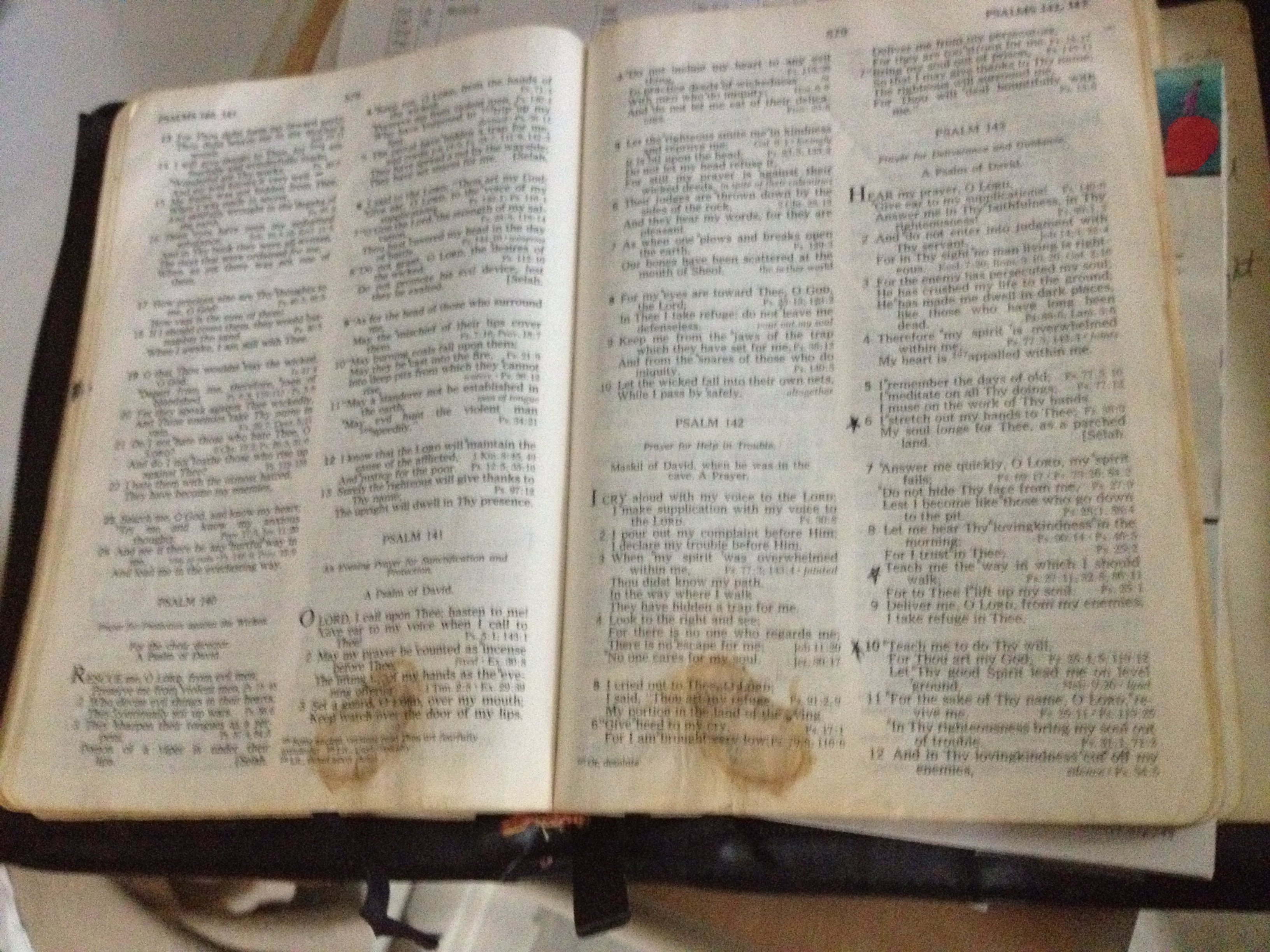
When The Redhead called to tell me that her cancer was back and had moved into her bones, I was sitting on the floor of my bedroom closet. The door was closed. I went into the closet the minute she called because I had a feeling the news wasn’t good and I wanted privacy.
Of course, I could have found privacy anywhere in the house. There was nobody living here but me and Coach and the Demon Dog. But I need a tightly enclosed area when I pray the gnashing-of-teeth-and-wailing-kind of prayers I prayed after that phone call.
That kind of praying is far removed from the sort of praying I do when I’m saying grace, or when I’m attending a high school or college graduation, a town hall meeting, or a military memorial event. Those prayers are more ceremonial in nature. Something I do as a matter of tradition and upbringing and respect. Some prayers usher a person into the presence of God. Other prayers are simply a matter of reverence and an expression of gratitude.
Ceremonial prayers have long been part of every tribe’s culture. Native Americans have a variety of ceremonial prayers. The Book of Common Prayer, which has been around for centuries, is full of recitations recommended for any number of occasions or daily routines. Reciting a ceremonial prayer does not make a person any more a Christian than slipping into lacy panties from Victoria Secrets makes a person a runway model.
It takes more than that.
So when the Supreme Court ruled recently that Greece, New York could continue to have prayer before their city council meetings, I was okay with that.
The decision was a close one, 5 to 4. Split down party lines, some suggest. Conservatives for the prayers. Liberals against the prayers. Sometimes it seems like we are living out the Romans and Christians scenario all over again.
Some non-believers cried foul. Said this was a violent act against Atheists. Linda Stephens, an avowed atheist and one of the women who brought the case against the city of Greece went on NPR and decried the decision. She related it to when some in her family had to flee Nazi Germany. Why does it seem people always relate their woes, perceived or otherwise, to Nazi Germany or the Segregated South?
We come closer to reincarnating Nazi Germany through the taping of Donald Sterling’s private conversation than we do through prayer at a town hall meeting, but few are crying foul over the intrusion of privacy in our lives. Whenever we see another headline about all the ways in which our government is spying on its everyday citizens, there is a collective national yawn.
So spare me the righteous indignation, please.
People of all ilk are going about quoting the First Amendment. Let’s do talk about that for a moment, shall we? What it says is that “Congress shall make no laws respecting an establishment of religion or prohibiting the free exercise thereof….”.
The word ‘establishment’ means a clear legislative act of making one religious philosophy the preferred belief of the people and state of which that legislature represents. A traditional and ceremonial prayer is nothing of that sort.
There is no state church in America. No federally-mandated path to God, or to the absence thereof. You and I are free to choose to believe in God or not to believe in God. Kids aren’t forced to recite the Lord’s Prayer in public school and those attending city council meetings are not required to pray the Sinner’s prayer.
Nobody is required to pray at all – not even inside the church. Shoot, I’ve stood in church while everyone else had their heads bowed and listened as they prayed and not prayed at all myself and nobody drug me out into the streets and stoned me for keeping my eyes open and looking around. We are not headed for Sharia Law in this nation, despite what blogs on the Internet claim or what those fear-mongering folks at the Christian radio station and Think Progress maintain. All this posturing and huffing-and-puffing by Believers and Non-Believers alike is ridiculous.
The job of the First Amendment is to protect our people from tyranny. The danger of Town of Greece vs. Galloway was that a tyranny of the minority could have misconstrued the establishment clause beyond recognition, not only of the founding generation but by any sane linguist. The fundamental function of our Constitution is to referee the excess of either the majority or the minority in the interest of a middle point where a maximum amount of liberty may exist for all our common well-being.
That, after all, is what a real democracy is all about.
Karen Spears Zacharias is author of Mother of Rain (Mercer Univ. Press). She teaches First-Amendment Ethics at Central Washington University.
Supreme Court Ruling. Conservatives
Previous Post

May 3, 2014
Rutgers Browbeats Rice
Next Post
May 11, 2014 Dear Mommy Dearest
Browse Our Archives
Select a Category child abuse Military ministry pop culture prayer Sports Uncategorized Veterans Day
Select a Month July 2014 June 2014 May 2014 April 2014 March 2014 February 2014 January 2014 December 2013 November 2013 October 2013 September 2013 August 2013 July 2013 June 2013 May 2013 April 2013 March 2013 February 2013 January 2013 December 2012 November 2012 October 2012 September 2012 August 2012 July 2012 June 2012 May 2012 April 2012 March 2012 February 2012 January 2012 December 2011 November 2011 October 2011 September 2011 August 2011 July 2011 June 2011 May 2011 April 2011 March 2011 February 2011 January 2011 December 2010 November 2010 October 2010 September 2010
Follow Us!
TAKE THE
Religious Wisdom Quiz
Which king rebuilt the high places Solomon had built for foreign gods?
Select your answer to see how you score.
Jehu Manasseh Hezekiah Josiah
Related posts from Karen Spears Zacharias


Resolutions of a Misremembered Life
TRENDING AT PATHEOS Evangelical

The REST of Your Life: A Creative Wrestles...
This week I had a conversation with a good friend from church....

How the author of the world's best hymn...
I've been working with John Newton for a while now. This makes...

Long before this Lectio Divina, Psalm 130 - the song - started...

What About the Trees? Another Living Parable
After I finished writing the last article about falling leaves as a...

Why Classical Education Is a Conversation, Not a...
Come and Read: Joy in Classical Education When I was a little...

Cornell University has received a great deal of negative publicity and intense...
view all Evangelical blogs
Ad-Free & Subscriber Log-In Subscription Support
- About Us
- 2026 Calendar
- Videos
- Podcasts
- Library of World Religions
- Faith In Media Tracker
- Advertise With Us
- Write for Us
- Privacy Policy
- Terms of Service
- Do Not Sell My Data
- Contact Us
- Radiant Digital
- Manage Newsletter Subscriptions
- Unsubscribe From Notifications
- Sitemap
Copyright 2008-2026, Patheos. All rights reserved.
Subscription Support Ad-Free & Subscriber Log-In
Follow Patheos