
BuddhistCatholicContemplativeEvangelicalGeneral ChristianHinduJewishLatter-day SaintMuslimNew VisionsProgressive Christian
Beliefs
- Buddhist
- Catholic
- Contemplative
- Evangelical
- General Christian
- Hindu
- Jewish
- Latter-day Saint
- More Voices
- Muslim
- New Visions
- Pagan
- Progressive Christian
Topics
- Religion News
- Food and Religion
- Sports and Religion
- Religious Art
- Religious Music and Entertainment
- Religious Events
- History and Religion
- Style and Religion
- Politics and Religion
- Women in Religion
- Recreation Outdoors and Religion
- Business Finance and Religion
- Careers Workplace and Religion
- Education and Religion
- Family Parenting and Religion
- Health Fitness and Religion
- Home and Religion
- Relationships and Religion
- Technology and Religion
- Travel and Religion
Columnists
- Buddhist Columnists
- Business Finance and Religion Columnists
- Careers Workplace and Religion Columnists
- Catholic Columnists
- Contemplative Columnists
- Education and Religion Columnists
- Evangelists Columnists
- Family Parenting and Religion Columnists
- General Christian Columnists
- Health Fitness and Religion Columnists
- Hindu Columnists
- History and Religion Columnists
- Home and Religion Columnists
- Jewish Columnists
- More Voices Columnists
- Latter Day Columnists
- Muslim Columnists
- New Visions Columnists
- Nonreligious Columnists
- Pagan Columnists
- Politics and Religion Columnists
- Progressive Columnists
- Recreation Outdoors and Religion Columnists
- Relationships and Religion Columnists
- Religion News Columnists
- Religious Art Columnists
- Religious Events Columnists
- Religious Music and Entertainment Columnists
- Sports and Religion Columnists
- Style and Religion Columnists
- Technology and Religion Columnists
- Travel and Religion Columnists
- Women in Religion Columnists
Resource Library
- 2026 Calendar
- Library of World Religions
- The 100 Most Holy Places on Earth
- Patheos Answers
- Podcasts
- Videos
- Faith Leaders Database
- Anglican Episcopalian
- Bahai
- Baptist
- Buddhism
- Christianity
- Confucianism
- Eastern Orthodoxy
- Hinduism
- Holiness and Pentecostal
- ISKCON
- Islam
- Judaism
- Lutheran
- Methodist
- The Church of Jesus Christ of Latter-day Saints
- New Age
- Paganism
- Presbytarian and Reformed
- Protestantism
- Religion Behind the Scenes
- Roman Catholic
- Scientology
- Shia Islam
- Sikhism
- Sufism
- Sunni Islam
- Taoism
- Zen
- See all religions
Research Tools
 Ad-Free & Subscriber Log-In Subscription Support
Ad-Free & Subscriber Log-In Subscription Support
Follow Patheos 

- Trending:
- Forgiveness
- |
- Marriage
- |
- Consciousness
- |
- Death Penalty
- |
- Election
- |
- Halloween
 Karen Spears Zacharias
- Home
- Evangelical
- Mothers & Mental Illness
Mothers & Mental Illness
Last updated on: January 2, 2014 at 5:44 pm by Karen Spears Zacharias
Mothers & Mental Illness 2014-01-02T17:44:57+00:00 Karen Spears Zacharias
Patheos Explore the world's faith through different perspectives on religion and spirituality! Patheos has the views of the prevalent religions and spiritualities of the world.
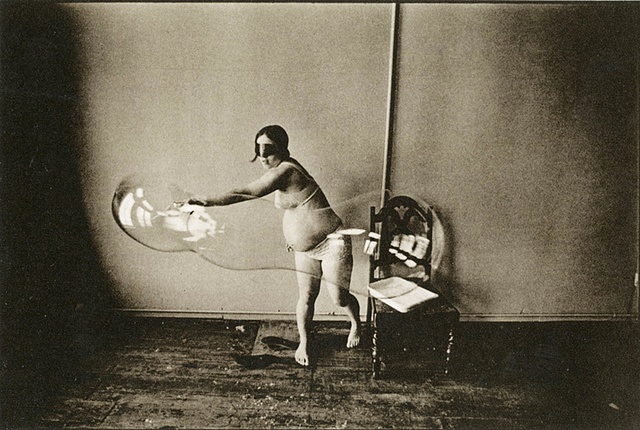
My childhood girlfriend was institutionalized following the birth of her first-born. Here she was, ten years later, in the third-trimester of her second pregnancy, talking out of her head again. We were having one of our catch-up phone calls. She from her home in Georgia. Me from my home in Oregon.
“I know what the problem is,” she whispered.
“Problem?” I asked, holding the phone closer so I could hear better.
“Yes,” she replied. “I know why I can’t get anything to eat. I can’t get into the kitchen.”
“Why can’t you get into the kitchen, honey?”
“Because the boys are at the table putting together a model airplane. I want them to do things like that but I can’t get into the kitchen to eat.”
“Honey, why don’t you just walk around the boys?” I suggested.
She paused for a long moment. “I’m not thinking clearly, am I?”
“No, you’re not.”
“Whatever happens, don’t let me hurt my babies.”
Don’t let me hurt my babies. Those were the words that reverberated in my newsroom cubicle a couple of years later when the AP wire reported that a Texas mother named Andrea Yates had drowned her five children in a bathtub.
Don’t let me hurt my babies came to me again when I heard Miriam Carey had been gunned down in D.C. after she tried to drive her car through barriers at the Capitol building. It wasn’t until after the unarmed woman was shot dead that police discovered a toddler in the car.
Postpartum psychosis is the official name for the illness, although we didn’t know that when the Yates children were murdered, or when my girlfriend attempted suicide six weeks after her daughter was born.
Postpartum psychosis, an extremely rare, but too-often deadly, form of mental illness affects thousands of women every year. An average of 1.3 million pregnant women experience some manifestation of postpartum depression (PPD) annually, reports Katherine Stone, founder and editor of Postpartum Progress (postpartumprogress.com).
Miriam Carey was under a doctor’s care. A physician had warned Andrea Yates after her third pregnancy to not get pregnant again. My girlfriend’s illness went misdiagnosed until that last attempt on her life when her family realized what she needed wasn’t solely a psychiatrist but an endocrinologist.
The symptoms of postpartum psychosis are often excused as something all new moms experience: Irritability, lack of sleep, hyperactivity, mood swings, difficulty communicating.
What new mother hasn’t experienced one or more of these?
But the mother suffering from postpartum psychosis will also experience delusions, which she will rarely mention, because her delusions often involve doing harm to her children or herself. And because the paranoia invoked by postpartum psychosis prevents her from trusting others.
My girlfriend was convinced that the CIA was listening to her every thought. She saw roaches climbing the walls of her baby’s room. She thought her husband might be trying to harm her. Mixed into all that was overwhelming despair. My girlfriend felt that she was a bad mother because good Christian mothers don’t have the kind of thoughts she was having.
Had a doctor on vacation not discovered my friend lying on that beach that afternoon, an empty bottle of pills at her side, I would be writing about suicide, not postpartum psychosis.
My girlfriend knows she could easily be serving time in a state hospital for the murder of her own children. She could have been gunned down by police in some awful confrontation gone awry.
Educate them so that what happened to me, what happened to Andrea Yates, what happened to Miriam Carey doesn’t happen to them, my girlfriend said.
Okay, I promised.
But the problem with talking about a mental illness associated with motherhood is the stigma we attach to those who suffer from it. My girlfriend lives in the same community where she grew up, just blocks from the high school where she was a cheerleader, a princess on the homecoming court, voted one of the top most-liked personalities among a graduating class of hundreds. Everyone knows her, loves her.
It’s difficult for her, even decades later, to not feel like she let people down because of a medical condition so rare and so misunderstood that its name is never spoken from the pulpits or uttered in university hallways.
How does a mother tell her children of the mental breakdowns their births invoked without terrorizing them, without leaving them feeling guilty or fearful that they, too, might suffer some silent disorder of the mind?
“What I wish most is that for one day of my life I could have known my mother the way you knew my mother – before her illness,” her son said to me upon his own high school graduation.
Her children have never known a time when their mother was not under a doctor’s care. And although postpartum psychosis can be treated effectively, there is no getting around the fact that for a woman who experiences it there is a forever sense of lingering fragility.
People look at you differently when you’ve suffered from mental illness. Even when you’ve healed, there remains the nagging “what ifs” in the minds of others.
It’s that stigma that kept me from writing a non-fiction account of my girlfriend’s struggles. Instead, I turned to fiction. “Mother of Rain” is the story of Maizee Hurd, a young mother of a deaf child named Rain. On the heels of Pearl Harbor, Maizee’s husband Zebulon enlists in the Army and leaves Maizee and Rain to the care of the community of Christian Bend, Tennessee.
I set the book in 1940s Appalachia because the isolation of that mountain community serves as a metaphor for the loneliness that women who suffer from postpartum psychosis endure. It also serves as a reminder that when it comes to mental illnesses and the health of women, progress is woefully lacking.
“Mother of Rain” is not my girlfriend’s story. It is not the story of Andrea Yates or of Miriam Carey. It is, however, informed by women who have suffered from postpartum psychosis.
What made the difference between my friend and Andrea Yates was simply the community that surrounded them. My girlfriend comes from a big Italian family. She is married to a man wholly-devoted to her. When she was ill, they refused to leave her alone for even one minute. They moved mountains to get her the medical help she so desperately needed.
Had it not been for the loving community who relentlessly nurtured her back to health, my girlfriend’s name could have been as common among the general public as that of Andrea Yates.
Karen Spears Zacharias is author of “Mother of Rain” (Mercer University Press). She can be reached via Twitter @karenzach or at via her website @ karenzach.com
For more information about postpartum psychosis check out postpartumprogress.com
505th Infantry Parachute Division
Southeast Independent Booksellers Association
Previous Post

December 31, 2013
Resolutions of a Misremembered Life
Next Post
January 5, 2014 First Hopes
Browse Our Archives
Select a Category child abuse Military ministry pop culture prayer Sports Uncategorized Veterans Day
Select a Month July 2014 June 2014 May 2014 April 2014 March 2014 February 2014 January 2014 December 2013 November 2013 October 2013 September 2013 August 2013 July 2013 June 2013 May 2013 April 2013 March 2013 February 2013 January 2013 December 2012 November 2012 October 2012 September 2012 August 2012 July 2012 June 2012 May 2012 April 2012 March 2012 February 2012 January 2012 December 2011 November 2011 October 2011 September 2011 August 2011 July 2011 June 2011 May 2011 April 2011 March 2011 February 2011 January 2011 December 2010 November 2010 October 2010 September 2010
Follow Us!
TAKE THE
Religious Wisdom Quiz
True or False: The Corinthians were told that love is patient and kind.
Select your answer to see how you score.
TRUE FALSE
Related posts from Karen Spears Zacharias


Appearances: Bristol, Johnson City, & Knoxville


TRENDING AT PATHEOS Evangelical

The REST of Your Life: A Creative Wrestles...
This week I had a conversation with a good friend from church....

How the author of the world's best hymn...
I've been working with John Newton for a while now. This makes...

Long before this Lectio Divina, Psalm 130 - the song - started...

What About the Trees? Another Living Parable
After I finished writing the last article about falling leaves as a...

Why Classical Education Is a Conversation, Not a...
Come and Read: Joy in Classical Education When I was a little...

Cornell University has received a great deal of negative publicity and intense...
view all Evangelical blogs
Ad-Free & Subscriber Log-In Subscription Support
- About Us
- 2026 Calendar
- Videos
- Podcasts
- Library of World Religions
- Faith In Media Tracker
- Advertise With Us
- Write for Us
- Privacy Policy
- Terms of Service
- Do Not Sell My Data
- Contact Us
- Radiant Digital
- Manage Newsletter Subscriptions
- Unsubscribe From Notifications
- Sitemap
Copyright 2008-2026, Patheos. All rights reserved.
Subscription Support Ad-Free & Subscriber Log-In
Follow Patheos