
BuddhistCatholicContemplativeEvangelicalGeneral ChristianHinduJewishLatter-day SaintMuslimNew VisionsProgressive Christian
Beliefs
- Buddhist
- Catholic
- Contemplative
- Evangelical
- General Christian
- Hindu
- Jewish
- Latter-day Saint
- More Voices
- Muslim
- New Visions
- Pagan
- Progressive Christian
Topics
- Religion News
- Food and Religion
- Sports and Religion
- Religious Art
- Religious Music and Entertainment
- Religious Events
- History and Religion
- Style and Religion
- Politics and Religion
- Women in Religion
- Recreation Outdoors and Religion
- Business Finance and Religion
- Careers Workplace and Religion
- Education and Religion
- Family Parenting and Religion
- Health Fitness and Religion
- Home and Religion
- Relationships and Religion
- Technology and Religion
- Travel and Religion
Columnists
- Buddhist Columnists
- Business Finance and Religion Columnists
- Careers Workplace and Religion Columnists
- Catholic Columnists
- Contemplative Columnists
- Education and Religion Columnists
- Evangelists Columnists
- Family Parenting and Religion Columnists
- General Christian Columnists
- Health Fitness and Religion Columnists
- Hindu Columnists
- History and Religion Columnists
- Home and Religion Columnists
- Jewish Columnists
- More Voices Columnists
- Latter Day Columnists
- Muslim Columnists
- New Visions Columnists
- Nonreligious Columnists
- Pagan Columnists
- Politics and Religion Columnists
- Progressive Columnists
- Recreation Outdoors and Religion Columnists
- Relationships and Religion Columnists
- Religion News Columnists
- Religious Art Columnists
- Religious Events Columnists
- Religious Music and Entertainment Columnists
- Sports and Religion Columnists
- Style and Religion Columnists
- Technology and Religion Columnists
- Travel and Religion Columnists
- Women in Religion Columnists
Resource Library
- 2026 Calendar
- Library of World Religions
- The 100 Most Holy Places on Earth
- Patheos Answers
- Podcasts
- Videos
- Faith Leaders Database
- Anglican Episcopalian
- Bahai
- Baptist
- Buddhism
- Christianity
- Confucianism
- Eastern Orthodoxy
- Hinduism
- Holiness and Pentecostal
- ISKCON
- Islam
- Judaism
- Lutheran
- Methodist
- The Church of Jesus Christ of Latter-day Saints
- New Age
- Paganism
- Presbytarian and Reformed
- Protestantism
- Religion Behind the Scenes
- Roman Catholic
- Scientology
- Shia Islam
- Sikhism
- Sufism
- Sunni Islam
- Taoism
- Zen
- See all religions
Research Tools
 Ad-Free & Subscriber Log-In Subscription Support
Ad-Free & Subscriber Log-In Subscription Support
Follow Patheos 

- Trending:
- Forgiveness
- |
- Marriage
- |
- Consciousness
- |
- Death Penalty
- |
- Election
- |
- Halloween
 Karen Spears Zacharias
- Home
- Evangelical
- Q & A with Pamela Steele
Q & A with Pamela Steele
Last updated on: December 12, 2011 at 6:25 am by Karen Spears Zacharias
Q & A with Pamela Steele 2011-12-12T06:25:23+00:00 Karen Spears Zacharias
Patheos Explore the world's faith through different perspectives on religion and spirituality! Patheos has the views of the prevalent religions and spiritualities of the world.
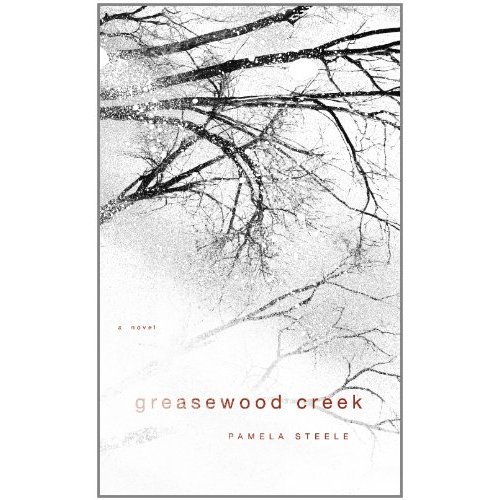 Oregon Poet Pamela Steele has published a debut novel, GREASEWOOD CREEK (Counterpoint). Avery and her partner Davis live contentedly on an Eastern Oregon ranch until Avery suffers the loss of her and Davis’s newborn child. That loss triggers and revives in her a familiar sense of guilt, one she has carried since childhood.
Steele’s stark storytelling is being compared to that of Alice Munro. In a bit of God’s poetry, Pamela Steele and Karen Zacharias, both daughters of the south, live in the same communities in Oregon. Join the two as they discuss Pamela’s newest work:
KAREN: You’re an immigrant to the Northwest. What’s the story behind how you ended up in in the West?
PAMELA: My parents moved to Oregon from West Virginia when I was about six months old. We had relatives who immigrated to Wallowa County in the early 20th century, along with a whole passel of other West Virginians. My dad tried working in the coal mines back home, just as his own father had, but they brought him up out of the mine on a stretcher the first day. When he heard about work out here, he came out and got a job at Bates sawmill in Wallowa. We stayed until he died when I was six. After that, Mom moved us back to West Virginia. I always thought I’d come west again. My younger brother and I would play “Oregon.” I didn’t come back, though, until I’d had a family of my own.
KAREN: When did you first begin identifying as a writer?
PAMELA: I was pretty shy in elementary and high school, and my family wasn’t terribly demonstrative. At some point, I learned that I could put down my feelings on paper. In high school lit class, I was required to give oral book reports, and somehow, writing and organizing notes gave me confidence to get up and speak in front of my classmates. In addition, I started hand-copying poems out of the lit book: In Flanders Fields, the poppies grow . . .
Even before that, though, I’d fallen in love with language. My Granny McClung would gather us kids up of an evening and read “The Cremation of Sam McGee.” The rhythm of the words mesmerized me, and besides, we kids got to hear Granny say “hell,” something she would never have said outside a poem.
In my junior year of high school, Mrs. Doris Hand offered a new class: creative writing, which conveniently coincided with my Rod McKuen phase. I still have the little paperback text we used. Near the end of the year, Mrs. Hand stopped by my desk as she was handing out papers, leaned over and said, “You could do this for a living, you know.”
KAREN: You earned your MFA from Spalding University. Why Spalding and what was that experience like?
PAMELA: Getting my MFA changed the way I think about myself as a writer–it gave me focus and made me get honest with myself about what I needed to say through my work. I chose Spalding because I wanted to get my MFA in the landscape of my origin. I wanted to hear the voices of the people and their stories. It was the right decision.
KAREN: You’ve published other works as a poet, but GREASEWOOD CREEK is your debut as a novelist. How did you go about making that shift from poet to novelist?
PAMELA: I come from a family of storytellers, which is the reason, I think, that many of my poems are narratives, or snapshots of time. All those evenings of sitting around a gnatsmoke on my granny’s porch must’ve done it! We had to find something to do. There wasn’t any TV reception.
Greg Pape, my mentor for the first and last semesters of the MFA program may also responsible for the shift because he taught me that poems, themselves, can be works of fiction. Somehow, I’d gotten the notion that the contents of poems had to be verifiable. Who knew it was perfectly fine to make up stuff?!
KAREN: What challenges did you face moving between the two literary forms?
PAMELA: Imagining an entire narrative, or a longer stretch of time, was daunting. That said, I began the novel the same way I usually begin a poem: with an image: a corner of cement foundation that I’d been driving by on my way to work for five years. In writing GREASEWOOD CREEK, I tried to fit the narrative into the landscape, rather than the other way around. That left a lot of room for metaphor.
KAREN: What was your biggest fear in writing a novel? And how did you overcome that?
PAMELA: I was intimidated by imagining a plot from beginning to end. I thought I had to do plan before I began writing, because many writers claim to do that. I didn’t think I could work from an outline.
Then I applied for a spot in a yearlong novel workshop offered Fishtrap, Inc., a writers’ organization located here in Oregon. Jane Vandenburgh was the workshop instructor, and she is absolutely responsible for getting me past the constraints of outlining and planning. She encouraged me to create episodes without worrying about order, and so I did.
I began with the scene in which Avery, the main character, goes back to the homeplace–the place of the cornerstone. Then I wrote other episodes to discover Avery’s secret, the one thing she fears everyone will find out–the component that Silas House teaches is imperative in fiction. From there, I added episodes until I could see the shape of the story.
When I finished the draft, I had something much like a shoebox full of loose photos that needed to be arranged in an order that would make sense, and not necessarily chronological. I literally laid the episodes on the floor of my office and crawled around, arranging and rearranging to put them together in a way that I thought worked. Only half of what I wrote made it into the final copy.
KAREN: Your writing in GREASEWOOD CREEK reminds me of the writing of Ron Rash’s ONE FOOT IN EDEN. There’s a tautness to the story, yet, it is packed full of the visual and sensual. Did the early drafts of GREASEWOOD CREEK read this way?
PAMELA: Somewhat. I don’t write the way I tell my students to write, to just close their eyes and go, to perhaps turn off the computer monitor and write, and worry about making it pretty later. While I did write that way some of the time, especially early on, much of the writing was done paragraph-by-paragraph. I’d write a few sentences and then read them aloud. I had to be able to hear the voice of the story in order to propel myself into the next paragraph. A few days later, I’d go back and read the draft aloud a few more times, making little changes to tighten it up.
KAREN: People who don’t know you would just assume from reading GREASEWOOD CREEK that you had grown up on an Eastern Oregon ranch. You have so adeptly captured the Northwest’s ranching life. Your bare-bones writing style reflects the economy of words and emotions common to this area. Did you do that purposefully or is that a result of assimilation into a culture foreign to your own upbringing?
PAMELA: I love ranching, but I’ve just come to it. I’ve had the privilege of working cattle with some real characters over the past few years, and the takeaway is that cowboys and girls–the real ones–don’t say any more than necessary unless they’re drinking whiskey around a fire at the end of the day. That’s when the stories come out, but where work is concerned, there is a shorthand to the language, and that fits nicely into the work of a poet: to make the most meaning with the fewest possible words.
KAREN: Tell us about Avery. How did she first come to you? How did you get to know her and her story?
PAMELA: Avery started out as a sort of falling apart, lost woman who goes on a cross-country drive in order to let go of something painful. The more I wrote about her, the more I realized that she is a very intelligent, wounded creature–nothing at all like the original character. I wrote the prologue first, without any idea it would actually be where the book, proper, begins. Then I wrote two childhood scenes, all of this as a means to write my way into Avery’s emotional landscape, which is shaped by guilt. From there, I began constructing adulthood episodes and backfilling with scenes of Avery, the child.
KAREN: Were there times when you got stuck? Didn’t know where to go next with the story?
PAMELA: Yes, I did get stuck. About halfway through, there was a span of about six weeks in which I wasn’t able to get much done, and it was maddening. I tried writing at different times of day, whining, exercise, reading really, really good fiction, massage and crying–none of which worked. In reality, I think I was avoiding the big question, which was whether or not Avery would leave Greasewood Creek. When the story started telling itself to me again, I still didn’t know, but I’d decided that, just then, it didn’t matter, and maybe that’s the point.
KAREN: Silas House once said that it’s more difficult to write about a good marriage than it is to write about a bad one. While heartbreaking at times, you’ve written a powerful love story between Avery and Davis. What was the challenge for you in telling their story?
PAMELA: It took some effort to stay focused on the respective characters of Avery and Davis and to not inject into the story any sort of relationship ordeals I’ve experienced. Of course, some of the pain and loss of personal experience is bound to get in–I can’t see how it couldn’t–but I had to let Avery and Davis respond to events in a way that was true to their own natures–not mine or anyone else’s.
KAREN: What surprised you the most as the writer of this story?
PAMELA: I was astonished that Jack Shoemaker, my publisher, and Laura Mazer, my editor, did not change the order of the episodes from the way I submitted them. I was terrified that the narrative wouldn’t make sense the way I’d arranged it, and I fully expected big discussions about this. Didn’t happen.
KAREN: Who have been the greatest influences in your own writing?
PAMELA: Aside from Mrs. Hand, my Granny McClung, whose house was filled with reading material of all kinds: newspapers, cookbooks, Readers Digest condensed books and Fingerhut catalogs; Rich Wandschneider of Fishtrap, Inc., my best cheerleader; Jane Vandenburgh, a most excellent teacher; Greg Pape, such a gentle tour guide through poetic language; and Silas House, my friend and teacher.
KAREN: Who do you read?
PAMELA: Fiction-wise: Mark Spragg, Cormac McCarthy, Debra Earling, Brad Watson, Ron Rash, Silas House. My favorite non-fiction writers are Anne Lamott, Jo Ann Beard, William Kittredge. And of course, poets Li-Young Lee, Neruda, Lorca, and Naomi Shihab Nye.
KAREN: What are you working on next?
PAMELA: I’ve written two scenes for the next novel, one set in the West and one set in Appalachia. At the moment, I’m wondering about the primary landscape from which the story will come. When I know that, I can really begin.
Previous Post

December 11, 2011
Sunday Prayerathon
Next Post
December 12, 2011 Abandoned Joy
Browse Our Archives
Select a Category child abuse Military ministry pop culture prayer Sports Uncategorized Veterans Day
Select a Month July 2014 June 2014 May 2014 April 2014 March 2014 February 2014 January 2014 December 2013 November 2013 October 2013 September 2013 August 2013 July 2013 June 2013 May 2013 April 2013 March 2013 February 2013 January 2013 December 2012 November 2012 October 2012 September 2012 August 2012 July 2012 June 2012 May 2012 April 2012 March 2012 February 2012 January 2012 December 2011 November 2011 October 2011 September 2011 August 2011 July 2011 June 2011 May 2011 April 2011 March 2011 February 2011 January 2011 December 2010 November 2010 October 2010 September 2010
Follow Us!
TAKE THE
Religious Wisdom Quiz
Who said, "Choose for yourselves this day whom you will serve"?
Select your answer to see how you score.
Solomon Joshua Gideon Moses
Related posts from Karen Spears Zacharias
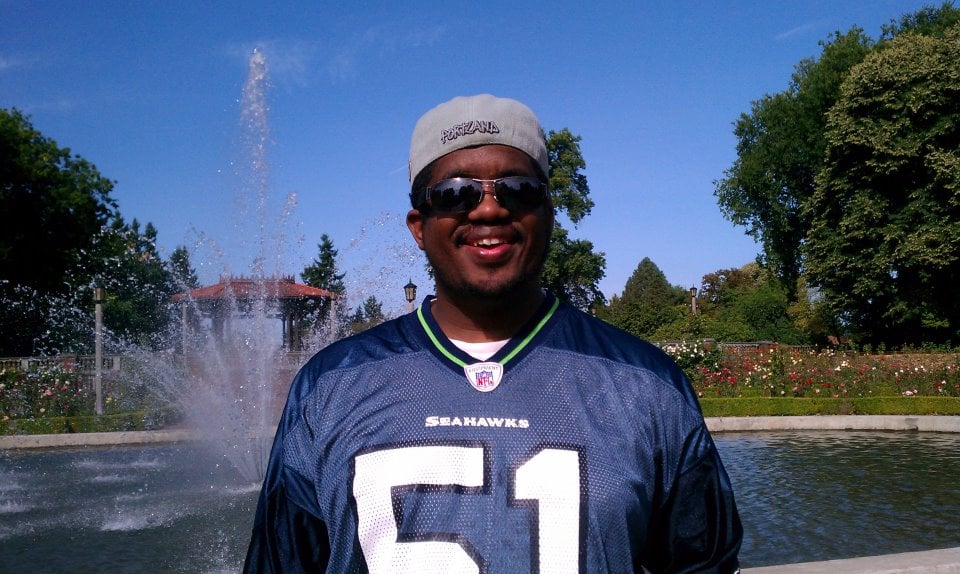
Urban Intellect talks Comedy: Jelani Greenidge

Appearances: Bristol, Johnson City, & Knoxville
TRENDING AT PATHEOS Evangelical

The REST of Your Life: A Creative Wrestles...
This week I had a conversation with a good friend from church....

How the author of the world's best hymn...
I've been working with John Newton for a while now. This makes...

Long before this Lectio Divina, Psalm 130 - the song - started...

What About the Trees? Another Living Parable
After I finished writing the last article about falling leaves as a...

Why Classical Education Is a Conversation, Not a...
Come and Read: Joy in Classical Education When I was a little...

Cornell University has received a great deal of negative publicity and intense...
view all Evangelical blogs
Ad-Free & Subscriber Log-In Subscription Support
- About Us
- 2026 Calendar
- Videos
- Podcasts
- Library of World Religions
- Faith In Media Tracker
- Advertise With Us
- Write for Us
- Privacy Policy
- Terms of Service
- Do Not Sell My Data
- Contact Us
- Radiant Digital
- Manage Newsletter Subscriptions
- Unsubscribe From Notifications
- Sitemap
Copyright 2008-2026, Patheos. All rights reserved.
Subscription Support Ad-Free & Subscriber Log-In
Follow Patheos