
BuddhistCatholicContemplativeEvangelicalGeneral ChristianHinduJewishLatter-day SaintMuslimNew VisionsProgressive Christian
Beliefs
- Buddhist
- Catholic
- Contemplative
- Evangelical
- General Christian
- Hindu
- Jewish
- Latter-day Saint
- More Voices
- Muslim
- New Visions
- Pagan
- Progressive Christian
Topics
- Religion News
- Food and Religion
- Sports and Religion
- Religious Art
- Religious Music and Entertainment
- Religious Events
- History and Religion
- Style and Religion
- Politics and Religion
- Women in Religion
- Recreation Outdoors and Religion
- Business Finance and Religion
- Careers Workplace and Religion
- Education and Religion
- Family Parenting and Religion
- Health Fitness and Religion
- Home and Religion
- Relationships and Religion
- Technology and Religion
- Travel and Religion
Columnists
- Buddhist Columnists
- Business Finance and Religion Columnists
- Careers Workplace and Religion Columnists
- Catholic Columnists
- Contemplative Columnists
- Education and Religion Columnists
- Evangelists Columnists
- Family Parenting and Religion Columnists
- General Christian Columnists
- Health Fitness and Religion Columnists
- Hindu Columnists
- History and Religion Columnists
- Home and Religion Columnists
- Jewish Columnists
- More Voices Columnists
- Latter Day Columnists
- Muslim Columnists
- New Visions Columnists
- Nonreligious Columnists
- Pagan Columnists
- Politics and Religion Columnists
- Progressive Columnists
- Recreation Outdoors and Religion Columnists
- Relationships and Religion Columnists
- Religion News Columnists
- Religious Art Columnists
- Religious Events Columnists
- Religious Music and Entertainment Columnists
- Sports and Religion Columnists
- Style and Religion Columnists
- Technology and Religion Columnists
- Travel and Religion Columnists
- Women in Religion Columnists
Resource Library
- 2026 Calendar
- Library of World Religions
- The 100 Most Holy Places on Earth
- Patheos Answers
- Podcasts
- Videos
- Faith Leaders Database
- Anglican Episcopalian
- Bahai
- Baptist
- Buddhism
- Christianity
- Confucianism
- Eastern Orthodoxy
- Hinduism
- Holiness and Pentecostal
- ISKCON
- Islam
- Judaism
- Lutheran
- Methodist
- The Church of Jesus Christ of Latter-day Saints
- New Age
- Paganism
- Presbytarian and Reformed
- Protestantism
- Religion Behind the Scenes
- Roman Catholic
- Scientology
- Shia Islam
- Sikhism
- Sufism
- Sunni Islam
- Taoism
- Zen
- See all religions
Research Tools
 Ad-Free & Subscriber Log-In Subscription Support
Ad-Free & Subscriber Log-In Subscription Support
Follow Patheos 

- Trending:
- Forgiveness
- |
- Marriage
- |
- Consciousness
- |
- Death Penalty
- |
- Election
- |
- Halloween
 Just and Sinner
- Home
- Evangelical
- Why Should Churches Have Liturgy?
Why Should Churches Have Liturgy?
Last updated on: June 3, 2014 at 2:00 am by Jordan Cooper
Why Should Churches Have Liturgy? 2014-06-03T02:00:19-06:00 Jordan Cooper
Patheos Explore the world's faith through different perspectives on religion and spirituality! Patheos has the views of the prevalent religions and spiritualities of the world.
“There is no point in repeating words every week that have no meaning to me.” That’s a sentiment often heard surrounding the use of liturgy in the church service. In a way, the statement is correct. Jesus criticized the Pharisees for using lengthy prayers to somehow gain favor with God, because their heart was not involved in their supplications. However, such a disinterested vein repetition need not accompany the use of the liturgy when we understand the meaning and purpose of what is being said. Martin Luther criticized the use of Latin in the church services of the Middle Ages because the people could not understand what was being said. We do the same thing today if we do not explain the meaning of the words and customs that we use. There are several reasons why the use of liturgy is particularly helpful and important for the church. I will outline three below:
It’s Biblical.
Most of the contents of the worship service are taken directly from Scripture. The worship service opens with the invocation: “In the name of the Father, and of the Son, and of the Holy Spirit.” The Trinitarian address is used in this manner in Matthew 28:19, when Jesus gives the disciples the great commission. When we begin the service in this way, we are confessing that it is God who is bringing us together in the congregation, and that it is God who is working during the service. The next element of the worship service is confession and absolution. This is also a Scriptural practice, as we are called by God to confess our sins (1 John 1:9), and pastors are called to forgive sins (John 20:22-23). The various canticles that are often sung during worship services are taken directly from Scripture, such as the Magnificat (Luke 1:46-55), and the Song of Simeon (Luke 2:29-32). A liturgical service also has three Scripture readings, and sometimes a Psalm reading. Hearing and reciting liturgy is hearing and reciting the Word of God!
It’s Historic.
I studied the early church fathers in college, and I will never forget one of the experiences I had reading the third century writer St. Hippolytus. I was looking through one of his books for a paper I was writing, and I came across a section where he discussed what the early Christian worship services looked like. Hippolytus discussed how the Communion service began with the words: “The Lord be with you. And also with you. Lift up your hearts. We lift them to the Lord.” This is exactly what liturgical churches say even today! When we use the liturgy, we come to realize and express that we are part of the same church as those who have lived throughout the centuries. We see ourselves as part of God’s great story in gathering his church together, and leading us by his Spirit!
It Reflects Heavenly Worship.
The book of Revelation gives us a taste of what worship in heaven looks like. John explains how the twenty-four elders surround the throne of God wearing white robes, and they have a song that repeats itself: “Holy, holy, holy, is the Lord God Almighty, who was and is and is to come!” (Rev. 4:8). The congregation of angels and saints also are said to repeat certain words together, such as “Worthy is the Lamb who was slain, to receive power and wealth and wisdom and might and honor and glory and blessing!” (Rev. 6:12). The worshipping community also often prostrate themselves, falling to the ground, to express the holiness and greatness of the God they worship (Rev. 6:14). When a liturgical church uses robes, singing, corporate readings of praises to God, and practices kneeling during different parts of the service, she is reflecting the very worship we will all experience in heaven. Worship is not simply a picture of heaven, but when we gather together to praise our Lord, heaven and earth meet! God is with us, and so are all the angels and saints crying: “Holy, holy holy is the Lord God Almighty!”
Previous Post

June 3, 2014
An Explanation of the Luther Chapter in my Book
Next Post
June 3, 2014 Does Baptism Save?
Browse Our Archives
Select a Category American Lutheran Classics Blog Posts Book Review Christian Dogmatics Course Church Resources Curtis Leins Dogmatic Theology Ethics FAQs Historical Theology Just & Sinner Publications Luther Quotations Podcast Sermons The American Lutheran Theological Journal The complete works of Revere Franklin Weidner Theology Proper Uncategorized Videos
Select a Month October 2019 September 2019 July 2019 June 2019 May 2019 April 2019 March 2019 February 2019 January 2019 December 2018 November 2018 October 2018 September 2018 July 2018 June 2018 May 2018 April 2018 March 2018 February 2018 January 2018 December 2017 November 2017 October 2017 September 2017 August 2017 July 2017 June 2017 May 2017 April 2017 March 2017 February 2017 January 2017 December 2016 November 2016 October 2016 September 2016 August 2016 July 2016 June 2016 May 2016 April 2016 March 2016 February 2016 January 2016 December 2015 November 2015 October 2015 September 2015 August 2015 July 2015 June 2015 May 2015 April 2015 March 2015 February 2015 January 2015 December 2014 November 2014 October 2014 September 2014 August 2014 July 2014 June 2014 May 2014
Follow Us!
TAKE THE
Religious Wisdom Quiz
What Christian denomination is known for circuit riders and revival meetings in America?
Select your answer to see how you score.
Catholic Methodist Presbyterian Episcopalian
Related posts from Just and Sinner

Where is the Lutheran View of Communion Taught...

Is the Lutheran View of Holy Communion the...
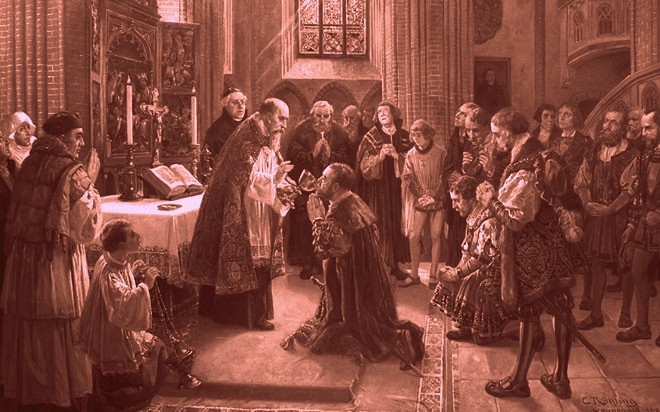
"Walking Together in Faith and Worship" ~ Rev....
Why it's important to say "Catholic" in Article...
TRENDING AT PATHEOS Evangelical

The REST of Your Life: A Creative Wrestles...
This week I had a conversation with a good friend from church....

How the author of the world's best hymn...
I've been working with John Newton for a while now. This makes...

Long before this Lectio Divina, Psalm 130 - the song - started...

What About the Trees? Another Living Parable
After I finished writing the last article about falling leaves as a...

Why Classical Education Is a Conversation, Not a...
Come and Read: Joy in Classical Education When I was a little...

Cornell University has received a great deal of negative publicity and intense...
view all Evangelical blogs
Ad-Free & Subscriber Log-In Subscription Support
- About Us
- 2026 Calendar
- Videos
- Podcasts
- Library of World Religions
- Faith In Media Tracker
- Advertise With Us
- Write for Us
- Privacy Policy
- Terms of Service
- Do Not Sell My Data
- Contact Us
- Radiant Digital
- Manage Newsletter Subscriptions
- Unsubscribe From Notifications
- Sitemap
Copyright 2008-2026, Patheos. All rights reserved.
Subscription Support Ad-Free & Subscriber Log-In
Follow Patheos