
BuddhistCatholicContemplativeEvangelicalGeneral ChristianHinduJewishLatter-day SaintMuslimNew VisionsProgressive Christian
Beliefs
- Buddhist
- Catholic
- Contemplative
- Evangelical
- General Christian
- Hindu
- Jewish
- Latter-day Saint
- More Voices
- Muslim
- New Visions
- Pagan
- Progressive Christian
Topics
- Religion News
- Food and Religion
- Sports and Religion
- Religious Art
- Religious Music and Entertainment
- Religious Events
- History and Religion
- Style and Religion
- Politics and Religion
- Women in Religion
- Recreation Outdoors and Religion
- Business Finance and Religion
- Careers Workplace and Religion
- Education and Religion
- Family Parenting and Religion
- Health Fitness and Religion
- Home and Religion
- Relationships and Religion
- Technology and Religion
- Travel and Religion
Columnists
- Buddhist Columnists
- Business Finance and Religion Columnists
- Careers Workplace and Religion Columnists
- Catholic Columnists
- Contemplative Columnists
- Education and Religion Columnists
- Evangelists Columnists
- Family Parenting and Religion Columnists
- General Christian Columnists
- Health Fitness and Religion Columnists
- Hindu Columnists
- History and Religion Columnists
- Home and Religion Columnists
- Jewish Columnists
- More Voices Columnists
- Latter Day Columnists
- Muslim Columnists
- New Visions Columnists
- Nonreligious Columnists
- Pagan Columnists
- Politics and Religion Columnists
- Progressive Columnists
- Recreation Outdoors and Religion Columnists
- Relationships and Religion Columnists
- Religion News Columnists
- Religious Art Columnists
- Religious Events Columnists
- Religious Music and Entertainment Columnists
- Sports and Religion Columnists
- Style and Religion Columnists
- Technology and Religion Columnists
- Travel and Religion Columnists
- Women in Religion Columnists
Resource Library
- 2026 Calendar
- Library of World Religions
- The 100 Most Holy Places on Earth
- Patheos Answers
- Podcasts
- Videos
- Faith Leaders Database
- Anglican Episcopalian
- Bahai
- Baptist
- Buddhism
- Christianity
- Confucianism
- Eastern Orthodoxy
- Hinduism
- Holiness and Pentecostal
- ISKCON
- Islam
- Judaism
- Lutheran
- Methodist
- The Church of Jesus Christ of Latter-day Saints
- New Age
- Paganism
- Presbytarian and Reformed
- Protestantism
- Religion Behind the Scenes
- Roman Catholic
- Scientology
- Shia Islam
- Sikhism
- Sufism
- Sunni Islam
- Taoism
- Zen
- See all religions
Research Tools
 Ad-Free & Subscriber Log-In Subscription Support
Ad-Free & Subscriber Log-In Subscription Support
Follow Patheos 

- Trending:
- Forgiveness
- |
- Marriage
- |
- Consciousness
- |
- Death Penalty
- |
- Election
- |
- Halloween
 Just and Sinner
- Home
- Evangelical
- What does the LC-MS document “When Homes are Heartless” Mean? (part 1 of 10)
What does the LC-MS document “When Homes are Heartless” Mean? (part 1 of 10)
Last updated on: September 19, 2018 at 6:49 am by nathanrinne
What does the LC-MS document “When Homes are Heartless” Mean? (part 1 of 10) 2018-09-19T06:49:40-06:00 nathanrinne
Patheos Explore the world's faith through different perspectives on religion and spirituality! Patheos has the views of the prevalent religions and spiritualities of the world.

Eighteenth-century poet Alexander Pope: “whatever is, is right.” Well…
+++
Have you read the LC-MS document When Homes are Heartless yet?
A few months ago I read it. It made me think. You might want to read it to.
After I read it, I wrote up a post which dealt with some of my reactions to it, and posted it on a private online group for discussion. To say the least, this posting caused a bit of a firestorm, earning fierce responses from some of the very authors of the document. Jumping off from the content of that conversation, this 10-part series of posts, set to run mostly at my personal blog (theology like a child), will dive into some of the sources and philosophies and that helped inform the When Homes are Heartless document—as well as my critiques of those sources and philosophies.
Above all, I hope the series will be helpful to those men and women who are trying to intelligently navigate the numerous complexities involved in the issue of domestic violence through Christian eyes.
Before we do that though, here are some interesting and thought-provoking quotes to chew on, often directly or indirectly addressing the issues in this series, offered without comment from myself (as you can imagine, this being a 10-part series, I will have much more to say)… Specifically how these quotes are relevant to our topic should become clearer in subsequent parts of this series. No one should assume that by sharing these quotes I endorse their content in whole or in part (you must wait!).
Some may be thinking: “Why start this way? Please save the time of the reader and tell us your thesis! Where are you going with this?”
I can only say that I proceed as I do to build some trust with those I would like to persaude, to try and proceed both intelligently and sympathetically. I hope you can put up with that.
First, from the Christian apologist and disciple of Francis Schaeffer, Udo Middelmann:
“Culturally, Judaism and Christianity have produced a mentality of change, personal effort, and responsibility coupled with critique, repentance, and dissatisfaction. We are aliens in this land because our home is not on earth in its present form. Compassion for the weak, assistance to the needy, the rule of law to restrain harmful power, and many other initiatives create a world that produce enough food for the hungry and give hope to the exploited.
The God of the Bible is innocent of the evil in our world. Christians are not drugged into faith by an opiate of religion that makes them see no evil and resign themselves to their present experience. Jews and Christians find in Scripture a freedom from any form of determinism. They are called to love God and obey him, not through uncritical resigned submission but from wisdom and enjoyment” (210, 211, The Innocence of God).
…In a fallen world, nothing—be it particular governments, marriage roles, job successes or failures, pains of illness or ways of dying, intelligence or stupidity—is necessarily from God… (213)
…the dying neighbor next door and the seeker burdened with the inhuman cultural-religious faith will find in the Bible the larger revelation of the gracious God and father of Jesus Christ which he will often miss in church. Like any other gift offered to us, the unmerited favor of God in Christ can then be first understood in its intellectual, moral, and historic context before being believed and accepted with ‘the empty hands of faith’” (216)
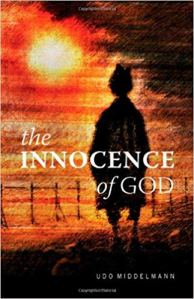
“…In a fallen world, nothing…is necessarily from God…” — Middelmann
From the anti-feminist writer and disciple of Phyllis Schlafly, Suzanne Venker:
“We alpha women are tired. Tired of always feeling like we have to do it all ourselves, tired of feeling like we have to prove that we can handle it all all the time. We want so badly for the dominant male to just come in and take over and handle things so we can focus on what we really want: to have a loving relationship and to raise our kids while knowing we’re taken care of and protected. We want that so badly, but society makes us feel guilty for wanting it so we constantly battle ourselves in an effort to convince ourselves that we don’t need those things — which is exhausting since at the end of the day we know, deep down, that’s what we want and need. Reading [romance] novels [like Fifty Shades] is an escape, and a safe way to be dominated and not be judged for it (from here).”
From a different post a few months later:
“Let’s look… at the parable of Adam and Eve, where God commands them not to eat the apple from the Tree of Knowledge. Eve disobeys God and eats the apple anyway, and then commands Adam to do the same. What does Adam do? He obeys Eve instead of God. He eats the apple. The moral of the story is that a man will do almost anything to please a woman.
But here’s the thing. Eve didn’t really want Adam to eat the apple. What she wanted was for him to say, “No, I will not listen to you. I will not give you more power than God.” In other words, Eve didn’t want a man she could control. She was testing Adam, and he failed.
After that post was published, I received an email from a man named Tom who asked me why women test men. “Why do women have this need to test men? I get it, and the evidence of my life has born this out. But why?”
Dr. Robert Glover, author of No More Mr. Nice Guy, is the first author (that I’m aware of) to identify and write about this behavior on the part of women. Many do it unknowingly, he says, because they don’t “feel safe” knowing they can push a man around. “She wants to know you’ll stand up to her. That is how she will feel secure in the relationship” (from here).”

“We want so badly for the dominant male to just come in and take over and handle things…” — Venker
Finally (for this post), an extended quote from the advocate for abused woman, Lundy Bancroft, writing about his perspective on the play Frankie and Johnny Got Married, which one theater says is “based on a true story,” and is a “romantic comedy about two lost people finding each other”:
“Several years ago I saw the play Frankie and Johnny Got Married in Boston. The story line goes like this: Johnny is in love with Frankie and knows that she is the right woman for him. One evening he comes to her apartment to express his love and convince her to get involved with him. She is not interested, and tells him so. Johnny then begins a relentless pressure campaign that lasts for the remainder of the play. He criticizes her and puts her down, telling her that her fears of intimacy and commitment are the reasons why she avoids being with him. He lets her know that, whatever knowledge she may have about who she is and what she needs, his judgment is better. Frankie remains unimpressed.
So Johnny’s coercion escalates. At one point Frankie, who is exhausted after hours of this pressure, attempts to go to sleep, but Johnny blocks her path to the bedroom, grabbing her arms. She then goes to the kitchen and makes herself a sandwich, figuring that if she can’t sleep she might at least eat. It is not to be, however, because Johnny grabs the plate away from her and heaves it into the sink, sandwich and all.
Exasperated, Frankie orders Johnny to leave her apartment. He refuses. She threatens to call the police to remove him, to which he replies with words to the effect of: “Go ahead, bring them over. In an hour they will have released me, and I’ll be back on your fire escape. Sooner or later you’re going to have to deal with me.”
So now that Frankie has discovered that she can’t succeed in having any of her rights respected at all, what happens next? Lo and behold, she has an epiphany! A life-changing breakthrough! In a flash, she overcomes her fear of deep connection—it turns out Johnny was right about her fear of intimacy as well as everything else—and she falls enraptured into his arms. Frankie and Johnny are in love. The curtain falls. (Presumably Frankie is now permitted to eat and sleep, though we have no way to say for sure.)
The most astounding part of the evening was still to come, however. To my amazement, the roughly two hundred and fifty well-educated, economically privileged adults who were packed into their Huntington Theater Company seats rose in a roar of delighted applause, smiling from ear to ear. Not a person in the auditorium remained seated—except me. I had been working with abusers for over five years at this point and knew perfectly well what we had been witnessing. No one else seemed to notice anything amiss in the physical grabbing, sleep and food deprivation, threats, superiority, and other forms of coercion we had just watched. Was Frankie reluctant to be with Johnny because she feared intimacy? Or could it perhaps have been because he was arrogant, coercive, and physically violent? Who wouldn’t fear intimacy with this bully? One ought to.
The messages to young men, intentional or not, are that coercion and even a degree of physical violence and intimidation are compatible with deep love and that a man can know better than a woman what is good for her. The attitudes that drive the behavior of many of my clients were woven throughout this play. And if a young boy doesn’t see this play—most of the audience was adult—he nonetheless is influenced by the attitudes that his parents bring home with them from the theater (Why Does He Do That?, 2002, 324-325).

“The messages to young men, intentional or not, are that coercion and even a degree of physical violence and intimidation are compatible with deep love and that a man can know better than a woman what is good for her…” — Bancroft
More thought-provoking quotes in part 2, which will run in a few days at my personal blog.
FIN
Lutheran Church-Missouri Synod
Previous Post

September 12, 2018
A Response to the Statement on Social Justice and the Gospel
Next Post

September 21, 2018 My New Book on Liturgical Worship is now available!
Browse Our Archives
Select a Category American Lutheran Classics Blog Posts Book Review Christian Dogmatics Course Church Resources Curtis Leins Dogmatic Theology Ethics FAQs Historical Theology Just & Sinner Publications Luther Quotations Podcast Sermons The American Lutheran Theological Journal The complete works of Revere Franklin Weidner Theology Proper Uncategorized Videos
Select a Month October 2019 September 2019 July 2019 June 2019 May 2019 April 2019 March 2019 February 2019 January 2019 December 2018 November 2018 October 2018 September 2018 July 2018 June 2018 May 2018 April 2018 March 2018 February 2018 January 2018 December 2017 November 2017 October 2017 September 2017 August 2017 July 2017 June 2017 May 2017 April 2017 March 2017 February 2017 January 2017 December 2016 November 2016 October 2016 September 2016 August 2016 July 2016 June 2016 May 2016 April 2016 March 2016 February 2016 January 2016 December 2015 November 2015 October 2015 September 2015 August 2015 July 2015 June 2015 May 2015 April 2015 March 2015 February 2015 January 2015 December 2014 November 2014 October 2014 September 2014 August 2014 July 2014 June 2014 May 2014
Follow Us!
TAKE THE
Religious Wisdom Quiz
What does "Boaz" mean in Hebrew?
Select your answer to see how you score.
God is my salvation Righteous One Redeemer Strength
Related posts from Just and Sinner

Fighting Critical Theory Approaches in the Academic Library...

Is Andres Manuel Lopez Obrador the “Moral Shakedown...
Should We Learn from the 16th Century Lutherans'...
Can Unbelievers Seek God? And What is the...
TRENDING AT PATHEOS Evangelical

How the author of the world's best hymn...
I've been working with John Newton for a while now. This makes...

Long before this Lectio Divina, Psalm 130 - the song - started...

What About the Trees? Another Living Parable
After I finished writing the last article about falling leaves as a...

Why Classical Education Is a Conversation, Not a...
Come and Read: Joy in Classical Education When I was a little...

Falling Leaves: A Living Parable on Letting Go
I’ve spent the vast majority of my life in the southeast corner...

Cornell University has received a great deal of negative publicity and intense...
view all Evangelical blogs
Ad-Free & Subscriber Log-In Subscription Support
- About Us
- 2026 Calendar
- Videos
- Podcasts
- Library of World Religions
- Faith In Media Tracker
- Advertise With Us
- Write for Us
- Privacy Policy
- Terms of Service
- Do Not Sell My Data
- Contact Us
- Radiant Digital
- Manage Newsletter Subscriptions
- Unsubscribe From Notifications
- Sitemap
Copyright 2008-2026, Patheos. All rights reserved.
Subscription Support Ad-Free & Subscriber Log-In
Follow Patheos