
BuddhistCatholicContemplativeEvangelicalGeneral ChristianHinduJewishLatter-day SaintMuslimNew VisionsProgressive Christian
Beliefs
- Buddhist
- Catholic
- Contemplative
- Evangelical
- General Christian
- Hindu
- Jewish
- Latter-day Saint
- More Voices
- Muslim
- New Visions
- Pagan
- Progressive Christian
Topics
- Religion News
- Food and Religion
- Sports and Religion
- Religious Art
- Religious Music and Entertainment
- Religious Events
- History and Religion
- Style and Religion
- Politics and Religion
- Women in Religion
- Recreation Outdoors and Religion
- Business Finance and Religion
- Careers Workplace and Religion
- Education and Religion
- Family Parenting and Religion
- Health Fitness and Religion
- Home and Religion
- Relationships and Religion
- Technology and Religion
- Travel and Religion
Columnists
- Buddhist Columnists
- Business Finance and Religion Columnists
- Careers Workplace and Religion Columnists
- Catholic Columnists
- Contemplative Columnists
- Education and Religion Columnists
- Evangelists Columnists
- Family Parenting and Religion Columnists
- General Christian Columnists
- Health Fitness and Religion Columnists
- Hindu Columnists
- History and Religion Columnists
- Home and Religion Columnists
- Jewish Columnists
- More Voices Columnists
- Latter Day Columnists
- Muslim Columnists
- New Visions Columnists
- Nonreligious Columnists
- Pagan Columnists
- Politics and Religion Columnists
- Progressive Columnists
- Recreation Outdoors and Religion Columnists
- Relationships and Religion Columnists
- Religion News Columnists
- Religious Art Columnists
- Religious Events Columnists
- Religious Music and Entertainment Columnists
- Sports and Religion Columnists
- Style and Religion Columnists
- Technology and Religion Columnists
- Travel and Religion Columnists
- Women in Religion Columnists
Resource Library
- 2026 Calendar
- Library of World Religions
- The 100 Most Holy Places on Earth
- Patheos Answers
- Podcasts
- Videos
- Faith Leaders Database
- Anglican Episcopalian
- Bahai
- Baptist
- Buddhism
- Christianity
- Confucianism
- Eastern Orthodoxy
- Hinduism
- Holiness and Pentecostal
- ISKCON
- Islam
- Judaism
- Lutheran
- Methodist
- The Church of Jesus Christ of Latter-day Saints
- New Age
- Paganism
- Presbytarian and Reformed
- Protestantism
- Religion Behind the Scenes
- Roman Catholic
- Scientology
- Shia Islam
- Sikhism
- Sufism
- Sunni Islam
- Taoism
- Zen
- See all religions
Research Tools
 Ad-Free & Subscriber Log-In Subscription Support
Ad-Free & Subscriber Log-In Subscription Support
Follow Patheos 

- Trending:
- Forgiveness
- |
- Marriage
- |
- Consciousness
- |
- Death Penalty
- |
- Election
- |
- Halloween
 Just and Sinner
- Home
- Evangelical
- Want to Save Free Speech? Listen to Rod Dreher, Jordan Cooper, Issues ETC., etc…
Want to Save Free Speech? Listen to Rod Dreher, Jordan Cooper, Issues ETC., etc…
Last updated on: February 17, 2017 at 11:40 am by nathanrinne
Want to Save Free Speech? Listen to Rod Dreher, Jordan Cooper, Issues ETC., etc… 2017-02-17T11:40:38-06:00 nathanrinne
Patheos Explore the world's faith through different perspectives on religion and spirituality! Patheos has the views of the prevalent religions and spiritualities of the world.
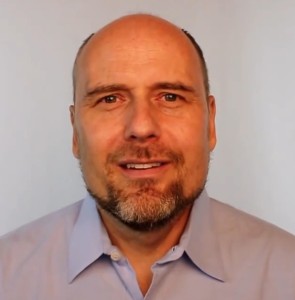
Stefan Molyneux: “Free Speech is All That Matters.”
Popular libertarian You Tuber Stefan Molyneux argues with all his rhetorical might that “Free Speech is All That Matters”.
I balk at his insistence. I don’t like the way he puts that. While I find his supporting arguments for this persuasive and important when it comes to politics, overall I wonder about the implications of such words, such devotion. It almost sounds religious to me. Molyneux talks about the importance of humility and self-doubt, but of this he is certain!
Why the intensity of such conviction? In a related comment, Rachel Fulton Brown, University of Chicago professor, interestingly argues that:
**“….**the freedom of speech enshrined in our national culture was established first and foremost as a freedom to wrestle with religion. Freedom of speech means little without this religious content, which is why cries for contentless “free speech” are so vacuous.”
Versus Molyneux, I would argue that it is only in cultures influenced by Christianity that you get the fruits he so treasures.
So where is the West, guided thusfar by Christian rails, going? Will speech remain free? Is the artistic expression of a florist speech that should be protected, and not extracted as a mere product to be sold? Should local practices of “Christian-only prayer” at public meetings be ruled unconstitutional? (see yesterday’s unanimous decision at the Washington state Supreme Court and the decision by a federal appeals court) Will Christians remain free not only to believe what they want, but to speak their faith in the public square? To practice it not only on Sundays, but in public? What of their schools and universities?
And should we, like the Apostle Paul, insist on our rights by fighting politically – at least to some degree? Or by withdrawing in the hope of being strengthened to “give an answer for the hope that we have” when the world is finally ready to hear – and believe – again? This brings us to the ideas of Rod Dreher, the cultural observer at the American Conservative and a thoughtful Eastern Orthodox Christian. A few days ago, the well-known Christian commentator Albert Mohler had Rod Dreher on his show Thinking in Public to talk about Dreher’s new book The Benedict Option.
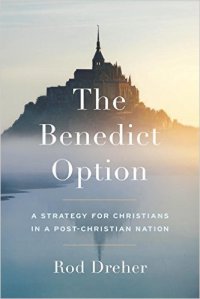 It was a fascinating and informative conversation, and one which I would recommend to everyone (I first talked about Dreher’s “Benedict Option” a couples years ago here).
The conversation between the two men ended with the following exchange, always a bit biting for folks like me (I need to hear it though!):
DREHER: …The Lord gave me a second chance, and I would have all your listeners realize that if they’ve got their heads buried in books–I love books, I write books–but it’s no substitute for the life of prayer and service.
MOHLER: Well, a classical historic Protestant can only say amen to that. Thank you, Rod, for this conversation; I’m deeply indebted to you.
That said, earlier in the conversation both men had clearly dealt with the importance of doctrine (note my bold in particular):
MOHLER: I read the articles that you wrote in the beginning, frankly I follow your column very closely at the American Conservative, and we’ve been watching you make this argument out loud for some time. And reading the book, it seems to me it’s significantly different than what I might have expected in terms of some your early articles on the Benedict Option, so let me just spell that out. You began by saying you’re not calling for us to head for the hills—you just used an illustration of heading for the hills—and as I look at those early articles in the American Conservative, it did appear you were calling, more or less—and those are of course partial arguments, just a few hundred words—but it appears you were calling to head for the hills. Nuance that a bit in terms of where you are in the book.
DREHER: I appreciate the chance to clarify this, and in fact my own thinking has been clarified through exchanges with my readers, through talking with Catholics and evangelical friends, and sort of working through these ideas. When people hear, “Head for the hills,” they think, you know, to light out for the mountains and build a compound and sit there and wait for the end. I don’t think we’re called to that. I know I’m not called to that; most people aren’t called to that. But it does mean doing what these monks in Norcia did initially. They were living right there in the town, but they were behind monastery walls. What does that mean for us? It means as lay Christians, we have to build some kind of walls to separate ourselves from the world so that we can continue to go out into the world and minister to people and be who Christ asked us to be. The culture itself is so toxic and so anti-Christian that we’re just not going to be able to make it if we let anybody and anything come into our hearts, into our imaginations. The monks in Norcia say, “We’re called to be monks, but we cannot be for the pilgrims who come to this monastery what Christ asked us to be if we don’t have that time away behind our walls for prayer and study and work.” I want to take that ethic and take it to lay Christian life. We need to have, for example, Christian schools. Not to shelter our kids from any bad idea that comes from the outside, but in order for them to be nurtured and to build that resilience within so when they do get out into the world, they know who they are, they know what they believe and why they believe it. And more importantly, they have participated and built practices necessary to live out this faith and to get the faith in their bones. Because if the faith is only in your head, if it’s only a series of arguments, you’re not going to make it.
MOHLER: You talk about a conversation, rather haunting actually, at a Christian university or college campus where the professors were telling you that so many Christian young people come, and even though they basically hold to some knowledge, genuine knowledge, of Christianity, it’s so superficial that it tends not even to last very long inside what’s defined as a Christian college and university.
DREHER: That’s true. I mean, the situation is horrible with Catholics, but this conversation you’re recalling was on an evangelical campus and the professors were saying, “We try our best; we can only have these kids for four years.” And these are all kids who came out of evangelical schools and evangelical churches. But this is the youth group culture. All it gave them was emotion and having fun. And one of these professors even said to me, “You know, I doubt that most of our kids are going to be able to form stable families.” That shocked me. I said, “Why’s that?” He said, “Because they’ve never seen it.”
MOHLER: I thought in reading that, once again, place still matters a great deal—and I mean place not just in terms of geography, but that and social context and social placement—because I think of the students at our school and I think the vast majority of them did see an intact family It was still close enough to them, if they didn’t come from it, then they saw it. But even in talking with students, you realize in concentric rings of their relationships, you get just one ring out, and then not to mention two or three rings out, and it’s very hard to find. And I think that’s so well documented in something like J.D. Vance’s work now. Where once you would have thought that respect for family and a traditional Christian morality and sexuality and all of that would’ve been taken for granted, it’s now hard to find on the ground….

Lutheran Church – Missouri Synod President Matthew Harrison shows off his copy of the Book of Concord.
I do not fully share Rod Dreher’s attitude when it comes to how we as Christians should engage the culture. That said, I can certainly say “Amen” to this exchange above. Because, to ape Molyneux, Jesus Christ is all that matters.
When I look back at my own life, I have no idea why I am as ferociously Christian – Lutheran – as I am. Not everyone in my family has kept the faith I hold on to. I think, however, that one thing that was very helpful for me was learning about the history of the Lutheran Church. I am thankful that I learned the content of Martin Luther’s Small Catechism as a child, but the importance of the words found therein really changed for me when I learned about the 1580 Book of Concord, otherwise known as the Lutheran Confessions (not even reading Martin Luther’s Large Catechism in college really helped me like this did).
Actually, not even that is the full truth. More accurately, the Small Catechism became much more important to me after I learned about the history of the church that produced the Lutheran Confessions. For me, getting in touch with the living history underlying the doctrines in the Book of Concord was essential. As the Reformed commentator Michael Horton likes to put it, “the doctrine is in the drama”. One notes that this is definitely the case for the church’s book, the Bible. We are creatures who hunger not just for “propositional truths,” but the meaningful stories that help situate the important things we should know.
To that effect, I can’t help but recommend some of the podcasts Pastor Jordan Cooper has been doing on his show lately where he digs into the Lutheran Confessions, giving a good deal of background knowledge along the way. The Small Catechism does indeed cover the core elements of the Christian faith, and we can never get to the bottom of the truths it contains. That said, as we mature and look to get our bearings in life, I think that knowing more about Bible, church history, and the history of the Reformation is critical in these last days to ground us in the faith….
An Introduction to Confessional Christianity
The Ecumenical Creeds and the Augsburg Confession
The Apology of the Augsburg Confession, Smalcald Articles, and Luther’s Catechisms
(I’d also be remiss to point out that the fine show Issues ETC. also has done many excellent shows on the Book of Concord).
And that, I think, can’t not be good for any nation, including ours.

Now in a revised edition called “How Christianity Changed the World”.
FIN
Images: Molyneux picture from Wikipedia Commons: “This file is licensed under the Creative Commons Attribution 3.0 Unported license” ; Pastor Matthew Harrison with BOC from http://mercyjourney.blogspot.com/2009/04/minnie-me-book-of-concord.html
Previous Post

February 4, 2017
The Formula of Concord
Next Post

February 17, 2017 Original Sin and Free Will (AC II)
Browse Our Archives
Select a Category American Lutheran Classics Blog Posts Book Review Christian Dogmatics Course Church Resources Curtis Leins Dogmatic Theology Ethics FAQs Historical Theology Just & Sinner Publications Luther Quotations Podcast Sermons The American Lutheran Theological Journal The complete works of Revere Franklin Weidner Theology Proper Uncategorized Videos
Select a Month October 2019 September 2019 July 2019 June 2019 May 2019 April 2019 March 2019 February 2019 January 2019 December 2018 November 2018 October 2018 September 2018 July 2018 June 2018 May 2018 April 2018 March 2018 February 2018 January 2018 December 2017 November 2017 October 2017 September 2017 August 2017 July 2017 June 2017 May 2017 April 2017 March 2017 February 2017 January 2017 December 2016 November 2016 October 2016 September 2016 August 2016 July 2016 June 2016 May 2016 April 2016 March 2016 February 2016 January 2016 December 2015 November 2015 October 2015 September 2015 August 2015 July 2015 June 2015 May 2015 April 2015 March 2015 February 2015 January 2015 December 2014 November 2014 October 2014 September 2014 August 2014 July 2014 June 2014 May 2014
Follow Us!
TAKE THE
Religious Wisdom Quiz
We are the tribe assigned to carry the sacred objects and serve in worship. Who are we?
Select your answer to see how you score.
The Tribe of Judah The Levites The Tribe of Naphtali The Danites
Related posts from Just and Sinner
And Now... A Message for Today's LC-MS Mainstream...

Is Andres Manuel Lopez Obrador the “Moral Shakedown...
Does God Expect Rulers Today to "Kiss the...

On the Evils of Abortion and the New...
TRENDING AT PATHEOS Evangelical

The REST of Your Life: A Creative Wrestles...
This week I had a conversation with a good friend from church....

How the author of the world's best hymn...
I've been working with John Newton for a while now. This makes...

Long before this Lectio Divina, Psalm 130 - the song - started...

What About the Trees? Another Living Parable
After I finished writing the last article about falling leaves as a...

Why Classical Education Is a Conversation, Not a...
Come and Read: Joy in Classical Education When I was a little...

Cornell University has received a great deal of negative publicity and intense...
view all Evangelical blogs
Ad-Free & Subscriber Log-In Subscription Support
- About Us
- 2026 Calendar
- Videos
- Podcasts
- Library of World Religions
- Faith In Media Tracker
- Advertise With Us
- Write for Us
- Privacy Policy
- Terms of Service
- Do Not Sell My Data
- Contact Us
- Radiant Digital
- Manage Newsletter Subscriptions
- Unsubscribe From Notifications
- Sitemap
Copyright 2008-2026, Patheos. All rights reserved.
Subscription Support Ad-Free & Subscriber Log-In
Follow Patheos