
BuddhistCatholicContemplativeEvangelicalGeneral ChristianHinduJewishLatter-day SaintMuslimNew VisionsProgressive Christian
Beliefs
- Buddhist
- Catholic
- Contemplative
- Evangelical
- General Christian
- Hindu
- Jewish
- Latter-day Saint
- More Voices
- Muslim
- New Visions
- Pagan
- Progressive Christian
Topics
- Religion News
- Food and Religion
- Sports and Religion
- Religious Art
- Religious Music and Entertainment
- Religious Events
- History and Religion
- Style and Religion
- Politics and Religion
- Women in Religion
- Recreation Outdoors and Religion
- Business Finance and Religion
- Careers Workplace and Religion
- Education and Religion
- Family Parenting and Religion
- Health Fitness and Religion
- Home and Religion
- Relationships and Religion
- Technology and Religion
- Travel and Religion
Columnists
- Buddhist Columnists
- Business Finance and Religion Columnists
- Careers Workplace and Religion Columnists
- Catholic Columnists
- Contemplative Columnists
- Education and Religion Columnists
- Evangelists Columnists
- Family Parenting and Religion Columnists
- General Christian Columnists
- Health Fitness and Religion Columnists
- Hindu Columnists
- History and Religion Columnists
- Home and Religion Columnists
- Jewish Columnists
- More Voices Columnists
- Latter Day Columnists
- Muslim Columnists
- New Visions Columnists
- Nonreligious Columnists
- Pagan Columnists
- Politics and Religion Columnists
- Progressive Columnists
- Recreation Outdoors and Religion Columnists
- Relationships and Religion Columnists
- Religion News Columnists
- Religious Art Columnists
- Religious Events Columnists
- Religious Music and Entertainment Columnists
- Sports and Religion Columnists
- Style and Religion Columnists
- Technology and Religion Columnists
- Travel and Religion Columnists
- Women in Religion Columnists
Resource Library
- 2026 Calendar
- Library of World Religions
- The 100 Most Holy Places on Earth
- Patheos Answers
- Podcasts
- Videos
- Faith Leaders Database
- Anglican Episcopalian
- Bahai
- Baptist
- Buddhism
- Christianity
- Confucianism
- Eastern Orthodoxy
- Hinduism
- Holiness and Pentecostal
- ISKCON
- Islam
- Judaism
- Lutheran
- Methodist
- The Church of Jesus Christ of Latter-day Saints
- New Age
- Paganism
- Presbytarian and Reformed
- Protestantism
- Religion Behind the Scenes
- Roman Catholic
- Scientology
- Shia Islam
- Sikhism
- Sufism
- Sunni Islam
- Taoism
- Zen
- See all religions
Research Tools
 Ad-Free & Subscriber Log-In Subscription Support
Ad-Free & Subscriber Log-In Subscription Support
Follow Patheos 

- Trending:
- Forgiveness
- |
- Marriage
- |
- Consciousness
- |
- Death Penalty
- |
- Election
- |
- Halloween
 Just and Sinner
- Home
- Evangelical
- Thesis: Only Theists Can Rationally Believe in American Values
Thesis: Only Theists Can Rationally Believe in American Values
Last updated on: June 19, 2015 at 4:26 am by nathanrinne
Thesis: Only Theists Can Rationally Believe in American Values 2015-06-19T04:26:59-06:00 nathanrinne
Patheos Explore the world's faith through different perspectives on religion and spirituality! Patheos has the views of the prevalent religions and spiritualities of the world.
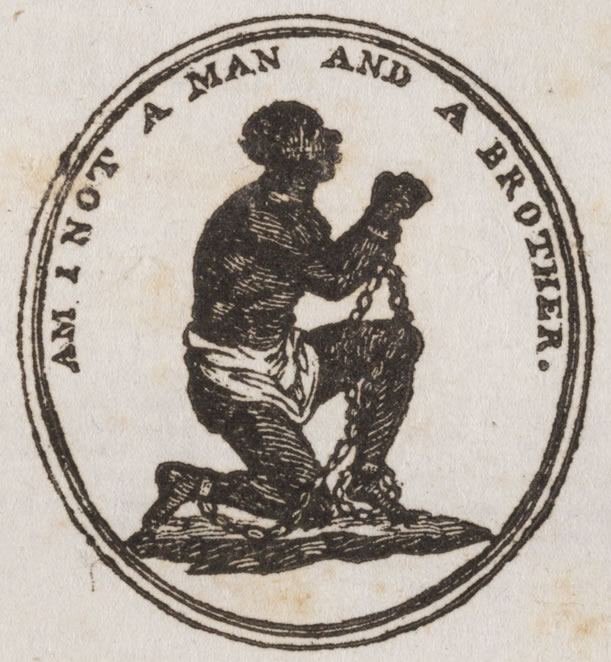
I know that title is audacious. I’m like a moth who can’t stay away from flames.
I am ready to be challenged on this, and quite honestly, I don’t feel terribly strongly about the statement. But I suspect that it is true.
Let’s see how I do in defending this. First of all, I take the following to be an American value:
“We should work hard to make sure that each person, without exception, is treated with the inherent human dignity and honor that they deserve.”
Maybe I lost some folks there, but probably not too many. Speaking for myself, I, as a Christian, really do believe this is true. I would even say that this is what I know is true and required of me. Now, I know that many non-believers in the Enlightenment tradition might also say that they believe this is true – even if, technically speaking, it is not something they have knowledge about, but simply strong convictions (that’s because of Kant’s distinctions about these things, which many elites still look to today).
Why not knowledge? That is more for the realm of things like pure mathematics and perhaps some of the basic laws of nature.
And even here, we see the cracks in the convictions surrounding American values like “all men are created equal, that they are endowed by their Creator with certain unalienable Rights”, which the Declaration of Independence says are, or perhaps should be (?), self-evident.
Enter Michael Gerson’s new editorial on Yuval Noah Harari’s book “Sapiens: A Brief History of Humankind.” Gerson’s own column is titled “Myths, Meaning, and Homo Sapiens”, and Albert Mohler discussed it on his program this morning.
Gerson starts his column with his own account of the emergence of human beings, saying of Homo sapiens:
“About 10,000 years ago, they invaded the Western Hemisphere, killing most of the large animals there as well (including woolly mammoths). Sapiens arrived, with blood on their hands, at the top of the food chain.
Then, to cut a long story short, came coinage, empires, monotheism, cathedrals, global capitalism, Newton’s “Philosophiae Naturalis Principia Mathematica,” the moon landing and Taylor Swift.”
He discusses and praises – “one of the best accounts by a Homo sapiens of the unlikely story of our violent, accomplished species” – Harari’s book, sharing such “insights” as the following:
“Ten thousand chimpanzees in St. Peter’s Square would be utter chaos. Ten thousand sapiens is an outdoor Mass. The ability to create unifying myths (used here as powerful, defining stories, not fictions) is our most powerful, distinguishing characteristic as a species.
Harari consigns all those myths to the realm of fiction — not only religions but the whole enterprise of humanistic, rights-based liberalism: “There are no gods in the universe, no nations, no money, no human rights, no laws, and no justice outside the common imagination of human beings…”
Gerson then ends his column by saying, in part:
“…With a kind of courageous consistency, he argues that the life sciences reveal sapiens as nothing more than a bundle of neurons, blood and bile. And that, he concedes, destroys the whole basis for ethics, law and democracy.
Harari shrugs where he should shudder. It is not a minor thing to assert that the main evolutionary advantage of sapiens — their capacity to produce meaning — is a cruel and pointless joke. There is at least one other alternative: that the best of our stories are not frauds but hints, and that the whole unlikely story has led sapiens to a justified belief in their own dignity and purpose.
In this case, the myths produced by Homo sapiens would be not the lies we tell ourselves but the truths we dimly perceive.”

Not so “self-evident” stuff these days…
Dimly perceived indeed. As in approaching, it seems, not being perceived at all. As I recently heard from another who seems to think like Gerson, “I want to believe there is an innate, universal morality. But if there is such a thing, we’ll never be able to know it perfectly.” The question though, is whether or not we can even begin to know it perfectly. Mohler points out, I believe rightly, that Gerson undermines his entire argument because of the story that he begins his column with. Many believe that one must be a Bible-believing fundamentalist to make this argument, but I want to argue below that this does not necessarily need to be the case.
There is no doubt that humanists can have ethical systems outside of a religious framework, but the issue is that such systems will always be evolving – and not just at the surface but at the core. Those who call themselves theistic evolutionists are confident that they can embrace “methodological naturalism” without embracing “philosophical naturalism”. The problem is that when it comes to evolution, the whole system is based on the fact that “human beings” are because they are “designed” to pass on their genes. As it has often been said, here “God” is in danger of being subsumed by the system as a belief that at one time was useful for us, evolutionarily speaking. That said, what is often missed here is the question of what becomes of human beings – and hence morality – in this system.
Theistic evolutionists will downplay the idea that evolution is all about passing on one’s genes. To be sure, that is what is happening in the natural world, they say, but this is not necessarily something “moral” that we should let control our morality and values. Besides, look at all the devout evangelicals who believe in evolution and the Bible: their morality does not seem to be tied to evolutionary ideas in the slightest. This may be true enough, but it is hardly the main issue.
Here is the issue:

At what point do we have a “pile”?
When it comes to evolution, scientists practicing methodological naturalism cannot help but focus on how key – and controlling – this factor of passing on one’s genes is. If we “observe” that the laws of nature demand the successful passing on of genetic material, this has implications for how we view – or can now conceivably be tempted to view – all living things, particularly human beings.
Certain temptations that might otherwise have been unimaginable now are imaginable.
And here is the crown of the examples: the idea of human being can now rationally be reduced to a “useful fiction”. It is now “human being”. Just like the Stoics puzzled over when a bunch of sand grains became a pile, doubt can now introduced about when we are dealing with another “human being”, which undermines any talk about morality being rooted in human solidarity. It gives persons an out for treating the other as less than human – or fully human – or not a sufficiently evolving human (i.e. less able or willing to adapt to changing circumstances such that they will remain socially viable so that their genes will be passed on) – when times get rough. After all, who decides what genome is human and what one isn’t? Based on what criteria?
Do you see what has happened? We are necessarily making value judgments here. And we are doing so according to a modern scientific and technological mindset (i.e. essences as classically understood must bow to useful fictions).
Am I correct? If we are, for example, primarily deciding who is a human being on the basis of the genome – and not by ordinary sensory experience available to all human beings – is this not really making a complex value judgment on the basis of what really does come down to numerical considerations (whether things like brain size, IQ or the % of genes that overlap with what we take to be the ideal standard)? And can’t this lack of belief in a stable human essence that all of us can immediately recognize through regular concrete means necessarily undermine a strong sense of the value of human beings – opening up the door for us to judge others as being less fit than us? I mean, it does not seem like much of a stretch for me to understand why so many elites 100-150 years ago drew racist conclusions from the theory.

July 4th inconceivable today….
So when someone says to me that “the problem of nature-red-in-tooth-and-claw is a moral consideration for all of us whether we choose to accept evolutionary theory or not”, I need to say: “Well, it is your problem – it isn’t mine.”
Humanists are increasingly talking about the “irrationality” of religion, and how religious persons even make “uncivil conflict resolution strategies” necessary (see here). But where, one wonders, has “the force of the best reason” ever shown that “all humans are created equal and are entitled to equal rights”? Which non-theist philosopher – or philosophers not influenced by theists – has ever been noted to say something remotely like this? The Indian Chrsitian philosopher Vishal Mangalwadi raises key issues here. And Thomas Kidd’s post this morning about “Benjamin Franklin, Skepticism, and The Enlightenment” at his blog the Anxious Bench also drives this home in a nice package.
But there are even more questions that need to be asked here: just how can Harari be absolutely convinced that his account is nothing other than a story? As Thomas Nagel has pointed out, “Evolutionary naturalism provides an account of our capacities that undermines their reliability, and in doing so undermines itself….” Here, one might say while it is only theists that can consistently believe in human rights, it is also only theists – or perhaps convinced Platonists, Aristotelians, or Stoics – that can believe in evolution (read my posts here and here for a more detailed unwrapping of why this needs to be the case).
In other words, evolution needs philosophy. That said, the remaining problem, then as now, is that when it comes to securing consistent human dignity and consistent human values, none of those classical philosophies – now infused with an Epicurean / evolutionary foundation – can even begin to argue that we can have any stable knowledge about these things.
I suggest that it is time for Christians to realize again the treasure that they have in the Word of God and the history of the world that it tells. There are our reasons for knowing meaning in life – and how we should live. As Gene Veith noted this morning in one of his posts at his Cranach blog, “the Early Church affirmed the Bible as its sole authority; later, it developed the concept of “tradition,” while insisting that the tradition is consistent with and normed by the Bible.”
It is in Jesus Christ’s love for sinners created in the image of God that we – and all persons – can find true hope. America is/was just a bonus.
FIN
Notes:
My last two posts dealt with related issues: one on science, morals, and philosophy and one on why I do not believe in evolutionary science.
All images from Wikipedia commons.
Previous Post

June 13, 2015
We Shouldn't Exclusively Use the ESV
Next Post

June 16, 2015 Should Parents View Their Children as Unbelievers? A Response to Todd Friel
Browse Our Archives
Select a Category American Lutheran Classics Blog Posts Book Review Christian Dogmatics Course Church Resources Curtis Leins Dogmatic Theology Ethics FAQs Historical Theology Just & Sinner Publications Luther Quotations Podcast Sermons The American Lutheran Theological Journal The complete works of Revere Franklin Weidner Theology Proper Uncategorized Videos
Select a Month October 2019 September 2019 July 2019 June 2019 May 2019 April 2019 March 2019 February 2019 January 2019 December 2018 November 2018 October 2018 September 2018 July 2018 June 2018 May 2018 April 2018 March 2018 February 2018 January 2018 December 2017 November 2017 October 2017 September 2017 August 2017 July 2017 June 2017 May 2017 April 2017 March 2017 February 2017 January 2017 December 2016 November 2016 October 2016 September 2016 August 2016 July 2016 June 2016 May 2016 April 2016 March 2016 February 2016 January 2016 December 2015 November 2015 October 2015 September 2015 August 2015 July 2015 June 2015 May 2015 April 2015 March 2015 February 2015 January 2015 December 2014 November 2014 October 2014 September 2014 August 2014 July 2014 June 2014 May 2014
Follow Us!
TAKE THE
Religious Wisdom Quiz
What did Nebuchadnezzar see inside the fiery furnace along with the three men?
Select your answer to see how you score.
A great cloud of smoke An angel with a sword A fourth figure like "a son of the gods" A vision of his own kingdom
Related posts from Just and Sinner

Fighting Critical Theory Approaches in the Academic Library...
Should We Learn from the 16th Century Lutherans'...
Does God Expect Rulers Today to "Kiss the...

On the Evils of Abortion and the New...
TRENDING AT PATHEOS Evangelical

The REST of Your Life: A Creative Wrestles...
This week I had a conversation with a good friend from church....

How the author of the world's best hymn...
I've been working with John Newton for a while now. This makes...

Long before this Lectio Divina, Psalm 130 - the song - started...

What About the Trees? Another Living Parable
After I finished writing the last article about falling leaves as a...

Why Classical Education Is a Conversation, Not a...
Come and Read: Joy in Classical Education When I was a little...

Cornell University has received a great deal of negative publicity and intense...
view all Evangelical blogs
Ad-Free & Subscriber Log-In Subscription Support
- About Us
- 2026 Calendar
- Videos
- Podcasts
- Library of World Religions
- Faith In Media Tracker
- Advertise With Us
- Write for Us
- Privacy Policy
- Terms of Service
- Do Not Sell My Data
- Contact Us
- Radiant Digital
- Manage Newsletter Subscriptions
- Unsubscribe From Notifications
- Sitemap
Copyright 2008-2026, Patheos. All rights reserved.
Subscription Support Ad-Free & Subscriber Log-In
Follow Patheos