
BuddhistCatholicContemplativeEvangelicalGeneral ChristianHinduJewishLatter-day SaintMuslimNew VisionsProgressive Christian
Beliefs
- Buddhist
- Catholic
- Contemplative
- Evangelical
- General Christian
- Hindu
- Jewish
- Latter-day Saint
- More Voices
- Muslim
- New Visions
- Pagan
- Progressive Christian
Topics
- Religion News
- Food and Religion
- Sports and Religion
- Religious Art
- Religious Music and Entertainment
- Religious Events
- History and Religion
- Style and Religion
- Politics and Religion
- Women in Religion
- Recreation Outdoors and Religion
- Business Finance and Religion
- Careers Workplace and Religion
- Education and Religion
- Family Parenting and Religion
- Health Fitness and Religion
- Home and Religion
- Relationships and Religion
- Technology and Religion
- Travel and Religion
Columnists
- Buddhist Columnists
- Business Finance and Religion Columnists
- Careers Workplace and Religion Columnists
- Catholic Columnists
- Contemplative Columnists
- Education and Religion Columnists
- Evangelists Columnists
- Family Parenting and Religion Columnists
- General Christian Columnists
- Health Fitness and Religion Columnists
- Hindu Columnists
- History and Religion Columnists
- Home and Religion Columnists
- Jewish Columnists
- More Voices Columnists
- Latter Day Columnists
- Muslim Columnists
- New Visions Columnists
- Nonreligious Columnists
- Pagan Columnists
- Politics and Religion Columnists
- Progressive Columnists
- Recreation Outdoors and Religion Columnists
- Relationships and Religion Columnists
- Religion News Columnists
- Religious Art Columnists
- Religious Events Columnists
- Religious Music and Entertainment Columnists
- Sports and Religion Columnists
- Style and Religion Columnists
- Technology and Religion Columnists
- Travel and Religion Columnists
- Women in Religion Columnists
Resource Library
- 2026 Calendar
- Library of World Religions
- The 100 Most Holy Places on Earth
- Patheos Answers
- Podcasts
- Videos
- Faith Leaders Database
- Anglican Episcopalian
- Bahai
- Baptist
- Buddhism
- Christianity
- Confucianism
- Eastern Orthodoxy
- Hinduism
- Holiness and Pentecostal
- ISKCON
- Islam
- Judaism
- Lutheran
- Methodist
- The Church of Jesus Christ of Latter-day Saints
- New Age
- Paganism
- Presbytarian and Reformed
- Protestantism
- Religion Behind the Scenes
- Roman Catholic
- Scientology
- Shia Islam
- Sikhism
- Sufism
- Sunni Islam
- Taoism
- Zen
- See all religions
Research Tools
 Ad-Free & Subscriber Log-In Subscription Support
Ad-Free & Subscriber Log-In Subscription Support
Follow Patheos 

- Trending:
- Forgiveness
- |
- Marriage
- |
- Consciousness
- |
- Death Penalty
- |
- Election
- |
- Halloween
 Just and Sinner
- Home
- Evangelical
- The Truth About Being A Prodigal and Why You Never Want to be One
The Truth About Being A Prodigal and Why You Never Want to be One
Last updated on: September 5, 2018 at 6:29 am by nathanrinne
The Truth About Being A Prodigal and Why You Never Want to be One 2018-09-05T06:29:18-06:00 nathanrinne
Patheos Explore the world's faith through different perspectives on religion and spirituality! Patheos has the views of the prevalent religions and spiritualities of the world.

Prefatory material:
Should pastors who fall into grave public sin continue in the ministry?
This has lately become an increasingly talked-about topic. Most recently, people following the public debate on the issue could read dueling articles titled “Grace for the Disgraced: Showing Forgiving Mercy to Former Ministries” and “Real Sin. Real Forgiveness. Real Faith. Real Fruits of Repentance”.
I highly recommend reading these articles side by side (here is Martin Luther’s view of the matter as well). In addition, a few weeks ago, I published a piece written pseudonymously at my blog that dealt with these same kinds of issues, though in a more broad fashion, tackling the issue of “prodigals”.
I cannot recommend this piece by Quamdilexilegemtuam (or Quam for short), strongly enough.
I am republishing it here at the Just and Sinner blog today, and hoping you enjoy it and find much encouragement in its contents.
+++
By Quamdilexilegemtuam
Much ink has been spilled and much oxygen wasted on the “testimony” of the so-called prodigals among us. As a former prodigal myself, let me assure you, there is nothing glamorous nor beneficial in choosing to live a life of sin and rebellion. Indeed, quite the opposite is true.
To begin, let’s get very clear on an oft overlooked and monumental fact. Choosing to be a “prodigal” is choosing to abandon faith. Lest we forget what abandoning faith ultimately means, let me spell that out in no uncertain terms. Abandoning faith means choosing a lifetime of war with God and an eternity in hell. It is a deception of the highest order to claim that abandoning the faith is somehow a “necessary evil” that aides in ultimately strengthening faith. That simply is not true. The notion that we cannot be saved by our works, yet we can be saved by our sin – that the only thing our salvation requires is our sin – is patently unbiblical. It is a direct violation of the teaching of St. Paul in Romans 6 and in other places. It is a blasphemy of the cross of Christ.
You may argue back, “But without our sin, the cross would not have been necessary! It’s not the healthy that need a physician but the sick!” True enough. However, we distort these truths when we arrive at the conclusion that we need somehow to experience the heights of sin and rebellion beyond what’s already present in order to qualify for the cross and the aid of The Physician. Simply being born in sin and acting in accord with that sinful nature is plenty to make us suitable for the Gospel, yet our sinful nature thinks that we must sin all the more that grace might abound. Fundamentally, this is a failure to recognize our own sin.
Now, some might make the claim that we’re all prodigals at some level. I disagree with that reading of the parable from St. Luke’s Gospel. This is clearly a case of a man who was in the household of faith and chose to leave. Not everyone who is in the Church does this nor should they. The lesson for those who have remained faithful is threefold. One, it is a warning not to abandon faith. Two, it is a lesson on the great mercy of the Father. Third, it is an exhortation to continually recognize the Father’s great mercy extended to us even as we remain faithful sons that are still in need of forgiveness.
I believe it’s no accident that St. Luke records for us the incident at Simon’s home in Luke 7 in order to prepare us for this parable in chapter fifteen. The point of Jesus’ teaching there is not that Simon needed to go out and engage in manifest sin. The point Christ was making was that Simon needed to recognize his own sin and be grateful that his many sins were forgiven.
To be sure, no prodigal thinks prior to their apostasy, “Oh, I don’t have enough sin. I need to go out and do some ‘wild living’!” Instead, those at the greatest risk of abandoning the faith generally fall into two categories: one, a legalistic camp — believing a life can be lived on this side of glory with no sin and two, an “all is grace” camp – believing that a reformation of life as a Christian should, at best, not be emphasized. Both potential prodigals ignore the clear exhortation of Holy Scripture to “take heed, lest he fall” (1 Cor 10).
The “legalist”, thinking himself to be perfect, ignores his daily need of the Gospel. The “all is grace” man ignores his need to strive, work, and discipline himself in his sanctification. One day the “perfect man” is confronted with a sin he cannot bear up under because he has so neglected the Gospel. The “grace man” falls into a pattern of sin that destroys faith because he has so neglected the seriousness of his sin. These sins that lead to apostasy are generally sudden, manifest, and utterly devastating to both the prodigal and everyone around him.
Adding to this, if a prodigal does return to the faith, he often falls into the opposite ditch or goes deeper into his former error. The legalist, reacting to his former situation, all but ignores sanctification or he tries to double down on his perfectionism. The more libertine fellow will often do the opposite; seek to guard against sin only and neglect the Gospel or, attempting to justify his rebellion, put forth a recapitulated version of his former antinomian theology. Put simply prodigals tend to experience a pendulum swing from one extreme to the other.
Take “Dave” for instance. Dave was an all-American Christian man, a pastor, and eventually a teacher at his denomination’s college. All he cared about was making sure he followed the commands of Holy Scripture and of his success as a college professor. One day Dave is injured while on his daily bike ride and his doctor prescribes a muscle relaxer. Dave becomes addicted. Instead of turning to the Gospel for help, he determined all was lost by his moral failure and chooses apostasy instead of forgiveness. Fortunately, Dave returns to the faith, however there’s a problem. Instead of retaining his former love of God’s law, he completely abandons it in favor of an “all is grace” antinomianism. Or, conversely, Dave decides that this time, he will try harder than ever before not to succumb to addiction and continue to all but ignore the Gospel.
Then take “Chris”. Chris is popular, good-looking, and an elder in his local parish. He teaches one of the adult bible study classes where his exposition of the Gospel is virtually irresistible. Unfortunately, his “all is grace” message has fueled a vice of his – kleptomania. He begins robbing liquor stores. Eventually Chris is caught and is disciplined by his church. Like “Dave”, instead of seeking forgiveness, Chris goes prodigal. After some time, Chris does come to his senses and returns. Only this time, he is going to take God’s law seriously. Never mind all of this “grace” stuff. Chris is going to follow the Law. Or, conversely, Chris will decide that he didn’t get grace enough. Now he thinks that because of his descent into gross and manifest sin, he is not only qualified to teach bible class, but is more qualified than anyone to be in the pastoral office.
Clearly, both “Dave” and “Chris” have it all wrong as prodigals. As we will see, the returning prodigal still must deal with temporal consequences. This might include, for defrocked clergymen who have betrayed Christ’s Church, to remain out of the ministry for a very extended period if not for a lifetime. Like the situation regarding salvation, being an apostate does not further qualify a man for ministry over those who, while still sinners, have remained in the faith. At any rate, we observe here that not only going prodigal, as it were, has no benefits to faith, it is also a detriment when said prodigal returns. This is especially true when that man is attempting to enter into a formal ministry capacity.
Furthermore, what is most troubling about the returning prodigal is that it seems they are making attempts to salve their damaged consciences with another gospel. (This would be a good example of the “all is grace” prodigal slipping deeper into his former error or the “legalist” reacting against his previous Gospel-less life.) This “gospel” tells them that somehow their sin is necessary because it brought them to a fuller understanding of the true Gospel. Or that they never really understood the Gospel before they fell headlong into sin. Furthermore, the claim is made that those who haven’t rebelled can’t understand the cross of Christ as deeply as a sin-scarred prodigal can. Some intimate that they are better and more qualified teachers of the Gospel than men who have been faithful. Moreover, this attitude perpetuates the lie that the Gospel has no power to transform men’s lives for the better; that there is no “getting better” as a Christian. There is only the greater realization of how evil we really are. For those in the “prodigal works salvation camp”, if you will, the entire Christian project is simply becoming accustomed to the justification in Christ we enjoy as Christians. In other words, for the hyper-grace prodigal, the only “good work” we can do as Christians is to get more fully acquainted with our Justification. In his mind, anything further amounts to legalism.
Additionally, I am frequently stunned at the surprise of the prodigals who aren’t welcomed back into the fold with open arms. Totally unwilling to recognize the damage his own sin caused, the prodigal is quick to point out how his faithful brother mistrusts him. We prodigals tend to condemn our faithful brothers for not being as gracious and welcoming as the Father. It’s somehow permissible if we sin all the day long, yet we condemn our brothers for the sin of not being perfectly forgiving? That’s hypocrisy. If we as prodigals want forgiveness from our brothers, we too must be willing to give some grace to them – especially those whom we have betrayed the most.
I am reminded here of a relationship in my own life with a faithful brother who I hurt quite deeply with my sin. While he never gave up on me, he simply would not allow me back in his life until he was convinced that I’d been brought to genuine repentance. In this case, what my friend did with me was right, good, and wise. But sometimes people are simply hurt by our sin such to the degree that it’s difficult to forgive the offending brother. Prodigals, like me, should allow those who have been hurt by our sin this latitude. We should recall that we have been forgiven many sins and that if a brother falters in the sin of unforgiveness, we too should extend him grace.
Moreover, the prodigal must take into account that it is perfectly legitimate for offended brothers to both forgive us all the while treating us with caution. It is equally legitimate for certain brothers to mete out temporal punishment to us if they are in a proper position of authority to do so. So for instance, a pastor who falls into manifest sin must be willing to undergo that church’s discipline process. Instead of fleeing or decrying such discipline as “unforgiveness”, that man should, if he is genuinely repentant, embrace such discipline as from the Lord.
Finally, what many don’t realize about prodigals is that they will live with regret and shame the remainder of their lives. As stated, I believe that some will try to salve those emotions and memories by falsely believing that their sin was somehow necessary. A person can only do that exercise so long before he realizes such efforts are akin to holding your breath. One day, the brutal reality will hit you. You abandoned the faith and there was not a single shred of what you did that was good, let alone profitable to faith. You didn’t earn a higher place in understanding salvation. All you did – every bit of it – was evil and corrupt to the core.
Despite all of this, God be praised that while we were still a long way off, our dear heavenly Father ran to embrace us once again. And that really is our only hope. My son teases me because sometimes I weep during the singing of the Agnus Dei after the consecration of the elements. It goes, “Oh Christ thou Lamb of God, that takest away the sins of the world. Have mercy upon us.” This moment is particularly striking because I realize I cannot in any way justify my sin and that I need One who can take it away. My sin served no purpose. It was stupid. Irrational. It hurt countless people who I said I loved. Yet the Father still sees fit to welcome me back with open arms for the sake of His Son. He called off the war, despite my best efforts to destroy Him and everyone around me. He robes me with the robes of a son. And now, far from thinking that sin and rebellion are what is required, my Father empowers me with His own Son’s body and blood and the preaching of His word to be the man I was created to be; a man who loves His law and His commandments. I can truly put my hand to the plow in cooperation with the Holy Spirit to love much because I have been forgiven much all while recognizing that it didn’t require me abandoning the faith. The Father’s love and grace was always there.
Here, I am reminded of the words the Father spoke to the older son. “Son, you are always with me, and all that is mine is yours.” Not only did the older son struggle to believe this about his Father, but I believe the younger son did as well. This is what initiated his leaving. May all of us grasp tightly to this truth whether faithful or former apostate: by the death and resurrection of Christ and the forgiveness of all our sins, all that the Father has is now our inheritance. May we both live in accord with that truth as well as continually recognizing our daily need for our Father’s great mercy and grace.
FIN
Image: http://www.freebibleimages.org/
Previous Post
July 24, 2018
Joel Biermann on the Two Kinds of Righteousness
Next Post
September 10, 2018 The Reliability of Scripture
Browse Our Archives
Select a Category American Lutheran Classics Blog Posts Book Review Christian Dogmatics Course Church Resources Curtis Leins Dogmatic Theology Ethics FAQs Historical Theology Just & Sinner Publications Luther Quotations Podcast Sermons The American Lutheran Theological Journal The complete works of Revere Franklin Weidner Theology Proper Uncategorized Videos
Select a Month October 2019 September 2019 July 2019 June 2019 May 2019 April 2019 March 2019 February 2019 January 2019 December 2018 November 2018 October 2018 September 2018 July 2018 June 2018 May 2018 April 2018 March 2018 February 2018 January 2018 December 2017 November 2017 October 2017 September 2017 August 2017 July 2017 June 2017 May 2017 April 2017 March 2017 February 2017 January 2017 December 2016 November 2016 October 2016 September 2016 August 2016 July 2016 June 2016 May 2016 April 2016 March 2016 February 2016 January 2016 December 2015 November 2015 October 2015 September 2015 August 2015 July 2015 June 2015 May 2015 April 2015 March 2015 February 2015 January 2015 December 2014 November 2014 October 2014 September 2014 August 2014 July 2014 June 2014 May 2014
Follow Us!
TAKE THE
Religious Wisdom Quiz
True or False: Isaiah prophesied that a virgin would conceive and bear a son called Jesus.
Select your answer to see how you score.
FALSE TRUE
Related posts from Just and Sinner

This Week's Podcast: Humanity after the Fall by...

A "Fate" Worse than Dead Orthodoxy: Today’s Institutionalization...
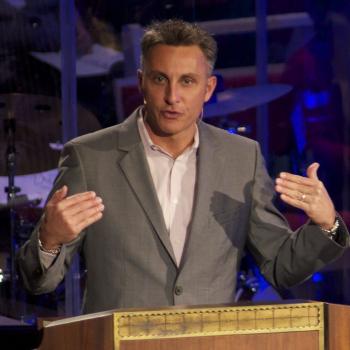
Matthew Garnett's Helpful Evaluation of Tullian Tchividjian’s Preaching
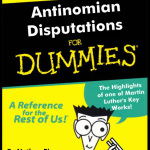
Luther's Antinomian Disputations for Dummies 5 (of 5):...
TRENDING AT PATHEOS Evangelical

The REST of Your Life: A Creative Wrestles...
This week I had a conversation with a good friend from church....

How the author of the world's best hymn...
I've been working with John Newton for a while now. This makes...

Long before this Lectio Divina, Psalm 130 - the song - started...

What About the Trees? Another Living Parable
After I finished writing the last article about falling leaves as a...

Why Classical Education Is a Conversation, Not a...
Come and Read: Joy in Classical Education When I was a little...

Cornell University has received a great deal of negative publicity and intense...
view all Evangelical blogs
Ad-Free & Subscriber Log-In Subscription Support
- About Us
- 2026 Calendar
- Videos
- Podcasts
- Library of World Religions
- Faith In Media Tracker
- Advertise With Us
- Write for Us
- Privacy Policy
- Terms of Service
- Do Not Sell My Data
- Contact Us
- Radiant Digital
- Manage Newsletter Subscriptions
- Unsubscribe From Notifications
- Sitemap
Copyright 2008-2026, Patheos. All rights reserved.
Subscription Support Ad-Free & Subscriber Log-In
Follow Patheos