
BuddhistCatholicContemplativeEvangelicalGeneral ChristianHinduJewishLatter-day SaintMuslimNew VisionsProgressive Christian
Beliefs
- Buddhist
- Catholic
- Contemplative
- Evangelical
- General Christian
- Hindu
- Jewish
- Latter-day Saint
- More Voices
- Muslim
- New Visions
- Pagan
- Progressive Christian
Topics
- Religion News
- Food and Religion
- Sports and Religion
- Religious Art
- Religious Music and Entertainment
- Religious Events
- History and Religion
- Style and Religion
- Politics and Religion
- Women in Religion
- Recreation Outdoors and Religion
- Business Finance and Religion
- Careers Workplace and Religion
- Education and Religion
- Family Parenting and Religion
- Health Fitness and Religion
- Home and Religion
- Relationships and Religion
- Technology and Religion
- Travel and Religion
Columnists
- Buddhist Columnists
- Business Finance and Religion Columnists
- Careers Workplace and Religion Columnists
- Catholic Columnists
- Contemplative Columnists
- Education and Religion Columnists
- Evangelists Columnists
- Family Parenting and Religion Columnists
- General Christian Columnists
- Health Fitness and Religion Columnists
- Hindu Columnists
- History and Religion Columnists
- Home and Religion Columnists
- Jewish Columnists
- More Voices Columnists
- Latter Day Columnists
- Muslim Columnists
- New Visions Columnists
- Nonreligious Columnists
- Pagan Columnists
- Politics and Religion Columnists
- Progressive Columnists
- Recreation Outdoors and Religion Columnists
- Relationships and Religion Columnists
- Religion News Columnists
- Religious Art Columnists
- Religious Events Columnists
- Religious Music and Entertainment Columnists
- Sports and Religion Columnists
- Style and Religion Columnists
- Technology and Religion Columnists
- Travel and Religion Columnists
- Women in Religion Columnists
Resource Library
- 2026 Calendar
- Library of World Religions
- The 100 Most Holy Places on Earth
- Patheos Answers
- Podcasts
- Videos
- Faith Leaders Database
- Anglican Episcopalian
- Bahai
- Baptist
- Buddhism
- Christianity
- Confucianism
- Eastern Orthodoxy
- Hinduism
- Holiness and Pentecostal
- ISKCON
- Islam
- Judaism
- Lutheran
- Methodist
- The Church of Jesus Christ of Latter-day Saints
- New Age
- Paganism
- Presbytarian and Reformed
- Protestantism
- Religion Behind the Scenes
- Roman Catholic
- Scientology
- Shia Islam
- Sikhism
- Sufism
- Sunni Islam
- Taoism
- Zen
- See all religions
Research Tools
 Ad-Free & Subscriber Log-In Subscription Support
Ad-Free & Subscriber Log-In Subscription Support
Follow Patheos 

- Trending:
- Forgiveness
- |
- Marriage
- |
- Consciousness
- |
- Death Penalty
- |
- Election
- |
- Halloween
 Just and Sinner
- Home
- Evangelical
- The Priority of Justification over Sanctification
The Priority of Justification over Sanctification
Last updated on: June 3, 2014 at 1:18 am by Jordan Cooper
The Priority of Justification over Sanctification 2014-06-03T01:18:28-06:00 Jordan Cooper
Patheos Explore the world's faith through different perspectives on religion and spirituality! Patheos has the views of the prevalent religions and spiritualities of the world.
The following is a section from my chapter “New Life in Christ: Sanctification and Vocation” in my upcoming book on Reformed and Lutheran theology,
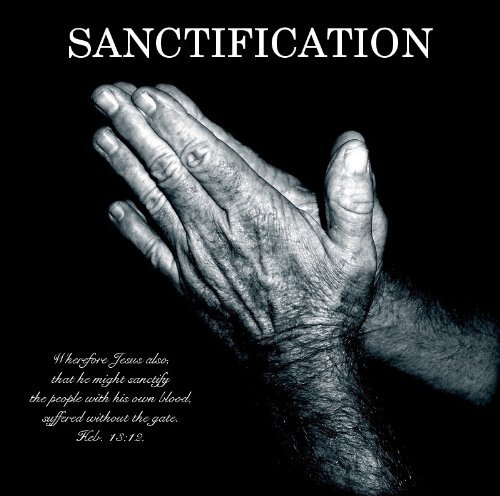 The primary reason why justification assumes a theological priority over sanctification is that it is a completed act. The work of justification establishes God’s eschatological verdict of “righteous” placed upon the sinner. As Romans 4:5 states, “And to the one who does not work but believes in him who justifies the ungodly, his faith is counted as righteousness.” As was discussed in the previous chapter, this text has specific reference to Abraham. In Genesis 12 Abraham was made an heir of the covenant, given the promise of being the forefather of the future messiah and the nation of Israel. Thus Abraham’s journey of faith began earlier than the text Paul utilizes from chapter 15 wherein Abraham’s faith was credited as righteousness. Paul explicitly labels Abraham as one who “does not work” and even calls him “ungodly.” This does not refer merely to the beginning of Abraham’s life of faith, in which he would become godly and righteous by his own strength, but to the Abraham who had already left his pagan idolatry in order to serve God. Thus even after Abraham had some level of sanctification and displayed that through his good works, he is still labeled by Paul as ungodly, and is righteous apart from works. This demonstrates that justification is primary, not only in the beginning of the Christian life, but in one’s continual journey in faith. Even after one is sanctified to an extent one can still be labeled as “ungodly” and “without works.”
There is a prominent pastoral concern in this discussion as well. As one progresses in the Christian life, rather than seeing victory over sin, one often struggles with the fact that the sins which should be done away with keep returning. The old Adam continually reasserts himself, bringing God’s children back into the sin which previously enslaved them. If I as a pastor were to emphasize the work of sanctification and progress in the Christian life, one’s state of mind would likely become that of despair. The progress that we hope to find in our spiritual journeys simply isn’t there. Rather than pointing to that work of God which is still incomplete, that work by which God would still only be able to call his people “ungodly”, I as a pastor have a duty to point to that work of God which is complete, that work by which alone one will be received into God’s kingdom and participate in the resurrection unto life. Alien righteousness is full and complete, and is the only thing which one can cling to in assurance that eternal life is a present possession, not the incomplete work of renewal which will only lead to the Christian’s realization of their failure to progress as far as they should.
Paul demonstrates this principle in a pastoral manner in the first epistle to the Corinthians. Of all his letters, this is the one in which Paul deals with the broadest moral problems. The Corinthian congregation is struggling with sectarianism, sexual immorality, a lack of concern for the sins of others, and a tendency to take other Christians to court. Amidst this group of people, seemingly lacking the fruits of sanctification, Paul is willing to address them as “saints.” Even though they are full of obvious sin that Paul addresses throughout this epistle, they are righteous and holy people. After chastising the Corinthians for their tendency to desire taking others to a law court in order to settle church disputes, Paul warns them that those who practice wickedness will not inherit the kingdom of God. Rather than pointing them, then, to the sinfulness of their own lives, and the lack of fruit that they demonstrate, he reminds them of something which is a past reality. He states, “And such were some of you. But you were washed, you were sanctified, you were justified in the name of the Lord Jesus Christ and by the Spirit of our God.” He reminds the Corinthians that even though they demonstrate all sorts of sin and wickedness within their congregation, these sins do not define who they are in Christ. Though previously slaves to sin, the Corinthians have now been baptized into Christ, they have been set apart, they have been declared righteous and their sins have been forgiven. Even in the midst of a situation of profound sin, Paul is willing to assure the Corinthian believers of their status before God by their baptisms and their justification.
Previous Post

June 3, 2014
Thoughts on Mercersburg Theology
Next Post
June 3, 2014 Is the God of the Bible Immoral?
Browse Our Archives
Select a Category American Lutheran Classics Blog Posts Book Review Christian Dogmatics Course Church Resources Curtis Leins Dogmatic Theology Ethics FAQs Historical Theology Just & Sinner Publications Luther Quotations Podcast Sermons The American Lutheran Theological Journal The complete works of Revere Franklin Weidner Theology Proper Uncategorized Videos
Select a Month October 2019 September 2019 July 2019 June 2019 May 2019 April 2019 March 2019 February 2019 January 2019 December 2018 November 2018 October 2018 September 2018 July 2018 June 2018 May 2018 April 2018 March 2018 February 2018 January 2018 December 2017 November 2017 October 2017 September 2017 August 2017 July 2017 June 2017 May 2017 April 2017 March 2017 February 2017 January 2017 December 2016 November 2016 October 2016 September 2016 August 2016 July 2016 June 2016 May 2016 April 2016 March 2016 February 2016 January 2016 December 2015 November 2015 October 2015 September 2015 August 2015 July 2015 June 2015 May 2015 April 2015 March 2015 February 2015 January 2015 December 2014 November 2014 October 2014 September 2014 August 2014 July 2014 June 2014 May 2014
Follow Us!
TAKE THE
Religious Wisdom Quiz
Which prophet was sent to Nineveh to preach repentance?
Select your answer to see how you score.
Jonah Amos Daniel Joel
Related posts from Just and Sinner

Sola Fide in the Church Fathers

Rev. Lewis Polzin is Back on the Show...

God Knows When We Won't Do Good. And...

TRENDING AT PATHEOS Evangelical

The REST of Your Life: A Creative Wrestles...
This week I had a conversation with a good friend from church....

How the author of the world's best hymn...
I've been working with John Newton for a while now. This makes...

Long before this Lectio Divina, Psalm 130 - the song - started...

What About the Trees? Another Living Parable
After I finished writing the last article about falling leaves as a...

Why Classical Education Is a Conversation, Not a...
Come and Read: Joy in Classical Education When I was a little...

Cornell University has received a great deal of negative publicity and intense...
view all Evangelical blogs
Ad-Free & Subscriber Log-In Subscription Support
- About Us
- 2026 Calendar
- Videos
- Podcasts
- Library of World Religions
- Faith In Media Tracker
- Advertise With Us
- Write for Us
- Privacy Policy
- Terms of Service
- Do Not Sell My Data
- Contact Us
- Radiant Digital
- Manage Newsletter Subscriptions
- Unsubscribe From Notifications
- Sitemap
Copyright 2008-2026, Patheos. All rights reserved.
Subscription Support Ad-Free & Subscriber Log-In
Follow Patheos