
BuddhistCatholicContemplativeEvangelicalGeneral ChristianHinduJewishLatter-day SaintMuslimNew VisionsProgressive Christian
Beliefs
- Buddhist
- Catholic
- Contemplative
- Evangelical
- General Christian
- Hindu
- Jewish
- Latter-day Saint
- More Voices
- Muslim
- New Visions
- Pagan
- Progressive Christian
Topics
- Religion News
- Food and Religion
- Sports and Religion
- Religious Art
- Religious Music and Entertainment
- Religious Events
- History and Religion
- Style and Religion
- Politics and Religion
- Women in Religion
- Recreation Outdoors and Religion
- Business Finance and Religion
- Careers Workplace and Religion
- Education and Religion
- Family Parenting and Religion
- Health Fitness and Religion
- Home and Religion
- Relationships and Religion
- Technology and Religion
- Travel and Religion
Columnists
- Buddhist Columnists
- Business Finance and Religion Columnists
- Careers Workplace and Religion Columnists
- Catholic Columnists
- Contemplative Columnists
- Education and Religion Columnists
- Evangelists Columnists
- Family Parenting and Religion Columnists
- General Christian Columnists
- Health Fitness and Religion Columnists
- Hindu Columnists
- History and Religion Columnists
- Home and Religion Columnists
- Jewish Columnists
- More Voices Columnists
- Latter Day Columnists
- Muslim Columnists
- New Visions Columnists
- Nonreligious Columnists
- Pagan Columnists
- Politics and Religion Columnists
- Progressive Columnists
- Recreation Outdoors and Religion Columnists
- Relationships and Religion Columnists
- Religion News Columnists
- Religious Art Columnists
- Religious Events Columnists
- Religious Music and Entertainment Columnists
- Sports and Religion Columnists
- Style and Religion Columnists
- Technology and Religion Columnists
- Travel and Religion Columnists
- Women in Religion Columnists
Resource Library
- 2026 Calendar
- Library of World Religions
- The 100 Most Holy Places on Earth
- Patheos Answers
- Podcasts
- Videos
- Faith Leaders Database
- Anglican Episcopalian
- Bahai
- Baptist
- Buddhism
- Christianity
- Confucianism
- Eastern Orthodoxy
- Hinduism
- Holiness and Pentecostal
- ISKCON
- Islam
- Judaism
- Lutheran
- Methodist
- The Church of Jesus Christ of Latter-day Saints
- New Age
- Paganism
- Presbytarian and Reformed
- Protestantism
- Religion Behind the Scenes
- Roman Catholic
- Scientology
- Shia Islam
- Sikhism
- Sufism
- Sunni Islam
- Taoism
- Zen
- See all religions
Research Tools
 Ad-Free & Subscriber Log-In Subscription Support
Ad-Free & Subscriber Log-In Subscription Support
Follow Patheos 

- Trending:
- Forgiveness
- |
- Marriage
- |
- Consciousness
- |
- Death Penalty
- |
- Election
- |
- Halloween
 Just and Sinner
- Home
- Evangelical
- The First Table of the Commandments’ Relationship to the Third Use of the Law (Part II of II)
The First Table of the Commandments’ Relationship to the Third Use of the Law (Part II of II)
Last updated on: February 10, 2016 at 10:07 am by nathanrinne
The First Table of the Commandments’ Relationship to the Third Use of the Law (Part II of II) 2016-02-10T10:07:08-06:00 nathanrinne
Patheos Explore the world's faith through different perspectives on religion and spirituality! Patheos has the views of the prevalent religions and spiritualities of the world.
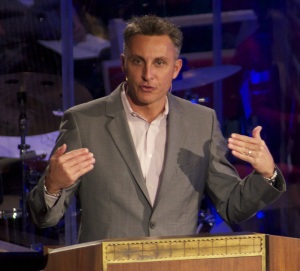
Billy Graham’s grandson Tullian Tchividjian says that he believes in “the third use of the law” – he just doesn’t want to have to “qualify things all the time”. And all the Lutherans shout “Amen!” So what’s the real issue with the “third use”?
I really don’t want anyone to feel like they should read this post. Truth. I would simply prefer that they read part I, say “Amen”, and “rejoice evermore” (I Thes. 5:16) with me. I think the words I shared there cover the topic of this article well and are reliable and life-giving words – they basically should not need to be supplemented.
But that, sadly, has not been my experience. Hence this part II, which gets into some very painful and even annoying detail in order to counter the objections that come up to the content of part I (again, if you gave a hearty “amen” to part I, I am totally serious: I really don’t think it is necessary for you to the rest of the article). For there is much confusion about God’s law today, and my “Steadfast Lutheran” tribe is no exception when it comes to this. Many of the problems though, I think, can be cleared up for persuadable folks by Pastor Todd Wilken’s compelling new article, “Is the Law Bad?” – see here. I get the impression that his article has been generally well-received and I promise you that it is far more interesting than this one.
So, what am I insisting needs to be said about the law – at least for some? Here are my core points:
- Indeed, the law never completely ceases to accuse even the most mature Christian in this life (Romans 8 follows Romans 7, but Romans 7 is Romans 7, period – and thank God). That said, the problem with much theology today is what it does not say, either intentionally or more innocently: the law is God’s eternal will.
- The Christian, according to his new nature, does indeed do the law motivated by the gospel and not by the law. That said…
- We should also add here that the law is being done by the individual agent who is the Christian, not by Christ or the Holy Spirit bypassing the Christian’s will. Further…
- Assent to the law is an act of the Christian’s will, empowered by the Holy Spirit through the Gospel, and the same holds true for saying no to sin and fighting temptation. Also…
- If we don’t want to say man had a ‘free will” before the fall – because of concerns about misunderstandings – we need to at least say something like “unenslaved will”.*
- For His part, God desires not to coerce according to truth, but to woo according to truth. Satan, now enslaved in himself to the bitter end, desires to coerce, but under God’s coercion is only permitted to seduce by lies. These distintions should affect how we see the Christian life. Finally….
- We can even say that from the perspective of the law, faith in God’s merciful promises – whether we are talking about passively receiving them or actively pursuing them (by pursuing Him and His words to us) – is an act of one’s will commanded in the First Commandment!
- Hence what Luther says about the conclusion of the Ten Commandments in his Small Catechism** is not primarily meant to “break us” with the law, but is, in fact, describing things as they are.

Norman Nagel: The book of Romans says we are justified by faith and that we are justified by the blood. If you ask faith, it has nothing to talk about… it points to the blood….
“Radical Lutheran” brethren… you who truly believe the Scriptures are the word of God (and you who don’t also : ) ), stay with me here. Let me first re-assert: The law cannot motivate or empower! But with the Gospel ringing in our ears, it does remind us of who we want to be – and who we have already begun to be in Christ, correct? Hence we all shout “Amen!” when the Apostle seeks to exhort us and guide our consciences in, for example, I Thes. 5:16-18. Second, when it comes to fighting for the faith, I also would prefer to have to defend God and His will to justify (I think all Christians should be tempted by Radical Lutheranism) and not issues pertaining to man’s will, for “Thy will be done” (i.e. focusing on His will!) indeed*.* Nevertheless, I not-so-humbly (because yes, I am, in my old Adam, a jerk and contribute my own sin to this process) suggest the integrity of your confessional subscription – and with that the good Christian confession – depends on your willingness to agree with those points above.***
So hear me now – this indeed follows!: all this said, we should not, in general, focus on our Spirit-inspired ability to [weakly] cooperate when it comes to our being progressively sanctified. We should simply recognize it, affirm it, and look continue looking to Christ for all good things! The reasons for this are that Radical Lutherans are right to emphasize these things: a) our real and constant need for the forgiveness we get when we are with Jesus and b) even though the Christian is motivated primarily by the Gospel, we are sinner-saints, and as such our “old man” is still motivated by the law (which, by the way, can be very good for my neighbor to, but not all the time). We constantly fall into the trap of living in terms of carrots and sticks, even of wanting to justify ourselves and our worth before God by our own actions! – this is the “opinio legis” within us.
Hence, again, we look to Christ for all good things – and like Mary, run to His feet! – realizing that He is the primary actor here who is constantly at work purging the evil that remains within us. This means that we have perpetual pardon, power, and progress – because the Scriptures say so – in Him . The habitual sins that beset us cannot change God’s work to transform us!
![“[The Apostle’s Creed] is intended to help us do that which according to the Ten Commandments we ought to do... increase in us faith and the fulfilment of the Ten Commandments, and that He would remove everything that is in our way and opposes us therein” -- Luther](https://infanttheology.files.wordpress.com/2016/02/largecatechism.jpg?w=194)
“[The Apostle’s Creed] is intended to help us do that which according to the Ten Commandments we ought to do…[we should pray that God] would give, preserve, and increase in us faith and the fulfilment of the Ten Commandments, and that He would remove everything that is in our way and opposes us therein” — Luther
How to explain all this a bit more, theologically? We can say that the righteousness of Christ that the Christian receives from the outside, and by which a person is justified by faith (we are put “in Christ”!), is the same righteousness that the Christian seeks to have in himself (because of Christ in him!), and by which he is progressively sanctified (see Luther’s Works, v. 1, p. 64, for example). As the great Epiphany hymn “Songs of Thankfulness and Praise” puts it:
“Grace to imitate thee now
And be pure, as pure art thou
That we might become like thee
At thy great epiphany…”
In other words, there is not only a “positional” sanctification (us in Christ – this goes with justification) but again, what we may call a “deepening” and progressive sanctification (Christ in us!).
More specifically though, how does this happen? Here, we must look at God’s larger purposes, which can be realized through a careful study of Scripture.
A goal of the Gospel is for us simply to be loved by God in Christ, and to grow in that understanding – even in the midst of great suffering… To sit at Christ’s feet and simply be blessed to learn as His pupil and even friend (and bride, brother, and child)!
Another goal of the Gospel, which really flows from this first goal, is for us to love our neighbor in Christ and to grow in fruitful service (often very simple and unspectacular acts). In fact, secure in God’s love, all our actions and sufferings are ultimately to be neighbor-directed – in fact, not only our sanctification but also our justification is for the neighbor (and yet, of course, where Christ is there is forgiveness, comfort, etc. for us to!). After all, the Apostle Paul, writing under the Holy Spirit’s inspiration, would even give that up.
And perhaps here, another question arises: how can we train ourselves to focus on and serve our neighbor, as we should? I argue that this difficult question is particularly appropriate today for Christians in the West. And more so now because we live in a society that is “always on” and fills our life with things to distract us from the things that matter most – the “one thing needful” as the hymn writer put it. For example, in their book, One Moment Please: It’s Time to Pay Attention, Susan Pearse and Martina Sheehan cite a study seemingly showing that persons would rather even have a mild electric shock than be alone without any electronic devices for 15 minutes!
We fear having to simply be… to be silent… to reflect…
So let us Christians in particular not only remember who we are in Christ, but reflect personally about our lives in Him. This has the potential to be a very selfish process to be sure, but our neighbors need us to do this in Christ and for Christ – for He is for them as He is for us! Here, we can say that the Christian, according to the new man, is often aware or the good works that He does in Christ (unconsciously or more consciously). And yet, none of this work is an opportunity to take pleasure in himself, boasting in what he has done – but rather to see and pay attention to the P/person(s) for whom the work is done.

As Luther said, echoing St. Augustine, sin means that we are naturally turned in on ourselves – “incurvatus in se” in the Latin. And again, we continue to have the opinio legis (the opinion of the law) – by which we would, in our pride, justify ourselves before God!**** – raging within us! This, to say the least, means that according to our old man, or Adam, who remains, the Christian is aware of the work but is pridefully seeking his own glory and crowns rather than the “crown” for whom the work is good – that is the neighbor loved by God (see I Thes. 2:19 and Philippians 4:1).
And here proper self-reflection, i.e. the examination of conscience – empowered and guided by the Gospel of Jesus Christ – is also desirable: we should not only seek to counter our evil desires and thoughts, but also, knowing we sin in all of our good works, increasingly be willing to examine these for wrong motivations***** (and yes, you will find them and throughout your life have plenty to repent for) – even if these won’t be fully purged until the life to come.
We who are justified by faith are His precious children! And so, He looks not only to clean us again and again, through His Word and Sacraments, but also to simply love us with the result that we increase in faith and love! Thus we continually look to Christ, whom we are in! For us, He – even without sin! – “became perfect” on earth, according to His human nature. In short, God became a son of man – and learned obedience, grew in favor with God, and became perfect (complete) – that we might become a son of God.
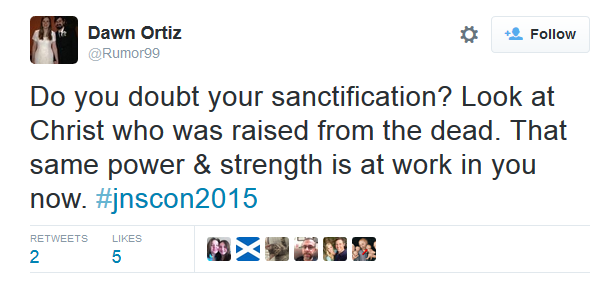
And we who have heard and believe are indeed this. Do you doubt your sanctification? Go forgiven… go in peace…. and look again to the only One who can lift you up – again and again and again, unto the world without end:
FIN
Images: Tullian T. (Wikipedia), Norman N. (issuesetc.org)
Notes:
*Thinking about the possible meanings of words, and how misunderstandings can often occur, it’s understandable some might react against the statement “man, prior to the fall was ‘free to sin'”. That might make it sound like God was indifferent to what they did. We, of course, want to say that man was able to sin, that is “capable of sinning”, but even here it might seem to make more sense to focus on the positive: “man was able not to sin”. On the other hand, saying we were “able to sin” might also help because it, unlike “man was able not to sin”, suggests there should have been nothing likely at all about this possibility, which is certainly the impression given by the text: man caused the greatest of tragedies through his unimaginably stupid and ungrateful deed.
**”God threatens to punish all who transgress these commandments. Therefore we should fear His wrath and do nothing against these commandments. But He promises grace and every blessing to all who keep these commandments. Therefore we should also love and trust in Him and willingly do according to His commandments.”
What, this side of heaven, is the most consequential and important command we will hear? That we believe in the name of God’s Son, Jesus Christ. Note I John 3: “Little children, let us not love in word or talk but in deed and in truth. By this we shall know that we are of the truth and reassure our heart before him; for whenever our heart condemns us, God is greater than our heart, and he knows everything. Beloved, if our heart does not condemn us, we have confidence before God; and whatever we ask we receive from him, because we keep his commandments and do what pleases him. And this is his commandment, that we believe in the name of his Son Jesus Christ and love one another, just as he has commanded us.” (love is there to be sure, but the order is not unimportant here).
***Or do you think the way I am framing things here is somehow less than fully Christian? If that is your evaluation, what do you think about the following?:
“Preachers should be diligent not to preach in generalities, but always to arrange the material according to these parts: sin; God’s wrath and punishment of sin; contrition, remorse, anxiety of the conscience, etc.; the resolve to abandon and avoid sin; the person of Christ; His office and merit; God’s grace; the forgiveness of sin; faith; the good fruits of faith, such as the good resolve to do better, good works, patience in suffering, etc. This is done so that in the sermons, the teaching may always have its application or accommodation to use, as the doctrine should be used in the best way.”
That is from two of the main contributors to the Lutheran “Book of Concord,” Martin Chemnitz and Jacob Andreae, giving a clear explanation of what sermons should be all about “in our Lutheran congregations”.
****Even as he also looks to get away with whatever “sin for a season” he thinks he can get away with.
*****We should always be aware that the non-Christian’s love for others is severely deficient because….
a) it is not bolstered and informed by an underlying love for the Triune God, and hence its ultimate hope and expression does not mirror God’s: the salvation of the whole world through the gifts of His word and sacraments – i.e. people’s rescue and growth in eternal life, that is, knowing God through His Son, Jesus Christ (John 17:3), and
b) of a lack of purity or holiness in fulfilling their love – which of course is supposed to flow through them unhindered from God and be for their neighbor.
Insofar as Christians remain sinners b) is true of our love because a) is true of our love.
Next Post

February 11, 2016 Divine Simplicity
Browse Our Archives
Select a Category American Lutheran Classics Blog Posts Book Review Christian Dogmatics Course Church Resources Curtis Leins Dogmatic Theology Ethics FAQs Historical Theology Just & Sinner Publications Luther Quotations Podcast Sermons The American Lutheran Theological Journal The complete works of Revere Franklin Weidner Theology Proper Uncategorized Videos
Select a Month October 2019 September 2019 July 2019 June 2019 May 2019 April 2019 March 2019 February 2019 January 2019 December 2018 November 2018 October 2018 September 2018 July 2018 June 2018 May 2018 April 2018 March 2018 February 2018 January 2018 December 2017 November 2017 October 2017 September 2017 August 2017 July 2017 June 2017 May 2017 April 2017 March 2017 February 2017 January 2017 December 2016 November 2016 October 2016 September 2016 August 2016 July 2016 June 2016 May 2016 April 2016 March 2016 February 2016 January 2016 December 2015 November 2015 October 2015 September 2015 August 2015 July 2015 June 2015 May 2015 April 2015 March 2015 February 2015 January 2015 December 2014 November 2014 October 2014 September 2014 August 2014 July 2014 June 2014 May 2014
Follow Us!
TAKE THE
Religious Wisdom Quiz
Where did Elijah confront the prophets of Baal?
Select your answer to see how you score.
Mount Zion Mount Sinai Mount Horeb Mount Carmel
Related posts from Just and Sinner

Sola Fide in the Church Fathers
Rev. Lewis Polzin is Back on the Show...

God Knows When We Won't Do Good. And...

Why is Contemporary Conservative Lutheranism So Confused About...
TRENDING AT PATHEOS Evangelical

The REST of Your Life: A Creative Wrestles...
This week I had a conversation with a good friend from church....

How the author of the world's best hymn...
I've been working with John Newton for a while now. This makes...

Long before this Lectio Divina, Psalm 130 - the song - started...

What About the Trees? Another Living Parable
After I finished writing the last article about falling leaves as a...

Why Classical Education Is a Conversation, Not a...
Come and Read: Joy in Classical Education When I was a little...

Cornell University has received a great deal of negative publicity and intense...
view all Evangelical blogs
Ad-Free & Subscriber Log-In Subscription Support
- About Us
- 2026 Calendar
- Videos
- Podcasts
- Library of World Religions
- Faith In Media Tracker
- Advertise With Us
- Write for Us
- Privacy Policy
- Terms of Service
- Do Not Sell My Data
- Contact Us
- Radiant Digital
- Manage Newsletter Subscriptions
- Unsubscribe From Notifications
- Sitemap
Copyright 2008-2026, Patheos. All rights reserved.
Subscription Support Ad-Free & Subscriber Log-In
Follow Patheos