
BuddhistCatholicContemplativeEvangelicalGeneral ChristianHinduJewishLatter-day SaintMuslimNew VisionsProgressive Christian
Beliefs
- Buddhist
- Catholic
- Contemplative
- Evangelical
- General Christian
- Hindu
- Jewish
- Latter-day Saint
- More Voices
- Muslim
- New Visions
- Pagan
- Progressive Christian
Topics
- Religion News
- Food and Religion
- Sports and Religion
- Religious Art
- Religious Music and Entertainment
- Religious Events
- History and Religion
- Style and Religion
- Politics and Religion
- Women in Religion
- Recreation Outdoors and Religion
- Business Finance and Religion
- Careers Workplace and Religion
- Education and Religion
- Family Parenting and Religion
- Health Fitness and Religion
- Home and Religion
- Relationships and Religion
- Technology and Religion
- Travel and Religion
Columnists
- Buddhist Columnists
- Business Finance and Religion Columnists
- Careers Workplace and Religion Columnists
- Catholic Columnists
- Contemplative Columnists
- Education and Religion Columnists
- Evangelists Columnists
- Family Parenting and Religion Columnists
- General Christian Columnists
- Health Fitness and Religion Columnists
- Hindu Columnists
- History and Religion Columnists
- Home and Religion Columnists
- Jewish Columnists
- More Voices Columnists
- Latter Day Columnists
- Muslim Columnists
- New Visions Columnists
- Nonreligious Columnists
- Pagan Columnists
- Politics and Religion Columnists
- Progressive Columnists
- Recreation Outdoors and Religion Columnists
- Relationships and Religion Columnists
- Religion News Columnists
- Religious Art Columnists
- Religious Events Columnists
- Religious Music and Entertainment Columnists
- Sports and Religion Columnists
- Style and Religion Columnists
- Technology and Religion Columnists
- Travel and Religion Columnists
- Women in Religion Columnists
Resource Library
- 2026 Calendar
- Library of World Religions
- The 100 Most Holy Places on Earth
- Patheos Answers
- Podcasts
- Videos
- Faith Leaders Database
- Anglican Episcopalian
- Bahai
- Baptist
- Buddhism
- Christianity
- Confucianism
- Eastern Orthodoxy
- Hinduism
- Holiness and Pentecostal
- ISKCON
- Islam
- Judaism
- Lutheran
- Methodist
- The Church of Jesus Christ of Latter-day Saints
- New Age
- Paganism
- Presbytarian and Reformed
- Protestantism
- Religion Behind the Scenes
- Roman Catholic
- Scientology
- Shia Islam
- Sikhism
- Sufism
- Sunni Islam
- Taoism
- Zen
- See all religions
Research Tools
 Ad-Free & Subscriber Log-In Subscription Support
Ad-Free & Subscriber Log-In Subscription Support
Follow Patheos 

- Trending:
- Forgiveness
- |
- Marriage
- |
- Consciousness
- |
- Death Penalty
- |
- Election
- |
- Halloween
 Just and Sinner
- Home
- Evangelical
- The End of Protestantism?
The End of Protestantism?
Last updated on: June 3, 2014 at 1:54 am by Jordan Cooper
The End of Protestantism? 2014-06-03T01:54:32-06:00 Jordan Cooper
Patheos Explore the world's faith through different perspectives on religion and spirituality! Patheos has the views of the prevalent religions and spiritualities of the world.
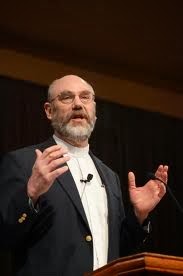
Peter Leithart recently posted a provocative article on First Things titled “The End of Protestantism.” In this article, Leithart argues that there is a divergence between what he labels “Reformation catholicism,” and “Protestantism.” Protestantism, he argues, has been characterized by it’s strong aversion to anything viewed as Roman Catholic. He writes:
“When I studied at Cambridge, I discovered that English Evangelicals define themselves over against the Church of England. Whatever the C of E is, they ain’t. What I’m calling “Protestantism” does the same with Roman Catholicism. Protestantism is a negative theology; a Protestant is a not-Catholic. Whatever Catholics say or do, the Protestant does and says as close to the opposite as he can.”
This anti-Roman Catholicism has characterized many Christian traditions since the Reformation, as Rome has been viewed as the ultimate enemy of the Gospel, and anything resembling her must be destroyed. This was primarily the attitude of the Anabaptists and others who are considered part of the “radical reformation,” rather than the traditional Confessional church bodies.
Anyone who is part of a Lutheran or Anglican church has heard the retort from their Baptist and evangelical friends and neighbors, that their worship too closely resembles the “great whore” or whatever other derogatory name they apply to the Roman Catholic church. The best of Reformation traditions attempted to be truly catholic in their beliefs and practices, keeping those elements of the medieval church that were Biblical, while rejecting aspects of theology and worship which were contrary to the Gospel.
Part of this article hinges on the use of the term “Protestant.” Historically, Protestantism referred to the Confessional Reformed and Lutheran traditions, as opposed to the Roman Catholic and Anabaptist movements. In the contemporary church, Protestantism has been the term applied broadly to any church that is not Roman Catholic. Roman Catholic apologists, for example, will commonly lump Mormons, Jehovah’s Witnesses, and other heretical fringe groups in with “Protestantism.” The name “Protestant,” like the name “evangelical” no longer has any particular meaning, other than stating that one is “not Roman Catholic.” That’s why most Lutherans, many Anglicans, and some Presbyterians have rejected the use of the term.
Leithart is absolutely correct that what is needed is a Reformational catholicism. What the contemporary church needs is to find it’s historical roots, and identify itself not simply with the church of the Reformation, but with the historic church–and that doesn’t just mean Augustine. We need to view ourselves as the church of Justin Martyr, of Chrysostom, Bernard, and even Aquinas. That doesn’t, of course, mean absolute agreement with all of these figures, but we need to recognize them as our forefathers as much as Rome sees them as theirs.
The question I have often asked of Leithart and others involved in the Federal Vision movement, is: why Presbyterian? In some ways, articles like this tend to search for catholicism in Reformed Christianity where it simply is not there. The Lutheran Confessions contain citations from the fathers and medieval theologians along with Scripture to defend their teachings; the Reformed Confessions don’t do this. This points to what I think has historically been a difference between Lutheran and Reformed Christianity. Lutheranism has generally seen itself (as has Anglicanism) as a branch of the historic Western church in a way that Calvinism hasn’t. Certainly figures like Augustine and even Aquinas have been influential for certain Reformed writers, but there has not been a consistent emphasis on the continuity of the church.
Luther’s Reformation kept the traditional Roman Mass with some necessary changes, while Zwingli rejected the traditional Roman service. While Calvin certainly held to a liturgical form of worship, the insistence on the regulative principle of worship essentially cut off the Reformed from continuity of worship with the patristic and medieval church. The Mercersburg and Federal Vision movements certainly are valuable in their insistence on the catholicity of the church. I simply don’t think such a stance can be consistently held from Reformed perspective, which is why the Federal Vision proponents have been so vigorously attacked in Confessional Presbyterianism.
R. Scott Clark quickly posted a rebuttal to Leithart titled: “Contra Leithart: No, the Reformation isn’t Over.” I don’t want to speak for Leithart, but I don’t think he indicated in the article that the Reformation is now over. He is simply trying to point the heirs of the Reformation back to a catholic rather than a sectarian understanding of the faith; this is consistent with the thought of many of the reformers themselves. Clark’s conclusion in his post is:
“The Reformation isn’t over, not at least for the confessional Protestant churches, who don’t equivocate, who understand what Rome is really saying, who still submit to the Word of God as the sole, unique authority for faith and life, who affirm the sole sufficiency of Christ and righteousness for us for acceptance with God, for salvation from wrath, and for sanctification, who are resting in Christ and in his finished work for us, and who find their assurance in Christ for us and his promises to us.“
Clark’s point is correct. The Reformation is not over, and the difference that divide us are deep and important. We cannot simply ignore our difference and pretend the issues the reformers had with Rome have now suddenly been fixed. We still disagree over Sola Scriptura, as well as Sola Gratia, and Sola Fide. We can’t simply ignore these issues in the interest of ecumenism. However, the fact that the Reformation is still important does not necessitate Clark’s assertion that Rome is a false church. Can’t we, as a church, recognize our catholic heritage without having to compromise our Reformational beliefs on the one hand, and condemning all Roman Catholics to hell on the other?
Previous Post

June 3, 2014
Cyril of Alexandria on the Importance of Having a Divine High Priest
Next Post
June 3, 2014 Characteristics of Lutheran Antinomianism
Browse Our Archives
Select a Category American Lutheran Classics Blog Posts Book Review Christian Dogmatics Course Church Resources Curtis Leins Dogmatic Theology Ethics FAQs Historical Theology Just & Sinner Publications Luther Quotations Podcast Sermons The American Lutheran Theological Journal The complete works of Revere Franklin Weidner Theology Proper Uncategorized Videos
Select a Month October 2019 September 2019 July 2019 June 2019 May 2019 April 2019 March 2019 February 2019 January 2019 December 2018 November 2018 October 2018 September 2018 July 2018 June 2018 May 2018 April 2018 March 2018 February 2018 January 2018 December 2017 November 2017 October 2017 September 2017 August 2017 July 2017 June 2017 May 2017 April 2017 March 2017 February 2017 January 2017 December 2016 November 2016 October 2016 September 2016 August 2016 July 2016 June 2016 May 2016 April 2016 March 2016 February 2016 January 2016 December 2015 November 2015 October 2015 September 2015 August 2015 July 2015 June 2015 May 2015 April 2015 March 2015 February 2015 January 2015 December 2014 November 2014 October 2014 September 2014 August 2014 July 2014 June 2014 May 2014
Follow Us!
TAKE THE
Religious Wisdom Quiz
What is the Christian attitude toward one's enemies?
Select your answer to see how you score.
Love them Ignore them Fight them Mock them
Related posts from Just and Sinner

Does Revelation 12 Teach the Bodily Assumption of...
The Invocation of the Saints is Not a...

So...which Christians are really Christians?

The Church Fathers' Interpretation of the Rock of...
TRENDING AT PATHEOS Evangelical

The REST of Your Life: A Creative Wrestles...
This week I had a conversation with a good friend from church....

How the author of the world's best hymn...
I've been working with John Newton for a while now. This makes...

Long before this Lectio Divina, Psalm 130 - the song - started...

What About the Trees? Another Living Parable
After I finished writing the last article about falling leaves as a...

Why Classical Education Is a Conversation, Not a...
Come and Read: Joy in Classical Education When I was a little...

Cornell University has received a great deal of negative publicity and intense...
view all Evangelical blogs
Ad-Free & Subscriber Log-In Subscription Support
- About Us
- 2026 Calendar
- Videos
- Podcasts
- Library of World Religions
- Faith In Media Tracker
- Advertise With Us
- Write for Us
- Privacy Policy
- Terms of Service
- Do Not Sell My Data
- Contact Us
- Radiant Digital
- Manage Newsletter Subscriptions
- Unsubscribe From Notifications
- Sitemap
Copyright 2008-2026, Patheos. All rights reserved.
Subscription Support Ad-Free & Subscriber Log-In
Follow Patheos