
BuddhistCatholicContemplativeEvangelicalGeneral ChristianHinduJewishLatter-day SaintMuslimNew VisionsProgressive Christian
Beliefs
- Buddhist
- Catholic
- Contemplative
- Evangelical
- General Christian
- Hindu
- Jewish
- Latter-day Saint
- More Voices
- Muslim
- New Visions
- Pagan
- Progressive Christian
Topics
- Religion News
- Food and Religion
- Sports and Religion
- Religious Art
- Religious Music and Entertainment
- Religious Events
- History and Religion
- Style and Religion
- Politics and Religion
- Women in Religion
- Recreation Outdoors and Religion
- Business Finance and Religion
- Careers Workplace and Religion
- Education and Religion
- Family Parenting and Religion
- Health Fitness and Religion
- Home and Religion
- Relationships and Religion
- Technology and Religion
- Travel and Religion
Columnists
- Buddhist Columnists
- Business Finance and Religion Columnists
- Careers Workplace and Religion Columnists
- Catholic Columnists
- Contemplative Columnists
- Education and Religion Columnists
- Evangelists Columnists
- Family Parenting and Religion Columnists
- General Christian Columnists
- Health Fitness and Religion Columnists
- Hindu Columnists
- History and Religion Columnists
- Home and Religion Columnists
- Jewish Columnists
- More Voices Columnists
- Latter Day Columnists
- Muslim Columnists
- New Visions Columnists
- Nonreligious Columnists
- Pagan Columnists
- Politics and Religion Columnists
- Progressive Columnists
- Recreation Outdoors and Religion Columnists
- Relationships and Religion Columnists
- Religion News Columnists
- Religious Art Columnists
- Religious Events Columnists
- Religious Music and Entertainment Columnists
- Sports and Religion Columnists
- Style and Religion Columnists
- Technology and Religion Columnists
- Travel and Religion Columnists
- Women in Religion Columnists
Resource Library
- 2026 Calendar
- Library of World Religions
- The 100 Most Holy Places on Earth
- Patheos Answers
- Podcasts
- Videos
- Faith Leaders Database
- Anglican Episcopalian
- Bahai
- Baptist
- Buddhism
- Christianity
- Confucianism
- Eastern Orthodoxy
- Hinduism
- Holiness and Pentecostal
- ISKCON
- Islam
- Judaism
- Lutheran
- Methodist
- The Church of Jesus Christ of Latter-day Saints
- New Age
- Paganism
- Presbytarian and Reformed
- Protestantism
- Religion Behind the Scenes
- Roman Catholic
- Scientology
- Shia Islam
- Sikhism
- Sufism
- Sunni Islam
- Taoism
- Zen
- See all religions
Research Tools
 Ad-Free & Subscriber Log-In Subscription Support
Ad-Free & Subscriber Log-In Subscription Support
Follow Patheos 

- Trending:
- Forgiveness
- |
- Marriage
- |
- Consciousness
- |
- Death Penalty
- |
- Election
- |
- Halloween
 Just and Sinner
- Home
- Evangelical
- Should We Learn from the 16th Century Lutherans’ Views of Church and State?
Should We Learn from the 16th Century Lutherans’ Views of Church and State?
Last updated on: March 5, 2019 at 6:09 am by nathanrinne
Should We Learn from the 16th Century Lutherans’ Views of Church and State? 2019-03-05T06:09:55-06:00 nathanrinne
Patheos Explore the world's faith through different perspectives on religion and spirituality! Patheos has the views of the prevalent religions and spiritualities of the world.

If a pastor says to kings and princes…. ‘Consider and fear God and keep his commandments’ he is not meddling in the affairs of secular authorities… — Luther (picture of the Apostle Paul before Agrippa)
+++
Did any kind of “separation of Church and State” exist for 16th-century Lutherans?
Is there anything that we can or even should learn from them today? This post seeks to intelligently start the conversation…
Undoubtedly, more and more these days, issues of church and state are on the minds of Christians.
Fellow Patheos blogger D.G. Hart has an interesting column about the dust-up surrounding Jerry Falwell Jr.’s fairly recent comments, and writing in The Week, Damon Linker talks about Christian cultural commentator Rod Dreher’s proposed book project exploring what an impending socialism might mean for Christianity:
Dreher is proposing to adapt and apply [the argument of Polish writer and former anti-Communist dissident Ryszard Legutko] to the United States, describing a country confronting what he calls the “Woke Menace” of a newly radicalized and emboldened left that aims to centralize power and stamp out all dissent. Those who believe in the sanctity of traditional marriage, who think that the free exercise of religion goes beyond worshipping in church and private homes, who therefore believe that devout Christians (and Jews and Muslims) should be free (in some instances) to discriminate against homosexuals and the transgendered, who consider abortion to be murder and abortion in the third trimester to be infanticide — Americans who hold these and similar views find themselves confronting the prospect of a party gaining power that considers every one of these positions not just erroneous but fundamentally illegitimate, beyond the moral pale, rooted in irrational animus and bigotry, and worthy of being excommunicated from public life.
And many will think (even if they don’t say it out loud quite yet): “Why not? Separation of church and state, right?”
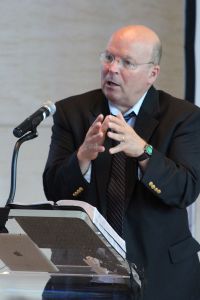
“The modern world drove the church out of the state and into the soul.” — Scot McKnight (215, Kingdom Conspiracy)
Let’s explore all of this a bit more… look at the history.
Unlike the religions of Islam and Judaism–and basically every religion in world history for that matter–Christianity is unique in the big distinction it makes between God’s government and man’s government. Certainly, one of Jesus’ most well-known sayings – besides “love your enemies”! – is “Give to Caesar what is Caesar’s, and God what is God’s”.

A little less known saying: “Then the children [of God] are exempt [from taxes]. But so that you do not cause offense… ” (see Matthew 17:24-27)
And just what, following up on St. Augustine’s distinction between the “City of God” and the “City of man,” is the nature and character of Martin Luther’s Reformation “doctrine of the two kingdoms”? Let’s now both introduce and seek to “problematize” the question.
Different answers have been given at different times, so it makes sense to revisit what the 1530 Augsburg Confession, the earliest Lutheran Confessional document and a document specifically responding to the abuses of the Roman Catholic Church, has to say about the issue:
“[E]cclesiastical and civil power are not to be confused. The power of the church has its own commission to preach the Gospel and administer the sacraments. Let it not invade the other’s function, nor transfer the kingdoms of the world, nor abrogate the laws of civil rules, nor abolish lawful obedience, nor interfere with judgements concerning any civil ordinances or contracts, nor prescribe to civil rulers laws about the forms of government that should be established. Christ says, “My kingdom is not of this world” [Jn. 18:36] and again, “Who made me a judge or divider over you?” [Lk. 12:14]. Paul also wrote in Phil. 3:20, “Our commonwealth is in heaven,” and in II Cor. 10:4,5, “The weapons of our warfare are not worldly but have divine power to destroy arguments,” etc.
In this way our teachers distinguish the functions of the two powers, and they command that both be held in honor and acknowledged as gifts and blessings of God (see Tappert, p. 83, The Book of Concord, bold mine).

“Render to Caesar the things that are Caesar’s; and to God the things that are God’s.” — Matthew 22:21
In many ways, this description of the two kingdoms sounds a lot like the modern American concept of “separation of church and state,” does it not?[i]
At the same time, how did persons look at this kind of thing in the past, particularly those whose nations had adopted Christianity, like the nations in the Middle East (before Muhammad begin to change that around the 7th c. A.D.) Rome, and many European nations as well?[ii] Particularly interesting here are the views of the Christian theologian Martin Chemnitz, who, many years after the rise of Christianity in general and Lutheranism in particular in his native Germany, wrote the following in his Loci Theologici (late 16th century) regarding the fourth commandment, “honor your father and your mother”.
It is fascinating reading from a day gone by….
At this point…we shall make only a brief explanation regarding the duties of government officials. The Decalog prescribes that they are to be the fathers of those who are subject to them, cf. 1 Peter 2:14; Rom. 13:3-4. These are general principles. The specifics can be very easily determined from the list which has been drawn up, as they are categorized in 1 Tim. 2:2;
[1.] The first duty of a ruler is to care for those who are subject to him, so that they may “live in godliness,” that is, this first concern must be for their religion, that they true doctrine may be taught to the people and they may be instructed in the true worship, kept from outward blasphemies and godless forms of worship and whatever else is a detriment to piety. In Judg. 17:5-6 the account of the idolatry of Micah is described when there was no king in Israel and “every man did what was right in his own eyes,” cf. Is. 49:23. For this reason it is the duty of government officials to be supportive of churches and schools, to provide for them and protect them, cf. Ps. 2:11-12; 47:9. Therefore the ruler must by his own confession be a good example to others. Here, note the examples of David, Solomon, Jehoshaphat, Hezekiah, and others.
[2.] The duty of the ruler is to see that the people “live in honesty,” that is, they are to establish and defend external order and not tolerate anything in conflict with it. The ruler must establish discipline, as it is written in Deut. 17:18, “Let the king receive a copy of this book (Deuteronomy) and let him write a copy of it and read it all the days of his life,” that is, let him rule according to the Decalog. And I Peter 2:13, “Let him rule according to the ordinance of men,” that is, in keeping with laws which are favorable and which are keeping with the law of nature.
[3.] It is the duty of the ruler to see that the people “live a quiet life,” that is, he must be concerned about the physical welfare of his subjects, as Joseph was, and not burden them down, disturb them, or jeopardize their property but rather nurture them, love them, and shower them with all good things, I Peter 2:14; Rom. 13:3. They must not be a terror for those who are good.
[4.] It is the duty of rulers to see that the people lead “a peaceable life.” This refers to the fact that rulers are to defend the bodies and properties of their subjects against the violence and injustice and thus protect the peace.
[5.] The ruler is to “execute wrath upon evildoers,” Rom. 13:4, that is, he is to compel them with force and physical punishments to obey the laws and he is to chastise the stubborn by court judgments, legal penalties, or wars. For “he does not bear the sword in vain,” Rom. 13:4.
[6.] He is to execute judgement. There is a description of a good judge in Deut. 1:16-17; Exodus 23; and 2 Chronicles 19. (v. 2, 400-401, bold mine).
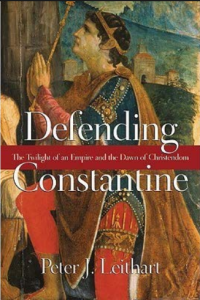
“A Church isn’t proclaiming the full biblical gospel unless it calls kings and nations to acknowledge and serve the king of kings.” — Peter Leithart, author of Defending Constantine.
+++
Later on, Chemnitz writes about the civil use of the law, or its first use.
Again, this is a different world. Since Chemnitz’s thoughts are so foreign even for devout Lutherans today, I am opting not to summarize, but quote in full:
“Properly the question is not whether the magistrate has the power to establish laws to which we must give obedience. But regarding the Decalog or the divine law the question is whether its teaching is to be set forth to those who are not truly repentant or whether it is useful to compel the unregenerate to obey or be forced under the doctrine of the divine law, so that they do not commit outward sins. The teaching of the civil law must be dealt with primarily to give an explanation to the very difficult argument which has arisen over the use of the Law over the unregenerate. This has caused a serious disturbance. For Scripture simply affirms, “Whatsoever is not of faith is sin,” Rom. 14:23; again, “An evil tree cannot bring forth good fruit,” Matt. 7:7. But because God does not will iniquity, therefore they seem to be doing wrong who do not want or force the unregenerate not to commit outward sins, for no person should be encouraged to sin and it is a sin to ignore discipline in the unregenerate. At this point voices are raised that it is more advisable that the unregenerate wallow around in every kind of crime rather than to some degree control their habits by any kind of morality, for “it is easier for the harlots and the publicans to enter into grace than for the Pharisees,” Matt. 21:31. It is correct to say this if we attach the concept of works righteousness to this discipline under the article on the remission of sins; but, on the other hand, it is certain that God earnestly demands obedience or discipline even from the unregenerate, so that even in this life He punishes the violation of His law with terrifying penalties and gives external rewards to those who live under His discipline, even the unregenerate.
In opposition to this the scholastics say that it is a cruel idea found in the Master of the Sentences [Lombard] when he says, “The whole life of the unbeliever is sin.” They say that to the man who does the best that is in him, God always gives His grace. This argument greatly disturbed Erasmus, for he says: “Is it all the same whether Socrates lives an honorable life or gives his mother poison or dishonors his sister?” Again, “If discipline does not merit the remission of sins, at least it renders the mind more open to grace. Socrates will be better prepared and more suited to receive grace than Phalaris will.” There is no doubt that this is a difficult argument. It cannot be settled more simply, more correctly, and more easily than on the basis of the doctrine of the civil use of the Law. We must be careful that we do not apply the pedagogical use of the Law to this point, as if there is in the unregenerate a certain preparation of for grace; but the matter must remain within the boundaries of the civil use because in this way men can be taught about the Gospel, through which later on the Holy Spirit is efficacious. For the doctrine of the Word of God cannot be taught when crime rules. Likewise, because in those who try to govern their morals by honorable discipline, there are many shameful lapses and their hearts remain impure. Therefore outward discipline instructs us to find out where righteousness comes from. This can most correctly be discovered in I Timothy 1 and Romans 1 and 2. (v. 2; 439, 440, bold mine)
+++

“Or do you not know that the Lord’s people will judge the world?” “If we endure, we will also reign with him.” – the Lord’s Apostle, Paul
Is this a massive confusion of spiritual and political powers on Chemnitz’s part? This was a different time, to be sure, even as one notes key phrases from Chemnitz that indicate the questions many in his own time had: “this has caused a serious disturbance”, “they seem to be doing wrong…” (we note the less than full-throated condemnation!).
In any case, one can see that Chemnitz’s own understanding of the role of Christianity in the “Kingdom of the left,” i.e. civil government, is worlds apart from that of most modern Lutherans, even conservative 20th century champions like Francis Pieper (see first footnote below), Kurt Marquart[iii], and Herman Sasse[iv] (see “The Social Doctrine of the Augsburg Confession” in The Lonely Way, v. 1). The duties of Christian clergy and secular rulers were certainly very distinct (note that secular here means “of the world” or “of the earth,” not “opposed to God”). Nevertheless, one is taken aback with how much religious duties – nay particularly Christian responsibilities – fall on the shoulders of the secular ruler.
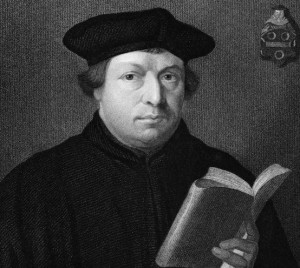
“God intends the secular Regiment to be a model of… the kingdom of heaven” — Luther
Another relevant comment here, even though I doubt it will do much good for those determined to be upset at “Christians who seek dominance”: Please note that, strictly speaking, none of what Chemnitz says really fits the specific criteria for what we today call theonomy[v] or theocracy[vi] (see Chemnitz, Loci Theologici, v. 2, 347 ; also, people who want to bring up things like shellfish really need to read Acts 10-15, and, if they really want to dig deep, can read pp. 235-301 in John Gerhard’s early 17th c. work On the Law)
And…as I have argued, if the Western world is going to remain itself, if it is going to persist, it must regain wisdom (see series from five years ago here).
This means it is going to need to find ways to honestly come to grips with its Christian heritage in some way, shape, or form,[vii] and to give thanks to God–to Jesus Christ–for its true blessings (no, “Judeo-Christian values” will not cut it). Obviously, this is going to be more difficult to do–and yes, perhaps it is impossible to do–when Christian influence and true faith has waned as much as it has (see footnote 7 below).

“Aristotle… requires that a legislator pay careful attention to the situation and the people, because there is a remarkable dissimilarity among peoples and different temperaments for different places.” — John Gerhard, On the Law, 296) (pictured: Aristotle)
One more important note here: in my last post, I pointed out that Scot McKnight, insists that Christians attempting to influence government in a Christian direction (in order to back up the Christian voices, for example) necessarily means that Christians are giving final authority to the state (216-217, Kingdom Conspiracy). What really, does this mean (I did email McKnight and he replied but not with an answer to that question)?
On the contrary, God does expect today’s rulers to “Kiss the Son,” lest He be angry…
Even if a country like America had a government which explicitly acknowledged its Christian heritage… Even if it defended it and perhaps embraced it… Acts 5:29 would *still apply to each individual believer.*

Finally, for those who really want to dig deeply into this topic–in both a highly intelligent and very culturally aware way–I recommend the following no-nonsense lecture from Dr. Eric Phillips, The Responsibilities of the Christian Prince According to Augustine, Luther, and America, below:
FIN
Notes:
[i] Francis Pieper, the highly respected America Lutheran theologian writing in the early 20th century, certainly seems to have thought so:
“The principles of Christ’s rule over His Church are subverted by those who intermingle the secular realm with the Kingdom of Grace, that is, who intermingle Church and State. This includes (1) those who turn the Church into a worldly kingdom by attempting to build the Church with earthly, or worldly, means (external power, natural morality, culture, etc.). Instead of employing solely the Word of God, thus eo ipso destroying the distinctive character of the Church; (2) those who would make of the State a spiritual Kingdom by attempting to rule the State not by reason, but by the Word of God, by “Christian principles” (Christian Dogmatics II: 392-393).
[ii] Yes, we all know that the sword was used in this or that case by Christians, or those claiming Christ at least,g to “convert”. Let’s look at the less controversial situations though and take it from there: Once large groups of people begin moving from darkness to light, is assistance also not necessary to help cultures take active steps to transform themselves politically to accommodate the Christian way of life – whether we are talking more or less radical changes? After all, while not becoming radical Protestants who would consider rebellion against rulers not sufficiently Christian or friendly to Christianity, surely we can at least imagine saying that we must obey God rather than men in circumstances beyond simply the freedom to preach the simple message of Christ crucified and risen – and taking stands as we are called by our circumstances to do so.
[iii] Marquart writes in his essay “The Two Realms (Kingdoms) in the Lutheran Confessions“:
“When addressing non-Christians the church’s preachment of the law is bounded by her missionary commitment (Mt. 28:19-20), hence limited to the second (“theological”) use. While the Table of Duties (second and third uses) must be proclaimed to all Christians (including rules), governments and states as such are accountable to God not through the church but through all who have standing under Rom. 13:1-7 (ultimately even the general citizenry), and by way of natural reason and law (first use). (God and Caesar Revisited, Lutheran Academy Conference Papers, no. 1, 1995, p. 46).
[iv] Sasse, in his essay “The Social Doctrine of the Augsburg Confession” in The Lonely Way, v. 1:
“There is as little possibility of a Christian state as there is of Christian agriculture and Christian technology…. There is no Christian order for society, for that would be an attempt to make sin disappear in the world, that love would take the place of law, in other words, that the kingdom of God would have come in glory…. (93) The task of the church over against the governing authorities is an especially difficult responsibility. It must guard itself against any illusion of a “Christian state” and must limit itself” (99).
[v] From Wikipedia: “Theonomy, from theos (god) and nomos (law), is a hypothetical Christian form of government in which society is ruled by divine law.[1] Theonomists hold that divine law, including the judicial laws of the Old Testament, should be observed by modern societies” (italics mine).
[vi] One popular definition: “a system of government in which priests rule in the name of God or a god.”
[vii] Relevant quote from Luther to ponder. Luther’s talk about “rul[ing] it in [an] evangelical manner” being impossible means that people will not be effectively governed by the Gospel alone, without the use of force and coercion… (“To rule the world with the gospel would be like a shepherd putting wolves, lions, eagles and sheep all together in the same fold…. The sheep will indeed follow the way of peace, but not for long,” he said elsewhere).
“Certainly it is true that Christians, so far as they themselves are concerned, are subject neither to law nor sword, have need of either. But take heed and first fill the world with real Christians before you attempt to rule it in a Christian or evangelical manner.
This you will never accomplish; for the world and the masses are and always will be un-Christian, even if they are all baptized and Christian in name. Christians are few and far between (as they say is). Therefore, it is out of the question that there should be a common Christian government over the whole world, or indeed over a single country or any considerable body of the people, for the wicked always outnumber the good.” (Temporal Authority: To What Extent it Should Be Obeyed)
Images: Scot McKnight CC BY-SA 3.0, Wikipedia
Previous Post
February 27, 2019
Q&A Program February 27, 2019
Next Post
March 20, 2019 A Discussion of the Recent Debates on Social Justice
Browse Our Archives
Select a Category American Lutheran Classics Blog Posts Book Review Christian Dogmatics Course Church Resources Curtis Leins Dogmatic Theology Ethics FAQs Historical Theology Just & Sinner Publications Luther Quotations Podcast Sermons The American Lutheran Theological Journal The complete works of Revere Franklin Weidner Theology Proper Uncategorized Videos
Select a Month October 2019 September 2019 July 2019 June 2019 May 2019 April 2019 March 2019 February 2019 January 2019 December 2018 November 2018 October 2018 September 2018 July 2018 June 2018 May 2018 April 2018 March 2018 February 2018 January 2018 December 2017 November 2017 October 2017 September 2017 August 2017 July 2017 June 2017 May 2017 April 2017 March 2017 February 2017 January 2017 December 2016 November 2016 October 2016 September 2016 August 2016 July 2016 June 2016 May 2016 April 2016 March 2016 February 2016 January 2016 December 2015 November 2015 October 2015 September 2015 August 2015 July 2015 June 2015 May 2015 April 2015 March 2015 February 2015 January 2015 December 2014 November 2014 October 2014 September 2014 August 2014 July 2014 June 2014 May 2014
Follow Us!
TAKE THE
Religious Wisdom Quiz
What does "Boaz" mean in Hebrew?
Select your answer to see how you score.
God is my salvation Righteous One Redeemer Strength
Related posts from Just and Sinner

Is Andres Manuel Lopez Obrador the “Moral Shakedown...
Does God Expect Rulers Today to "Kiss the...
Can Unbelievers Seek God? And What is the...
What does the LC-MS document “When Homes are...
TRENDING AT PATHEOS Evangelical

How the author of the world's best hymn...
I've been working with John Newton for a while now. This makes...

Long before this Lectio Divina, Psalm 130 - the song - started...

What About the Trees? Another Living Parable
After I finished writing the last article about falling leaves as a...

Why Classical Education Is a Conversation, Not a...
Come and Read: Joy in Classical Education When I was a little...

Falling Leaves: A Living Parable on Letting Go
I’ve spent the vast majority of my life in the southeast corner...

Cornell University has received a great deal of negative publicity and intense...
view all Evangelical blogs
Ad-Free & Subscriber Log-In Subscription Support
- About Us
- 2026 Calendar
- Videos
- Podcasts
- Library of World Religions
- Faith In Media Tracker
- Advertise With Us
- Write for Us
- Privacy Policy
- Terms of Service
- Do Not Sell My Data
- Contact Us
- Radiant Digital
- Manage Newsletter Subscriptions
- Unsubscribe From Notifications
- Sitemap
Copyright 2008-2026, Patheos. All rights reserved.
Subscription Support Ad-Free & Subscriber Log-In
Follow Patheos