
BuddhistCatholicContemplativeEvangelicalGeneral ChristianHinduJewishLatter-day SaintMuslimNew VisionsProgressive Christian
Beliefs
- Buddhist
- Catholic
- Contemplative
- Evangelical
- General Christian
- Hindu
- Jewish
- Latter-day Saint
- More Voices
- Muslim
- New Visions
- Pagan
- Progressive Christian
Topics
- Religion News
- Food and Religion
- Sports and Religion
- Religious Art
- Religious Music and Entertainment
- Religious Events
- History and Religion
- Style and Religion
- Politics and Religion
- Women in Religion
- Recreation Outdoors and Religion
- Business Finance and Religion
- Careers Workplace and Religion
- Education and Religion
- Family Parenting and Religion
- Health Fitness and Religion
- Home and Religion
- Relationships and Religion
- Technology and Religion
- Travel and Religion
Columnists
- Buddhist Columnists
- Business Finance and Religion Columnists
- Careers Workplace and Religion Columnists
- Catholic Columnists
- Contemplative Columnists
- Education and Religion Columnists
- Evangelists Columnists
- Family Parenting and Religion Columnists
- General Christian Columnists
- Health Fitness and Religion Columnists
- Hindu Columnists
- History and Religion Columnists
- Home and Religion Columnists
- Jewish Columnists
- More Voices Columnists
- Latter Day Columnists
- Muslim Columnists
- New Visions Columnists
- Nonreligious Columnists
- Pagan Columnists
- Politics and Religion Columnists
- Progressive Columnists
- Recreation Outdoors and Religion Columnists
- Relationships and Religion Columnists
- Religion News Columnists
- Religious Art Columnists
- Religious Events Columnists
- Religious Music and Entertainment Columnists
- Sports and Religion Columnists
- Style and Religion Columnists
- Technology and Religion Columnists
- Travel and Religion Columnists
- Women in Religion Columnists
Resource Library
- 2026 Calendar
- Library of World Religions
- The 100 Most Holy Places on Earth
- Patheos Answers
- Podcasts
- Videos
- Faith Leaders Database
- Anglican Episcopalian
- Bahai
- Baptist
- Buddhism
- Christianity
- Confucianism
- Eastern Orthodoxy
- Hinduism
- Holiness and Pentecostal
- ISKCON
- Islam
- Judaism
- Lutheran
- Methodist
- The Church of Jesus Christ of Latter-day Saints
- New Age
- Paganism
- Presbytarian and Reformed
- Protestantism
- Religion Behind the Scenes
- Roman Catholic
- Scientology
- Shia Islam
- Sikhism
- Sufism
- Sunni Islam
- Taoism
- Zen
- See all religions
Research Tools
 Ad-Free & Subscriber Log-In Subscription Support
Ad-Free & Subscriber Log-In Subscription Support
Follow Patheos 

- Trending:
- Forgiveness
- |
- Marriage
- |
- Consciousness
- |
- Death Penalty
- |
- Election
- |
- Halloween
 Just and Sinner
- Home
- Evangelical
- Resolved: Why We Should Recognize, not Emphasize, the Christian’s Freed, New Will
Resolved: Why We Should Recognize, not Emphasize, the Christian’s Freed, New Will
Last updated on: January 5, 2017 at 5:55 am by nathanrinne
Resolved: Why We Should Recognize, not Emphasize, the Christian’s Freed, New Will 2017-01-05T05:55:00-06:00 nathanrinne
Patheos Explore the world's faith through different perspectives on religion and spirituality! Patheos has the views of the prevalent religions and spiritualities of the world.
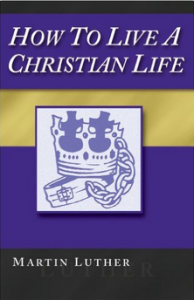
A recent translation of Martin Luther’s “On Christian Freedom,” retitled, from Lutheran Press.
There is a brutal honesty in the 16th century Lutheran Confessional documents. At one point, we are asked the question:
“Who does not frequently doubt whether human affairs are ruled by God’s counsel or by chance? Who does not frequently doubt whether he be heard by God?”
Still, the God revealed in the Bible ultimately delivers faith and certain hope. In Jesus Christ, there is forgiveness, life and salvation. The sure and full transformation of the world – and we who believe to – is coming! And because God is free (II Cor. 3:17), He makes us free, and we have the beginnings of this now (whether you see it or not! – see II Cor. 3:18).
Therefore, a la Paul in Romans 12:1-2, we are resolved.
And did you, in your Christian liberty, decide to make a New Year’s resolution this year? If not, that is certainly not a problem. A couple of years ago however, Tullian Tchividjian got some major media attention for saying that things like New Year’s resolutions were a part of the problem! He complained thusly:
“….underneath our New Year’s resolutions is the drive to save ourselves by generating our own value, significance, meaning, and security by what we do and by who we can become.” (see here)
I use Tchividjian’s argument, not as a reason to pile on him (as he has certainly had some major difficulties of late, to say the least), but because I think his words can very effectively lead us into reflection on this important issue.
After all, had Tchividjian spoken about the drive that lies underneath many New Year’s Resolutions,[i] he would undoubtedly have been correct. And even if we, through God’s Holy Spirit, resist the impulse that tells us we can stand before God’s throne of judgment by what we have done in our earthly lives, we nevertheless tend to believe that we can at least, through freely chosen actions enacted through the sheer power of our will, be masters of our own fate. A kind of “gorilla mindset”, as a popular bestseller puts it, is all we really need to attain the good…the success…we seek.
And of course, in America in the early 21st century, the idea of human freedom has reached fantastically absurd proportions. It was almost 25 years ago that a majority on the United States Supreme Court (!) said, with a straight face, “[a]t the heart of liberty is the right to define one’s own concept of existence, of meaning, of the universe, and of the mystery of human life.” Or, as a Sprint advertisement put it succinctly a few years ago – at least in regards to our digital uploading powers! – “I have a right to be unlimited”! (here)
Luther on gods not strong and free enough to save: “the Gentiles have asserted an inescapable fate…for their gods” who cannot foresee future events or are deceived by events.”
I think it is helpful to think about this concept of the freedom of the human will – and how we certainly can effect change in the world – in a larger context. Led by the West, the predominant themes in the world today – even taking into consideration recent events – are arguably those of progress and destiny (similar to the notion of fate, but with largely positive connotations). This has not always been the case. In the ancient world, the predominant motifs, despite some ideas of order, were those of chaos and fate (which has negative connotations).
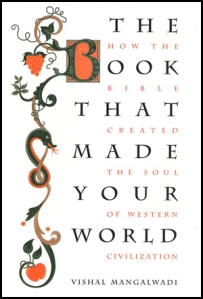
Like the Indian writer, Vishal Mangalwadi, I believe that the reason for this shift in attitudes has largely to do with Christian influence. In his book The Book That Made Your World, he writes of the fatalism and determinism that dominated the ancient world and still affects his native India:
“Determinism (and other forms of reductionism) implies that we don’t exist as individual selves but are only products of our chemistry, genes, environment, culture, or language. My professors [in India] couched these ideas in scientific/academic termninology. Did that make these ideas any better than traditional fatalism? Fatalism is a worldview with huge social consequences that I could see all around me: poverty, disease and oppression. Cultures like mine had historically resigned themselves to their “fate.” Western civilization, on the other hand, believed that human beings were creative creatures and therefore could change ‘reality’ for the better. This enabled the West to virtually eliminate many of the ills that still plague my people.” (p. 48)
Christians are the heretics who, like their God, don’t bow to Fate and Fortuna.
I think that words like these from Mangalwadi are very important. At the same time, there is no doubt that we post-Augustinian Christians look back at the way that the early church defended the doctrine of free choice with a bit of horror. The fact of the matter is that these early Christians, eager to counter these pagan notions of chance and fate, often seem to have severely underestimated the doctrine of original sin!
There is no doubt that the church, through a man like Augustine, needed to counter the excesses and errors of Pelagius, who insisted that man in his nature was capable of meriting God’s approval. At the same time, Augustine would not have been eager to disregard the concerns and teachings of those who had gone before him. As the above quotation from Mangalwadi makes clear, there was a very good reason the early church fathers stood firm in their insistence of human free will over and against fate and determinism. Human beings, created in the image of God, were morally responsible creatures who answered not to the stars[ii], but to the One True God!
And in some sense, in spite of his doctrine of double predestination (where God appoints some to heaven and others to hell), Augustine seems to stand with the early church fathers when it comes to the freedom of the human will not only as regards growth in the Christian life but our becoming Christians as well. As regards both of these, Augustine emphasized God’s initiative. For example, as regards our growth in the life of faith, he said:
“God brings it about that we act. The Psalmist says to him: “set a guard, lord, upon my mouth” [Ps. 140:3 (141:3 rsv)]. This is to say: bring it about that I set a guard upon my mouth. The one who said “I have set a guard upon my mouth” [Ps. 38:2 (39:1 rsv)] had already obtained that benefit from God.” (On Grace and Free Choice, see p. 161 here).

Hart discusses Augustine’s influence on American ideas and ideals.
At the same time, writing to Firmus, a man of nobility who had read and appreciated Augustine’s work but had resisted becoming a Christian, he said the following….
“Do not wait until he wills it, as if you were going to offend him if you willed it first. For, whenever you have willed it, you will be willing it with his help and by his working. His mercy, of course, anticipates you so that you may will it, but when you will it, you yourself certainly will it. For, if we do not will when we will, then he does not give us anything when he makes us will.” (Epistle 2*.8 (A.D. 428); in The Works of Saint Augustine, II/4, 236)
This, of course, does not really seem to emphasize the heart and core of the Christian faith: that we freely receive, in Jesus Christ, forgiveness, life, and salvation from sin, death and the devil! Further, it seems to be in real tension with what Augustine writes elsewhere, namely that our initial conversion is something that God does to us, period! (where we are, in truth, wholly passive like infants at their mother’s breast). It was Martin Luther of course, who, in the interest in making this absolutely clear vs. Erasmus (who had attacked Luther’s position), put forth an argument in his Bondage of the Will that, to some, seemed to disregard the human will, and hence human responsibility, altogether.
Erasmus certainly thought that this was the case, and replied to Luther again in his Hyperaspistes I and II. After this, Luther’s trusted colleague Phillip Melanchthon urged Luther to let him do the responding to Erasmus this time, and he did so (indirectly) in editions of his commentary on Colossians that was popular during the years 1527-1529. As Timothy Wengert notes regarding Melanchthon’s take on the situation (at least in the 1520s!):
“Questions arose which were not edifying for the church, including ‘whether God causes evil things.’ Taken out of context, this point might be misconstrued as an attack on Luther. Instead, as we have seen again and again, Erasmus’s challenge to Luther was the real culprit [for Melanchthon]. To pose the question of the pagans, whether God was the cause of evil, showed an improper understanding of rhetoric and dialectic. Yet this was in fact what worried Erasmus!” (p. 100, Human Freedom, Christian Righteousness).
![“…when [God] acts by the Spirit of Grace in those whom He has made righteous, i.e., in His own kingdom, He… impels and moves them; and, being new creatures, they follow and cooperate with Him; or rather, as Paul says, they are led by Him." -- Martin Luther](https://infanttheology.files.wordpress.com/2017/01/bondage.jpg?w=200)
“…when [God] acts by the Spirit of Grace in those whom He has made righteous, i.e., in His own kingdom, He… impels and moves them; and, being new creatures, they follow and cooperate with Him; or rather, as Paul says, they are led by Him.” — Martin Luther, BOTW
It is important to see a book like The Bondage of the Will in light of Luther’s wider work. For example, Luther himself certainly never would have wanted anyone to believe – as Erasmus implied – that God had intended for Adam to fall (this can be clearly seen by looking at his Genesis commentary, written in his later years). And as is evident in the widely accepted confessional writings of the early Lutherans, they, like Augustine, also did not want to disregard the wisdom of the church’s earlier fathers, but wanted to be attentive to their concerns (see here, for example, in Art. II on Free Will in the Solid Declaration of the Formula of Concord).
In sum, what all of this means is that while the human free will is not something that we should be fixated on (impossible as that often is in our world), it is something that we should assert exists, and that has no small degree of importance.
As I put it in five points from a New Year’s Resolution post last year….
- The law cannot inspire the obedience it demands – but the Gospel can inspire us to say “Amen!” when we hear the beauty that is God’s law/will![vi]
- If the Western church is indeed “weak in sanctification”, it is because it is looking to Christ less, not more; for less, not for more.
- We should not focus on our ability to [weakly] cooperate in sanctification. We should just recognize it, affirm it, and look to Christ for all good things.
- There is a “positional” sanctification (us in Christ – this goes with justification) and a “deepening” and progressive sanctification (Christ in us).
- And finally, if you doubt your sanctification, look to Christ whom you are in: for us, He “became perfect” on earth, according to His human nature.[vii]
Ken Miller, in a comment responding to a blog post about Tchividjian’s New Year’s resolution ideas, had some good words with which to close this post:
“I think New Year’s Resolutions are a good thing, provided that they are coming from a place of complete security in the finished work of Christ. The gospel calls us to do good works, not to earn our salvation or even to prove it, but because of our salvation. If our resolutions are intended to make ourselves more lovable or to earn someone’s favor, then they’re misguided. If they are made out of a pure love for God and a desire to put on Christ Jesus, then I think we’re moving in the right direction.”
I would tweak that last sentence a bit, noting that our love for God won’t be pure this side of heaven. That said, the basic thought is right on target. Through the gift of faith which cling’s to Christ’s perfect righteousness, our sincere resolutions to love God and neighbor more are certainly pleasing to him. Even if there is nothing that we are able to do to make Him love us more than He already does!
FIN
Notes:
[i] Wise words from Pastor Cooper (I’ve taken six successive tweets he recently made and strung them together): “Let’s not assume that everyone who speaks like Tullian or uses his language are using their own theology as an excuse for sin [as] he did. He reached a lot of vulnerable people who genuinely were beaten up by legalistic backgrounds. Recognize that. However, this should also be an opportunity for those who use the kind of language he did to clarify it, and see the dangers in such talk that downplays the necessity and importance of Christian obedience and daily repentance. From my own talks with him, I thought he was simply unbalanced. He always affirmed third use/ progressive sanctification etc. But simply affirming Biblical doctrine is not enough if we never actually talk or think about it.” (see first tweet here: https://twitter.com/JustandSinner/status/804783343074181120 )
[ii] Again, it is very interesting to note that the God found in the Bible “demystifies the natural world by taking personal benevolence and malevolence out of the account of sun and moon and natural phenomena” – people of the Psalmist’s day really did worry that the *gods* of the Sun and Moon “might strike you by day…[and] by night”, respectively! (James V. Bachman, “Lutheran Theology and Philosophy”, The Idea and Practice of a Christian University, p. 174).
Previous Post

December 29, 2016
A New Q&A Program!
Next Post

January 19, 2017 How Can Christian Schools Shine in a “Doubling Down” World?
Browse Our Archives
Select a Category American Lutheran Classics Blog Posts Book Review Christian Dogmatics Course Church Resources Curtis Leins Dogmatic Theology Ethics FAQs Historical Theology Just & Sinner Publications Luther Quotations Podcast Sermons The American Lutheran Theological Journal The complete works of Revere Franklin Weidner Theology Proper Uncategorized Videos
Select a Month October 2019 September 2019 July 2019 June 2019 May 2019 April 2019 March 2019 February 2019 January 2019 December 2018 November 2018 October 2018 September 2018 July 2018 June 2018 May 2018 April 2018 March 2018 February 2018 January 2018 December 2017 November 2017 October 2017 September 2017 August 2017 July 2017 June 2017 May 2017 April 2017 March 2017 February 2017 January 2017 December 2016 November 2016 October 2016 September 2016 August 2016 July 2016 June 2016 May 2016 April 2016 March 2016 February 2016 January 2016 December 2015 November 2015 October 2015 September 2015 August 2015 July 2015 June 2015 May 2015 April 2015 March 2015 February 2015 January 2015 December 2014 November 2014 October 2014 September 2014 August 2014 July 2014 June 2014 May 2014
Follow Us!
TAKE THE
Religious Wisdom Quiz
Who interpreted Nebuchadnezzar's dream of a statue?
Select your answer to see how you score.
Ezekiel Daniel Abraham Joseph
Related posts from Just and Sinner
And Now... A Message for Today's LC-MS Mainstream...

Sola Fide in the Church Fathers
Does God Expect Rulers Today to "Kiss the...
Rev. Lewis Polzin is Back on the Show...
TRENDING AT PATHEOS Evangelical

The REST of Your Life: A Creative Wrestles...
This week I had a conversation with a good friend from church....

How the author of the world's best hymn...
I've been working with John Newton for a while now. This makes...

Long before this Lectio Divina, Psalm 130 - the song - started...

What About the Trees? Another Living Parable
After I finished writing the last article about falling leaves as a...

Why Classical Education Is a Conversation, Not a...
Come and Read: Joy in Classical Education When I was a little...

Cornell University has received a great deal of negative publicity and intense...
view all Evangelical blogs
Ad-Free & Subscriber Log-In Subscription Support
- About Us
- 2026 Calendar
- Videos
- Podcasts
- Library of World Religions
- Faith In Media Tracker
- Advertise With Us
- Write for Us
- Privacy Policy
- Terms of Service
- Do Not Sell My Data
- Contact Us
- Radiant Digital
- Manage Newsletter Subscriptions
- Unsubscribe From Notifications
- Sitemap
Copyright 2008-2026, Patheos. All rights reserved.
Subscription Support Ad-Free & Subscriber Log-In
Follow Patheos