
BuddhistCatholicContemplativeEvangelicalGeneral ChristianHinduJewishLatter-day SaintMuslimNew VisionsProgressive Christian
Beliefs
- Buddhist
- Catholic
- Contemplative
- Evangelical
- General Christian
- Hindu
- Jewish
- Latter-day Saint
- More Voices
- Muslim
- New Visions
- Pagan
- Progressive Christian
Topics
- Religion News
- Food and Religion
- Sports and Religion
- Religious Art
- Religious Music and Entertainment
- Religious Events
- History and Religion
- Style and Religion
- Politics and Religion
- Women in Religion
- Recreation Outdoors and Religion
- Business Finance and Religion
- Careers Workplace and Religion
- Education and Religion
- Family Parenting and Religion
- Health Fitness and Religion
- Home and Religion
- Relationships and Religion
- Technology and Religion
- Travel and Religion
Columnists
- Buddhist Columnists
- Business Finance and Religion Columnists
- Careers Workplace and Religion Columnists
- Catholic Columnists
- Contemplative Columnists
- Education and Religion Columnists
- Evangelists Columnists
- Family Parenting and Religion Columnists
- General Christian Columnists
- Health Fitness and Religion Columnists
- Hindu Columnists
- History and Religion Columnists
- Home and Religion Columnists
- Jewish Columnists
- More Voices Columnists
- Latter Day Columnists
- Muslim Columnists
- New Visions Columnists
- Nonreligious Columnists
- Pagan Columnists
- Politics and Religion Columnists
- Progressive Columnists
- Recreation Outdoors and Religion Columnists
- Relationships and Religion Columnists
- Religion News Columnists
- Religious Art Columnists
- Religious Events Columnists
- Religious Music and Entertainment Columnists
- Sports and Religion Columnists
- Style and Religion Columnists
- Technology and Religion Columnists
- Travel and Religion Columnists
- Women in Religion Columnists
Resource Library
- 2026 Calendar
- Library of World Religions
- The 100 Most Holy Places on Earth
- Patheos Answers
- Podcasts
- Videos
- Faith Leaders Database
- Anglican Episcopalian
- Bahai
- Baptist
- Buddhism
- Christianity
- Confucianism
- Eastern Orthodoxy
- Hinduism
- Holiness and Pentecostal
- ISKCON
- Islam
- Judaism
- Lutheran
- Methodist
- The Church of Jesus Christ of Latter-day Saints
- New Age
- Paganism
- Presbytarian and Reformed
- Protestantism
- Religion Behind the Scenes
- Roman Catholic
- Scientology
- Shia Islam
- Sikhism
- Sufism
- Sunni Islam
- Taoism
- Zen
- See all religions
Research Tools
 Ad-Free & Subscriber Log-In Subscription Support
Ad-Free & Subscriber Log-In Subscription Support
Follow Patheos 

- Trending:
- Forgiveness
- |
- Marriage
- |
- Consciousness
- |
- Death Penalty
- |
- Election
- |
- Halloween
 Just and Sinner
- Home
- Evangelical
- Meditations for Radical Lutherans on Luther’s Antinomian Disputations (part 5 of 6)
Meditations for Radical Lutherans on Luther’s Antinomian Disputations (part 5 of 6)
Last updated on: December 13, 2018 at 8:45 am by nathanrinne
Meditations for Radical Lutherans on Luther’s Antinomian Disputations (part 5 of 6) 2018-12-13T08:45:27-06:00 nathanrinne
Patheos Explore the world's faith through different perspectives on religion and spirituality! Patheos has the views of the prevalent religions and spiritualities of the world.
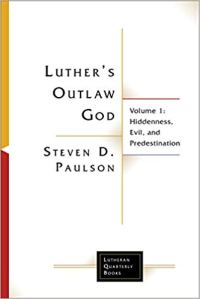
Yes? “God is not united by law and gospel but divided.” — Steven Paulson, 24
+++
Seeking Refuge from the Law’s Inherent Goodness in the “Hidden God”? (part 5)
One might think that because of the nature of God’s law, given in Eden and still inscribed on human hearts today, Christ and the Holy Spirit should not ultimately be set against the law in any way.
As we saw in our last post however, in the Radical Lutheran account the Holy Spirit is said to be the “opposite of the law.” In his article “Luther’s Antinomian Disputations and lex aeterna” (see my response to this article in the latest Concordia Theological Quarterly here) we see that Radical Lutheran theologian Nicholas Hopman also asserts that:
- “[T]he content of the commandment/law is always a weapon attacking human sin” (159).
- “[T]he fulfillment of the law actually empties the law of all its content, namely, its threatening teeth” (160, italics mine)
- “Where there is no accusation, there is no law” (164)
- “[T]he law and delight in the law are two mutually exclusive realities” (167)
- “The Christian, in faith alone, is beyond the law” (160)
- The Christian is successful vs. sin because the Christian and Holy Spirit are not law (171)
- “[The] law is present only where Christ is absent” (164)
In sum, in the Radical Lutheran account, the law appears to be fully identified with “the hidden God” — God as human beings see him though their sin-infested reason. Again, they desire to stand before God with their good works, their “ladder theology” and/or “law story” (see part 2). The revealed God, however, has nothing to do with law, and comes in the form of Jesus Christ. He, actually, is the end of the law.
So — while Luther warned about flirting with God hidden in wrath, some modern theologians would prefer to make it a staple in how we do theology, especially when it comes to the law.

If Jesus had been born today, would we even recognize this “outlaw God”?
Jack Kilcrease explains “the self-evident threat posed by the hidden God to humanity” the Radical Lutheran sees:
“Relying on several remarks Luther made in his Antinomian Disputations, [Gerhard] Forde identifies the hidden God’s threatening activity with the law. Forde writes in The Law-Gospel Debate that the law must be broadly understood as “a general term for the manner in which the will of God impinges on Man…” (278).
Again, as noted in part 3, man’s response to God’s law, the nature of which is said to be our sense of accusation, is “Hell if I am going to be God’s slave.” As such, they “flee from what they perceive as the unreasonable expectations and control (oppression, coercion… punishment!) of the True God.”
Pauson and Hopman agree. And so, whatever their own intentions may be, they in any case show how Radical Lutherans can conveniently bracket God’s good law in the category of the “hidden God”…
“The resurrection is Christ’s victory over sin, death, hell, the devil, and even over God hidden in wrath (deus absconditus)—along with his law. Death is the last, greatest enemy but the law is the strangest enemy.” (“Hated God,” 23)
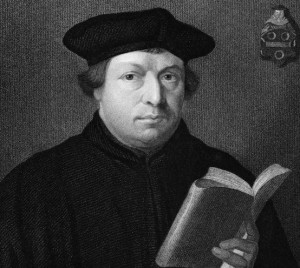
Indeed.
“It is dangerous to want to explore and comprehend the divinity by means of human reason without Christ” (SDEA, 89).
The Radical Lutherans explain to us that this “strangest enemy,” the law, even justly accused Jesus Christ! As I wrote in a past post:
[W]hat it comes down to is this: Christ ends up a damned sinner, “defeated” by that most coercive and even killing of forces: the merciless “order keeping” law!
What do I mean?
By “order keeping” I mean something like this: law is not necessarily associated first and foremost – or at all! — with God’s law, the 10 commandments, but is rather anything which provides boundaries, “makes life work,” and keeps peace – all good things! What really is true, right, and just may not even need to be considered here, as this story from a good friend of mine illustrates:
“In Kindergarten I was accused of and punished for throwing a snowball at recess. I had not done it. Oddly enough, 45 years later, it still kind of hurts to think about.
In other words, even though I was not guilty of the sin for which I was punished, there was significant suffering involved on my part. I didn’t need to be the sinner to suffer for the sin of whoever did commit that sin. Although that is what I, for all intents and purposes, became.
And justice was served. The boy hit by the snowball in the face, and his parents, were satisfied. The teacher and principal upheld the law. My classmates learned from my experience.”
By “merciless,” I mean that the law, though “good” in an earthly sense, ultimately fails because it does not have the good of particular persons in mind – even Jesus!…

Could it be true? And, in “where there is smoke there is fire” fashion, could there also be a “constellation of denials”? “What Forde confidently labels ‘Luther’s Theology of the Cross’ is not actually a doctrine of the atonement but a malformed theory of justification posing as a doctrine of atonement.” — David Scaer
In sum, for the Radical Lutheran, the law is understood in terms of the wrath we see in God’s creation[i], and might be said to rightfully demand the death of all sinners with nary a concern for God’s mercy.[ii] Ultimately, with its “relatively good” order-keeping coerciveness, it — not just the ceremonial laws abolished in the New Testament — is temporal and passes away. It is not connected with God as He really is.
We are told by the Radical Lutherans that the revealed will of God is very different from–nay, the complete opposite of–the law. It is the Gospel of the Lord Jesus Christ: “God was reconciling the world to himself in Christ, not counting people’s sins against them.”
Unlike the law, it actually cares about both truth and individuals, ultimately aiming to save all persons in Christ through preachers! (see Romans 10).
Does this approach to this issue not cause unnecessary confusion? Should we really be wondering whether God’s will and the law of God are two completely different things? Should we really be opening up doors for those who, asserting the temporal nature of God’s law (and of course redefining “nature,” “God,” and “law” in the process!), are also eager to see it evolve in a “Hegelian” fashion or otherwise?
Who is really being the Erasmian skeptic and “enthusiast” here?

“…no answer is ever given to those who seek to judge God’s justice. He will remain a hidden God to those who try to access him experientially…” – Pastor Philip Hale, p. 24
Does it really make sense that the “the law of the Spirit who gives life” is the opposite of the law? Or does it make sense that it is instead the opposite of “the law of sin and death,” from which Christ has set us free (Rom. 8:2)!?
Again, going along with the previous posts (part 3), how we size up this issue will also determine how we view the law’s role in the Christian’s conscience and life of repentance.
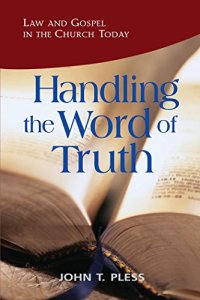
“When the conscience is under attack, one must abandon the law completely”? In this case?
Here, it also does us well to note that Luther speaks of the current world as a place where we can still, in spite of the fall, speak of “the good” (SDEA 33). And to re-iterate once again, even though Luther did speak of the law in Eden in terms of it being a threat, an evaluation of his Genesis commentary reveals that in no sense did this law actually accuse or terrify Adam and Eve, who were already at peace with God.[iii] And while for Nicholas Hopman’s Luther “[w]here there is no accusation, there is no law” (Hopman, 164), we also know that in Eden this was not the case. The law was not meant to drive, by force, God’s people to this or that (Hopman, 160), but rather to inform them of and to keep them from a very specific danger, as well as being an invitation to grow in the fear, love and trust in God (again, see my longer, more detailed argument in the latest Concordia Theological Quarterly here).
And the fact also remains that the law/commands of God, used by the Holy Spirit, are always good. With the Gospel of forgiveness ringing in our ears, it guides His people in paths that are right and true and safe. If God meant for “very good” Adam and Eve to be prevented from sinning via his command in the Garden, how much more might this be true for us who have fallen and who now face not only the devil, but the fallen world and our sinful flesh?

“In Adam we have all been one…” or no? Not Luther’s view?: “Attempts to get God off the hook of our suffering and death commonly end with a theory of the misuse of human free will as the cause of our suffering and the reason for the presence of evil.” — Steve D. Paulson, p. 365
Indeed, until the time that the law is fulfilled in us perfectly, the Christian will be at war with these three under his commander, Christ. And here, the Holy Spirit – and the good law that He brings which says “[t]he law does not want you to despair of God… it wills that you despair of yourself, but expect good from God…” – is not to be denied (SDEA 367, 369)
Whatever else can be said here – and much more must be said and will be said in the final post of this series – this much is clear: the law and gospel – just like the Holy Spirit – reveal an important truth which is exactly the same: God has an overriding desire to do good to all men (even, finally, desiring that each not despair but be saved in Christ). This holds true even as the purposes of the law and gospel are distinct and must always remain so.
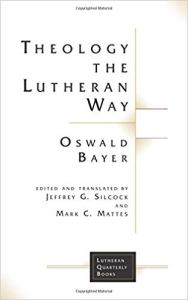
Yes? “God is not consistent but contradicts himself. Here we see God against God!” — Oswald Bayer, p. 104.
When only reading some of what Luther says, it might be easy to at times get the impression that God’s Holy Spirit only brings peace and joy in the “spirit” by the perfect Gospel, and that the “flesh” is dealt with only according to the imperfect law, at odds with the Holy Spirit (and here, we might see increasing insistence from many that we deal with this or that topic in light of stricter and stricter distinctions between the left-hand and right-hand kingdoms). This kind of “practical Gnosticizing” however, does not take into account what Luther says elsewhere.
For example, in response to the 29th argument in the Second Disputation Against the Antinomians, Luther not only insists that “God preached” (vs. “God not preached,” i.e. the hidden God) is a God of law too, but that He hides also so as to not terrify us:
“God by himself, without certain signs, cannot be comprehended; and whoever searched for God in his majesty and divinity, would be crushed by the glory of God. Yet later he emptied himself and became lovable and admirable, a boy put in the womb of the Virgin and in the manger. In this way we can bear him and he becomes easy to deal with. Otherwise, a man will not see him and live. Yet clothed and dressed in human flesh, born of the Virgin and incarnate of our flesh, made our brother and flesh, I cannot dread him.
In the same way the Holy Spirit in his majesty is incomprehensible, and when he in his majesty as God reveals the law, he cannot but kill and vehemently terrify. Therefore, he at last, in order to be Consoler and Sanctifier, also becomes a Gift… the Holy Spirit as God terrifies in the law, but consoles, sanctifies, and vivifies as Gift, in the form of a dove, and in a flame of fire” (bold and italics mine, SDEA 225).
Even if the theme of the hidden God in Luther’s theology is being abused by Radical Lutherans, the proper articulation of it (this is a very nice summary) makes a critical point. The idea here is that God is a God who hides Himself, and a temptation of man is to peek into the window of heaven, trying to catch a glimpse of the “bare God” that He has not revealed to us in Scripture.

Indeed. Ironically? “To seek God behind this giving of himself in words preached is to seek some God… who might allow us to bypass the revelation of our own nature as sinners and creatures.” – Steven D. Paulson, p. 367, 368
Interestingly, elsewhere in the Antinomian Disputations, we can readily discern that Luther in fact speaks of two different kinds of “bare God” in the minds of men.
There is one which, in line with the Scriptures, “speaks in his majesty,” “only terrif[ying] and kill[ing],” – and yet, being ultimately revealed as the merciful Christ who dies for the sins of the world, and who disciplines His children in love. On the other hand, those who neglect this “basic truth” of the gospel, follow “seemingly magnificent and divine illuminations and revelations” which are “in reality satanic”. Their “bare God” is an illusion, and they “finally fall into despair” (SDEA 91).

Luther: “These true disciples of Satan seem to think that the law is something temporal that has ceased under Christ, like circumcision.”
When Luther talks in the Antinomian Disputations about the law showing sin “without this Holy Spirit who is the Gift” He is nevertheless talking about the same Holy Spirit! The Holy Spirit is, in fact, the true bare God, the One who in his majesty reveals the law and convicts of sin unto salvation and not damnation (John 16-8-10).
He also reveals the true bare God, that is, the baby, born of Mary and wrapped in swaddling clothes. He is the One who still hides Himself, but now not in wrath, but in humility, simplicity, and weakness – in the human flesh of the man Jesus Christ. For us.
And He does this, for example, in the Lord’s Supper, so as not to further terrify those who have known His wrath (and what is the Radical Lutheran’s view of this Supper?) We can, really, and truly, partake of His true body and blood in peace and joy. In fact, we can have the grace of God applied to each one of us in an exceedingly personal and intimate way.
He does so through simple and humble bread and wine, and importantly, simple and humble words to believe, still “hiding” in a sense, for our sake!

Given for you, like this, so as not to terrify you…
What sweet Gospel this is! “Truly, you are a God who hides himself, O God of Israel, the Savior!” (Isaiah 45:15)
And, as Luther puts it, if one believes in the revealed God, Jesus Christ, Christ will “gradually also reveal the hidden God; for ‘He who sees Me also sees the Father.’” (LW 5:46 ; LW 28:126 ; see here).
Much more on this kind of thing in the final post…
FIN
Notes
[i] Hopman has written elsewhere that “the hidden God works even life in his wrath,” and “God in his wrath works life”.
[ii] Instead of: “The law does not want you to despair of God…it wills that you despair of yourself, but expect good from God…” — Luther (ODE, 195), the view towards the law might be like what is described in this post:
“By its own standard, which cannot be violated (as a friend once told me “When the Law says ‘stone’ you stone!), the law “justly” but falsely accuses Jesus of being a sinner.
([As you say:] “Here Paul’s point is exact: the law is no respecter of persons, it does not identify Christ among sinners as an exception to the rule. Law as “blind lady justice” executes its judgment regardless of race, color, creed—or divinity.”)”
You can listen to some more official 1517 Legacy folks discuss the atonement quite well here.
[iii] See, e.g. LW 1: 62-63, 65, 111.
Images: Jörg Schubert ; The outlaw (https://www.flickr.com/photos/tinto/31228355070)
Previous Post
November 30, 2018
A Discussion on Liturgical Worship
Next Post
December 14, 2018 On the Existence of the Soul
Browse Our Archives
Select a Category American Lutheran Classics Blog Posts Book Review Christian Dogmatics Course Church Resources Curtis Leins Dogmatic Theology Ethics FAQs Historical Theology Just & Sinner Publications Luther Quotations Podcast Sermons The American Lutheran Theological Journal The complete works of Revere Franklin Weidner Theology Proper Uncategorized Videos
Select a Month October 2019 September 2019 July 2019 June 2019 May 2019 April 2019 March 2019 February 2019 January 2019 December 2018 November 2018 October 2018 September 2018 July 2018 June 2018 May 2018 April 2018 March 2018 February 2018 January 2018 December 2017 November 2017 October 2017 September 2017 August 2017 July 2017 June 2017 May 2017 April 2017 March 2017 February 2017 January 2017 December 2016 November 2016 October 2016 September 2016 August 2016 July 2016 June 2016 May 2016 April 2016 March 2016 February 2016 January 2016 December 2015 November 2015 October 2015 September 2015 August 2015 July 2015 June 2015 May 2015 April 2015 March 2015 February 2015 January 2015 December 2014 November 2014 October 2014 September 2014 August 2014 July 2014 June 2014 May 2014
Follow Us!
TAKE THE
Religious Wisdom Quiz
For the wages of sin is death, but the gift of God is ____ in Christ Jesus our Lord.
Select your answer to see how you score.
Love Grace Redemption Eternal Life
Related posts from Just and Sinner
C.F.W. Walther’s Talk on God’s Law and My...
And Now... A Message for Today's LC-MS Mainstream...

Can Unbelievers Seek God? And What is the...
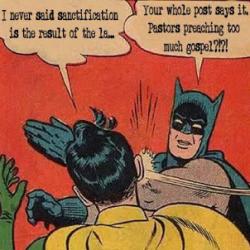
The Biggest Radical Lutheran Straw Man of Them...
TRENDING AT PATHEOS Evangelical

The REST of Your Life: A Creative Wrestles...
This week I had a conversation with a good friend from church....

How the author of the world's best hymn...
I've been working with John Newton for a while now. This makes...

Long before this Lectio Divina, Psalm 130 - the song - started...

What About the Trees? Another Living Parable
After I finished writing the last article about falling leaves as a...

Why Classical Education Is a Conversation, Not a...
Come and Read: Joy in Classical Education When I was a little...

Cornell University has received a great deal of negative publicity and intense...
view all Evangelical blogs
Ad-Free & Subscriber Log-In Subscription Support
- About Us
- 2026 Calendar
- Videos
- Podcasts
- Library of World Religions
- Faith In Media Tracker
- Advertise With Us
- Write for Us
- Privacy Policy
- Terms of Service
- Do Not Sell My Data
- Contact Us
- Radiant Digital
- Manage Newsletter Subscriptions
- Unsubscribe From Notifications
- Sitemap
Copyright 2008-2026, Patheos. All rights reserved.
Subscription Support Ad-Free & Subscriber Log-In
Follow Patheos