
BuddhistCatholicContemplativeEvangelicalGeneral ChristianHinduJewishLatter-day SaintMuslimNew VisionsProgressive Christian
Beliefs
- Buddhist
- Catholic
- Contemplative
- Evangelical
- General Christian
- Hindu
- Jewish
- Latter-day Saint
- More Voices
- Muslim
- New Visions
- Pagan
- Progressive Christian
Topics
- Religion News
- Food and Religion
- Sports and Religion
- Religious Art
- Religious Music and Entertainment
- Religious Events
- History and Religion
- Style and Religion
- Politics and Religion
- Women in Religion
- Recreation Outdoors and Religion
- Business Finance and Religion
- Careers Workplace and Religion
- Education and Religion
- Family Parenting and Religion
- Health Fitness and Religion
- Home and Religion
- Relationships and Religion
- Technology and Religion
- Travel and Religion
Columnists
- Buddhist Columnists
- Business Finance and Religion Columnists
- Careers Workplace and Religion Columnists
- Catholic Columnists
- Contemplative Columnists
- Education and Religion Columnists
- Evangelists Columnists
- Family Parenting and Religion Columnists
- General Christian Columnists
- Health Fitness and Religion Columnists
- Hindu Columnists
- History and Religion Columnists
- Home and Religion Columnists
- Jewish Columnists
- More Voices Columnists
- Latter Day Columnists
- Muslim Columnists
- New Visions Columnists
- Nonreligious Columnists
- Pagan Columnists
- Politics and Religion Columnists
- Progressive Columnists
- Recreation Outdoors and Religion Columnists
- Relationships and Religion Columnists
- Religion News Columnists
- Religious Art Columnists
- Religious Events Columnists
- Religious Music and Entertainment Columnists
- Sports and Religion Columnists
- Style and Religion Columnists
- Technology and Religion Columnists
- Travel and Religion Columnists
- Women in Religion Columnists
Resource Library
- 2026 Calendar
- Library of World Religions
- The 100 Most Holy Places on Earth
- Patheos Answers
- Podcasts
- Videos
- Faith Leaders Database
- Anglican Episcopalian
- Bahai
- Baptist
- Buddhism
- Christianity
- Confucianism
- Eastern Orthodoxy
- Hinduism
- Holiness and Pentecostal
- ISKCON
- Islam
- Judaism
- Lutheran
- Methodist
- The Church of Jesus Christ of Latter-day Saints
- New Age
- Paganism
- Presbytarian and Reformed
- Protestantism
- Religion Behind the Scenes
- Roman Catholic
- Scientology
- Shia Islam
- Sikhism
- Sufism
- Sunni Islam
- Taoism
- Zen
- See all religions
Research Tools
 Ad-Free & Subscriber Log-In Subscription Support
Ad-Free & Subscriber Log-In Subscription Support
Follow Patheos 

- Trending:
- Forgiveness
- |
- Marriage
- |
- Consciousness
- |
- Death Penalty
- |
- Election
- |
- Halloween
 Just and Sinner
- Home
- Evangelical
- Luther’s Antinomian Disputations for Dummies 5 (of 5): Welcome “Mr. Sin” Boldly!
Luther’s Antinomian Disputations for Dummies 5 (of 5): Welcome “Mr. Sin” Boldly!
Last updated on: August 16, 2017 at 1:26 pm by nathanrinne
Luther’s Antinomian Disputations for Dummies 5 (of 5): Welcome “Mr. Sin” Boldly! 2017-08-16T13:26:44-06:00 nathanrinne
Patheos Explore the world's faith through different perspectives on religion and spirituality! Patheos has the views of the prevalent religions and spiritualities of the world.

Chapter 5 of 5: Sin Boldly or Welcome “Mr. Sin” Boldly? (Luther’s “Thomas Christian”)
Chapter 1: Natural Law in Martin Luther’s Antinomian Disputations
Chapter 2: Does the Christian Cease to be Under the Law of God?
Chapter 3: If the Law is Abrogated in Jesus Christ How Can the Ten Commandments be Eternal?
Chapter 4: Should the Preacher Reduce the Force of God’s Law?
+++
“Sin boldly” means in no way boldly to sin. But enough about that. Let’s talk about those baptized into Christ welcoming “Mr. Sin” boldly.
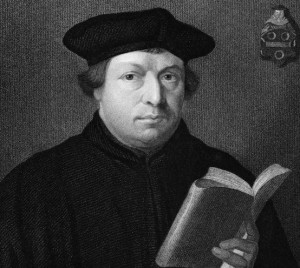
“we have… Christ, through whom we are pure & unleavened. And nonetheless [Paul] commands us to cast out the old leaven.” – Luther, SDEA 103
You see, it’s not just about what some call “the simul”. Many are familiar with Martin Luther’s point that Christians are simultaneously saint and sinner, which correlates with the idea of the new man and the old man, the spirit and the flesh, or sinful nature.
As one stands before God, one always must remain totally a sinner and totally a saint (100% each). The Christian’s primary identify is saint, and yet in order to be a saint one must, on earth, be willing to see one’s self as a sinner.
On earth, after all, the healthy, or righteous, do not need the doctor (or so they think!). They do not need the friend of sinners (or so they think!). If these do claim Christ as their own, they then have a false Christ. Only those who are Christians are those who are sinners and saints at the same time.
But.
“[W]hat exercise of faith will be left….when the battle between spirit and flesh will be taken away?….” (SDEA, 261)
But few know that Martin Luther also thought that another idea was needed to really explicate the Christian’s day-by-day experience. This concept, the “Thomist Thomas or twin,” describes how the Christian is also triumphant and militant at the same time.
So what does this all mean? Luther explains in his response to the third argument of the fifth Antinomian Disputation.
First, the triumphant aspect:
“Insofar as he is triumphant, and dwells under the shadow of the wings of his Lord (cf. Psa. 36:7), as it is said (Psa. 32:1-2), “Blessed are those whose sins are covered and whom the Lord did not impute their sins” so far there is nothing about law. Here let Moses depart, let him go away to the ravens with his stuttering tongue, here I do not hear anything, neither heaven nor earth…. Insofar as the Christian is a Christian, leave him in peace and unconfused. For being accused and convicted, and being—or being regarded—righteous, cannot stand at the same time. Yet the Christian is righteous by faith in Christ. In himself, however, he still has inherent sin” (ODE 150, 151).

Again, the justified say “Silent law!”: “He died for us, bore the curses and punishments of the law, and gave us his innocent righteousness… where I shall have Christ by faith, there I have what the law requires and demands from me. (SDEA 63, 189)
This seems a lot like the “saint” part of the sinner-saint formulation. But now, with the militant aspect of the Thomas Christian, things get really interesting – and colorful, as is Luther’s custom:
“…now I come to another area, which is widely different from that above, to the militant Christian, who still lives in the flesh, and I come to me and my person. Alas, how much wretchedness I see here! Here I, and you, insofar as we as such, would do all shameful acts in our power, if only they could be done secretly, without the knowledge of people, so that we daily and truly ought to experience how true it is, what Paul says about himself (Rom. 7:23): “I see another law in my members” etc. Yet as soon as these things take place, and as soon as this law or this carnal nature infected by the venom of Satan in Paradise rears its head and incites the poor Christian to lust, to greed, to despair, or to hatred of God, there, I say, the Christian stirs himself up and says, as if in wonder: “Look! And you are still here! Welcome, Mr. Sin. Where were you? Where did you spend your time so long? Are you still alive now? From where do you come to us? Away with you to the cross! It will absolutely not be so! I will protect my virgin and will do what is just, even against your will. And the more you torture me, even challenge and incite me to dishonor, lust, despair, the more I will laugh at you with a spirit that is both confident and strong! Trusting in the help of my Christ I will scorn you and crush your head (cf. Gen. 3:15). What do I have to do with you? I have another Lord in whose camp I am now a soldier. Here I will stay, here I will die.” This one is that glorious soldier and strong George who makes a great massacre in the army of the devil and wins gloriously, as Paul says (Rom. 8:37): “In all these things we overcome through Jesus Christ,” and he does not permit sin to devour in his flesh.
Indeed we, each in his age and situation, cannot but encounter a great number of sins and evil desires. But with God’s help, we will nevertheless not permit them to rule. I witness my flesh having a taste for the same things as the Turk, the pope, and the entire world, but don’t assent! Let him not allow the lice to build nests in the coat. Thus Paul has sin, but conquered and faint. The impious have living, ruling, triumphant sin” (SDEA 275, 277; ODE, 151, 152, italics and bold mine).[i]
Look at these passages again, paying close attention!
When it comes to the sinner-saint aspect of our Christian life, the saint identity is the primary one. So what identity do we think is primary here? Is it, as we might think, the victorious Christian aspect?
“[I]s it then here really appropriate for us; I wonder, to sleep or to be secure, to be inattentive or to snore giving the raging of an utterly vigilant and violent enemy?” (SDEA, 261)
Not in the context that Luther is here concerned with! He is clear:
“…we do not hope for peace, since we are under the Lords of Hosts, under Sabaoth, not of sleepers and snorers, but of the fighters under the Lord, who is Christ Jesus. This is why the Church living in this life is called militant, not triumphant. Certainly, after this life, when all our enemies will be destroyed and when also death, our last enemy, will be subdued and destroyed, then we will triumph.” (SDEA, 263 ; ODE, 145)
And he is not shy about how ugly and difficult it is to “obey[] the Spirit, [and] avert[] by prayer[ii] the evil [we] feel[]… (SDEA, 271). Speaking of Christians, the pious, he goes so far as to say that disgrace and punishment may well be primary motivators for us (SDEA, 269): “…I, and you… would do all shameful acts in our power if only they could be done secretly, without the knowledge of people….” (SDEA 275, ODE 151). Again, “the law is still given to the holy and righteous Paul, not insofar as he is righteous and holy, but insofar as he is flesh, and he ought to be convicted by the law… (SDEA, 269).

Unless we watch extremely carefully in prayer—[the devil, the world, and our flesh] finally overthrow us at some time, and we will not be able to escape without huge and extremely great danger.” – Luther, SDEA 297
Note what is not being said here.
First, Luther is not denying, but is rather upholding, the distinction between venial and mortal sins. Simply put, venial sins are done vs. the renewed will of the Christian, while mortal sins are done with his full consent and pleasure (and yes, venial sins become mortal when considered insignificant — if you are confused by this, see this short post which makes things more concrete).
Second, Luther is not saying that there is nothing in the Christian that wants to conform to God’s law. He said as much earlier in the disputations, when he, for instance, states: “…insofar as there is Spirit in us, so far is there also delight in the law” (SDEA, 47, 61, 63). The point is simply that sometimes fear of punishment and disgrace is – and until death must continue to be! – a part of the Christian’s complex of motivations, which are never fully pure, but which can certainly be more or less so.[iii]
Third, while Luther is saying that motivations like this might play a part in the believer’s behavior, he is not saying that preachers, for instance, necessarily need to encourage this kind of behavior, this kind of ongoing repentance, through threats of punishment. There may be occasions where this is what they do, but at the same time, as we saw in the last post, there is also a kind of admonishment without the intention of threat that is based on appealing to believers “by the mercies of God….”
In sum, it is not difficult to imagine Luther making appeals, based on Christ’s mercy, like “stir yourself up!”, “protect your virgin!”, “Laugh at Mr. Sin!”, and the like.
One only needs to look at his sermons to see that this is the case. To see the similarities he shares with the Apostle Paul.

“Get behind me, Satan (cf. Mat. 16:23)! Shut up! No, don’t rule, flesh! Be completely silent!….These and such words are not man’s, but Christ’s and the Holy Spirit’s…” (SDEA 271)
And he has a very definite judgment about the antinomians of his day:
“Our Antinomians are so blind that they cannot recognize the doctrine of the law in Paul, e.g., in these obvious words (Phil. 4:8): “Whatever things are chaste, just, etc., these pursue.” Yet they do all things for that reason that they might render us secure and that the window might be opened for the devil in order to overthrow us unexpectedly” (ODE 156, SDEA 287, italics mine).
No patience:
“Yet Christ,” they say, “has removed your sin. Why are you sad?” This is why they continue to do what they do in an utterly secure manner. They translate the merit of the passion of Christ and of the remission of sins into luxuriousness….
Christ fulfilled the law, but it needs to be added: “Later see to it that you lead a holy, pious, and irreproachable life, as it is fitting for a Christian. This is what you have heard so far: Be forgiven. But lest you complain that you are utterly forsaken, I will give you my Holy Spirit, who makes you a soldier; he will even produce mighty and unspeakable cries against sin in your heart, so that you thus finally do what you wish.” But am I not unable? “Pray that I may hear you, and I will make you able…” (SDEA 303, 305, italics mine)
And if that gives you pause, remember also that this is the man who highlighted the doctrine of justification in the Church’s time of need – when it was needed the most! He, and those who follow in his train, are more than eager to give you, the penitent, absolution in Christ.
One more:
“[I]t is necessary to admonish, to stir up, and to call as if to battle, so that they may remember in what danger they live. Don’t sleep, don’t sleep and don’t snore! Awake!” (SDEA, 263)

“I walk in danger all the way…” (Hymn # 716)
We Christians can boldly face Mr. Sin because our old nature, our old Adam, is being put to death in Christ. It’s not that we were baptized, for we currently belong to him (it’s not I was married, but I am).
We are baptized. There is no condemnation for we who are found in Him.
For those who let God be God, cling to Him, and have no other hope.

“The law does not want you to despair of God…it wills that you despair of yourself, but expect good from God…” — Luther (ODE, 195)
FIN
Notes:
[i] Other passages that leap out to me in the Antinomian Disputations (SDEA page numbers):
“To be dead and to die to sin is a Pauline phrase for battling against sin and not allowing it to rule in us. And this happens not only in one member, but in all, so that now the heart, eyes, hands, tongue, and feet do something else than before, and serve Christ the Lord, not sin, and thus become from day to the next constantly holier and better**.** But because this nature is totally infected by the devil, we do not hope to be fully free from sins before the body is covered by the ground and is consumed by worms. There is therefore a twofold death in Paul: To die to sin or world, and to die to nature. The impious also dies to nature, no matter how great he is. But the pious dies also in this life to sins, that is, to the world with all its evil lusts, which Paul calls elsewhere mortifying and crucifying his flesh, as he says to the Ephesians (4:28): “Who was stealing, let him steal no more.”
But such death of Christians is not seen. For it is hidden in Christ, where there is neither male nor female (cf. Gal. 3:28). But meanwhile, as long as this life lasts, we must constantly fight against the sins that remain in the flesh, which, since they cannot be totally taken away, needs to retain the law that keeps the flesh in service” (335).
And:
“Truly saints, pure, and righteous, just as even Gabriel himself in heaven, by faith; and we are truly set in the heavens with Christ (cf. Eph. 2:6). But as for myself and my flesh, I am a sinner. Yet as I there become lord of all things now and in the kingdom with Christ, over law, death, and devil, so I here become a servant of all things and a soldier of Christ against sin and all evil lusts,(i) as Christ says (John 5:14): Go, sin no more, lest something worse happen to you” (337).
And:
“Insofar as they are Christians they are rightly called righteous and are not under the law, since no law is given to the righteous (1 Tim. 1:9), insofar as he is righteous. And the greatest care needs to be taken lest Groom and bride disagree. For the forgiveness of sins ought to rule preeminently the conscience with Christ, and it ought not to be allowed that it be vexed by the law. For this bed is narrower than that it could further receive or allow the law or any tradition. Here the Groom alone lies down with the bride, after all onlookers are thrown out.
It is true, because we still carry around with us the flesh and the body of sin, the law must be added and urged; the yoke must be added, lest we begin to be lascivious, because the flesh is usually the largest part. One ought to place its feed higher and restrain it, lest it advance beyond its limits. And for the unbridled the law needs to be emphasized more than the Gospel preached. To the others I respond: Insofar as they are right, they are called righteous and not under law, since for the righteous there is no law given” (361).
[ii] See theses 17-30 from the 3rd set of theses in ODE 126-127 (SDEA 231). Here, Luther talks about the Lord’s prayer as a prayer of repentance, a powerful weapon of the Holy Spirit. “If you are a saint, why do you cry? Because I feel the sin clinging to me, and this is why I pray: “Hallowed be thy name, thy kingdom come.” “O Lord, be merciful to me.” But you are a saint. But you are a saint? In this way, insofar as I am a Christian, because to that extent I am righteous, pious and belonging to Christ, but insofar as I look at me and my sin, I am wretched and a very great sinner. Thus, in Christ there is no sin, and in our flesh there is no peace and quiet, but perpetual battle as long as this old Adam and this corrupt nature last. They are destroyed only by death itself” (ODE 153, SDEA 281).
[iii] Note what Luther says in this sermon excerpt. While it might initially seem to contradict the sentence this footnote is attached to, note and reflect on the words in italics:
What will your repentance profit you, if you fail to do it gladly or willingly, but are constrained by the commandment or by fear of shame, otherwise you would rather not do it? But what is the reason? Because it is a repentance in the devil’s name or in your own name. Hence you go on and do worse things, and wish there were no confession and sacrament, so that you might not be constrained to attend them. This is repentance in our own name, and proceeds from our own strength.
But when I begin to believe in Christ, lay hold of the Gospel, and do not doubt that he has taken away my sin and blotted it out, and comforts me with his resurrection; my heart is filled with such gladness that I myself take hold willingly, not through persuasion, nor of necessity, I gladly do what I ought and say: Because my Lord has done this for me, I will also do his will in this, that I may amend my ways and repent out of love to him and to his glory. In this way, a true reformation begins that proceeds from the innermost heart, and that is brought forth by the joy that flows from faith, when I apprehend the greatness of the love Christ has bestowed upon me.
Previous Post
August 15, 2017
Martin Luther's Theology
Next Post
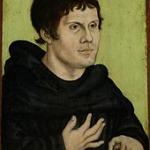
August 25, 2017 Martin Luther on the Christian in Society
Browse Our Archives
Select a Category American Lutheran Classics Blog Posts Book Review Christian Dogmatics Course Church Resources Curtis Leins Dogmatic Theology Ethics FAQs Historical Theology Just & Sinner Publications Luther Quotations Podcast Sermons The American Lutheran Theological Journal The complete works of Revere Franklin Weidner Theology Proper Uncategorized Videos
Select a Month October 2019 September 2019 July 2019 June 2019 May 2019 April 2019 March 2019 February 2019 January 2019 December 2018 November 2018 October 2018 September 2018 July 2018 June 2018 May 2018 April 2018 March 2018 February 2018 January 2018 December 2017 November 2017 October 2017 September 2017 August 2017 July 2017 June 2017 May 2017 April 2017 March 2017 February 2017 January 2017 December 2016 November 2016 October 2016 September 2016 August 2016 July 2016 June 2016 May 2016 April 2016 March 2016 February 2016 January 2016 December 2015 November 2015 October 2015 September 2015 August 2015 July 2015 June 2015 May 2015 April 2015 March 2015 February 2015 January 2015 December 2014 November 2014 October 2014 September 2014 August 2014 July 2014 June 2014 May 2014
Follow Us!
TAKE THE
Religious Wisdom Quiz
Where was Paul's hometown?
Select your answer to see how you score.
Damascus Antioch Tarsus Jerusalem
Related posts from Just and Sinner
C.F.W. Walther’s Talk on God’s Law and My...
And Now... A Message for Today's LC-MS Mainstream...

Can Unbelievers Seek God? And What is the...
The Biggest Radical Lutheran Straw Man of Them...
TRENDING AT PATHEOS Evangelical

The REST of Your Life: A Creative Wrestles...
This week I had a conversation with a good friend from church....

How the author of the world's best hymn...
I've been working with John Newton for a while now. This makes...

Long before this Lectio Divina, Psalm 130 - the song - started...

What About the Trees? Another Living Parable
After I finished writing the last article about falling leaves as a...

Why Classical Education Is a Conversation, Not a...
Come and Read: Joy in Classical Education When I was a little...

Cornell University has received a great deal of negative publicity and intense...
view all Evangelical blogs
Ad-Free & Subscriber Log-In Subscription Support
- About Us
- 2026 Calendar
- Videos
- Podcasts
- Library of World Religions
- Faith In Media Tracker
- Advertise With Us
- Write for Us
- Privacy Policy
- Terms of Service
- Do Not Sell My Data
- Contact Us
- Radiant Digital
- Manage Newsletter Subscriptions
- Unsubscribe From Notifications
- Sitemap
Copyright 2008-2026, Patheos. All rights reserved.
Subscription Support Ad-Free & Subscriber Log-In
Follow Patheos