
BuddhistCatholicContemplativeEvangelicalGeneral ChristianHinduJewishLatter-day SaintMuslimNew VisionsProgressive Christian
Beliefs
- Buddhist
- Catholic
- Contemplative
- Evangelical
- General Christian
- Hindu
- Jewish
- Latter-day Saint
- More Voices
- Muslim
- New Visions
- Pagan
- Progressive Christian
Topics
- Religion News
- Food and Religion
- Sports and Religion
- Religious Art
- Religious Music and Entertainment
- Religious Events
- History and Religion
- Style and Religion
- Politics and Religion
- Women in Religion
- Recreation Outdoors and Religion
- Business Finance and Religion
- Careers Workplace and Religion
- Education and Religion
- Family Parenting and Religion
- Health Fitness and Religion
- Home and Religion
- Relationships and Religion
- Technology and Religion
- Travel and Religion
Columnists
- Buddhist Columnists
- Business Finance and Religion Columnists
- Careers Workplace and Religion Columnists
- Catholic Columnists
- Contemplative Columnists
- Education and Religion Columnists
- Evangelists Columnists
- Family Parenting and Religion Columnists
- General Christian Columnists
- Health Fitness and Religion Columnists
- Hindu Columnists
- History and Religion Columnists
- Home and Religion Columnists
- Jewish Columnists
- More Voices Columnists
- Latter Day Columnists
- Muslim Columnists
- New Visions Columnists
- Nonreligious Columnists
- Pagan Columnists
- Politics and Religion Columnists
- Progressive Columnists
- Recreation Outdoors and Religion Columnists
- Relationships and Religion Columnists
- Religion News Columnists
- Religious Art Columnists
- Religious Events Columnists
- Religious Music and Entertainment Columnists
- Sports and Religion Columnists
- Style and Religion Columnists
- Technology and Religion Columnists
- Travel and Religion Columnists
- Women in Religion Columnists
Resource Library
- 2026 Calendar
- Library of World Religions
- The 100 Most Holy Places on Earth
- Patheos Answers
- Podcasts
- Videos
- Faith Leaders Database
- Anglican Episcopalian
- Bahai
- Baptist
- Buddhism
- Christianity
- Confucianism
- Eastern Orthodoxy
- Hinduism
- Holiness and Pentecostal
- ISKCON
- Islam
- Judaism
- Lutheran
- Methodist
- The Church of Jesus Christ of Latter-day Saints
- New Age
- Paganism
- Presbytarian and Reformed
- Protestantism
- Religion Behind the Scenes
- Roman Catholic
- Scientology
- Shia Islam
- Sikhism
- Sufism
- Sunni Islam
- Taoism
- Zen
- See all religions
Research Tools
 Ad-Free & Subscriber Log-In Subscription Support
Ad-Free & Subscriber Log-In Subscription Support
Follow Patheos 

- Trending:
- Forgiveness
- |
- Marriage
- |
- Consciousness
- |
- Death Penalty
- |
- Election
- |
- Halloween
 Just and Sinner
- Home
- Evangelical
- Law and Gospel and 2KR are Not Competing Paradigms
Law and Gospel and 2KR are Not Competing Paradigms
Last updated on: January 27, 2015 at 8:00 pm by Jordan Cooper
Law and Gospel and 2KR are Not Competing Paradigms 2015-01-27T20:00:50-06:00 Jordan Cooper
Patheos Explore the world's faith through different perspectives on religion and spirituality! Patheos has the views of the prevalent religions and spiritualities of the world.
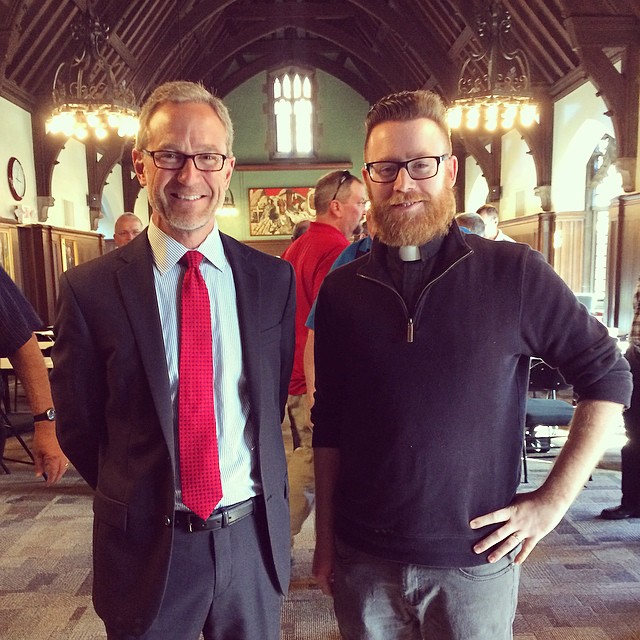 After the publication of Joel Biermann’s recent book A Case for Character (which can be purchased here), the subject of the two kinds of righteousness in Lutheran thought has been prominent in theological dialogue, especially in online discussions about the role of justification, good works, preaching, etc. One of the primary contentions of those who oppose the utilization of the two kinds of righteousness distinction is that such a distinction displaces law and gospel from its central position. This has not been helped by the fact that Biermann has stated that the two kinds of righteousness is a “better paradigm” than law and gospel. I contend, however, that these two important theological distinctions are not competing paradigms at all, but address different issues.
Law and gospel is essentially a description of how God speaks. God’s words are promises (gospel) and commands (law). These two words must be distinguished in preaching, theological dialogue, and practice. Each is good and necessary, but the law and the gospel function in different manners. Coram Deo, law and gospel is the most helpful theological structure. Before God, Christians are shown their sin by God’s law, and thus are prepared to hear the good news of the forgiveness of sins in Christ. However, Christian’s do not simply live before God. We also live in a world, where we have to make decisions about how to live, and how to treat other people. It is in this context that the two kinds of righteousness distinction is essential. Here, we also need to sharply distinguish between these two ideas. Our relationship to God is based in no way upon our active obedience, but upon the righteousness of God passively received. Our relationship with others is not passive, but we must work for the benefit of our neighbor. This distinction then is not answering the question of how God speaks (that’s law and gospel), but how man relates to God (passive righteousness) and fellow-man (active righteousness). If these two “paradigms” (that’s probably not even the best word to use) are addressing different issues, then there is no need to view them as contradictory.
Those who contend that the two kinds of righteousness distinction somehow undermines law and gospel often point to the structure of preaching. It is said that 2KR is an attempt to replace a traditional law-gospel sermon structure with a passive righteousness-active righteousness sermon structure. This, however, is not really a helpful manner in which to look at preaching. Both law and gospel, and the two kinds of righteousness, need to be distinguished in preaching, but neither needs to be the sole structure of each sermon. In historic Lutheran preaching (just read some of C.F.W. Walther’s sermons), the message was not divided into: 1. Law, and 2. Gospel. This is a modern trend that seems to identify more with existential Lutheranism than Lutheran orthodoxy. Instead of imposing a preconceived structure on each text, whether that be law and gospel, or the two kinds of righteousness, the pastor should preach according to whatever text he is given. Sometimes that is going to be a straightforward law-gospel sermon, but other times it will include a heavy amount of exhortation to serve one’s neighbor in obedience to God’s will.
Both the law-gospel and the passive-active righteousness distinctions are essential for the Lutheran pastor, and neither needs to be neglected in favor of the other. Law and gospel remind us that we always fall short of God’s will, and that we are saved solely by God’s grace. The two kinds of righteousness remind us that we cannot work to merit God’s favor or love, but that righteousness is given freely, and that we live in this world for the good of others.
Next Post

January 27, 2015 Moving to Patheos
Browse Our Archives
Select a Category American Lutheran Classics Blog Posts Book Review Christian Dogmatics Course Church Resources Curtis Leins Dogmatic Theology Ethics FAQs Historical Theology Just & Sinner Publications Luther Quotations Podcast Sermons The American Lutheran Theological Journal The complete works of Revere Franklin Weidner Theology Proper Uncategorized Videos
Select a Month October 2019 September 2019 July 2019 June 2019 May 2019 April 2019 March 2019 February 2019 January 2019 December 2018 November 2018 October 2018 September 2018 July 2018 June 2018 May 2018 April 2018 March 2018 February 2018 January 2018 December 2017 November 2017 October 2017 September 2017 August 2017 July 2017 June 2017 May 2017 April 2017 March 2017 February 2017 January 2017 December 2016 November 2016 October 2016 September 2016 August 2016 July 2016 June 2016 May 2016 April 2016 March 2016 February 2016 January 2016 December 2015 November 2015 October 2015 September 2015 August 2015 July 2015 June 2015 May 2015 April 2015 March 2015 February 2015 January 2015 December 2014 November 2014 October 2014 September 2014 August 2014 July 2014 June 2014 May 2014
Follow Us!
TAKE THE
Religious Wisdom Quiz
Who was sold into slavery by his brothers?
Select your answer to see how you score.
Joseph Judah Benjamin Dan
Related posts from Just and Sinner
C.F.W. Walther’s Talk on God’s Law and My...
And Now... A Message for Today's LC-MS Mainstream...
Can Unbelievers Seek God? And What is the...
The Biggest Radical Lutheran Straw Man of Them...
TRENDING AT PATHEOS Evangelical

The REST of Your Life: A Creative Wrestles...
This week I had a conversation with a good friend from church....

How the author of the world's best hymn...
I've been working with John Newton for a while now. This makes...

Long before this Lectio Divina, Psalm 130 - the song - started...

What About the Trees? Another Living Parable
After I finished writing the last article about falling leaves as a...

Why Classical Education Is a Conversation, Not a...
Come and Read: Joy in Classical Education When I was a little...

Cornell University has received a great deal of negative publicity and intense...
view all Evangelical blogs
Ad-Free & Subscriber Log-In Subscription Support
- About Us
- 2026 Calendar
- Videos
- Podcasts
- Library of World Religions
- Faith In Media Tracker
- Advertise With Us
- Write for Us
- Privacy Policy
- Terms of Service
- Do Not Sell My Data
- Contact Us
- Radiant Digital
- Manage Newsletter Subscriptions
- Unsubscribe From Notifications
- Sitemap
Copyright 2008-2026, Patheos. All rights reserved.
Subscription Support Ad-Free & Subscriber Log-In
Follow Patheos