
BuddhistCatholicContemplativeEvangelicalGeneral ChristianHinduJewishLatter-day SaintMuslimNew VisionsProgressive Christian
Beliefs
- Buddhist
- Catholic
- Contemplative
- Evangelical
- General Christian
- Hindu
- Jewish
- Latter-day Saint
- More Voices
- Muslim
- New Visions
- Pagan
- Progressive Christian
Topics
- Religion News
- Food and Religion
- Sports and Religion
- Religious Art
- Religious Music and Entertainment
- Religious Events
- History and Religion
- Style and Religion
- Politics and Religion
- Women in Religion
- Recreation Outdoors and Religion
- Business Finance and Religion
- Careers Workplace and Religion
- Education and Religion
- Family Parenting and Religion
- Health Fitness and Religion
- Home and Religion
- Relationships and Religion
- Technology and Religion
- Travel and Religion
Columnists
- Buddhist Columnists
- Business Finance and Religion Columnists
- Careers Workplace and Religion Columnists
- Catholic Columnists
- Contemplative Columnists
- Education and Religion Columnists
- Evangelists Columnists
- Family Parenting and Religion Columnists
- General Christian Columnists
- Health Fitness and Religion Columnists
- Hindu Columnists
- History and Religion Columnists
- Home and Religion Columnists
- Jewish Columnists
- More Voices Columnists
- Latter Day Columnists
- Muslim Columnists
- New Visions Columnists
- Nonreligious Columnists
- Pagan Columnists
- Politics and Religion Columnists
- Progressive Columnists
- Recreation Outdoors and Religion Columnists
- Relationships and Religion Columnists
- Religion News Columnists
- Religious Art Columnists
- Religious Events Columnists
- Religious Music and Entertainment Columnists
- Sports and Religion Columnists
- Style and Religion Columnists
- Technology and Religion Columnists
- Travel and Religion Columnists
- Women in Religion Columnists
Resource Library
- 2026 Calendar
- Library of World Religions
- The 100 Most Holy Places on Earth
- Patheos Answers
- Podcasts
- Videos
- Faith Leaders Database
- Anglican Episcopalian
- Bahai
- Baptist
- Buddhism
- Christianity
- Confucianism
- Eastern Orthodoxy
- Hinduism
- Holiness and Pentecostal
- ISKCON
- Islam
- Judaism
- Lutheran
- Methodist
- The Church of Jesus Christ of Latter-day Saints
- New Age
- Paganism
- Presbytarian and Reformed
- Protestantism
- Religion Behind the Scenes
- Roman Catholic
- Scientology
- Shia Islam
- Sikhism
- Sufism
- Sunni Islam
- Taoism
- Zen
- See all religions
Research Tools
 Ad-Free & Subscriber Log-In Subscription Support
Ad-Free & Subscriber Log-In Subscription Support
Follow Patheos 

- Trending:
- Forgiveness
- |
- Marriage
- |
- Consciousness
- |
- Death Penalty
- |
- Election
- |
- Halloween
 Just and Sinner
- Home
- Evangelical
- Jesus and Banned Books Week
Jesus and Banned Books Week
Last updated on: September 28, 2015 at 1:25 pm by nathanrinne
Jesus and Banned Books Week 2015-09-28T13:25:05-06:00 nathanrinne
Patheos Explore the world's faith through different perspectives on religion and spirituality! Patheos has the views of the prevalent religions and spiritualities of the world.
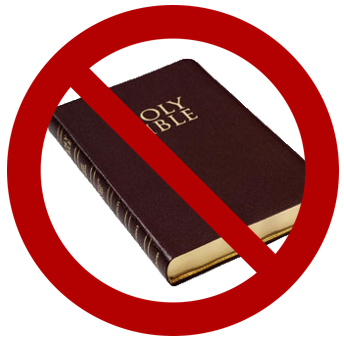
Yes –me talking about Banned Books Week again. As a librarian, I suppose I can’t help it!
Last week, I talked about why Christians – particularly when it comes to their schools – should exercise some critical thinking towards Banned Books Week. This time, I simply want to take the concept and run with it – and “hijack” it a bit for my own purposes.
One of the most feared books throughout history has been the Christian Bible. Interestingly it has been feared by both authorities in the world and authorities in the church itself!
First, regarding the fear of the Bible in the church…
In the 2003 movie Luther, I recall one of the complaints being that it gave the impression that Martin Luther was the first to have translated the Bible into German. This was a fair complaint – the Bible had, in fact, been translated into German several times before that.
What Luther had done – against the wishes of many in the hierarchy of the church[i] – was put the Bible into the language the common people could readily comprehend. This was a translation of the Bible, from the original languages (not the official Latin Vulgate!), created with them in mind! And as literacy was increasing in the European nations, the ancient Christian hope that the whole church would be reading the Scriptures in their own homes daily was increasing as well.[ii]
Second, there is the fear of the Bible in the world…
Have you heard of Bible smuggling?
Christian organizations like International Christian Concern (persecution.org) and Voice of the Martyrs (persecution.com) exist to raise awareness of the persecuted church. Both organizations attempt to get Bibles and other Christian literature to believers in countries where government policies and practices make this extremely difficult. Voice of the Martyrs calls these “restricted nations”.

A Voice of the Marytrs prayer map from 2013
On their website, Voice of the Martyrs says:
In restricted nations around the world, persecuted believers have two requests: “Please pray for us” and “Please send Bibles!” Believers, as well as those seeking Christ, often wait years to own their own copy of God’s Word, and they do so at great risk. But the requests continue: “Please send Bibles!”
And yet, who can blame political leaders for fearing a book that says, among other things….
Now therefore, O kings, be wise;
be warned, O rulers of the earth.
11 Serve the Lord with fear,
and rejoice with trembling.
12 Kiss the Son,
lest he be angry, and you perish in the way,
for his wrath is quickly kindled.
Blessed are all who take refuge in him. (Psalm 2)

Talk about banned!: In Nov. 2013, persons in North Korea were executed for the crime of possessing a Bible.
Even if Christ came to earth as a meek king – and also commands his followers to be people of peace during their earthly sojourn – Christians have always affirmed Him as the King who will come again. And on that day, the Lord of all creation will put sin, death, and the devil – and all that is aligned with them – under His feet.
Christians are commanded to recognize earthly leaders as being appointed by God himself – and to submit to and pray for their leaders – whatever their faith. And in the same book of I Timothy where these words appear, we also read that He “desires all people to be saved and to come to the knowledge of the truth” (I Tim. 2:4)
How can we be on the right side of the King? Jesus was banned for you!
“Herem” means “to ban”, and it is the total exclusion of a person from the Jewish community. The words shunning or even “excommunication” (as in ecclesiastical, or religious censure) come to mind. When thinking about this, many Banned Books Weeks proponents might think of Benedict Spinioza, the 17th c. Jewish philosopher whose works – very popular even today (I address some of that Spinoza-love here) – were labeled heretical and banned.
But that is not what I have in mind here. I want to go back to the banning of the Word of God. It is not only the Word of God – meaning the Bible – that we find being banned. It is also the Word of God – in this sense meaning the Son of God Jesus Christ! – that was banned.[iii] Suffering “herem”.

“And this is the judgment: the light has come into the world, and people loved the darkness rather than the light because their works were evil.” (John 3:19)
Jesus came preaching the Kingdom of God, and in this process challenged those He spoke to by revealing their sins. As a result of this, He was “banned”: in the book of Hebrews, we read that he was made to endure the cross and its shame, being executed “outside the camp” (Hebrews 13:3).
The supreme irony in all of this is that God used all of this evil in His plan to reconcile the rebellious world to himself (II Cor. 5). Jesus said that no one took His life from Him but that He laid it down willingly – as the book of Isaiah had foretold hundreds of years earlier:
4 Surely he has borne our griefs
and carried our sorrows;
yet we esteemed him stricken,
smitten by God, and afflicted.
5 But he was pierced for our transgressions;
he was crushed for our iniquities;
upon him was the chastisement that brought us peace,
and with his wounds we are healed.
6 All we like sheep have gone astray;
we have turned—every one—to his own way;
and the Lord has laid on him
the iniquity of us all.7 He was oppressed, and he was afflicted,
yet he opened not his mouth;
like a lamb that is led to the slaughter,
and like a sheep that before its shearers is silent,
so he opened not his mouth….
So even though sinful man banned the God-Man Jesus, it was through this banning that He took on the punishment we deserved. God “gave Him over” to our evil precisely so that we might be made clean and whole! Jesus Christ was actually our God-ordained “scapegoat” whereby we might again attain a right standing with God… and have the joyful delight of knowing our loving Creator – and Redeemer! – both now and in the life to come.

“But the goat chosen by lot as the scapegoat shall be presented alive before the LORD to be used for making atonement by sending it into the wilderness as a scapegoat.” (Leviticus 16:10)
It is a complete scandal. The Word of God, Jesus Christ, was banned for you! I hope you will remember that as you perhaps experience “Banned Books Week” this week (and please do consider reading my other article critical of the same!)
FIN
Images: Persecuted Church map: http://soulspartan.com/2013/10/03/haunting-bible-verses-vi-we-suffer-when-other-christians-suffer-or-do-we/ ; others: Wikipedia; (for example, William Holman Hunt: The Scapegoat, 1854).
Notes:
[i] Pope Innocent III stated in 1199:
… to be reproved are those who translate into French the Gospels, the letters of Paul, the psalter, etc. They are moved by a certain love of Scripture in order to explain them clandestinely and to preach them to one another. The mysteries of the faith are not to explained rashly to anyone. Usually in fact, they cannot be understood by everyone but only by those who are qualified to understand them with informed intelligence. The depth of the divine Scriptures is such that not only the illiterate and uninitiated have difficulty understanding them, but also the educated and the gifted (Denzinger-Schönmetzer, Enchiridion Symbolorum 770-771)
More statements to this effect have been collected here. I am suggesting that this page is just a place to get started exploring the topic more, as it links to several other more authoritative references.
[ii] St. John Chrysostom (347-407) said: “I am always encouraging you to pay attention not only to what is said here in church, but also, when you are at home, to continue constantly in the practice of reading the divine Scriptures. . . For it is not possible, not possible for anyone to be saved who does not constantly have the benefit of spiritual reading.” (from here ; see also here)
[iii] From a previous post: “Protestants, like N.T. Wright, are seemingly content to make sure Jesus Christ is the main focus of the church when it comes to speaking about “words”:
“When John declares that ‘in the beginning was the word,’ he does not reach a climax with ‘and the word was written down’ but ‘and the word became flesh’… scripture itself points… away from itself” (Wright, Scripture, 24, quoted on 136 of Peter Nafzger’s These Are Written)
Here is where we confessional Lutherans are keen to point out that we are not just talking about the Church living from the living Word Jesus Christ – but also “every word that proceeds from the mouth of God” – words of Spirit and life that proceed from that Word’s mouth. In this view – which we fiercely contend is true – the Word includes but is it not limited to the Scriptures – in fact the oral or preached word… is always to be seen as primary. Nevertheless, more must be said.
Back to N.T. Wright for a moment: he is right because the good news is indeed not so much that God has given us His written word, but that He has given us the incarnate Word. Further when he says that the Holy Spirit does give us the incarnate Word through the written word. On the other hand, Wright goes wrong when he forgets to mention not only that the Scripture does in fact point to itself (Isaiah 8:20, Acts 17:11), but that it also points to the incarnate Word who points us back to the written word – particularly as it regards His fulfillment of its Divine prophecies (see Luke 7:18-23 in particular but also all throughout the New Testament – also note my recent series on the significance of this matter)!
Previous Post
September 26, 2015
Come to the Just and Sinner Conference!
Next Post
September 29, 2015 Outline for a Bible Study on Infant Baptism
Browse Our Archives
Select a Category American Lutheran Classics Blog Posts Book Review Christian Dogmatics Course Church Resources Curtis Leins Dogmatic Theology Ethics FAQs Historical Theology Just & Sinner Publications Luther Quotations Podcast Sermons The American Lutheran Theological Journal The complete works of Revere Franklin Weidner Theology Proper Uncategorized Videos
Select a Month October 2019 September 2019 July 2019 June 2019 May 2019 April 2019 March 2019 February 2019 January 2019 December 2018 November 2018 October 2018 September 2018 July 2018 June 2018 May 2018 April 2018 March 2018 February 2018 January 2018 December 2017 November 2017 October 2017 September 2017 August 2017 July 2017 June 2017 May 2017 April 2017 March 2017 February 2017 January 2017 December 2016 November 2016 October 2016 September 2016 August 2016 July 2016 June 2016 May 2016 April 2016 March 2016 February 2016 January 2016 December 2015 November 2015 October 2015 September 2015 August 2015 July 2015 June 2015 May 2015 April 2015 March 2015 February 2015 January 2015 December 2014 November 2014 October 2014 September 2014 August 2014 July 2014 June 2014 May 2014
Follow Us!
TAKE THE
Religious Wisdom Quiz
In John 6:35, Jesus said, "I am the ______."
Select your answer to see how you score.
Bread of Life Good Shepherd True Vine Light of the World
Related posts from Just and Sinner
C.F.W. Walther’s Talk on God’s Law and My...
And Now... A Message for Today's LC-MS Mainstream...

Is Andres Manuel Lopez Obrador the “Moral Shakedown...

Sola Fide in the Church Fathers
TRENDING AT PATHEOS Evangelical

How the author of the world's best hymn...
I've been working with John Newton for a while now. This makes...

Long before this Lectio Divina, Psalm 130 - the song - started...

What About the Trees? Another Living Parable
After I finished writing the last article about falling leaves as a...

Why Classical Education Is a Conversation, Not a...
Come and Read: Joy in Classical Education When I was a little...

Falling Leaves: A Living Parable on Letting Go
I’ve spent the vast majority of my life in the southeast corner...

Cornell University has received a great deal of negative publicity and intense...
view all Evangelical blogs
Ad-Free & Subscriber Log-In Subscription Support
- About Us
- 2026 Calendar
- Videos
- Podcasts
- Library of World Religions
- Faith In Media Tracker
- Advertise With Us
- Write for Us
- Privacy Policy
- Terms of Service
- Do Not Sell My Data
- Contact Us
- Radiant Digital
- Manage Newsletter Subscriptions
- Unsubscribe From Notifications
- Sitemap
Copyright 2008-2026, Patheos. All rights reserved.
Subscription Support Ad-Free & Subscriber Log-In
Follow Patheos