
BuddhistCatholicContemplativeEvangelicalGeneral ChristianHinduJewishLatter-day SaintMuslimNew VisionsProgressive Christian
Beliefs
- Buddhist
- Catholic
- Contemplative
- Evangelical
- General Christian
- Hindu
- Jewish
- Latter-day Saint
- More Voices
- Muslim
- New Visions
- Pagan
- Progressive Christian
Topics
- Religion News
- Food and Religion
- Sports and Religion
- Religious Art
- Religious Music and Entertainment
- Religious Events
- History and Religion
- Style and Religion
- Politics and Religion
- Women in Religion
- Recreation Outdoors and Religion
- Business Finance and Religion
- Careers Workplace and Religion
- Education and Religion
- Family Parenting and Religion
- Health Fitness and Religion
- Home and Religion
- Relationships and Religion
- Technology and Religion
- Travel and Religion
Columnists
- Buddhist Columnists
- Business Finance and Religion Columnists
- Careers Workplace and Religion Columnists
- Catholic Columnists
- Contemplative Columnists
- Education and Religion Columnists
- Evangelists Columnists
- Family Parenting and Religion Columnists
- General Christian Columnists
- Health Fitness and Religion Columnists
- Hindu Columnists
- History and Religion Columnists
- Home and Religion Columnists
- Jewish Columnists
- More Voices Columnists
- Latter Day Columnists
- Muslim Columnists
- New Visions Columnists
- Nonreligious Columnists
- Pagan Columnists
- Politics and Religion Columnists
- Progressive Columnists
- Recreation Outdoors and Religion Columnists
- Relationships and Religion Columnists
- Religion News Columnists
- Religious Art Columnists
- Religious Events Columnists
- Religious Music and Entertainment Columnists
- Sports and Religion Columnists
- Style and Religion Columnists
- Technology and Religion Columnists
- Travel and Religion Columnists
- Women in Religion Columnists
Resource Library
- 2026 Calendar
- Library of World Religions
- The 100 Most Holy Places on Earth
- Patheos Answers
- Podcasts
- Videos
- Faith Leaders Database
- Anglican Episcopalian
- Bahai
- Baptist
- Buddhism
- Christianity
- Confucianism
- Eastern Orthodoxy
- Hinduism
- Holiness and Pentecostal
- ISKCON
- Islam
- Judaism
- Lutheran
- Methodist
- The Church of Jesus Christ of Latter-day Saints
- New Age
- Paganism
- Presbytarian and Reformed
- Protestantism
- Religion Behind the Scenes
- Roman Catholic
- Scientology
- Shia Islam
- Sikhism
- Sufism
- Sunni Islam
- Taoism
- Zen
- See all religions
Research Tools
 Ad-Free & Subscriber Log-In Subscription Support
Ad-Free & Subscriber Log-In Subscription Support
Follow Patheos 

- Trending:
- Forgiveness
- |
- Marriage
- |
- Consciousness
- |
- Death Penalty
- |
- Election
- |
- Halloween
 Just and Sinner
- Home
- Evangelical
- Is the distinction between mortal and venial sin helpful?
Is the distinction between mortal and venial sin helpful?
Last updated on: October 22, 2014 at 2:01 pm by nathanrinne
Is the distinction between mortal and venial sin helpful? 2014-10-22T14:01:40-06:00 nathanrinne
Patheos Explore the world's faith through different perspectives on religion and spirituality! Patheos has the views of the prevalent religions and spiritualities of the world.

“Small sins become great when they are regarded as small.” — the great 19th c. Lutheran theologian C.F.W. Walther
This blog’s own Trent Demarest and his two Pseudepodcast colleagues recently did a show on mortal and venial sin, “Mortal Sin – a light and fluffy topic for a change…”, which I highly recommend checking out (I cover ground here that they also cover in their show, which features more than what is offered here). A guy commenting on their show hits the nail on the head:
“So I’ve listened to last week’s show twice now. What I’ve come away with both times (besides a clearer view of the Lutheran doctrine of moral and venial sin) is that this doctrine, properly understood, pretty much ends any arguments about Lutherans being antinomians.”
That is true – read on to explore this more.
As regards our confession, Lutherans, like Roman Catholics, say that there are both mortal and venial sins (I will admit that I am not really up on what Calvinists believe specifically about the distinction between mortal and venial sins though I don’t doubt this is probably not the whole story).
I John 5 is one of the go-to passages for all who deal with this topic:
13I write these things to you who believe in the name of the Son of God that you may know that you have eternal life. 14And this is the confidence that we have toward him, that if we ask anything according to his will he hears us. 15And if we know that he hears us in whatever we ask, we know that we have the requests that we have asked of him.
16If anyone sees his brother committing a sin not leading to death, he shall ask, and God will give him life—to those who commit sins that do not lead to death. There is sin that leads to death; I do not say that one should pray for that. 17All wrongdoing is sin, but there is sin that does not lead to death.
18We know that everyone who has been born of God does not keep on sinning, but he who was born of God protects him, and the evil one does not touch him.
Rome and Wittenberg are also similar in that both assert that a believer can have true faith in Christ and then lose it.
And yet, there is a huge difference between the Lutheran and Roman Catholic approach to mortal and venial sins. While I do not believe that Lutherans have ever denied that some kinds of sins are not more serious by their very nature – in that they tend to drive out faith in the Holy Spirit, Pastor Will Weedon, echoing Walther, points out where our true emphasis lies:
“I don’t see how any Lutheran can dispense with a term such as that used in our Symbols. Lutherans do have a different approach to mortal sin than Roman Catholics. We don’t have a list. We hold rather that any sin that we regard AS venial IS mortal; i.e., any sin that we seek to excuse rather than repent of – no matter what it is – is a sin that will bring one under condemnation” (from here, quoted on the Pseudopodcast)

“We do urge a careful distinction between venial and mortal sins in our churches.” — 17th c. Lutheran theologian Johann Gerhard, On the Church, p. 80.
The 16th century Lutheran theologian Martin Chemnitz also has some more helpful words for us that go into some depth:
Original sin, which still dwells in the flesh of the reborn, is not idle, but is the restless law of sin in our members, enticing, tempting, driving to sin with various suggestions and evil lusts. Ja 1:14; Ro 7:8; Ga 5:17. Since, then, one who is reborn does not delight in this kind of carnal lusts, and is neither led by them nor follows them, but earnestly represses and crucifies them as sins and mortifies them through the Spirit, lest they rule or be performed (Ro 6:12, 7:15, 8:13; Gl. 5:24), this very thing is a sure sign of true and earnest repentance. And when the reborn pray that God would not impute these weaknesses to them, but forgive them for the sake of Christ, and at the same time believe and trust that Christ, as the true propitiation, would, in the sight of God, cover this their uncleanness with His innocence and obedience (Ro 4:7; Ps 32:1; 1 John 1:7; 2:1-2), this also is a sure sign of true and justifying faith. And where true faith, in earnest repentance, apprehends Christ in the Gospel, and relies on Him and is supported by Him, there is no condemnation, but pure grace of God, forgiveness of sins, and eternal salvation (Rom 8:1:; 1 John 1:9; Ps 32:2). In this way there are and occur venial sins in the reborn, for which they are not condemned, because, as St. Augustine says, they live under grace.
But what if we indulge and delight in evil lusts and seek occasions to give them free reign? Then they become mortal sins (Rom 8:13; Ja 1:15), because there surely is no room for true repentance and faith where the lusts of the flesh are served and given reign, so that they break out into action. It is the nature and particular character of true faith that it does not seek how to commit, continue, and heap up sins freely, but rather hungers and thirsts after the righteousness that releases and frees from sins. Therefore, where there is no true repentance, the Holy Spirit pronounces a very solemn sentence. Jer. 5:3,9; Rom 2:5,9; Luke 13:3; Rv. 2:5. And where there is no true faith, there is neither Christ, nor the Holy Spirit, nor the grace of God, nor forgiveness of sins, nor any salvation. Therefore what? Doubtless the wrath of God, death, and eternal condemnation, unless the fallen are turned to God again. Cl. 3:6; Rom 8:13. As a result of this, therefore, and for this reason mortal sins occur in the reborn, namely when repentance, faith, Christ, and the Holy Spirit are driven out and lost.
Enchiridion, 208, 209

“Faith only exists in repentance” — 16th c. Lutheran theologian, Phillip Melanchton
Luther spoke in a similar fashion – and in the most official of documents (the Smalcald Articles). Finally, I add this helpful bit from my pastor:
I think the distinction between mortal and venial sin is important. As far as our justification is concerned, all sins are mortal, as Luther pointed out in the Heidelberg disputation. Imperfection is imperfection, no matter if it is small or larger, no matter if one is aware of it or not. As far as our sanctification is concerned, some sins are venial, some are mortal. Venial sins usually fall under the category of sins which occur not purposely and willfully, but because we are by nature defective. Sometimes we are aware of them, sometimes not. Here the confession of sins of two types in the Small Catechism: Those of which we are not aware, and those of which we are aware. (This distinction goes back to the Old Testament, and the placing of garments on the priest, and the offering of specific sacrifices for unknown sins.) So if we are aware of a sin, does that necessarily mean it is a mortal sin? Well, we can we be aware of sin within us. For example, when something causes us to become angry, and we realize we should not be angry about that thing, and yet we are. At that moment there may be an awareness of the New Man, that the Old Adam has caused such anger, and must simply live with it until that anger subsides. Thus to prevent further or greater sin, the New Man takes the Old Adam for a walk…Here we can talk about non-willful sins, sins which occur because by nature we are defective, and which are a result of the reactions of that defective nature to our situation (we are tired and hungry and so end up yelling at a child when such yelling was not really needed…). But what about “premeditated sin”, that is sin which we commit with the full knowledge that it is sin, and we should not commit it? Here we are working against the Holy Spirit, and have strayed into mortal sin territory. So the chief example in the Bible: David and Bathsheba. Certainly with all the time that lapses during the sequence of events which occurred there there must have been something more than venial sin occurring. We don’t know. What we do know is that as soon as David is confronted with his sin, he does not claim ignorance, that he should not have committed adultery or murdered, but he repents, asks for a clean heart, a right spirit, and that Spirit not be taken from him, that the joy of salvation be restored to him.
I hope all of this is helpful to you as it is me. If this terrifies you, I can only say this: it does me to. This is why confessional Lutherans emphasize that the Christian, throughout his Christian life, continues to need the ongoing forgiveness that is given in the church. We live from the Gospel preached and the sacraments administered. Penitent sinners trust these words of promise so that what is said in I John 1 is true for them: “that you may know that you have eternal life.”
No sin is ultimately mortal to the person who lives by faith in Christ.
FIN
Update: leading up to Reformation day, at my blog theology like a child, I am re-publishing several of my most important posts surrounding this topic. I invite everyone here to check those out – I will probably do one or two here as well.
Previous Post

October 21, 2014
Interviews on Reformed Confessions
Next Post
October 22, 2014 The Doctrine of Justification
Browse Our Archives
Select a Category American Lutheran Classics Blog Posts Book Review Christian Dogmatics Course Church Resources Curtis Leins Dogmatic Theology Ethics FAQs Historical Theology Just & Sinner Publications Luther Quotations Podcast Sermons The American Lutheran Theological Journal The complete works of Revere Franklin Weidner Theology Proper Uncategorized Videos
Select a Month October 2019 September 2019 July 2019 June 2019 May 2019 April 2019 March 2019 February 2019 January 2019 December 2018 November 2018 October 2018 September 2018 July 2018 June 2018 May 2018 April 2018 March 2018 February 2018 January 2018 December 2017 November 2017 October 2017 September 2017 August 2017 July 2017 June 2017 May 2017 April 2017 March 2017 February 2017 January 2017 December 2016 November 2016 October 2016 September 2016 August 2016 July 2016 June 2016 May 2016 April 2016 March 2016 February 2016 January 2016 December 2015 November 2015 October 2015 September 2015 August 2015 July 2015 June 2015 May 2015 April 2015 March 2015 February 2015 January 2015 December 2014 November 2014 October 2014 September 2014 August 2014 July 2014 June 2014 May 2014
Follow Us!
TAKE THE
Religious Wisdom Quiz
What does "Selah," found often in Psalms, likely mean?
Select your answer to see how you score.
Sing loudly Forever Pause or reflect Give thanks
Related posts from Just and Sinner
I Am Not Your Pastor, and That's a...
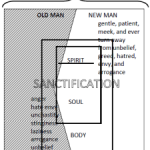
What Should the Christian Do With Wicked Desires...

Diagnosing Christian Bad Boy Syndrome
All Philosophy is Morality and Teleology – and...
TRENDING AT PATHEOS Evangelical

The REST of Your Life: A Creative Wrestles...
This week I had a conversation with a good friend from church....

How the author of the world's best hymn...
I've been working with John Newton for a while now. This makes...

Long before this Lectio Divina, Psalm 130 - the song - started...

What About the Trees? Another Living Parable
After I finished writing the last article about falling leaves as a...

Why Classical Education Is a Conversation, Not a...
Come and Read: Joy in Classical Education When I was a little...

Cornell University has received a great deal of negative publicity and intense...
view all Evangelical blogs
Ad-Free & Subscriber Log-In Subscription Support
- About Us
- 2026 Calendar
- Videos
- Podcasts
- Library of World Religions
- Faith In Media Tracker
- Advertise With Us
- Write for Us
- Privacy Policy
- Terms of Service
- Do Not Sell My Data
- Contact Us
- Radiant Digital
- Manage Newsletter Subscriptions
- Unsubscribe From Notifications
- Sitemap
Copyright 2008-2026, Patheos. All rights reserved.
Subscription Support Ad-Free & Subscriber Log-In
Follow Patheos